
5.0 Rating
Request A Free Estimate
Backyard solar panels are becoming a popular option for homeowners who want more control over their energy costs.
Instead of installing panels on the roof, a backyard solar system is installed on the ground, allowing for flexible positioning, easier maintenance, and the potential for higher energy production.
Whether your roof isn’t ideal for solar power or you simply want a system that is easier to expand in the future, backyard solar panels can be an effective way to generate clean electricity and reduce long-term utility expenses.
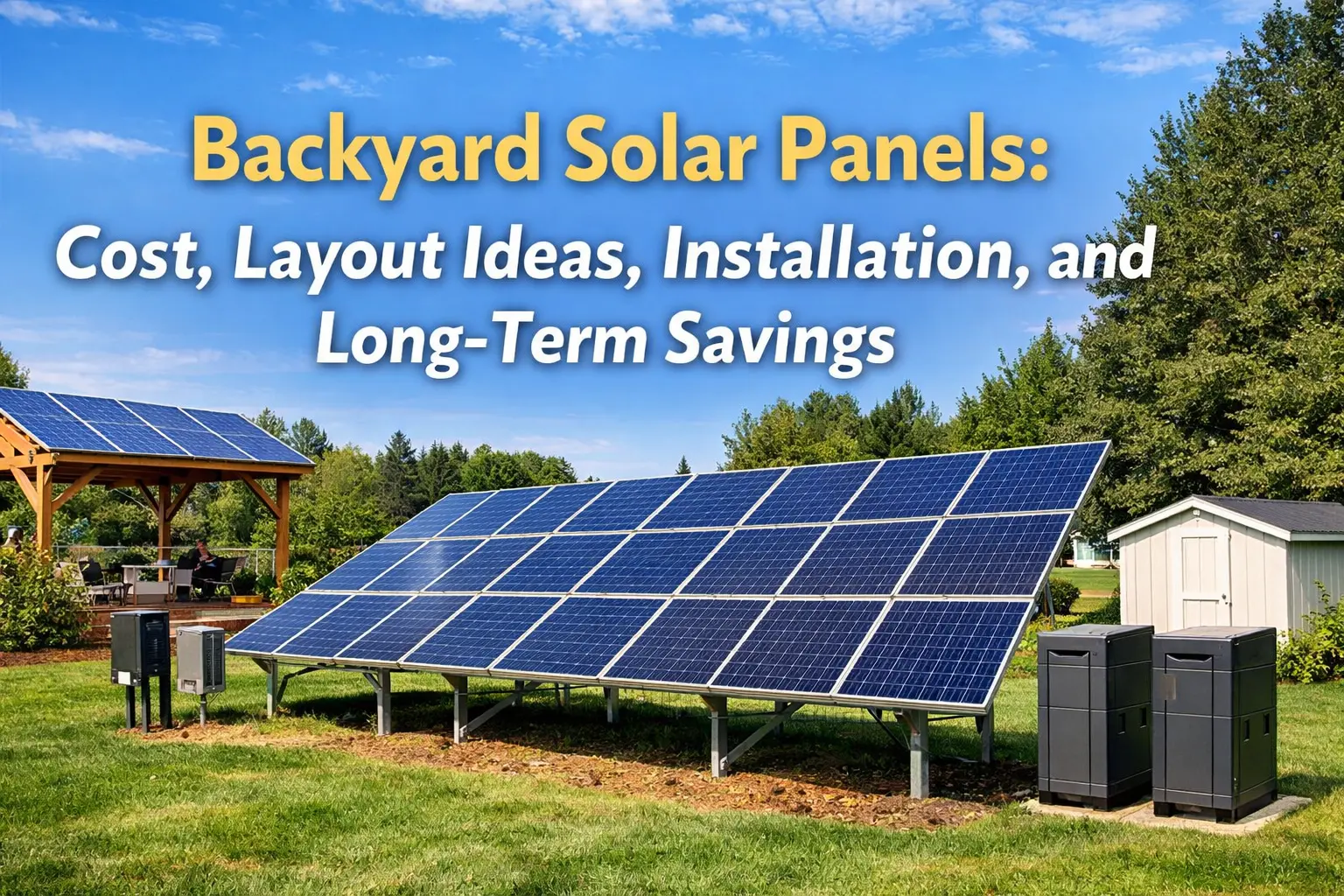
Backyard solar panels are solar energy systems installed on the ground instead of on a roof.
They are commonly referred to as ground-mounted solar panels, meaning the system is installed directly on land using a racking structure that holds the panels at an optimal angle for sunlight exposure.
These systems work the same way as rooftop solar panels by converting sunlight into electricity using photovoltaic (PV) cells.
The key difference is that backyard systems allow for more control over panel placement and orientation.
Backyard solar setups can be used to:
Because they are installed at ground level, backyard solar panels are often easier to clean, maintain, and expand over time.
One advantage of installing solar panels in a yard is the ability to design a system that fits your property layout.
Homeowners often choose configurations that maximize sunlight exposure while maintaining the look and usability of their outdoor space.
Common backyard solar power options include:
Planning the layout carefully helps ensure the system produces as much electricity as possible throughout the year.
There are several types of backyard solar panel systems, each suited for different property sizes and energy needs.
These are the most common systems.
Panels are installed at a fixed angle that maximizes yearly sunlight exposure.
Pole-mounted systems elevate panels higher above the ground and can sometimes include tracking technology to follow the sun.
Tracking systems automatically adjust panel positioning throughout the day to capture more sunlight, increasing energy production.
Pre-designed kits are available for homeowners interested in smaller systems or DIY installation.
These typically include panels, mounting equipment, and an inverter.
Choosing the right system depends on available space, budget, and energy goals.
Backyard solar panels require enough open space to allow sunlight to reach the panels throughout the day without obstruction from trees, buildings, or fencing.
Typical solar panel size:
• approximately 17–21 square feet per panel
Estimated space requirements:
Most residential solar systems require between 300 and 800 square feet of available space depending on energy usage.
Spacing between panel rows may be needed to prevent shading and allow for maintenance access.
A solar professional can evaluate yard conditions and determine the most efficient layout.
The number of panels your backyard can support depends on available space and energy goals.
Typical system sizes:
A typical home may require 15–25 panels depending on electricity usage.
Homes with higher energy consumption or electric heating systems may require larger systems, while smaller homes may need fewer panels to offset energy costs.
Backyard solar panels can be designed to scale over time, allowing homeowners to expand the system as energy needs change.
Understanding the advantages and disadvantages can help determine whether a ground-mounted system is the right choice.
Both backyard and rooftop solar panels can provide reliable electricity savings, but each has advantages depending on the property.
| Feature | Backyard Solar Panels | Rooftop Solar Panels |
| Installation Cost | Slightly higher | Lower |
| Efficiency | Often higher due to optimal positioning | Depends on roof angle |
| Maintenance | Easier access | Harder access |
| Expandability | Easier to expand | Limited by roof size |
| Aesthetics | Visible in yard | Less visible |
Backyard solar panels often allow for better positioning and may produce more electricity if shading affects the roof.
Rooftop panels typically cost less to install but may be limited by roof orientation or available space.
Homeowners often choose backyard solar panels when:
Many homeowners pair backyard solar panels with battery storage systems to store excess electricity produced during the day.
Solar batteries allow homeowners to:
Battery storage can improve the overall value of a solar system by allowing more of the generated electricity to be used directly rather than sent back to the grid.
The payback period for backyard solar panels depends on installation cost, energy usage, and local electricity rates.
Most homeowners see a return on investment within approximately 6–12 years.
Factors that influence payback period include:
After the system has paid for itself, the electricity it produces can significantly reduce long-term energy expenses.
Installing backyard solar panels involves several steps to ensure the system operates safely and efficiently.
Professional solar installation helps ensure compliance with local electrical codes and safety standards.
Backyard solar panels can provide long-term financial and environmental benefits.
Many homeowners choose ground-mounted solar systems to gain more control over electricity costs and reduce dependence on traditional utility providers.
Potential benefits include:
Backyard solar panels are often worth considering when a property has sufficient sunlight exposure and space for installation.
Backyard solar panels may be a good option for:
Ground-mounted systems are often ideal for properties with flexible space and strong sunlight exposure.
Sunergy Solutions helps homeowners design solar power systems that match their energy goals and property layout.
From planning and system sizing to solar installation and long-term support, a customized approach helps ensure the solar system delivers reliable performance.
Homeowners in CT, MA, ME, NH, RI, VT, and VA can benefit from solar solutions designed to maximize energy production while maintaining the appearance and functionality of outdoor spaces.
Professional guidance can help simplify the process and ensure the system meets both current and future energy needs.
Yes, solar panels can be installed in your backyard using a ground-mounted system. These systems are placed on metal racking structures that position the panels at an angle that captures the most sunlight. Backyard solar panels are often used when a roof is shaded, too small, or not positioned well for solar energy production.
Backyard solar panels can cost slightly more upfront because they require mounting structures and sometimes additional site preparation. However, they can produce more electricity due to better positioning and may provide greater long-term value depending on the property.
Most homes require between 15 and 25 solar panels to offset electricity usage. The exact number depends on energy consumption, sunlight exposure, and system efficiency. A professional solar assessment can determine the ideal system size for your property.
Most residential systems require approximately 300 to 800 square feet of open space. Each solar panel typically needs about 17–21 square feet, plus spacing between rows to prevent shading and allow maintenance access.
Solar panel systems can increase property value by reducing long-term energy costs and making the home more energy efficient. Many buyers see solar energy as a desirable feature because it can lower monthly utility expenses.
Yes, a properly sized backyard solar system can generate enough electricity to power most or all of a home’s energy needs. Larger systems can offset nearly all grid electricity usage depending on energy consumption patterns.
Most solar panels last 25–30 years or longer with proper maintenance. Many manufacturers offer performance warranties that guarantee a certain level of energy production over time.
Yes, many homeowners choose to pair backyard solar panels with battery storage systems. Batteries store excess electricity generated during the day so it can be used at night or during power outages.
Solar panels still produce electricity in winter as long as sunlight reaches the panels. Cold temperatures can actually improve panel efficiency, although shorter daylight hours may reduce total energy production.
Yes, many backyard solar systems are designed to allow future expansion. Additional panels can often be added if energy needs increase, such as when adding an electric vehicle or home addition.
Appointments Available, 7 Days a Week


