
5.0 Rating
Request A Free Estimate
Solar panels can protect your roof by shielding it from UV rays, hail, and temperature swings, but only when your roof is in good condition and the installation is done correctly.
A poorly installed solar system, or panels on an aging roof, can shorten its life instead.
Here’s how to tell which outcome you’ll get.
More than 6 million homes and businesses across the United States have gone solar, with 97% of those installations built on residential rooftops.
If you’re weighing whether to join them, you’ve probably landed on the same question a lot of homeowners ask: do solar panels protect your roof, or do they put it at risk?
It’s a fair question.
A national study found that homes with solar systems sell for about 4.1% more than comparable homes without panels.
But none of that matters if a rushed installation leaves you with a leaky roof five years later.
The real answer is that solar panels can protect your roof or damage it, and the difference comes down to your roof’s condition and how the system goes in.
Yes, solar panels can protect your roof.
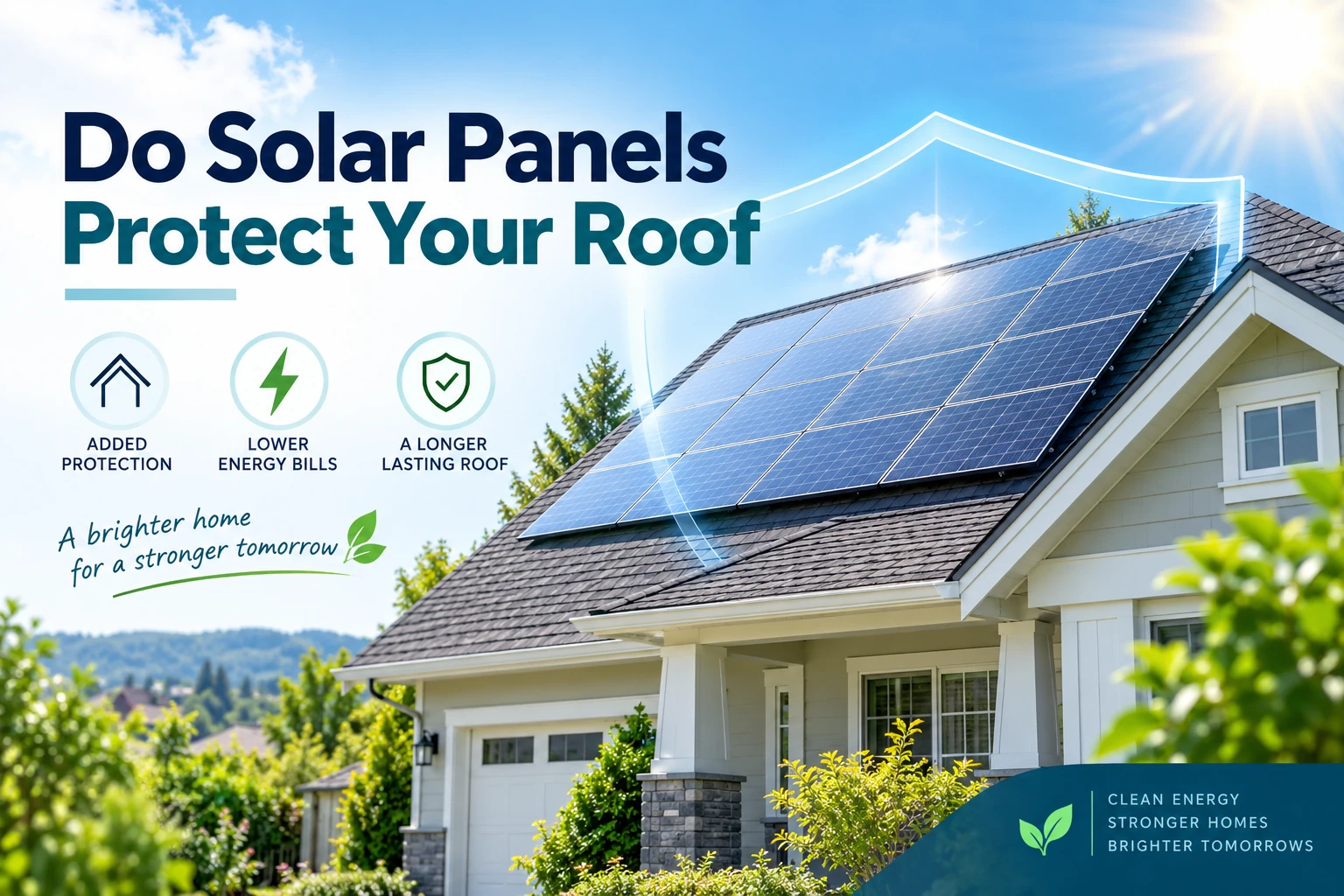
Once mounted, they act as a physical shield between your shingles and the sun, wind, hail, and falling debris that wear roofing material down over time.
That protection depends on two things: your roof being in good condition before installation, and the panels being mounted correctly.
Picture your roof with an umbrella over part of it.
The section covered by solar panels stops taking direct hits from ultraviolet rays, rain, and small debris.
It tends to age more slowly than the exposed roof around it.
That’s the upside.
The catch is that panels don’t fix roof problems, they just cover them up.
If your shingles were already curling, cracked, or missing granules before installation, a solar array on top won’t stop that damage.
It will just make the damage harder to see and harder to repair without pulling the panels first.
A few specific things happen physically once panels go on your roof, and they add up over the life of your system.
Constant sun exposure is one of the biggest reasons asphalt shingles wear out.
UV rays dry out the asphalt binders and break down the granules that protect the shingle underneath, which is why asphalt shingle roofs typically last 15 to 30 years depending on material and climate.
A solar panel sitting a few inches above the shingles blocks that direct UV exposure completely for the section it covers.
Panels also take the brunt of hail, branches, and wind-blown debris that would otherwise hit the shingles directly.
Solar panels are tested and rated to survive hail impacts that would dent or crack an unprotected shingle.
Roofing materials expand and contract with heat, and repeated temperature swings cause fatigue over time.
Department of Energy-funded research found that shingles underneath rooftop solar panels experience less thermal stress than exposed shingles nearby, because the panels absorb the sun’s energy instead of the roof deck absorbing it directly.
Most racking systems also leave a small air gap between the back of the panel and the roof surface.
That gap lets air move underneath the array, which helps carry heat away instead of letting it build up against the shingles.
Solar panels can make your roof last longer, but only for the part of the roof underneath them, and only if that roof was healthy when the panels went on.
By blocking UV rays and easing temperature swings, panels slow down the wear that normally ages a shingle roof.
They don’t restore life to a roof that’s already old or damaged, and a rushed installation can shorten it instead.
Think of it as protection, not repair.
The shingles under your array will likely outlast the exposed shingles around the edges of your roof, simply because they’re seeing less sun and weather.
That’s a real benefit, but it’s a slower, quieter one than most homeowners expect, and it usually only shows up years down the road.
Solar panels can damage your roof, though the panels themselves are almost never the cause.
Nearly every roof problem linked to solar traces back to installation: mounting holes that aren’t properly sealed with flashing, brackets that miss the rafters, or panels placed on shingles that were already brittle or near the end of their life.
Improperly flashed roof penetrations are the most common source of solar-related leaks, since water finds its way through any gap that wasn’t sealed correctly.
A qualified installer flashes and seals every mounting point the same way a roofer flashes a chimney or vent pipe, so water has nowhere to get in.
If your roof already has damage before installation, whether that’s a soft spot, a missing shingle, or an aging patch, it needs roof repair first.
Installing panels over an existing problem doesn’t cause new damage on its own, but it does make that problem much harder and more expensive to fix later, since the array usually has to come off first.
If you already have panels and need work done underneath them, repairing a roof that already has solar panels is a routine job for a contractor who handles both trades.
Your roof is ready for solar panels if it’s structurally sound, has at least 15 to 20 years of expected life left, and can carry the added weight of the panels and mounting hardware.
An older roof, one already showing wear, or one in a heavy snow region without a recent structural check should be inspected before installation, not after.
Solar panels typically carry a 25-year manufacturer warranty, and most systems keep producing power well beyond that.
Because of this, roofing industry guidance recommends matching your roof’s remaining lifespan to your solar system’s expected lifespan, so you’re not stuck removing a working solar array just to fix the roof underneath it a few years later.
If your roof is already 15 or more years into a typical 20 to 25 year asphalt lifespan, it usually makes more sense to handle a roof replacement before solar goes on, rather than after.
Solar panels and their mounting rails typically add about 2.5 to 4 pounds of weight per square foot to a roof.
That’s a manageable load for most homes, but it matters more here in the Northeast, where Massachusetts building code requires roofs to handle 35 to 50 pounds of snow load per square foot depending on the town.
A roof built to code can typically carry that added solar weight without a problem.
But older homes, homes with wider rafter spacing, or roofs that have never had a structural review deserve a closer look first.
That’s why a combined roof and solar inspection matters more in a New England winter than it does in a warmer climate: the panels, the snow sitting on them, and the roof underneath are all working together, and each one needs to be sized correctly for the others.
SEE IF YOUR ROOF IS READY FOR SOLAR
Not every roof takes solar panels the same way.
The mounting method changes depending on what’s underneath.
Asphalt shingles are the most common roofing material on homes across New England, and they’re also the most common surface for solar installation.
Panels attach through lag bolts driven into the rafters, each one sealed with flashing designed specifically for solar mounts.
Done correctly, this method has decades of track record and rarely causes leaks.
Standing seam metal roofs are often considered one of the easiest surfaces for solar, since clamps can attach directly to the raised seams without any new holes drilled into the metal.
Combined with a metal roof’s own long lifespan, this pairing tends to need the least maintenance over time.
Flat and low-slope roofs, common on commercial buildings, usually use a different approach entirely.
Instead of bolting through the roof membrane, ballasted racking systems use weighted trays to hold panels in place without any roof penetrations, which protects the waterproofing layer underneath.
This is a common setup for commercial solar installations, where a large flat roof surface is available and penetrations carry more risk across such a wide area.
Adding solar panels can affect your roof warranty if the installation isn’t handled by a certified, insured contractor, since most shingle manufacturers require proper installation methods to keep their coverage valid.
When panels are installed correctly, with every penetration sealed and manufacturer-approved hardware used, your existing roof warranty typically stays in place, and your new solar system carries its own separate warranty on top of it, often around 25 years.
Before signing off on an installation, ask your contractor for documentation of their workmanship warranty and whether they carry a certification from your roofing manufacturer.
That paperwork is what protects you if a problem shows up years later.
Sunergy Solutions installs solar systems and handles roofing services under one company, which changes how we approach every solar project.
Before we design a system, we look at your roof the way a roofer would, not just the way a solar installer would.
That means checking the material, age, and condition of your roof as part of the same visit where we plan your residential solar installation.
If we find a problem, we can address it directly instead of sending you to a separate roofing company and hoping the two teams coordinate.
If your roof needs work first, we can do that too, then move straight into the solar build on a surface we already know is sound.
We serve homeowners and businesses across Connecticut, Maine, Massachusetts, New Hampshire, Rhode Island, Vermont, and Virginia, and we size every system to the roof, snow load, and climate it’s actually going on, not a generic national average.
Solar panels aren’t automatically good or bad for your roof.
They protect the parts of your roof they cover, as long as that roof was sound to begin with and the installation was done right.
Get those two things wrong, and the same panels that were supposed to protect your roof can become the reason you’re replacing it early.
If you’re considering solar and want a straight answer about what your specific roof can handle, Sunergy Solutions can walk your roof and your system design together, so you know exactly what you’re getting before any panels go up.
They can do either. Panels that sit on a healthy roof and were installed correctly tend to slow down wear on the covered section, since they block UV rays and cut down on temperature swings. Panels installed on an already aging roof, or mounted with poor flashing, can lead to leaks and other damage that shortens the roof’s life instead.
Not if the installation is done correctly. Most roofing manufacturers require proper installation methods to keep a warranty valid, so working with a certified, insured installer who follows manufacturer guidelines for flashing and mounting is what keeps your roof warranty intact.
An annual inspection is a good baseline, similar to any roof, though homeowners in snowy climates may want a check after an unusually heavy storm season. Since panels can make parts of the roof harder to see, it helps to work with a contractor who can inspect both the roof and the solar system together.
Yes, but the panels usually need to come off first. A qualified contractor removes the array, replaces or repairs the roof, then reinstalls the same panels once the new roofing material is down. This is often called a detach and reset, and it costs less than a full new solar system.
Snow can build up on and around panels in the winter, similar to how it collects on any part of a sloped roof. Panels mounted at a steep enough angle tend to shed snow on their own after a sunny day, and the added weight is factored into the structural design before installation.
Solar panels and their mounting rails typically add about 2.5 to 4 pounds per square foot to a roof. Most roofs built to current code can carry that easily, though older homes or roofs with wider rafter spacing may need a structural check first.
Appointments Available, 7 Days a Week


