
5.0 Rating
Request A Free Estimate
Residential metal roofing prices typically range from $9-$20 per square foot installed, with most homeowners paying between $18,000-$36,000 for an average 2,000-3,000 sq ft roof replacement. Here’s what you need to know:
Quick Price Breakdown:
If you’re staring at a roofing estimate that’s 2-3 times higher than asphalt shingles, you’re probably wondering if metal roofing is worth the investment. The short answer? For most homeowners, absolutely.
Metal roofs last 40-70 years compared to asphalt’s 15-20 years. They resist hail, fire, and extreme weather while potentially lowering your energy bills. But the upfront cost can feel overwhelming without understanding what drives these prices.
The reality is simple: you’re not just buying a roof – you’re making a long-term investment in your home’s protection, energy efficiency, and resale value. The key is understanding what factors influence residential metal roofing prices so you can make an informed decision.
As Robert Raffa, CEO of Sunergy Solutions LLC, I’ve helped hundreds of Northeast homeowners steer residential metal roofing prices during my decade in renewable energy and home improvement. My background analyzing investment returns helps homeowners understand the true financial impact of roofing decisions beyond just the initial quote.
Let’s cut straight to what you really want to know: the actual numbers. When homeowners call us asking about residential metal roofing prices, they’re usually bracing themselves for sticker shock. Here’s the reality without any sugar-coating.
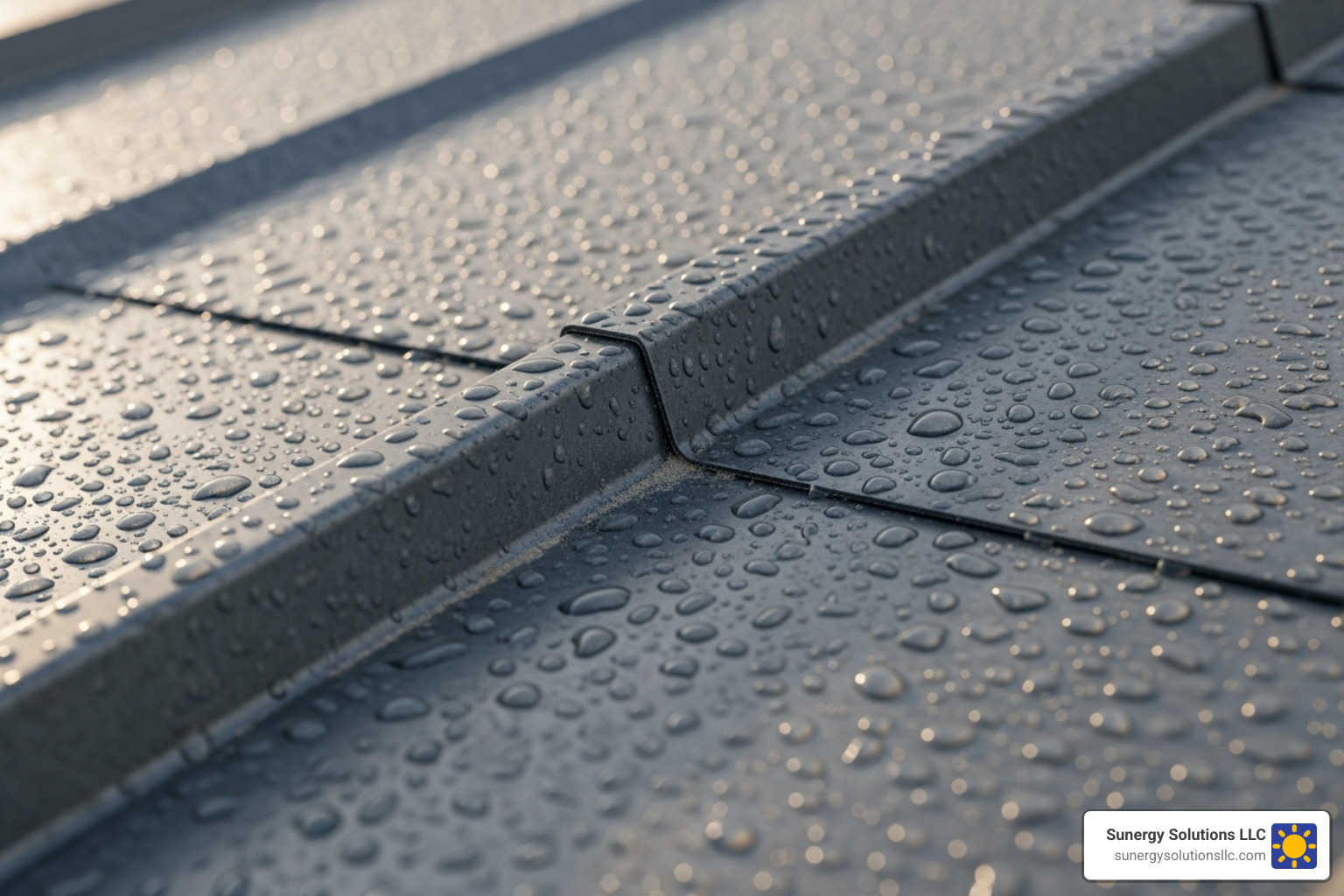
Most homeowners pay between $9-$20 per square foot for installed metal roofing, depending on the style they choose. For a typical 2,000-3,000 square foot home, you’re looking at $18,000-$60,000 total for a complete roof replacement.
That’s a wide range, I know. But here’s why: the type of metal roof you choose makes a huge difference in your final price. A basic exposed fastener system costs about half what you’ll pay for premium standing seam panels.
When contractors talk about “installed pricing,” they mean everything – materials, labor, permits, cleanup, the whole nine yards. Material-only pricing is much lower, but unless you’re planning to install it yourself (which I definitely don’t recommend), you need to focus on that total installed cost.
You’ll also hear roofers mention “squares” – that’s just 100 square feet. So if someone quotes you $1,200 per square, that’s $12 per square foot. Just roofing industry lingo to keep you on your toes.
Not all metal roofs are created equal, and the style you choose will be the biggest factor in your residential metal roofing prices. Think of it like buying a car – you can get a reliable Honda or splurge on a BMW. Both will get you where you’re going, but the experience (and price tag) is quite different.
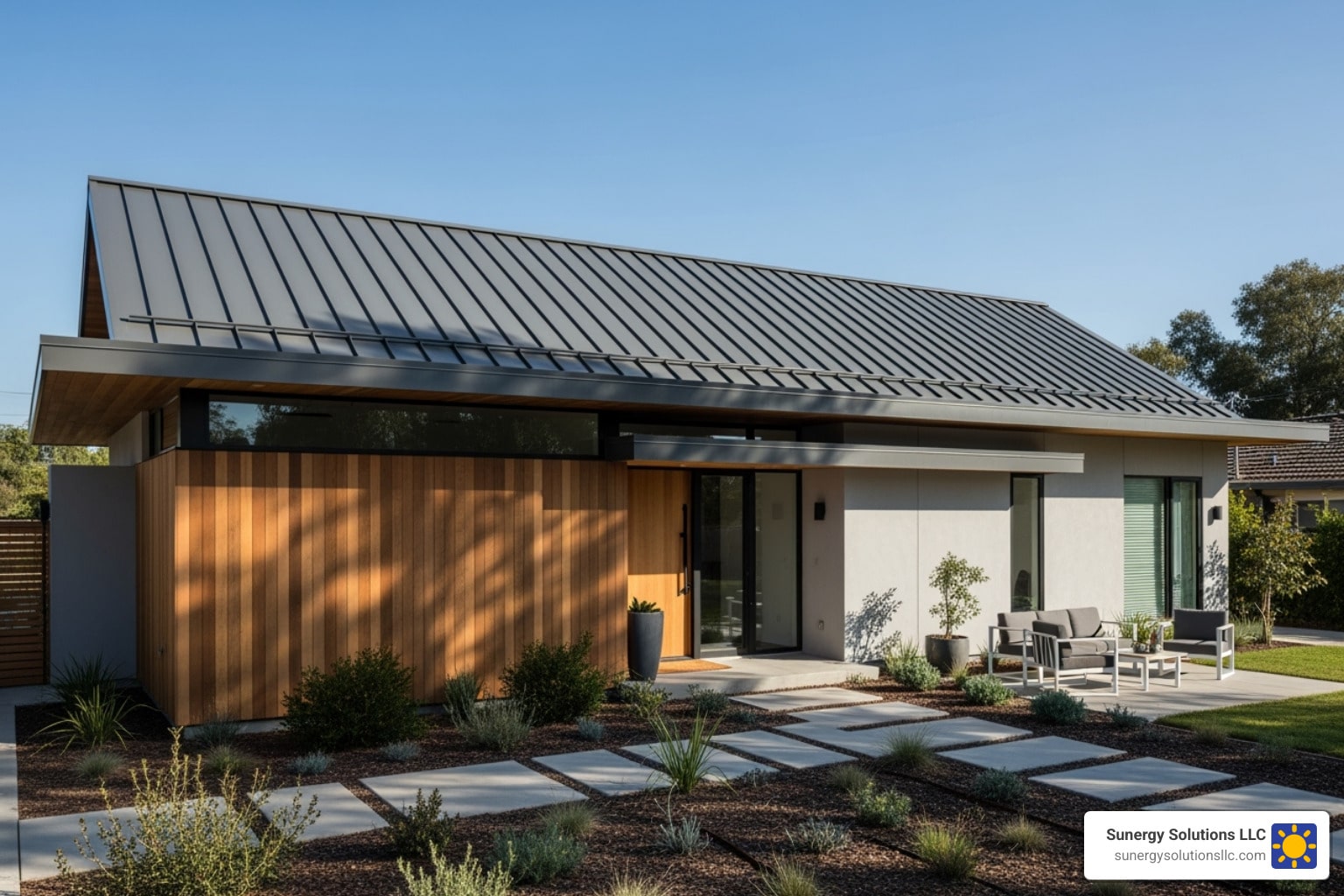
Standing seam metal roofing is the premium option at $13-$17 per square foot installed. These are the sleek, modern-looking roofs with hidden fasteners that give you those clean, continuous lines. They’re pricier because they require specialized equipment and skilled installers who know what they’re doing.
Metal shingles and tiles fall in the middle range at $10-$15 per square foot installed. These clever products give you the classic look of asphalt shingles, wood shakes, or clay tiles, but with all the benefits of metal. They’re perfect if you love the durability of metal but want to keep your home’s traditional aesthetic.
Exposed fastener panels (including corrugated metal) are your budget-friendly option at $4-$9 per square foot installed. Yes, you can see the screws, but they’re incredibly cost-effective and still give you decades of protection.
Let me put this in real numbers for typical home sizes. A 2,000 square foot roof with standing seam will run you $26,000-$34,000, while the same size with exposed fastener panels might cost $8,000-$18,000. For a 3,000 square foot roof, you’re looking at $39,000-$51,000 for standing seam or $12,000-$27,000 for exposed fastener.
| Roofing Type | Installed Cost Per Sq Ft | Lifespan (Years) | Key Features |
|---|---|---|---|
| Standing Seam | $13 – $17 | 40-70+ | Concealed fasteners, modern aesthetic, excellent weather protection |
| Metal Shingles/Tiles | $10 – $15 | 40-70+ | Mimics traditional materials (asphalt, wood, clay), versatile design |
| Exposed Fastener Panels | $4 – $9 | 30-50+ | Visible fasteners, economical, often corrugated, good for barns/sheds |
The price differences between metal roof styles aren’t random – they reflect real differences in materials, manufacturing, and installation complexity.
Standing seam systems command top dollar because they’re genuinely more sophisticated. Those raised vertical panels with concealed fasteners aren’t just prettier – they’re also more weather-resistant since water can’t get to the screws. The installation requires special tools to crimp the panels together, and frankly, not every roofer knows how to do it properly. You’re paying for both better performance and specialized expertise.
Metal shingles and tiles sit in the middle because they’re mimicking traditional looks while delivering metal durability. The manufacturing process is more complex than flat panels – they’re stamped, shaped, and textured to look like wood grain or slate patterns. Installation takes longer too, since each piece needs to interlock properly with its neighbors.
Exposed fastener panels and corrugated metal are the workhorses of metal roofing. The fasteners are visible, which some people don’t love aesthetically, but it makes installation much faster and simpler. Any experienced roofer can handle these systems, which keeps labor costs down. The trade-off? Those exposed screws need maintenance over time and can be weak points if not properly sealed.
The bottom line: you get what you pay for, but even the “budget” metal option will outlast asphalt shingles by decades.
You know the average residential metal roofing prices, but here’s where things get interesting. Just like no two homes are exactly alike, no two metal roof quotes will be identical. Think of it like ordering a custom pizza – the base price is just the beginning, and your choices from there determine the final bill.
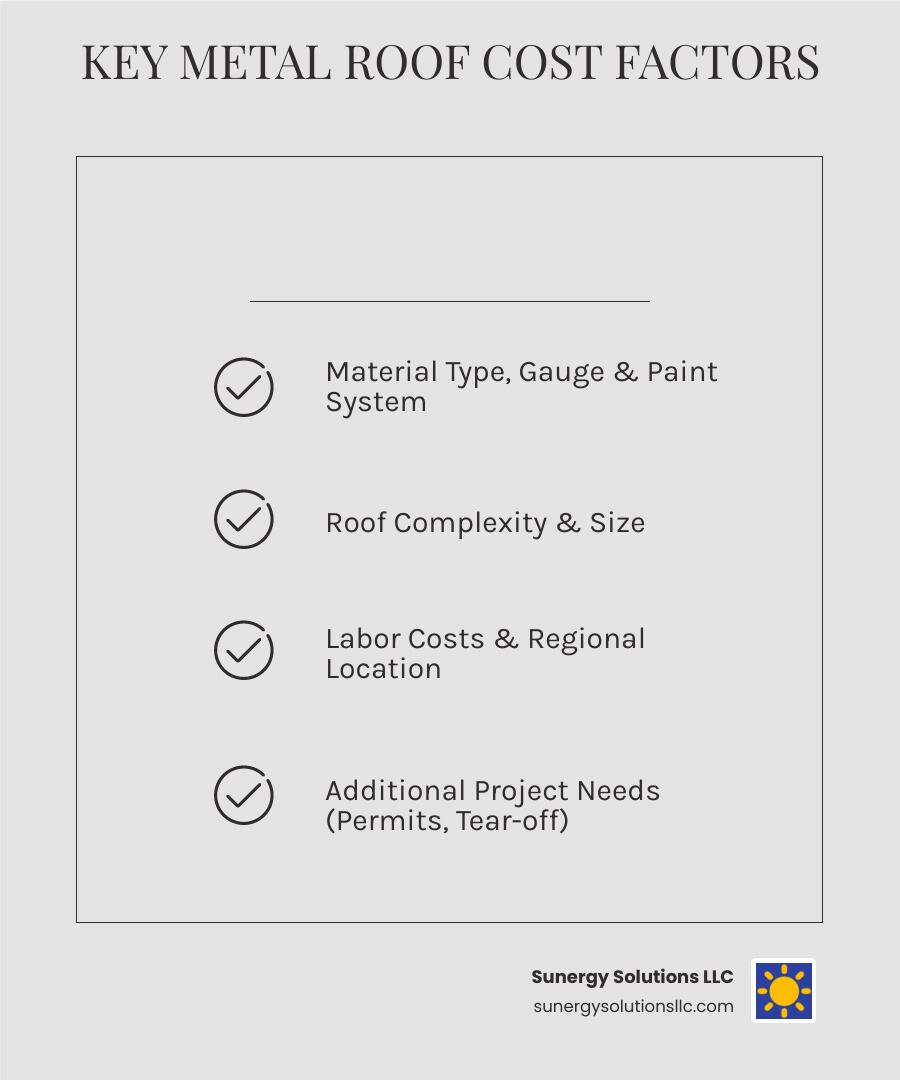
Several key factors work together to create your final quote: the metal type you choose, its thickness and paint quality, your roof’s complexity, where you live, and the size of your project. Understanding these variables helps you make informed decisions and spot whether a quote is fair or if someone’s trying to pull a fast one.
Let me walk you through each factor so you can approach your roofing project with confidence.
The type of metal you select is probably the biggest driver of your residential metal roofing prices. It’s like choosing between a Honda and a BMW – both will get you where you need to go, but the experience and cost are quite different.
Steel with Galvalume coating is the workhorse of residential metal roofing. This isn’t your grandfather’s rusty barn metal – modern steel roofing combines strength with excellent corrosion resistance thanks to its zinc-aluminum coating. Material costs typically run $2.00-$4.00 per square foot for painted steel, or $1.50-$3.50 for bare Galvalume. It’s strong, versatile, and offers the best bang for your buck.
Aluminum steps up the game, especially if you live near the coast or in high-moisture areas like parts of Maine or Massachusetts. While it costs more at $3.50-$6.50 per square foot, aluminum laughs at rust and corrosion. It’s also lighter than steel, making installation easier, though it can dent more easily if you go with a thinner gauge.
Copper and zinc are the luxury options, both running $13-$25 per square foot just for materials. Copper develops that gorgeous blue-green patina over time, while zinc creates its own protective coating. Both can last over 100 years, but they’re typically reserved for high-end homes or architectural accents where budget isn’t the primary concern.
For most homeowners in our service areas across New England and Virginia, steel offers the perfect balance of performance and value. If you’re considering a complete roof upgrade, check out our roof replacement services to see how we can help.
Once you’ve picked your metal, the details start adding up – and so does the cost. But these aren’t just expensive add-ons; they’re investments in how your roof performs and looks over time.
Gauge refers to metal thickness, and here’s where things get backwards: lower numbers mean thicker metal. 24-gauge steel is thicker and stronger than 26-gauge, costing about 25-40% more. Think of it like buying a heavy-duty extension cord versus a basic one – you pay more upfront but get better performance and durability. Most homes use 26-gauge or 24-gauge steel, with the heavier option offering better hail resistance and less chance of that wavy “oil canning” appearance.
Paint systems make a huge difference in how your roof ages. PVDF paints (often called Kynar 500 or Hylar 5000) are the premium choice, costing 30-40% more than standard options but keeping their color and gloss much longer. SMP paints are more budget-friendly but will fade faster over time. It’s like choosing between cheap house paint and the premium stuff – both cover the surface, but one keeps looking good much longer. The better paint systems also come with stronger warranty coverage.
Color choices usually won’t break the bank, though custom colors or special finishes like matte or textured surfaces can add to your costs. Most manufacturers offer plenty of standard colors that meet energy-efficient CoolRoof ratings, so you can likely find something perfect without paying extra.
Here’s something that surprises many homeowners: labor often accounts for about 60% of your total project cost. But this isn’t just guys with hammers – metal roof installation requires serious skill and specialized equipment.
Experienced contractors cost more for good reason. Installing standing seam metal roofing isn’t something you learn over a weekend. The precision required for proper panel alignment, seaming, and flashing takes years to master. You might find someone cheaper, but as the saying goes, “The bitterness of poor quality remains long after the sweetness of low price is forgotten.”
Where you live significantly impacts labor costs. A metal roof installation in high-cost areas like parts of Connecticut or Massachusetts will cost more than the same job in rural Maine or Vermont. We see this serving homeowners across Connecticut, Massachusetts, Maine, New Hampshire, Rhode Island, Vermont, and Virginia.
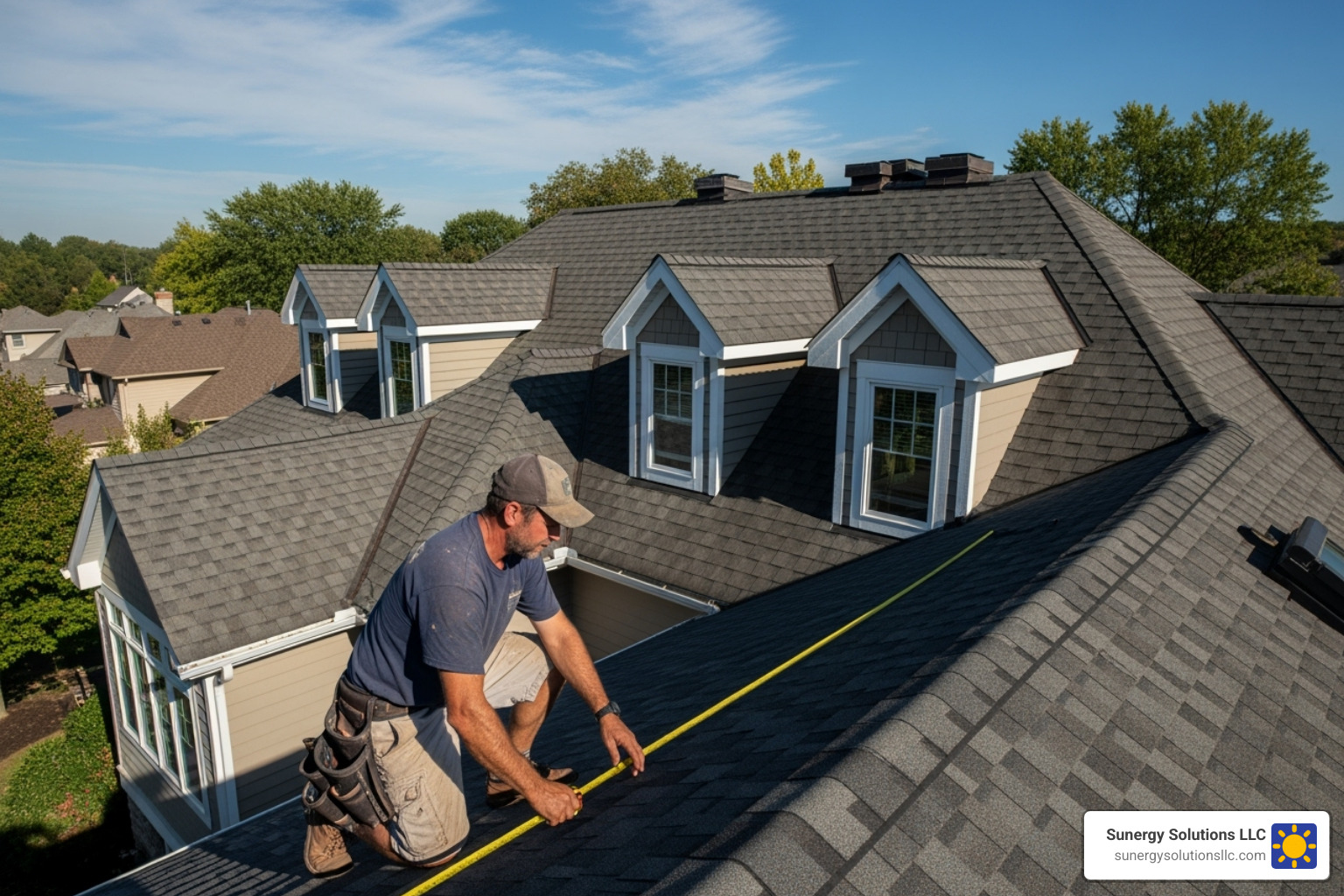
Your roof’s design complexity can dramatically affect pricing. A simple ranch with a straightforward roofline? That’s the contractor’s dream. But add dormers, multiple valleys, skylights, and chimneys, and you’re looking at more cuts, more flashing, more time, and more material waste. Steep roofs also cost more because they require additional safety equipment and slow down the installation process.
Job size matters too, but not always how you’d expect. While bigger jobs cost more total, they often have slightly lower per-square-foot costs due to efficiencies. Very small jobs under 500 square feet can actually cost more per square foot because of fixed setup and mobilization costs.
Want to see how our professional approach ensures quality results? Learn more about our professional roof installation services.
Beyond the main event, several supporting costs contribute to your final residential metal roofing prices. These aren’t surprise fees – they’re necessary parts of doing the job right.
Removing your old roof typically adds $1.50-$2.50 per square foot to your project. Multiple layers or difficult materials like tar and gravel can push this higher. While some situations allow installing metal over existing shingles, we usually recommend full removal to give your new roof the best foundation possible.
Underlayment is your roof’s insurance policy – that crucial barrier between your metal panels and the roof deck. Options range from basic synthetic materials to premium ice-and-water shields. Given our Northeast winters, the upgraded protection is often worth the extra cost, especially in areas prone to ice dams.
Permits and inspections keep everyone honest and ensure your roof meets local codes. Costs typically run $150-$500 depending on your area, and we handle all the paperwork to keep your project moving smoothly.
Site cleanup and disposal might seem basic, but proper cleanup and responsible disposal of old materials are signs of a professional operation. These costs are typically built into your quote, not surprise add-ons.
If you’re unsure about your current roof’s condition and what additional work might be needed, our comprehensive roof inspection process can provide the clarity you need to plan your project properly.
I get it – when you first see those residential metal roofing prices, your wallet might feel a little lighter just thinking about it. But here’s the thing I tell every homeowner who walks through our doors: you’re not just buying a roof, you’re making one of the smartest long-term investments in your home’s future.
Think of it like buying a quality winter coat here in New England. You could grab something cheap that’ll last a season or two, or you could invest in something that’ll keep you warm and looking good for decades. Your roof works the same way, except the stakes are a lot higher than staying dry on your morning commute.
Let’s talk numbers that actually matter – the ones that show up decades after your installation is complete.
While your neighbor might replace their asphalt shingles 2-3 times over the next 40 years, you’ll be sitting pretty under the same metal roof. Most asphalt shingles call it quits after 15-20 years (maybe 30 if you’re lucky with premium architectural shingles). A properly installed metal roof? We’re talking 40-70 years of protection, sometimes even longer.
I’ve seen metal roofs from the 1970s that still look fantastic. That’s not an accident – it’s engineering.
The durability factor is where metal really shines. These roofs laugh at hailstones up to 2 inches across while asphalt shingles are getting pummeled. They won’t crack, erode, or shrink like other materials. And if you’ve ever worried about house fires, metal roofs are completely non-flammable, giving you serious peace of mind.
Here’s something most homeowners don’t realize: metal roofs are practically maintenance-free. No more weekend projects scraping moss off your roof or replacing damaged shingles after every storm. A quick rinse with the garden hose once a year to clear debris, and you’re done. They don’t absorb water, so moss, mildew, and fungus can’t get a foothold.
The warranty coverage reflects this confidence. Most systems come with a 40-year manufacturer paint warranty and 25-year workmanship warranty. Some companies even offer 50-year fully transferable warranties – try getting that with asphalt shingles! These aren’t just marketing gimmicks; they’re backed by decades of real-world performance.
And here’s a bonus many homeowners find: insurance companies often offer discounts on homeowner’s premiums for metal roofs. When your roof can handle fire, hail, and hurricane-force winds, insurers take notice. Those savings add up year after year.
The financial benefits don’t stop at durability – they extend to your monthly utility bills and your home’s market value.
Metal roofs are energy-saving champions. Instead of absorbing heat like a giant solar collector (looking at you, asphalt shingles), metal roofs reflect solar heat away from your home. This means your air conditioner doesn’t have to work as hard during those brutal New England summer days. The Metal Roofing Alliance reports that reflective metal roofs can slash cooling costs by up to 40%. Many of our installations feature Cool Roofs that can lower cooling costs significantly.
For environmentally conscious homeowners, metal roofing checks all the right boxes. Most metal roofs contain 30-60% recycled content, and when they finally reach the end of their very long lifespan, they’re 100% recyclable. Compare that to asphalt shingles, which contribute millions of tons to landfills every year. It’s a choice you can feel good about.
The resale value impact is substantial. A metal roof transforms your home’s curb appeal with a clean, sophisticated look that buyers notice immediately. But it’s not just about aesthetics – smart buyers recognize the value of a roof that won’t need replacement for decades.
According to the 2024 Cost vs. Value Report, homeowners typically recoup about 48% of their metal roof investment when they sell. In some markets, especially here in the Northeast where weather durability matters, that number can climb to 85-95%. That means a significant portion of your initial investment comes right back to you, plus you enjoyed all the benefits while living there.
When you factor in the energy savings, insurance discounts, eliminated maintenance costs, and avoided replacement expenses over 40-70 years, those initial residential metal roofing prices start looking like the bargain they really are. You’re not just protecting your home – you’re making a smart financial decision that pays dividends for decades to come.
We often hear similar questions from homeowners exploring residential metal roofing prices and benefits. After helping hundreds of families across New England make this important decision, I’ve noticed the same concerns come up again and again. Let’s tackle the big ones head-on.
This is the question that keeps most homeowners up at night! I’ll be straight with you – residential metal roofing prices are definitely higher upfront. You’re looking at about 2 to 3 times the initial cost of asphalt shingles.
Here’s a real-world example: that 1,700 square foot roof might run you around $9,350 for quality asphalt shingles, while the same roof in standing seam metal could cost about $21,250. I know that difference can make your wallet feel a little lighter!
But here’s where the math gets interesting. While you’re replacing asphalt shingles every 15-20 years, your metal roof is just getting started. Metal roofs last 3 to 4 times longer – we’re talking 40-70 years of protection. Over your home’s lifetime, you might replace that asphalt roof 2-4 times, while your metal roof keeps on performing.
When you crunch those long-term numbers, including the hassle and cost of multiple replacements, metal roofing often becomes the smarter financial choice. It’s like buying a quality tool that lasts a lifetime versus replacing cheap ones every few years.
Ah, the “tin roof” myth! I completely understand this concern – many folks picture themselves lying awake listening to every raindrop like they’re inside a drum.
The good news? This is one of those old wives’ tales that just won’t die. Modern metal roofing systems are remarkably quiet when installed properly with solid sheathing and adequate attic insulation. We’re talking about a difference of just 52 decibels for metal versus 46 decibels for asphalt shingles during rainfall.
That 6-decibel difference? You probably won’t even notice it inside your well-insulated home. The “noisy metal roof” reputation comes from those old barn roofs or storage sheds with no insulation underneath. Your home’s construction is completely different, creating a peaceful indoor environment regardless of what Mother Nature throws at your roof.
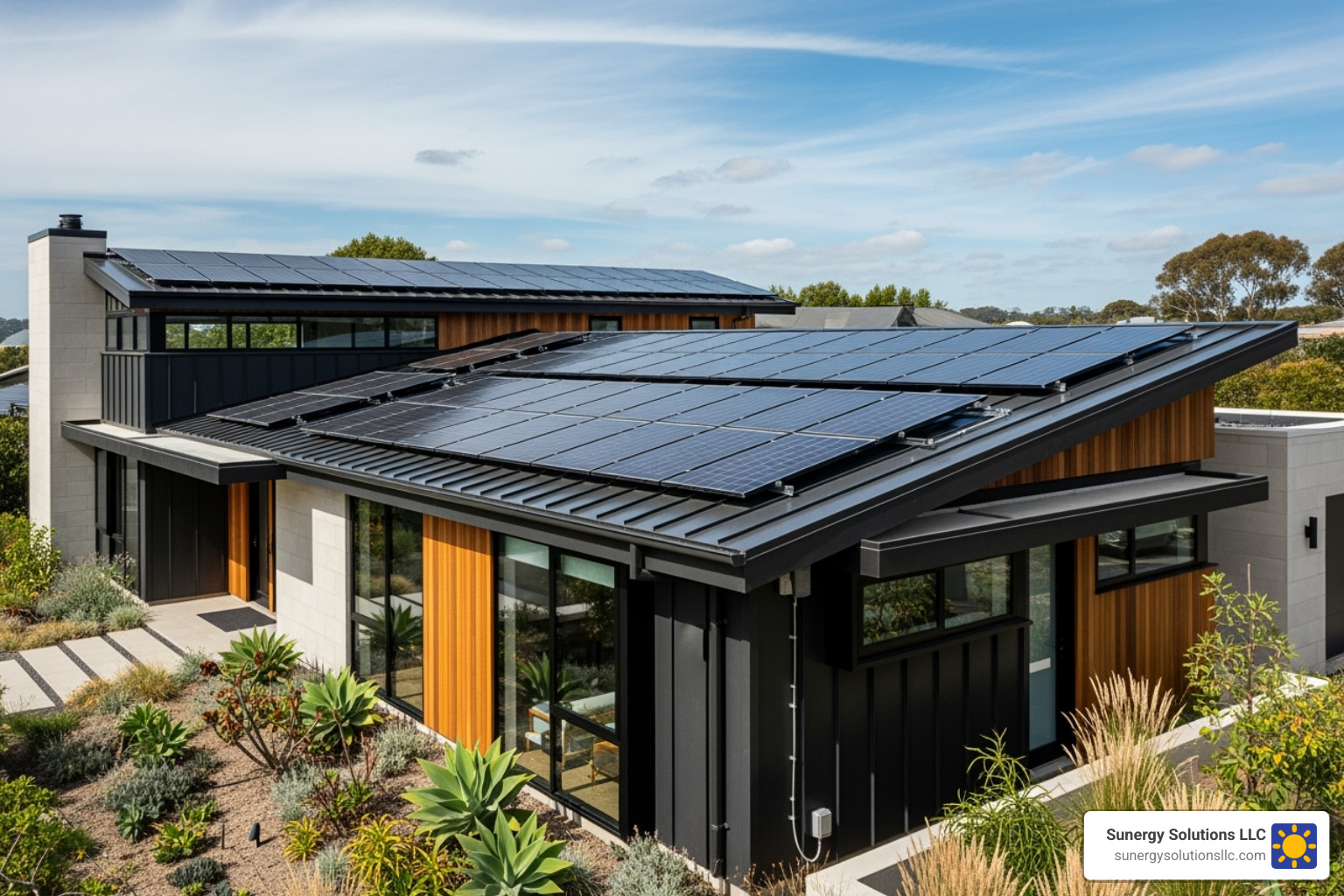
Now this is where my solar expertise really comes in handy! As someone who’s been in the renewable energy business for over a decade, I can tell you that metal roofs are absolutely ideal for solar panel installation.
The durability factor alone is fantastic – metal roofs easily support the weight of solar panels and mounting systems without any structural concerns. But here’s the real game-changer: standing seam metal roofs allow for penetration-free solar panel attachment.
What does this mean for you? We can use specialized clamps that attach directly to those raised seams, completely eliminating the need to drill holes through your roof surface. Your roof’s integrity stays perfect, your warranty remains intact, and you get clean, renewable energy.
There’s another brilliant advantage – the longevity match is perfect. Your metal roof will last 40-70 years, while solar panels typically perform for 25-30 years. You’ll never face the expensive headache of removing solar panels to replace your roof before the panels reach their end of life.
If you’re considering both upgrades, you’re making two of the smartest investments possible for your home’s future. Check out our residential solar incentives to see how much you could save on both projects.
When you step back and look at the complete picture, choosing a metal roof isn’t just about paying residential metal roofing prices – it’s about making one of the smartest long-term investments you can make in your home. Yes, that initial price tag might make you pause. But when you consider that you’re buying protection that lasts 40-70 years, energy savings that add up month after month, and beauty that improves your home’s value, the numbers start to make a lot more sense.
Think about it this way: most homeowners will replace an asphalt roof 2-4 times over the decades they own their home. With a metal roof, you’re likely looking at a once-in-a-lifetime purchase. That’s fewer disruptions to your life, fewer contractor visits, and ultimately, fewer headaches down the road.
The performance benefits speak for themselves. Your metal roof will stand strong against hail storms that would damage other roofing materials. It’ll reflect summer heat to keep your home cooler and your energy bills lower. And when severe weather hits – something we see plenty of here in the Northeast – you’ll have peace of mind knowing your roof can handle whatever nature throws at it.
At Sunergy Solutions LLC, we’ve helped hundreds of homeowners across Connecticut, Massachusetts, Maine, New Hampshire, Rhode Island, Vermont, and Virginia make this important decision. Our decade of experience in both professional roofing and solar energy means we understand how all the pieces fit together to create a truly energy-efficient home from the roof down.
We’re committed to delivering safe, reliable, and affordable solutions that make sense for your specific situation and budget. Whether you’re dealing with an aging roof that needs replacement or you’re building new and want to do it right the first time, we’re here to guide you through every step of the process.
Ready to see what a metal roof could mean for your home? Contact us for a comprehensive quote on our roofing services. We’ll walk through your options, explain the costs clearly, and help you understand exactly what you’re getting for your investment. After all, your home deserves protection that’s built to last – and so do you.
Appointments Available, 7 Days a Week


