
5.0 Rating
Request A Free Estimate
Commercial solar panel installers are helping businesses across the United States achieve remarkable energy savings and financial returns. Here’s what top commercial installers deliver:
Key Services from Leading Commercial Solar Panel Installers:
Typical Results:
The numbers speak for themselves. Nearly 19 gigawatts of commercial solar projects have been installed across the U.S. as of 2022, with more than half coming online since 2020. This surge reflects how businesses are finding that solar isn’t just an environmental choice—it’s a smart financial strategy.
The majority of commercial solar projects pay for themselves between 4 and 7 years, according to industry data. After that payback period, businesses essentially receive free electricity for the remaining 20+ years of their system’s life.
As Robert Raffa, CEO and Founder of Sunergy Solutions LLC, I’ve spent nearly a decade helping businesses transition to clean energy through strategic solar installations. My background in investment banking allows me to analyze each commercial solar panel installers project with the financial rigor that business owners demand.
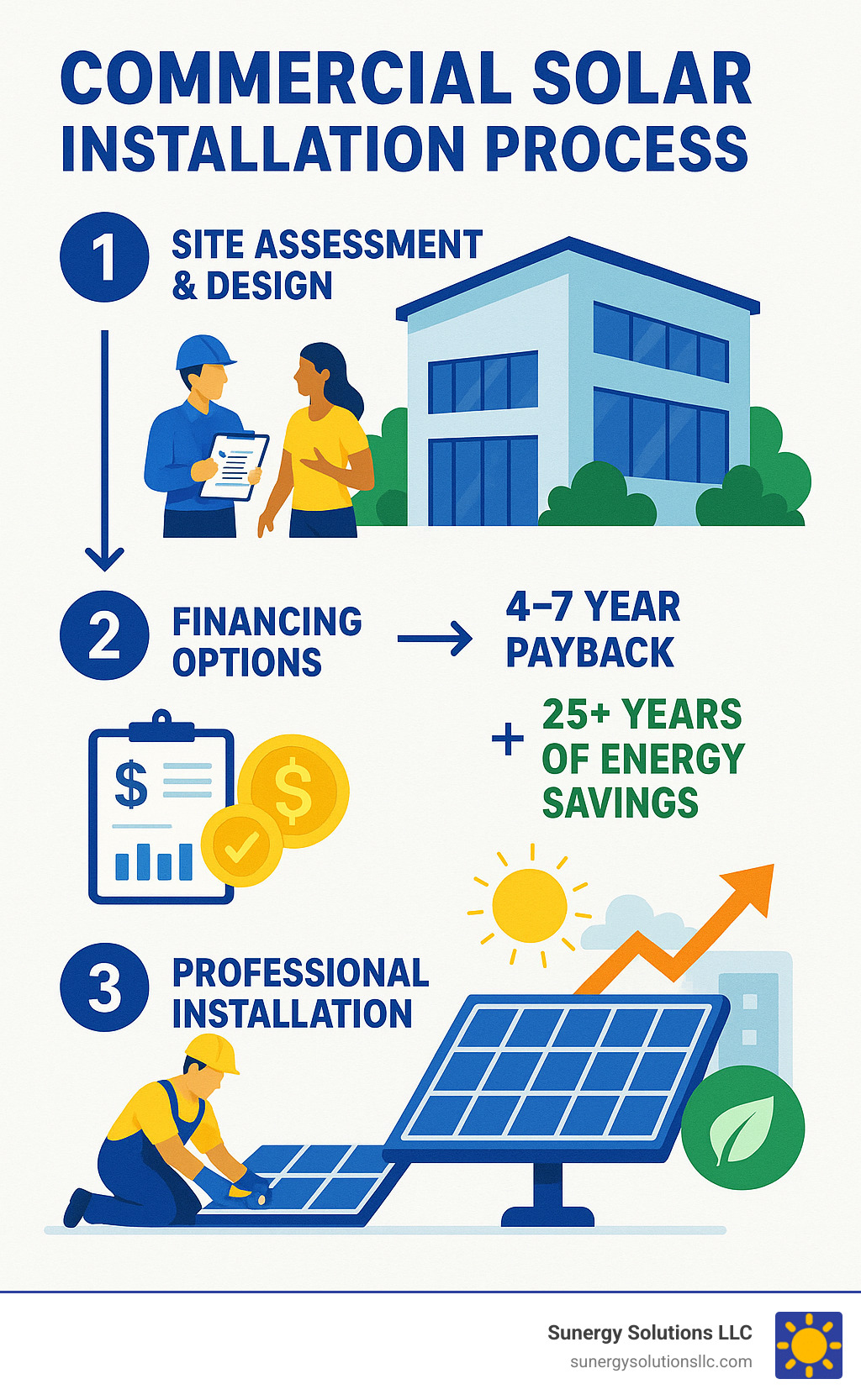
Commercial solar panel installers basics:
The business case for commercial solar has never been stronger. We’re seeing unprecedented demand from companies across all sectors who recognize that solar installations deliver both immediate cost savings and long-term financial benefits.
Energy Savings That Impact Your Bottom Line
Commercial solar systems can reduce electricity costs by 50-100%, depending on system size and local utility rates. For businesses spending thousands monthly on electricity, these savings add up quickly. A typical 220 kW system produces approximately 286,000 kWh annually—enough to power most medium-sized commercial facilities.
Tax Credits and Depreciation Benefits
The federal Investment Tax Credit (ITC) currently covers 30% of your total system cost. But here’s where it gets even better: federal tax rules allow businesses to depreciate 100% of the system cost in the first year against taxable income. This accelerated depreciation can dramatically improve your project’s cash flow and return on investment.
Net Metering Advantages
Most commercial solar installations are grid-tied systems that feed excess electricity back to the utility grid. Through net metering programs, businesses receive credits for this excess production, which can offset electricity usage during peak demand periods or cloudy days.
Carbon Footprint Reduction
Beyond financial benefits, commercial solar helps businesses meet sustainability goals and improve their public image. A 220 kW system prevents approximately 200 tons of CO2 emissions annually—equivalent to taking 43 cars off the road.
| Commercial vs Residential Solar Systems |
|---|
| Commercial Systems: |
| – Average size: 220 kW |
| – Panel wattage: ~485W |
| – Payback period: 4-7 years |
| – Three-phase inverters |
| – Specialized racking for high winds |
| Residential Systems: |
| – Average size: 6-10 kW |
| – Panel wattage: ~350W |
| – Payback period: 7-10 years |
| – Single-phase inverters |
| – Standard residential mounting |
For detailed analysis on photovoltaic investment returns, check out this Scientific research on PV IRR. You can also learn more about our comprehensive approach at More info about Commercial Solar Power.
We’ve had the privilege of working with businesses across diverse industries, each with unique energy needs and challenges. Here are five real-world success stories that demonstrate how commercial solar panel installers create value for their clients.

Project Overview: 220 kW flat-roof installation across multiple store locations
One of our most successful partnerships involved a regional retail chain with high daytime energy consumption. Their stores operated extensive lighting, HVAC, and refrigeration systems during peak solar production hours—making them ideal candidates for commercial solar.
The Challenge: Rising electricity costs were eating into profit margins across 15 store locations. The company needed a solution that would provide predictable energy costs while supporting their sustainability initiatives.
Our Solution: We designed and installed 220 kW systems on each store’s flat roof using ballasted mounting systems. This approach required no roof penetrations while providing optimal panel positioning for maximum energy production.
Results:
The retail chain now enjoys predictable energy costs for the next 25+ years while demonstrating environmental leadership to their customers. Learn more about our commercial panel solutions at More info about Commercial Solar Panels.
Project Overview: 500 kW ground-mounted system with three-phase inverters
A manufacturing facility in New Hampshire faced two major challenges: high peak demand charges and limited roof space due to heavy equipment. Their solution required thinking beyond traditional rooftop installations.
The Challenge: Peak demand charges were adding $8,000 monthly to their electricity bills. The facility’s energy consumption spiked during daytime production hours, creating perfect alignment with solar generation.
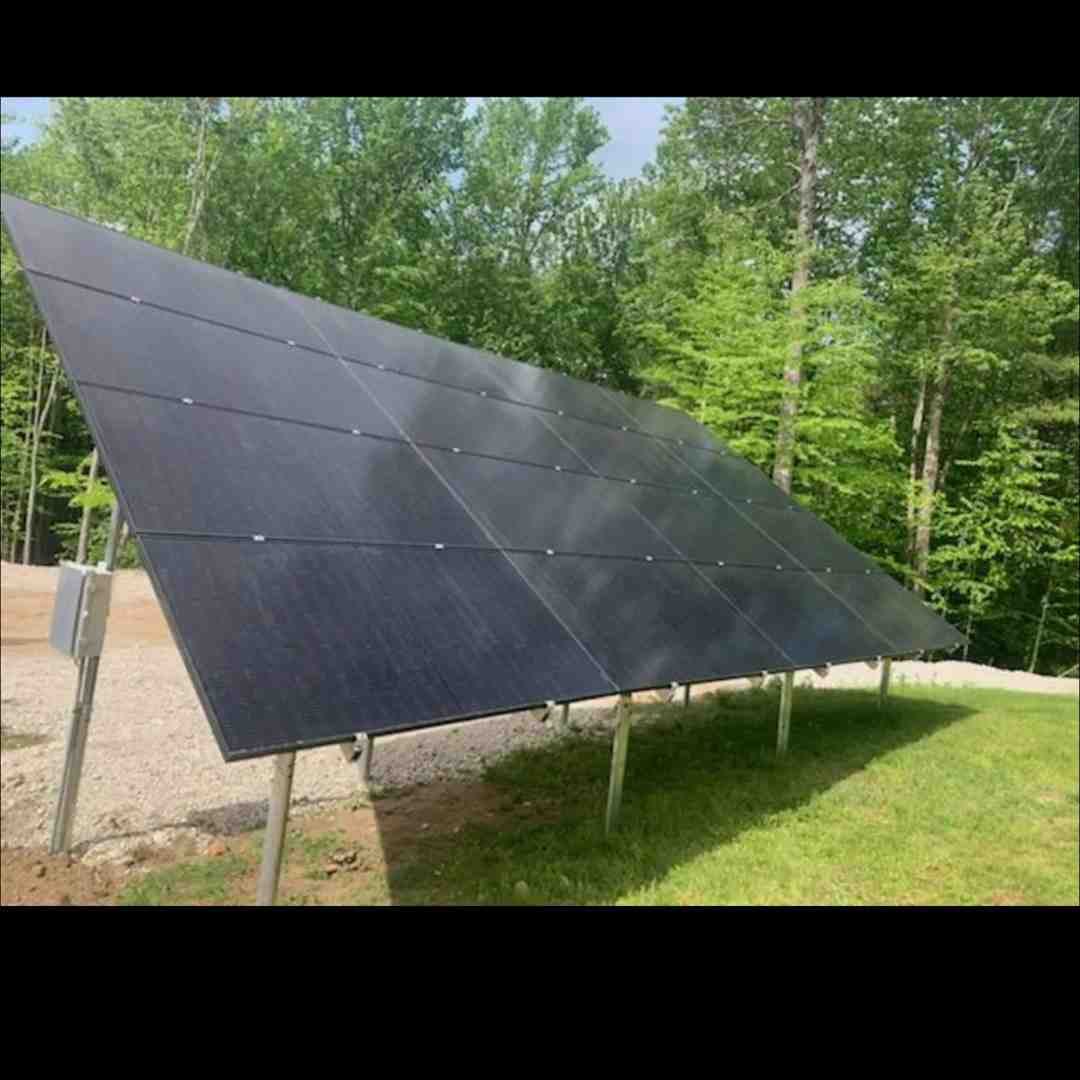
Our Solution: We designed a 500 kW ground-mounted system on unused land adjacent to the facility. Three-phase inverters efficiently converted DC power to match the facility’s high-voltage electrical infrastructure.
Key Features:
Results:
The manufacturing plant now operates with greater energy security while significantly reducing operating costs. The ground-mounted system also provides flexibility for future expansion.
Project Overview: 750 kW solar carport installation providing dual benefits
A university campus in Massachusetts wanted to achieve net-zero energy consumption while addressing parking challenges. Solar carports provided the perfect solution, delivering both vehicle protection and clean energy generation.
The Challenge: Limited roof space across campus buildings made traditional installations insufficient for their net-zero goals. The university also needed to provide covered parking for students and faculty.
Our Solution: We designed an innovative solar carport system covering 300 parking spaces while generating 750 kW of clean energy. The liftd design provided vehicle protection while maximizing solar exposure.

Educational Benefits:
Results:
The university now serves as a model for other educational institutions seeking to combine sustainability with practical campus improvements.
Project Overview: 400 kW high-efficiency system with ballasted racking
A cold-storage facility in Vermont needed to offset massive refrigeration costs while working within strict roof load limitations. High-efficiency panels and careful engineering made this project possible.
The Challenge: Refrigeration systems created enormous electricity bills, especially during summer months. The existing roof could only support limited additional weight, requiring specialized mounting solutions.
Our Solution: We installed 400 kW of high-efficiency 485W modules using ballasted racking systems. This approach distributed weight evenly while maximizing energy production per square foot.
Technical Features:
Results:
The cold-storage facility now operates with predictable energy costs year-round, with the solar system performing exceptionally well even during Vermont’s harsh winters.
Project Overview: 300 kW solar + 500 kWh battery storage microgrid system
A community hospital in Maine required not just energy savings, but also backup power capability for critical operations. This project combined solar generation with battery storage for maximum resilience.
The Challenge: Hospital operations demand 24/7 reliability, with critical systems requiring uninterrupted power. Rising electricity costs were straining the hospital’s budget while energy security remained paramount.
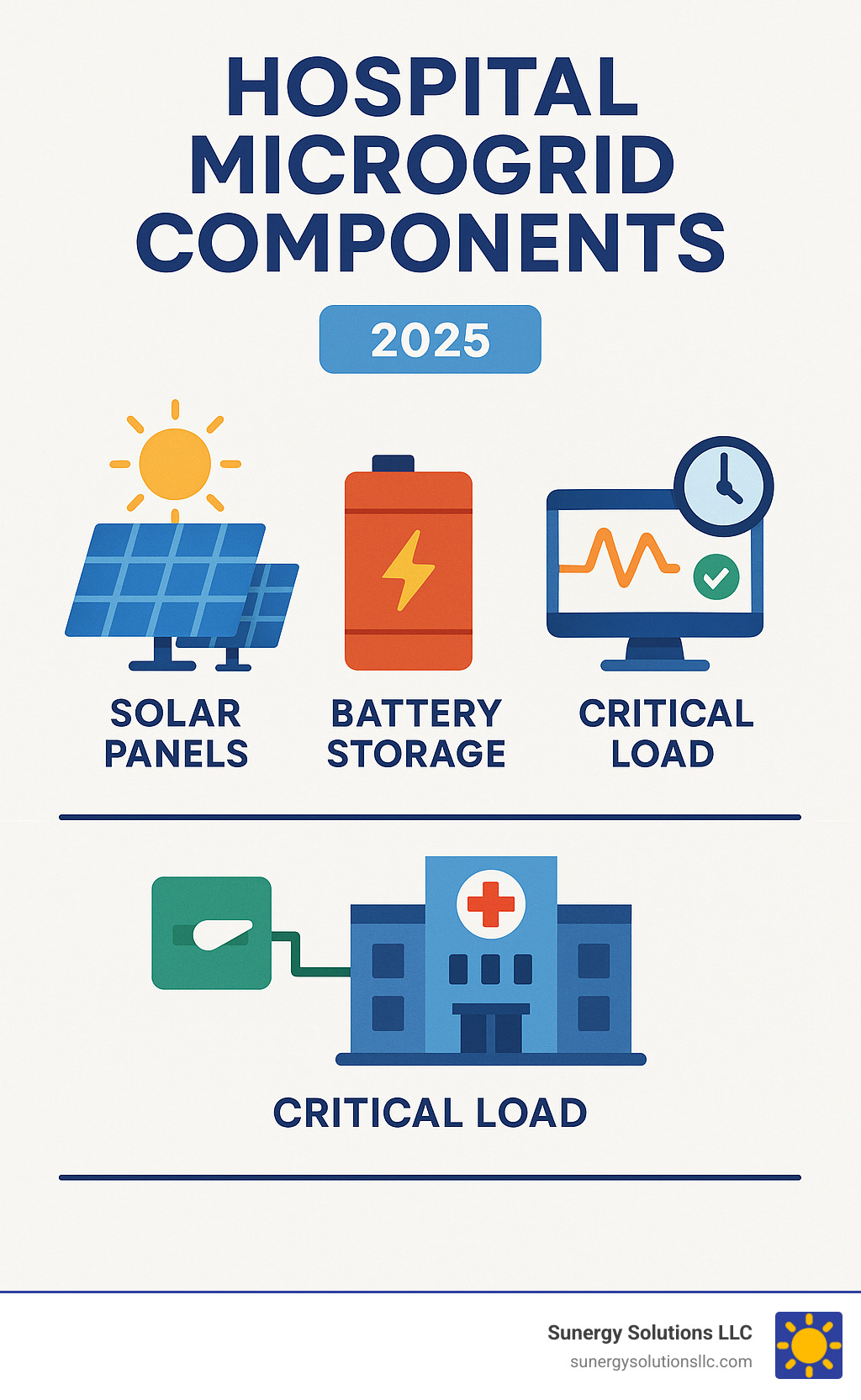
Our Solution: We designed a comprehensive microgrid system combining 300 kW of solar generation with 500 kWh of battery storage. This system provides both daily energy savings and emergency backup power for critical loads.
System Components:
Results:
The hospital now operates with complete energy independence during outages while enjoying significant daily savings. Learn more about our integrated approach at More info about Commercial Solar Systems.
Selecting the right installer can make or break your commercial solar project. We’ve seen too many businesses struggle with inexperienced installers who overpromise and underdeliver. Here’s your comprehensive checklist for choosing commercial solar panel installers who will deliver results.
Essential Qualifications to Verify:
✓ NABCEP Certification – Look for North American Board of Certified Energy Practitioners credentials. This certification ensures your installer has proper training and follows industry best practices.
✓ Turnkey EPC Capabilities – Your installer should handle Engineering, Procurement, and Construction under one roof. This eliminates coordination issues and ensures accountability.
✓ Local Licensing and Insurance – Verify proper electrical contractor licenses and comprehensive insurance coverage. We maintain licenses across Maine, Massachusetts, New Hampshire, Rhode Island, Vermont, Montana, and Virginia.
✓ Commercial Experience – Residential installers often lack commercial expertise. Ask for references from similar-sized projects in your industry.
Financial and Operational Considerations:
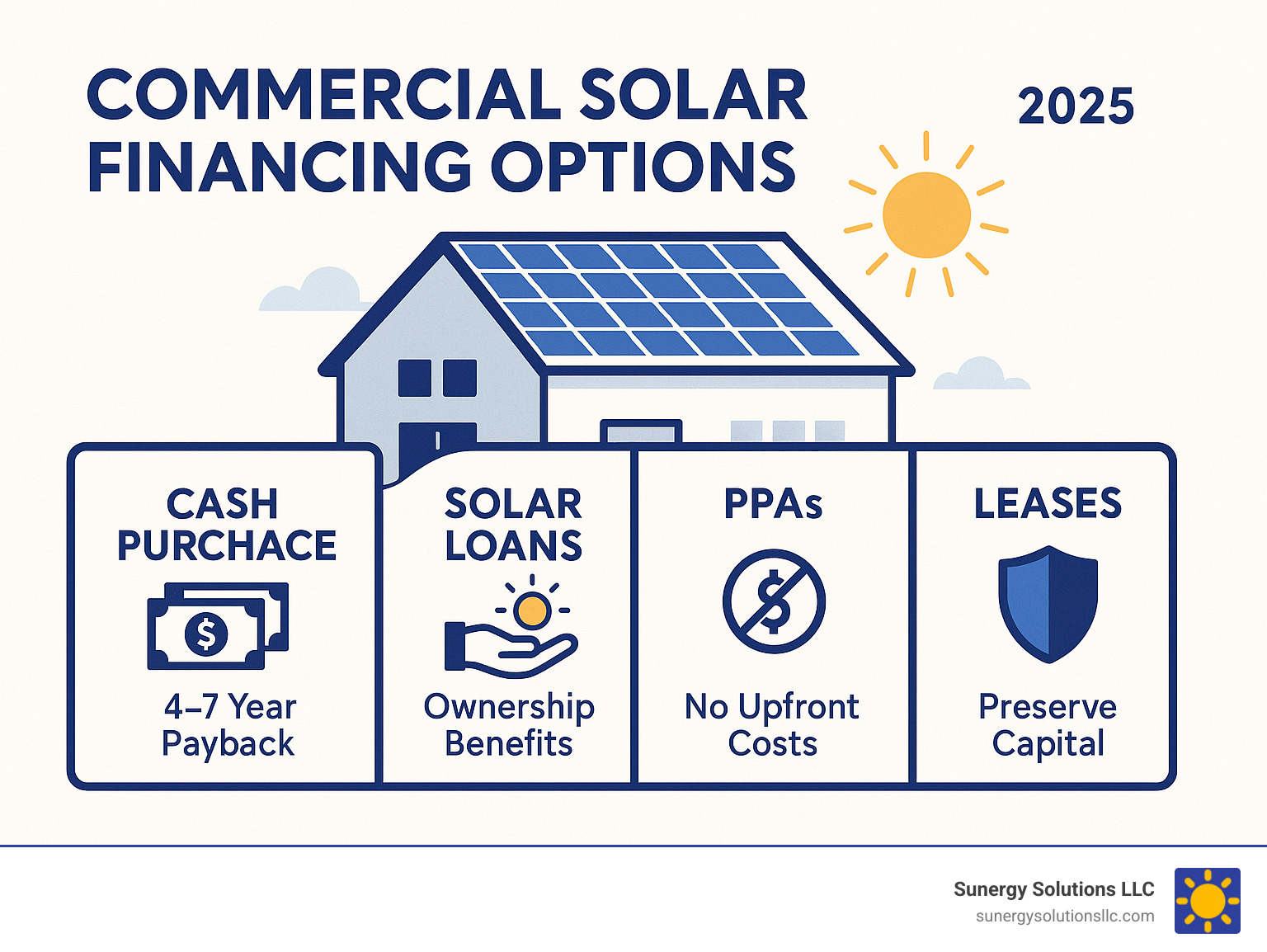
✓ Multiple Financing Options – Quality installers offer cash purchase, loans, leases, and Power Purchase Agreements (PPAs). Each option has different benefits depending on your situation.
✓ Comprehensive O&M Plans – Operations and maintenance support ensures your system performs optimally for 25+ years. Look for proactive monitoring and quick response times.
✓ Transparent Proposal Comparison – Your installer should provide detailed financial analysis including all costs, incentives, and projected savings. Avoid vague estimates or high-pressure sales tactics.
Technical Expertise Indicators:
✓ Advanced Monitoring Systems – Real-time, panel-by-panel monitoring catches issues before they impact production. We provide 24/7 system monitoring with mobile app access.
✓ Quality Equipment Selection – Tier 1 manufacturers offer the best reliability and warranty coverage. We use only top-tier panels, inverters, and mounting systems.
✓ Site-Specific Engineering – Cookie-cutter approaches don’t work for commercial projects. Your installer should conduct thorough site analysis and custom system design.
Red Flags to Avoid:
✗ Door-to-door sales tactics
✗ Pressure to sign immediately
✗ Unrealistic savings projections
✗ Lack of local references
✗ Subcontracted installation work
✗ Vague warranty terms
Use our Solar Cost Calculator to get preliminary estimates, then contact us for detailed analysis. Learn more about our comprehensive approach at More info about Commercial Solar Company.
System sizing depends on four primary factors that we analyze during our comprehensive site assessment:
Roof Area and Structural Capacity – We evaluate available roof space, structural load limits, and optimal panel placement. Flat roofs typically accommodate more panels but may require ballasted systems to avoid roof penetrations.
Annual kWh Usage – Your historical electricity consumption determines target system size. We analyze 12-24 months of utility bills to understand usage patterns and seasonal variations.
Shading Analysis – Even partial shading can significantly impact system performance. We use advanced modeling software to identify shading issues and optimize panel placement.
Load Profile Matching – The best commercial solar projects align energy production with consumption patterns. Businesses with high daytime usage see the greatest benefits from solar installations.
Commercial solar projects typically achieve payback in 4-7 years, depending on several key factors:
System Size and Efficiency – Larger systems benefit from economies of scale, while high-efficiency panels maximize production per square foot. Our 485W commercial panels deliver superior performance compared to standard residential panels.
Available Incentives – The 30% federal Investment Tax Credit significantly improves payback periods. Combined with accelerated depreciation, businesses can recover costs much faster than the headline payback period suggests.
Local Electricity Rates – Higher utility rates mean greater savings from solar. Areas with time-of-use pricing or demand charges often see even better returns.
Financing Structure – Cash purchases typically offer the fastest payback, while PPAs and leases provide immediate savings with no upfront costs.
Federal Incentives:
Financing Options:
State and Local Programs:
We handle all incentive applications and paperwork, ensuring you maximize available benefits. Our financing team works with multiple lenders to secure the best terms for your project.
These success stories demonstrate how commercial solar panel installers create measurable value for businesses across diverse industries. From retail chains slashing operating costs to hospitals achieving energy resilience, commercial solar delivers both financial returns and operational benefits.
At Sunergy Solutions LLC, we’ve helped businesses across Maine, Massachusetts, New Hampshire, Rhode Island, Vermont, Montana, and Virginia achieve similar results. Our turnkey approach combines top-tier equipment, comprehensive warranties, and exceptional customer service to ensure your solar investment delivers maximum value.
Whether you’re looking to reduce operating costs, achieve sustainability goals, or improve energy security, commercial solar offers a proven path to success. The combination of federal tax credits, accelerated depreciation, and declining equipment costs makes this an ideal time to invest in solar energy.
Ready to write your own solar success story? Our team of certified professionals will conduct a comprehensive site assessment, design a custom system for your needs, and handle every aspect of your project from permits to activation.
Contact us today to find how commercial solar can transform your business operations and bottom line. Learn more about making the smart business decision at More info about Commercial Solar Power – A Smart Business Decision.
The future of business energy is solar—and that future starts with choosing the right commercial solar panel installers for your project.
Appointments Available, 7 Days a Week


