
5.0 Rating
Request A Free Estimate
Conservatory box gutter repair is one of the most critical home maintenance tasks that homeowners often overlook until serious damage occurs. When box gutters leak, you’ll experience one of two scenarios: a deluge of water inside your property during heavy rain or slight dampness that progresses to constant drips over time.
Common conservatory box gutter repair needs:
Box gutters are rectangular gutters built into your conservatory’s roofline, designed to collect water from sloped roofs that drain toward your house. Unlike traditional gutters that hang from the roof edge, these gutters are integrated into decorative trims and architectural features, making repairs complex and costly when problems arise.
The stakes are high with conservatory box gutters. A blocked gutter can cause water to flood your house interior, while water running behind the gutter can damage trim, cause paint to peel, and create water spots on your walls and ceilings. As one homeowner found, even a sweet wrapper and old coke can blocking a gutter sump led to significant water damage.
I’m Robert Raffa, CEO of Sunergy Solutions LLC. While my primary expertise is in solar, I’ve worked with homeowners on property improvements like conservatory box gutter repair as part of our roofing services. My financial analysis background helps homeowners understand the true cost of delaying critical repairs versus investing in proper solutions.

Simple conservatory box gutter repair word guide:
Think of your conservatory box gutters like your house gutters, but when they fail, water can go straight into your home. The good news is your gutters usually give you plenty of warning before they fail completely.
I’ve seen too many homeowners find conservatory box gutter repair issues only after water damage has already occurred inside their homes. The key is knowing what to look for before you’re dealing with soggy ceilings and peeling paint.
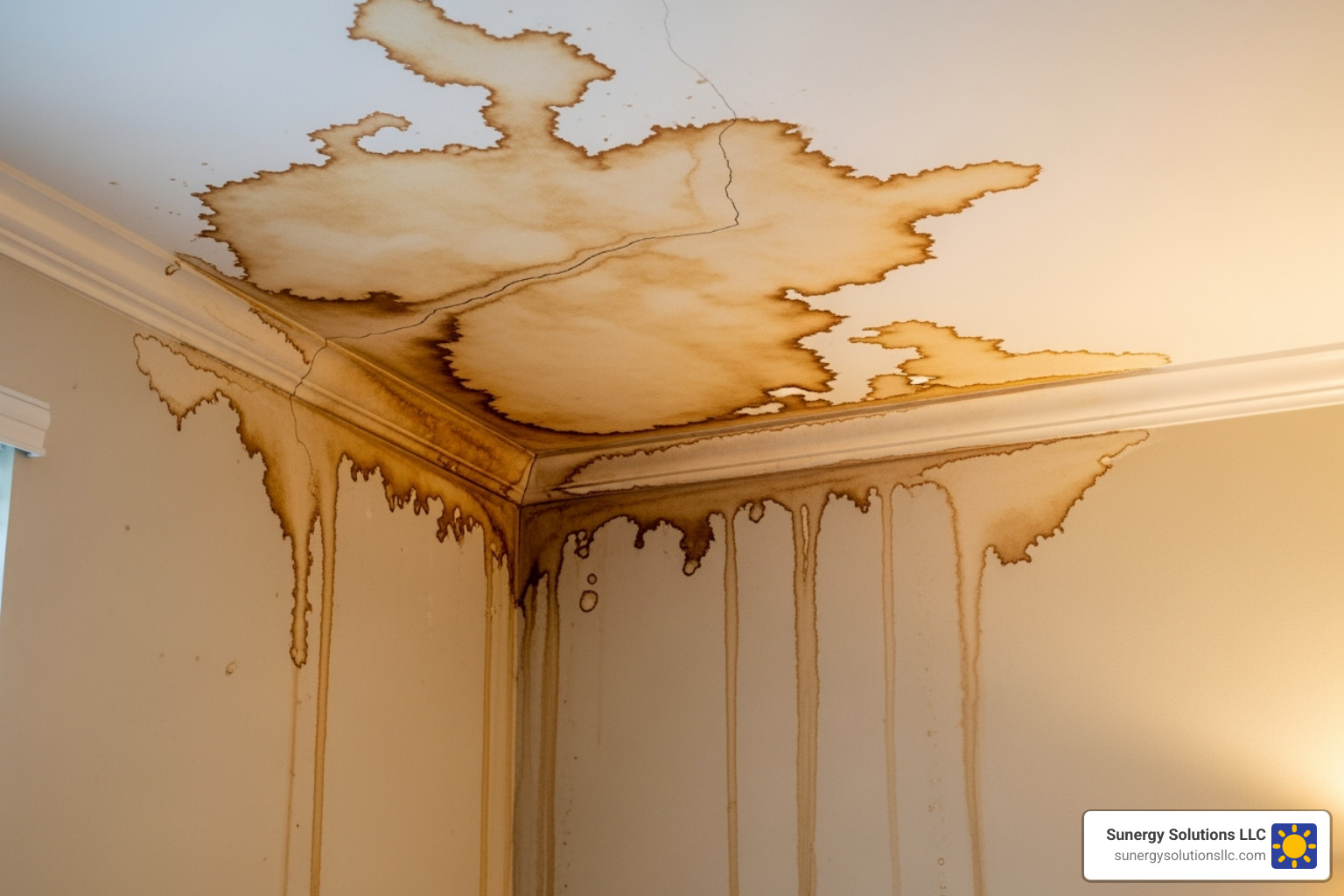
Start with a walk around your conservatory. Look up at those box gutters and check for visible sagging or sections that don’t look quite right. Conservatory gutter brackets are often made from plastic that gets brittle over time. When they fail, your gutters start to droop like a sad smile.
During a heavy rainstorm, check that water flows smoothly into your downspouts and doesn’t cascade over the edges. If you see water overflowing, you likely have a blockage.
Here’s something that catches many homeowners off guard: water running behind the gutter. You might notice streaks or discoloration on your exterior wall right below the gutter line. This often happens when the gutter design is off – sometimes the front edge sits higher than the back, so overflow water spills inward toward your house instead of outward.
Metal gutters show their age through rust spots and small holes, especially where water likes to sit. These start small but grow quickly once they get going.
The interior signs are your home’s way of waving a red flag. Water spots on ceilings or walls near your conservatory mean water is already getting where it shouldn’t. Peeling paint or wallpaper often appears before you even notice the water itself.
That musty smell you can’t quite place? It could be the beginning of mold growth from persistent dampness. And if you notice soft spots in wooden trim or frames, water has been working on them for a while.
For comprehensive solutions to these issues, check out our Roof Repair Services.
Most conservatory box gutter repair problems boil down to a few common culprits. Clogged drains top the list – leaves, twigs, and even random litter can block your gutter sumps faster than you’d think. I’ve heard of cases where something as simple as a candy wrapper caused major flooding.
Poor original design creates ongoing headaches. Some gutters lack proper slope for drainage, while others direct overflow water in all the wrong directions. Bracket failure is incredibly common, especially with plastic brackets that become brittle after years of sun exposure and temperature swings.
Material corrosion affects older metal systems, particularly where water tends to pool. Sealant breakdown around joints and drain connections is practically inevitable over time – those materials just aren’t meant to last forever.
Here’s the thing about water damage – it’s sneaky and it’s expensive. What starts as slight dampness can progress to constant drips, and those drips can cause thousands of dollars in damage.
Water doesn’t stay put once it gets inside your walls. It spreads, soaks into insulation, and creates perfect conditions for mold growth. Structural damage becomes a real concern when water reaches wooden framing components.
The longer you wait, the more expensive repairs become. A simple gutter fix might cost a few hundred dollars, but water damage restoration can easily run into the thousands. Foundation problems can even develop if water consistently pools near your conservatory’s base.
Don’t gamble with water damage. If you’re seeing any of these warning signs, it’s time to Get a Professional Roof Repair before a small problem becomes a major headache.
When you’re staring at water dripping into your beautiful conservatory, the big question isn’t just “How do I fix this?” but “What’s the smartest way to fix this?” The truth is, conservatory box gutter repair options range from weekend DIY attempts to professional solutions that can last decades. Your choice depends on how extensive the damage is, your comfort level with home repairs, and whether you want a quick Band-Aid or a lasting solution.

I’ve seen many homeowners waste money on temporary fixes. While DIY solutions seem appealing for a quick stop to a leak, they often create more problems. I’ll walk you through all the options so you can make the best decision for your situation and budget.
When water is actively dripping into your home, the urge to grab some caulk from the hardware store is understandable. These quick fixes can provide immediate relief, but they come with significant limitations that every homeowner should understand.
Caulking and sealants are probably the most common DIY approach. They’re cheap, available everywhere, and seem straightforward to apply. The reality? They only work if you apply them in exactly the right areas using exactly the right type of sealant. Even then, you’re looking at a temporary stopgap at best.
The problem with caulking is that gutters expand and contract constantly with temperature changes. This movement breaks the sealant’s bond, usually within a year. Drain holes are particularly tricky to seal effectively with caulking, and we’ve seen countless cases where previous owners attempted repairs with various fillers, only for the leaks to persist because they never addressed the actual source.
Peel-and-seal tape is another hardware store favorite. It’s easy to find, simple to cut and apply, and doesn’t require special tools. But here’s the catch: peel-and-seal is only a short-term fix that can cause long-term damage. The adhesive loses its grip quickly, especially when sitting in standing water. Once moisture gets underneath the material, it stays there, creating a perfect environment for the metal pan to rust out completely.
Metal coatings might seem more substantial since they come in large buckets and can be applied with a roller or brush. These coatings can temporarily stop leaks for up to a year, but they rarely last much longer because of the expansion and contraction issues we mentioned. They’re also messy to apply and require careful surface preparation to be even marginally effective.
The hard truth about all these DIY approaches is that patching box gutters might be the most cost-effective option initially, but chances are those gutters will be leaking again in 6-12 months. They don’t address underlying structural issues or design flaws, and sometimes they actually make the problem worse by trapping moisture. For more detailed discussions on various repair approaches, you might find this forum discussion on box gutter repair helpful.
If you want a conservatory box gutter repair that will actually last, you need to think beyond quick fixes. Professional membrane lining solutions create a seamless, waterproof barrier within your existing gutter structure, addressing the root causes of leaks rather than just covering them up.
EPDM rubber membrane is one option you’ll encounter. This waterproof material is relatively flexible and can conform to the shape of most gutters. However, the glued seams in rubber roofing used for box gutters quickly degrade when constantly exposed to standing water. The membrane tends to shrink over time, pulling away from edges and termination points. Without proper drain boot assemblies, the areas around drains become major weak spots.
TPO membrane offers better durability with its fabric-reinforced construction and hot air welded seams. The welded connections create strong, watertight bonds that hold up much better than glued seams. The downside? TPO is very stiff and won’t conform to tighter box gutters, and the material has limited accessories like inside and outside corners. Like EPDM, it also lacks proper drain boot assemblies, leaving drain areas vulnerable.
PVC membrane is often our go-to recommendation for serious conservatory box gutter repair projects. PVC membrane is very tough and flexible, takes the shape of box gutters with ease, and has a large assortment of trims and accessories. The fabric reinforcement provides excellent durability, and the hot air welded seams create a truly waterproof system.
Most importantly, PVC is often the only membrane material available with specific drain boot assembly accessories. These boots ensure proper water funneling and prevent leaks around downspouts – creating a truly seamless and long-lasting solution. When properly installed with the membrane running 6-12 inches up onto the roof behind the box gutter and integrated with proper drain boots, a PVC lining system can protect your conservatory for decades.
The catch is that PVC installation requires an experienced professional with a hot air welder who understands the nuances of welding PVC membranes and accessories. This isn’t a DIY project, but the investment pays off in longevity and peace of mind. For comprehensive solutions like this, explore our Gutter Repair Services.
Sometimes the hardest part of dealing with failing gutters is deciding whether to repair what you have or start fresh with a complete replacement. This decision impacts both your immediate budget and your home’s long-term protection, so it’s worth taking time to assess your situation carefully.
When repair makes sense: If your damage is localized – maybe a few pinholes, a single leaking joint, or a blockage issue that’s caused some overflow damage – a targeted repair with professional PVC lining can be very cost-effective. You’re addressing the problem areas while preserving the overall system structure.
When replacement becomes necessary: Widespread corrosion changes the equation entirely. If multiple sections are leaking, the metal pan is extensively rusted, or the supporting structure is compromised, patching becomes a losing game. Once water and moisture get under repair materials, they stay there and quickly rust out the metal pan of the box gutter.
Design flaws require different thinking. Sometimes the problem isn’t wear and tear but a fundamental design issue. If your box gutter consistently allows water to run behind it due to incorrect pitching, or if the front edge is higher than the back causing chronic overflow problems, repairs might not solve the core issue.
The cost comparison often surprises homeowners. While full replacement has a higher upfront cost, continuously patching a failing system every 6-12 months adds up quickly. The cost of replacing old box gutters varies depending on the damage extent and complexity of your conservatory design.
In extreme cases where the box gutter system is fundamentally flawed, removing box gutters and adding traditional gutters can be an intensive process that might cost in the range of $50,000, depending on your home’s size and complexity. However, this is usually for complete roofline overhauls, not simple box gutter replacement.
At Sunergy Solutions LLC, we help homeowners throughout Connecticut, Massachusetts, Maine, New Hampshire, Rhode Island, Vermont, and Virginia steer these decisions by focusing on solutions that offer the best value over time. For a clearer understanding of potential costs, check out our guide on How Much Does Gutter Installation Cost?.
Think of your conservatory box gutters like your car – a little regular maintenance goes a long way toward preventing expensive breakdowns. The best conservatory box gutter repair is the one you never have to do because you caught problems early and kept everything running smoothly.

Understanding what your gutters are made of helps you know what to expect and how to care for them properly. Each material has its own personality, so to speak, with unique strengths and quirks.
uPVC gutters are the practical choice you’ll find on most modern conservatories. They’re lightweight, won’t rust, and don’t break the bank. But here’s the catch – those plastic brackets can get brittle over time, especially after years of hot summers and cold winters. When they fail, they often snap without warning. Repairs usually mean sealing cracks with specialized uPVC adhesives or swapping out broken sections entirely.
Aluminum gutters are like the reliable friend who rarely lets you down. They’re tough, lightweight, and laugh in the face of rust. When problems do arise, it’s usually at the joints where sealants have given up the ghost, or where something heavy has dented the metal. The good news? Aluminum repairs are straightforward – clean the area, apply the right sealant, and you’re back in business.
Now, copper gutters – these are the luxury sports car of the gutter world. When properly installed, copper can last 100 years, developing a beautiful patina that many homeowners actually prefer to the original shiny finish. The secret weapon with copper is its ability to be soldered, creating incredibly strong, long-lasting joints. When copper gutters do need repair, it’s usually because someone skipped the soldering step or the metal got stressed somehow.
Galvanized steel gutters are strong as an ox but have an Achilles heel – rust. Once that protective zinc coating gets scratched or worn away, rust moves in like an unwelcome houseguest. The repair process involves some elbow grease: wire brush away the rust, apply a rust-inhibiting primer, then patch or coat the area.
For homeowners with historic properties, material choice becomes even more important. Conservation Guidelines for historic homes emphasize keeping original materials whenever possible and replicating them when replacement is necessary. Swapping that neat copper box gutter for plastic might save money, but it could hurt your home’s historic character and value.
Here’s the truth nobody wants to hear: box gutters are high-maintenance. They’re susceptible to wear and tear if not properly cared for, leading to leaks, sagging, and those dreaded blockages that can flood your home. But with a solid maintenance routine, you can keep them happy for decades.
Spring cleaning isn’t just for closets – your gutters need it too. Late spring is perfect timing, after tree pollen and early debris have settled but before summer storms arrive. Clear out any accumulated leaves, seeds, and that mysterious grime that seems to appear from nowhere.
Fall maintenance is absolutely critical. Once most leaves have fallen from nearby trees, it’s time for the big clean. This isn’t optional – the gutter must be maintained very often, especially when leaves are falling, as they can clog things up just about every day if trees are near your home.
If your property is surrounded by trees (lucky you for the shade, not so lucky for gutter maintenance), you’ll need to clean more frequently. Think weekly or bi-weekly checks during peak leaf season. It sounds like a lot, but it beats dealing with water damage inside your home.
Gutter guards can be your friend here, significantly reducing debris buildup. They won’t eliminate cleaning entirely, but they can stretch the time between those ladder sessions.
When it comes to safe cleaning techniques, your safety is worth more than any gutter repair. Use a sturdy ladder on firm, level ground, and have someone spot you. Wear gloves and manually remove debris first – you’d be amazed what ends up in there. After clearing the big stuff, flush with a garden hose to ensure water flows freely toward the downspouts. You can even use a leaf blower to quickly remove debris and water for a thorough inspection.
Don’t forget to check those downspouts too. If water backs up after cleaning the box gutter, the problem might be further down the line in the downspout or even in underground drainage.
The bottom line? A little regular attention keeps your conservatory box gutters working properly and saves you from expensive emergency repairs. It’s not the most exciting weekend activity, but it’s far better than dealing with water damage inside your beautiful conservatory.
As homeowners find issues with their conservatory gutters, we hear the same concerns time and time again. These questions often come from folks who’ve noticed water where it shouldn’t be or are wondering if they can tackle repairs themselves. Let me share the most common questions we receive and give you the straight answers you need.
This frustrating problem usually points to a design flaw that wasn’t apparent when the conservatory was first installed. The most common cause is an incorrect design where the front edge of the gutter is higher than the back. When the gutter overflows due to a blockage or heavy rain, water spills over the back and runs down the wall of your house, potentially causing significant interior damage.
Think of it this way: if your gutter can’t handle the water volume, it needs somewhere to go. A properly designed system would overflow safely onto the ground in front of your conservatory. But when the back edge is lower, that water heads straight for your interior walls instead.
This isn’t just a minor inconvenience – it’s a recipe for serious water damage. We’ve seen this lead to water spots on ceilings, peeling paint, and even structural rot in walls. The water finds its way behind trim and into the building envelope, where it can cause problems for years before you even notice.
I understand the appeal of a quick sealant fix – it’s cheap, available at any hardware store, and seems straightforward. While sealants and caulking are inexpensive and easy to apply, they are typically a short-term fix that often creates more problems than it solves.
The reality is that sealants rarely work long-term on box gutters. The constant expansion and contraction of gutter materials due to temperature changes causes most sealants to crack or lose their grip within months. Even if you use the right type of sealant and apply it perfectly, you’re looking at maybe a year of protection before the problem returns.
Here’s what’s worse: some temporary fixes like peel-and-seal tape can actually trap moisture against the metal, accelerating rust and corrosion. Once water gets underneath these materials, it stays there and can quickly rust out the metal pan of your box gutter.
For a durable solution, a professional repair like a PVC membrane lining is recommended. This creates a seamless, flexible barrier that moves with your gutter system and provides decades of protection instead of months.
Cleaning frequency is absolutely critical for preventing major conservatory box gutter repair issues. It is best practice to clean your conservatory box gutters at least twice a year: once in the late spring and again in the late fall after most leaves have fallen.
But here’s the thing – if your home is surrounded by many trees, this schedule might not be enough. During peak leaf season, gutters can literally clog up almost daily when trees are close to your building. I’ve seen homeowners who need to check their gutters weekly during autumn just to stay ahead of the debris.
The spring cleaning should happen after tree pollen and early debris have settled, while the fall cleaning is crucial once most leaves have dropped. Don’t forget to check after severe weather events too – storms can dump a season’s worth of debris into your gutters overnight.
Regular cleaning isn’t just about preventing clogs. It’s your chance to spot small problems before they become expensive repairs. A few minutes on a ladder twice a year can save you thousands in water damage restoration costs.
Your conservatory should be a place of relaxation and beauty, not a source of constant worry about water damage. Throughout this guide, we’ve explored the warning signs of conservatory box gutter repair needs, from those telltale water stains on your ceiling to the more obvious sight of water cascading where it shouldn’t during a storm.
The truth is, while those quick DIY fixes might seem tempting when you’re staring at a leak, they’re often just postponing the inevitable. As we’ve seen, sealants crack, peel-and-seal tape lifts, and metal coatings rarely survive more than a year of New England weather. Meanwhile, that small problem you thought you fixed is quietly growing into something much more expensive.
Early detection really is your best friend here. Catching issues before they escalate from minor dampness to structural damage can save you thousands of dollars and countless headaches. What starts as a simple blocked drain can quickly become rotted wooden frames, damaged interior walls, and even compromised foundations.
At Sunergy Solutions LLC, we’ve seen how proper conservatory box gutter repair protects your investment. Our approach focuses on long-term solutions rather than temporary patches. Whether it’s installing a heat-welded PVC membrane lining that can last decades or helping you decide between repair and replacement, we’re committed to solutions that actually solve the problem.
We serve homeowners throughout Connecticut, Massachusetts, Maine, New Hampshire, Rhode Island, Vermont, and Virginia because we understand the unique challenges that New England weather brings to conservatory systems. From heavy snow loads to spring debris buildup, we’ve seen it all and know what works in our climate.
Don’t wait for that small drip to become a flood. Regular maintenance, professional assessment when needed, and quality repairs when problems arise will keep your conservatory the peaceful retreat it was meant to be. Your home deserves protection that lasts, and your family deserves the peace of mind that comes with knowing the job was done right.
Ready to protect your investment? Contact us for expert Gutter Replacement services and let our experienced team provide the lasting solution your conservatory needs.

Appointments Available, 7 Days a Week


