
5.0 Rating
Request A Free Estimate
A domestic solar system is a residential solar power setup that converts sunlight into electricity for your home using photovoltaic panels, an inverter, and mounting equipment. Here’s what you need to know:
Key Components:
– Solar panels – Convert sunlight to DC electricity
– Inverter – Changes DC to AC power for your home
– Mounting system – Secures panels to your roof
– Monitoring system – Tracks energy production
– Optional battery storage – Stores excess power
Typical Costs & Savings:
– Installation: $2,000-$3,000 per kW (average $2,500/kW)
– 10 kW system: $20,000-$30,000 before incentives
– 30% federal tax credit available through 2032
– Payback period: 10-15 years
If you’re tired of watching your electricity bills climb month after month, you’re not alone. Rising utility costs are pushing more homeowners to explore solar power as a way to take control of their energy expenses.
The good news? Installing a domestic solar system has never been more affordable or straightforward. With costs dropping to around $2,500 per kilowatt and generous federal tax credits available, many homeowners are finding that solar pays for itself within 10-15 years while providing decades of free electricity afterward.
I’m Robert Raffa, CEO and Founder of Sunergy Solutions LLC, and I’ve spent nearly a decade helping homeowners steer the transition to clean energy. My team has designed and installed hundreds of domestic solar systems across the Northeast, and I’ve learned that the key to a successful solar project starts with understanding the basics in plain English.
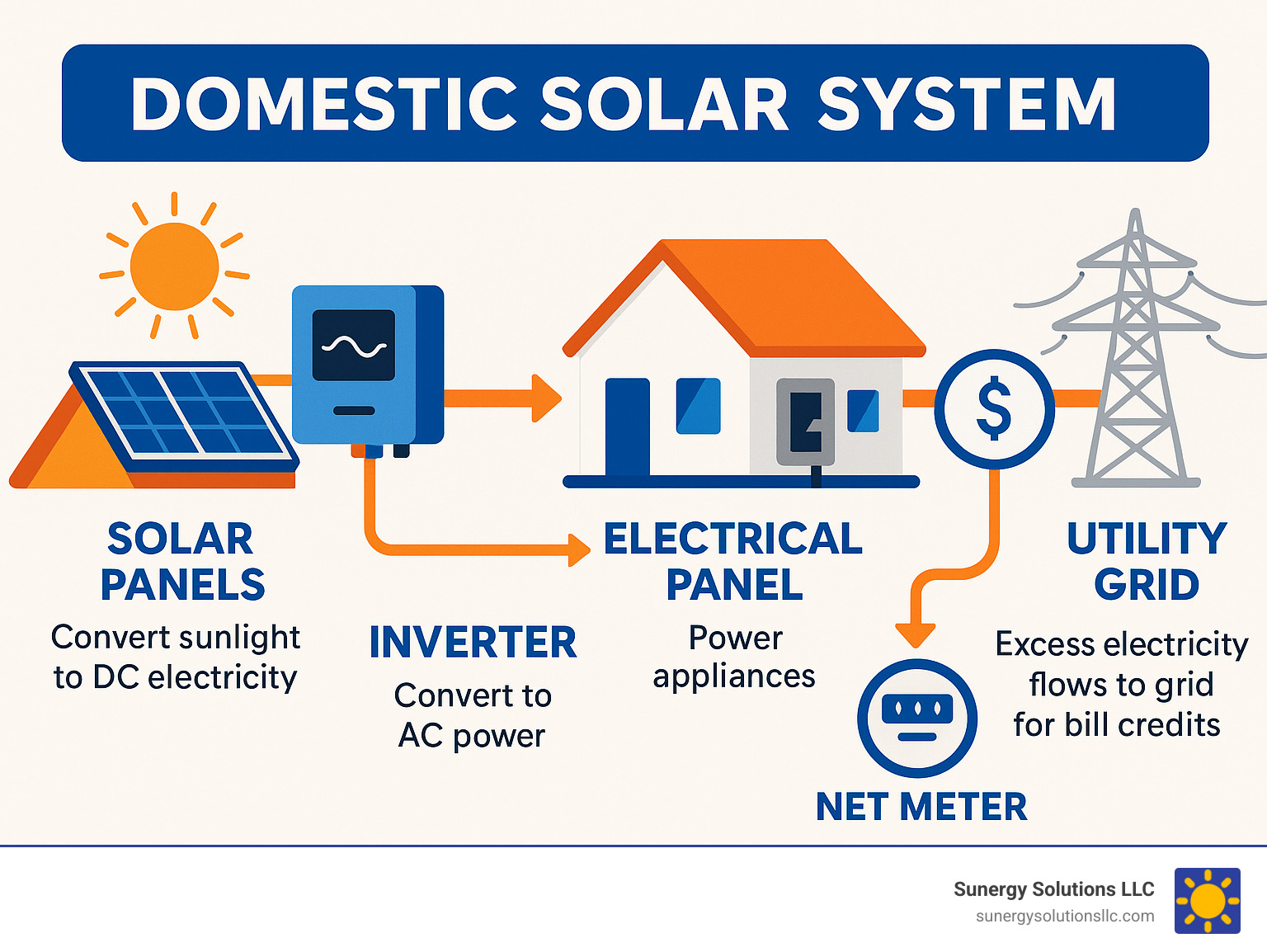
Picture this: you wake up on a sunny morning, and while you’re enjoying your coffee, your roof is already hard at work generating clean electricity for your home. That’s the magic of a domestic solar system – it’s essentially your personal power plant, quietly converting sunlight into savings.
The process is beautifully straightforward. When sunlight hits your solar panels, they create direct current (DC) electricity. Your home runs on alternating current (AC) power, so your inverter converts DC electricity into AC power your appliances can use.
What makes this system brilliant is how it handles your energy needs. During sunny afternoons when your panels produce more power than you’re using, excess energy flows back to the utility grid through net metering, earning you credits. When evening rolls around, you draw power from the grid using those banked credits.
Your solar panels are the stars of the show – these silicon workhorses are built to last 25-30 years while losing only about 0.5% of their efficiency each year. For most homes, we install around 16 panels in a 7 kW system, which typically generates about 7,700 kWh annually.
The inverter is the brain of your system, converting DC electricity from your panels into AC power your home can use. Most inverters come with 10-year warranties, though newer models often stretch to 25 years.
Your mounting system keeps everything secure and weatherproof. These engineered systems work with virtually any roof type while maintaining your roof’s integrity, built to handle everything from heavy snow to hurricane-force winds.
The monitoring system is like having a dashboard for your personal power plant. Through a smartphone app, you can watch your system generate electricity in real-time and spot any issues quickly.
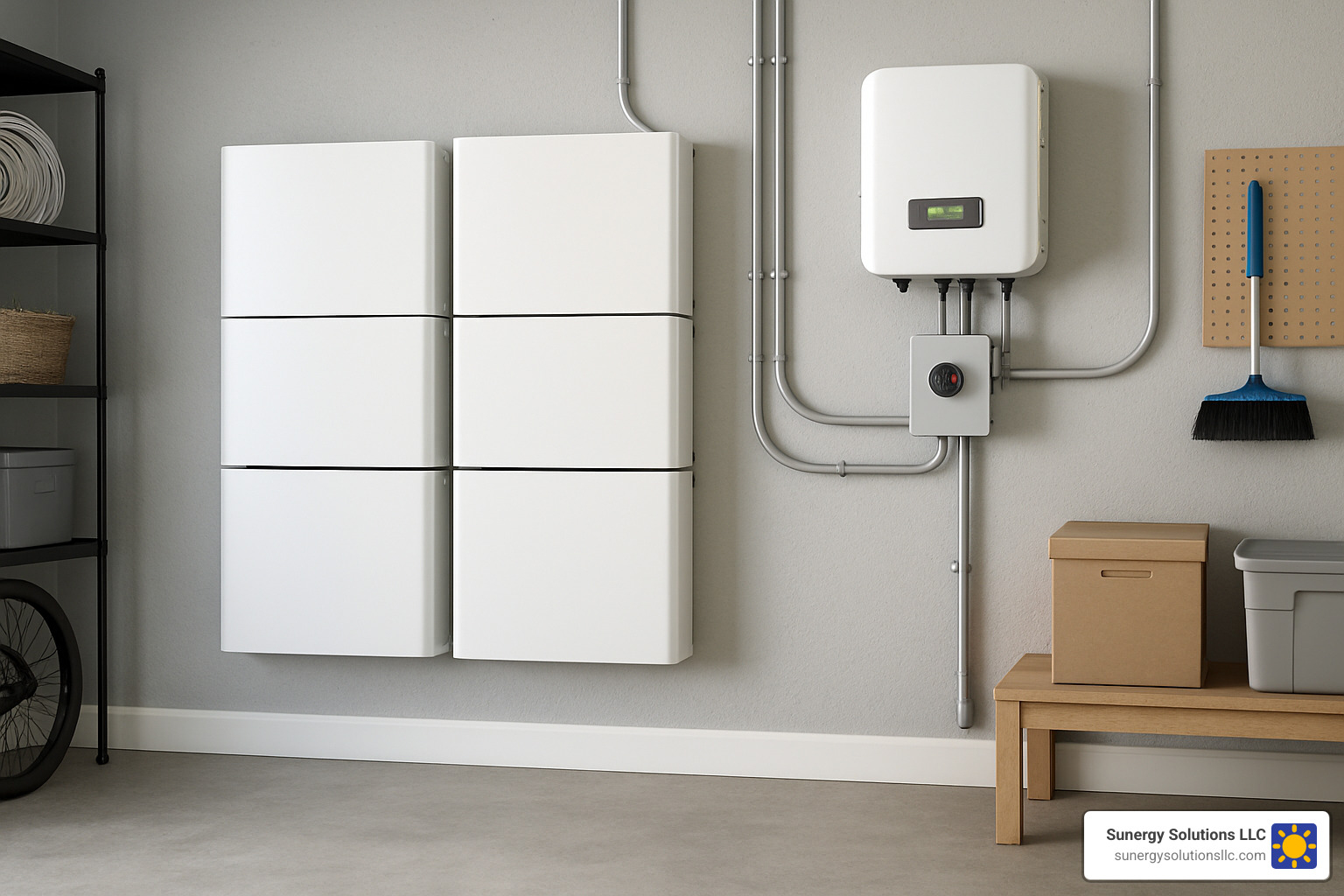
Battery storage is optional but increasingly popular. These systems store excess solar energy for use during power outages or expensive peak-rate periods. Today’s batteries can last up to 10 years and integrate seamlessly with your solar setup.
Most homes are better candidates for solar than their owners realize. During site assessments, we evaluate several key factors.
Roof condition is our starting point. Your roof should have at least 10-15 years of life left. If you’re planning a roof replacement soon, it’s usually smarter to do that first.
Available space doesn’t need to be enormous. We can work with as little as 12 feet by 10 feet of unobstructed roof area, accommodating about 1.4-1.9 kW of solar capacity.
Roof orientation is flexible. South-facing roofs are ideal, but east and west-facing roofs perform well too. We regularly install successful systems on roofs facing southeast to southwest.
Shading doesn’t have to be a deal-breaker. Even partially shaded roofs can often accommodate solar with smart system design.
Your home’s electrical system might need attention in older homes. Sometimes electrical panels need upgrades, but we factor these costs into your project estimate upfront.
HOA restrictions used to be a bigger hurdle, but most states now have solar rights provisions preventing homeowner associations from blocking reasonable solar installations.
Let’s talk about the elephant in the room – money. A domestic solar system typically costs between $2,000 and $3,000 per kilowatt installed, with most homeowners paying around $2,500 per kilowatt. A typical 10 kW system runs between $20,000 and $30,000 before incentives.
The federal solar Investment Tax Credit (ITC) gives you back 30% of your total system cost for installations completed between 2022 and 2032. That $25,000 system? You’re actually paying $17,500 after the federal credit.
Many states offer additional incentives that can slash costs even further. Some regions offer rebates up to $5,000 for solar panels, plus another $5,000 for battery storage. Others provide PST exemptions on solar equipment, saving another 7%.
More info about Residential Solar Tax Incentives
Latest research on solar incentives
Solar panels come with 25-30 year warranties and degrade at only about 0.5% per year. A typical 7 kW domestic solar system generates about 7,700 kWh annually. With electricity rates averaging $0.12-0.15 per kWh, that translates to $920-1,155 in annual savings.
Over 25 years, you’re looking at $23,000-28,875 in total savings – assuming electricity rates never increase. Most households use around 10,000 kWh per year, so a 7 kW system covers roughly 77% of typical electricity needs.
The payback period typically falls between 10-15 years, meaning you’ll enjoy 10-15 years of essentially free electricity after your system pays for itself.
Cash purchases deliver the biggest bang for your buck. You pocket the full 30% federal tax credit, avoid interest payments, and typically see payback in 10-12 years.
Solar loans let you own your system while spreading payments over 10-20 years. Many customers choose $0 down options where monthly payments are less than their current electric bill. You still qualify for all tax credits and incentives.
Solar leases work for homeowners who want immediate savings without upfront investment. While you won’t own the system or qualify for tax credits, you’ll typically save 10-20% on electricity costs from day one.
More info about Bright Ideas for Residential Solar System Financing
At the federal level, the Investment Tax Credit offers 30% back through 2032, then stepping down to 26% in 2033 and 22% in 2034.
State and local programs can include additional tax credits, cash rebates, property tax exemptions, and sales tax exemptions on solar equipment.
Utility programs like net metering agreements and solar renewable energy certificates (SRECs) can add hundreds or thousands to your annual savings.
| Payment Option | Upfront Cost | Tax Credits | Monthly Payment | Ownership | Payback Period |
|---|---|---|---|---|---|
| Cash Purchase | $17,500* | Yes (30%) | $0 | You own | 10-12 years |
| Solar Loan | $0-2,500 | Yes (30%) | $120-180 | You own | 12-15 years |
| Solar Lease | $0 | No | $80-120 | Company owns | N/A |
*After federal tax credit on $25,000 system
Getting a domestic solar system installed is much simpler than most homeowners expect. The entire process typically takes 1-3 months from contract signing to system activation. Most of that time is spent waiting for permits and utility approvals – the physical installation usually wraps up in just 1-2 days.

Your energy audit and site assessment comes first, where we analyze your electricity bills and evaluate your property. We measure roof dimensions, check for shading, evaluate your electrical panel’s capacity, and ensure your roof structure can handle the additional weight.
Custom system design follows, where we create a solar solution custom specifically for your home. You’ll see exactly where each panel will go, how much electricity your system will produce monthly, and what your new electric bills will look like.
Permitting – we handle every form and application for you, including building permits and utility interconnection applications. This typically takes 2-4 weeks to process.
Installation day is when our NABCEP-certified technicians arrive and work efficiently to get your panels mounted and connected. Most residential installations wrap up in 1-2 days.
Final inspections and commissioning are the last steps. Your local building department inspects the electrical work, and your utility company approves the interconnection. We coordinate all inspections and handle any required corrections.
When choosing an installer, look for NABCEP certification, proper state licensing, local references, and experience with your local permitting offices and utility procedures.
More info about How to Find a Reputable Solar Company
Almost every domestic solar system we install stays connected to the utility grid. Grid-tied systems cost less upfront since you don’t need expensive battery storage. When your panels produce excess power, it flows back to the grid and earns you credits through net metering.
Off-grid systems completely disconnect from the utility grid and rely entirely on battery storage. We typically only recommend these for remote properties where grid connection would cost more than the battery system.
Net metering is available in most areas – your electric meter literally runs backward when your panels produce more power than you’re using. Those credits typically roll over month to month.
Domestic solar systems are remarkably low-maintenance. Unlike your car or HVAC system, solar panels have no moving parts to wear out. They’re built to sit on your roof for 25-30 years, quietly converting sunlight into electricity with minimal fuss.
Keep an eye on your production numbers through your monitoring app. Most homeowners check monthly, looking for unusual drops in energy production. If you notice production dropping by more than 10-15% without obvious cause, it’s worth having us take a look.
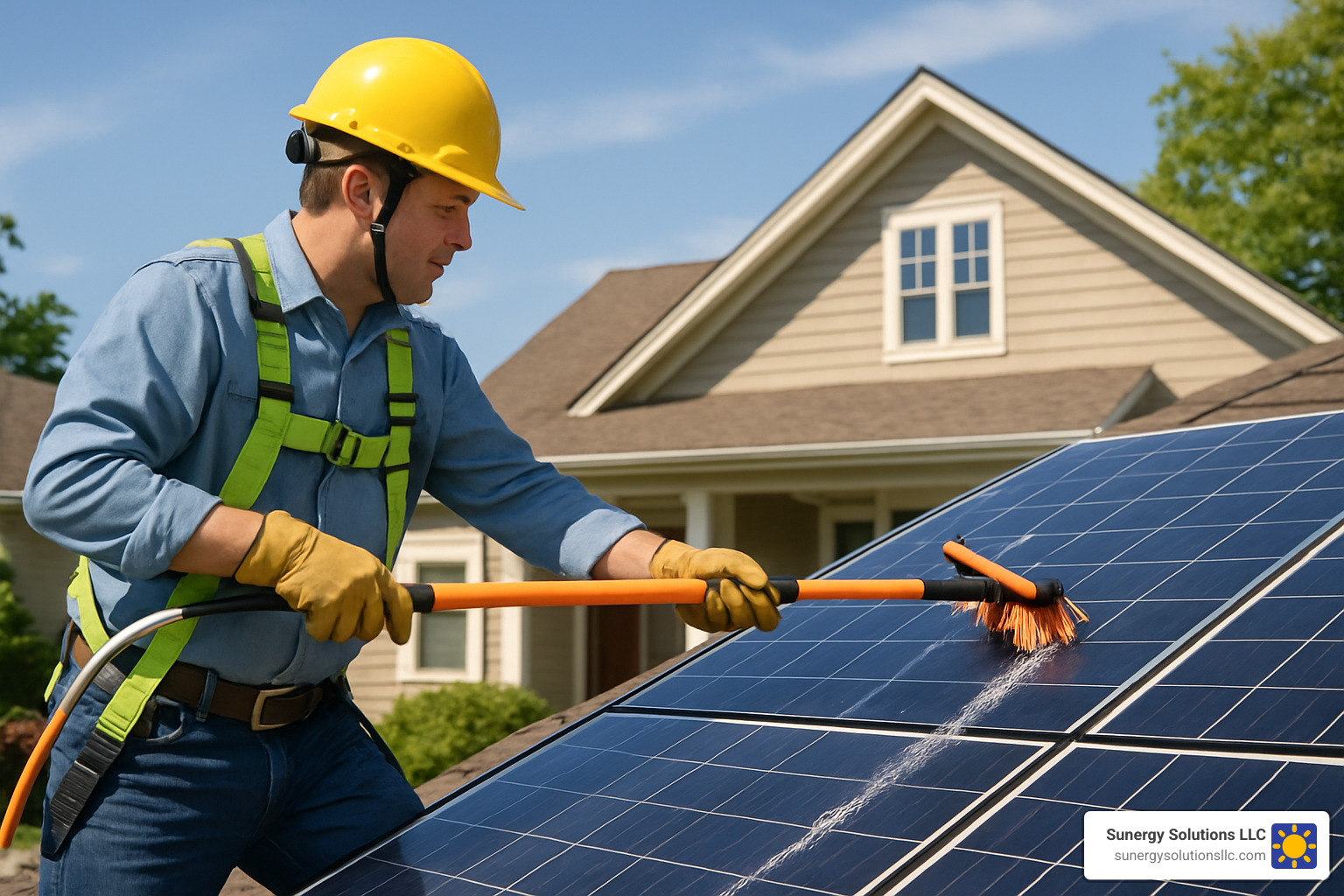
Panel cleaning is simpler than most people think. In most areas, rain naturally washes away dust and debris. If you live in a dusty region or notice buildup of leaves or bird droppings, a gentle rinse with your garden hose usually does the trick.
Watch those growing trees around your property. Even partial shading can significantly impact your system’s performance, so periodic pruning helps maintain optimal sun exposure.
Professional inspections once a year help catch small issues before they become expensive problems. We check electrical connections, examine mounting hardware, and verify optimal performance.
If your domestic solar system includes battery storage, expect replacement every 8-10 years, though newer lithium-ion batteries are much more reliable.
Firmware updates for your inverter and monitoring system help ensure optimal performance. Many systems update automatically, but we handle manual updates during service visits.
More info about Maintenance and Cleaning of Residential Solar Systems
The bottom line? Solar maintenance is refreshingly straightforward. With minimal effort on your part and our annual professional attention, your system will keep generating clean, free electricity for decades.
Let me answer the three questions I hear most often from homeowners considering solar. These are the real concerns that keep people up at night when they’re thinking about making the switch to clean energy.
This is always the first question, and I completely understand why. You want to know if solar will actually make a meaningful difference in your electricity bills.
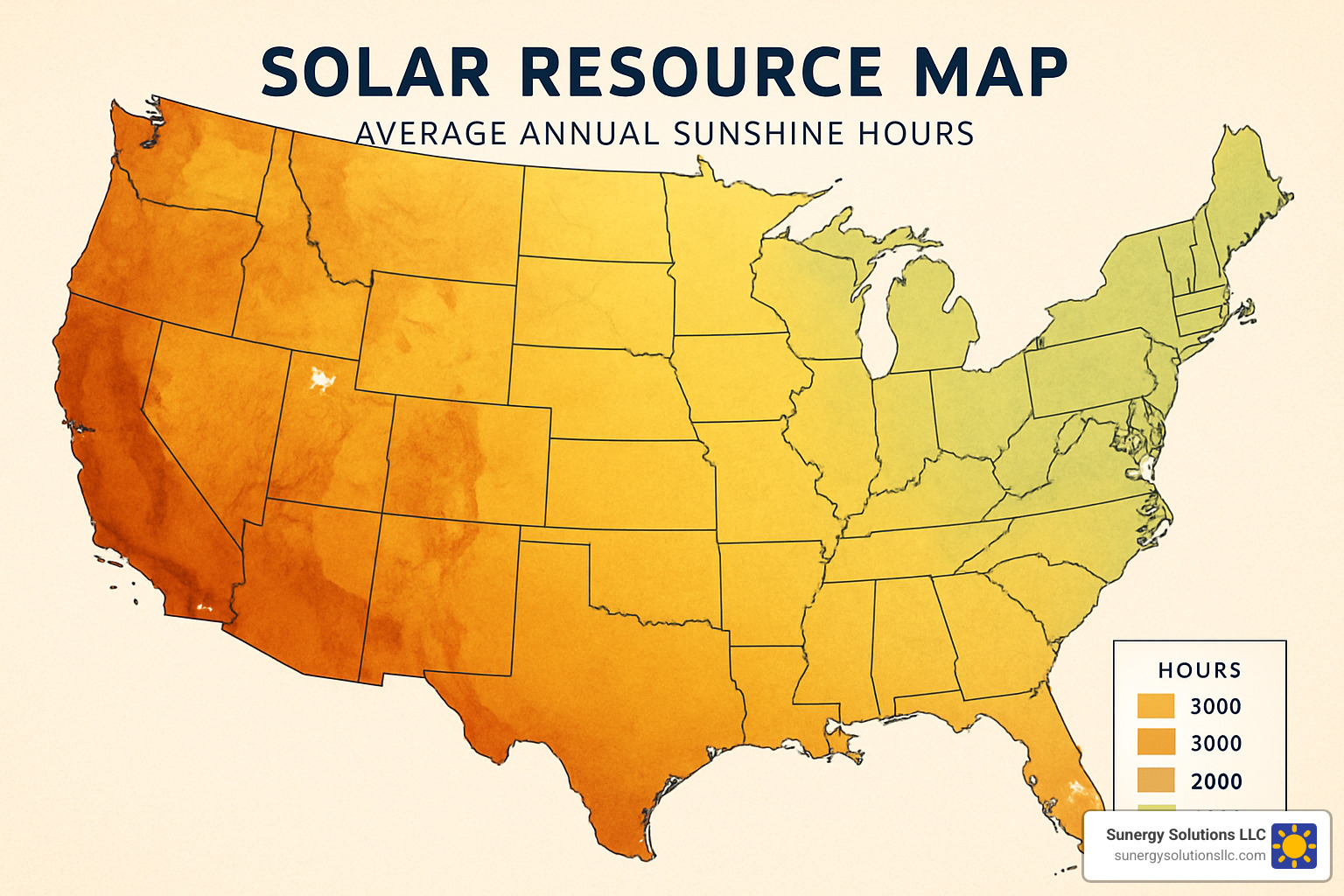
Here’s the honest answer: a typical 7 kW domestic solar system with 16 panels generates about 7,700 kWh annually in most regions we serve. Since the average household uses approximately 10,000 kWh per year, this system covers about 77% of your electricity needs.
But here’s what makes it even better – in sunnier regions, that same system might generate over 9,000 kWh annually. And remember, your domestic solar system works like a savings account through net metering. During those long summer days when your panels are cranking out electricity, you’re banking credits for winter months when production naturally drops.
Your system will have its ups and downs throughout the year – peak production during summer and lower output in winter. But that’s exactly why net metering is so valuable. Those excess summer credits carry you through the shorter winter days.
This question always catches people off guard, and I get why it’s confusing. You’d think that with solar panels on your roof, you’d have power even when the grid goes down. Unfortunately, that’s not how standard grid-tied systems work.
Your domestic solar system automatically shuts down during power outages for a very important safety reason – it protects utility workers who might be up on power lines trying to restore electricity. Without this safety feature, your panels could send electricity into lines that workers think are dead.
So yes, even on a sunny day during a blackout, you won’t have power from your standard solar system. It’s frustrating, but it’s the law in most areas.
Now, if backup power is important to you – maybe you work from home, have medical equipment, or just want peace of mind – we can design a system with battery storage. These systems automatically disconnect from the grid during outages while continuing to power essential circuits in your home with stored solar energy. It’s an additional investment, but for many families, that backup power is worth every penny.
This is where I have really good news for you. Studies consistently show that homes with solar panels sell for 3-4% more than comparable homes without solar. That means if your home is worth $300,000, solar could add $9,000-12,000 to its value.
But the value increase depends on several factors: your local real estate market, system size, and how much warranty time remains on the equipment. In areas where solar is more common and appreciated, the value boost tends to be higher.
Here’s what’s really encouraging – solar panels are increasingly viewed as desirable home features, just like granite countertops or hardwood floors. Many homebuyers get excited about the prospect of lower electricity bills and doing something good for the environment.
And here’s the cherry on top: in most areas, solar installations don’t increase your property taxes despite increasing your home’s value. Solar property tax exemptions mean you get the value boost without the tax hit.
The bottom line? Solar typically pays for itself through energy savings, and any property value increase is just bonus money in your pocket.
Making the switch to a domestic solar system isn’t just about installing panels – it’s about taking control of your family’s energy future. After nearly a decade in this industry, I’ve watched thousands of homeowners transform from passive bill-payers to active energy producers.
The numbers speak for themselves. With installation costs averaging $2,500 per kilowatt, the 30% federal tax credit extending through 2032, and systems designed to last 25-30 years, solar delivers compelling financial returns. Your domestic solar system becomes more valuable every year as electricity costs climb.
The environmental impact matters too. A typical 7 kW residential system prevents about 8 tons of CO2 emissions annually – equivalent to planting 200 trees every year.
At Sunergy Solutions LLC, we’ve guided hundreds of homeowners through this transition across Maine, Massachusetts, New Hampshire, Rhode Island, Vermont, Montana, and Virginia. We handle everything from initial site assessment to final utility interconnection. Our top-tier equipment comes with extensive warranties, and our customer service team remains available long after installation.
The solar industry will keep evolving, but the sun rises every morning, delivering free energy to your roof. The only question is whether you’ll harness that power or keep paying someone else for electricity.
Ready to see how much you could save? We offer free, no-obligation consultations that include detailed site assessments, custom system designs, and transparent pricing.
More info about Residential Solar
The sun has been powering our planet for billions of years. Isn’t it time you started using that reliable energy source to power your home?
Appointments Available, 7 Days a Week


