
5.0 Rating
Request A Free Estimate
Learning how to replace roof with solar panels is a key step for homeowners looking to invest in clean energy. The project requires careful planning, but coordinating a roof replacement with a solar installation is the smartest way to power your home for decades.
Here’s a quick overview of the process:
As the CEO and Founder of Sunergy Solutions LLC, I’ve spent nearly a decade helping homeowners understand how to replace roof with solar panels and transition to sustainable energy. My goal is to ensure your solar solution is both environmentally responsible and financially smart.
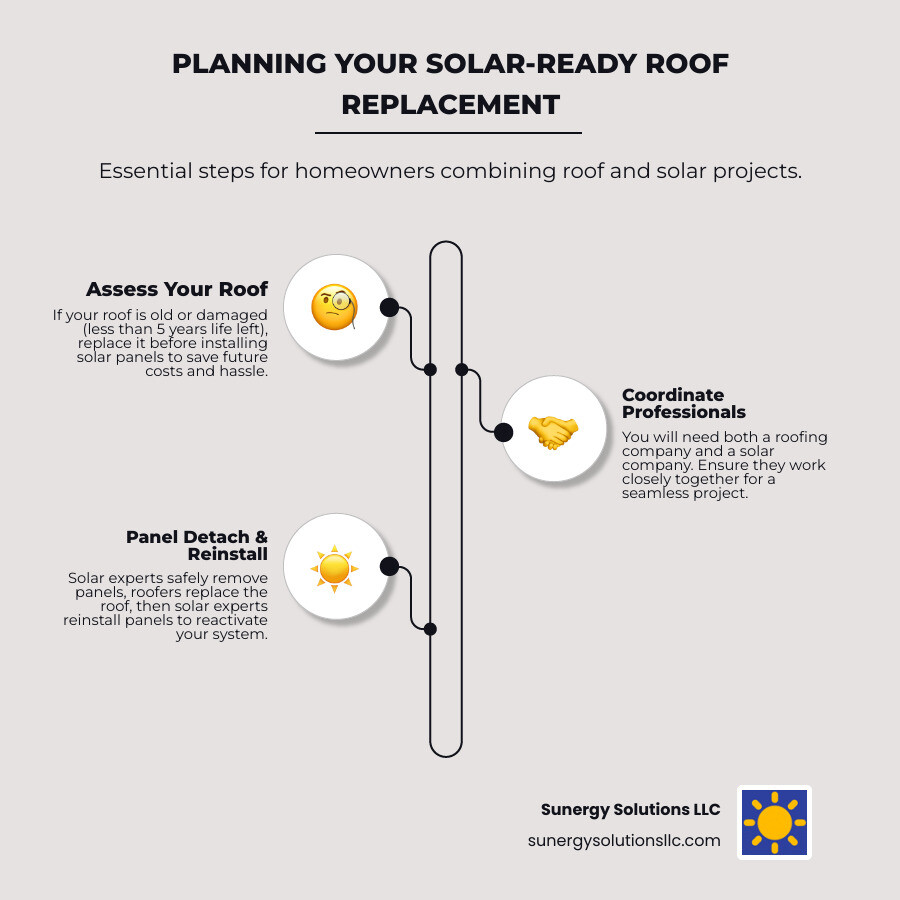
This is a pivotal decision that impacts your budget, timeline, and the long-term health of your home. The core of the issue is a potential mismatch in lifespans. Solar panels are warrantied for 25 years and can often last 30-35 years. In contrast, a typical asphalt shingle roof lasts 15-30 years. If you install new panels on an old roof, you’ll face the significant cost of removing and reinstalling them just a few years later for a roof replacement.
That’s why we recommend replacing your roof before installing solar if it has less than five years of life left. The cost to remove and reinstall solar panels ranges from $2,800 to $8,000. By combining the projects, you avoid this future expense. Our experience at Sunergy Solutions LLC shows that bundling a roof replacement and solar installation can save an average of $4,000. For more details on making the switch to clean energy, explore our resources on More info about home solar energy.
Knowing the signs of a failing roof is key to making a smart, timely decision.
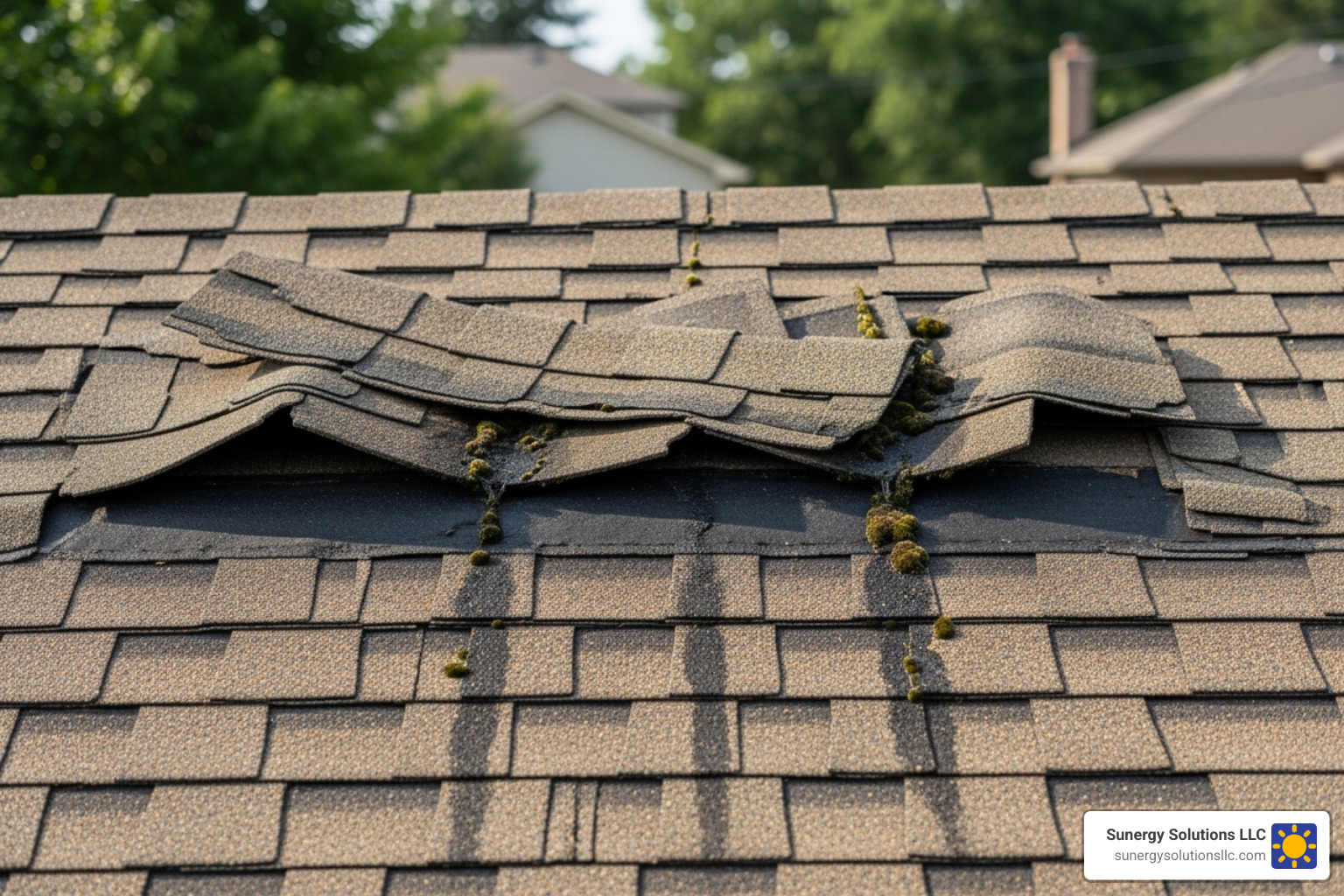
Look for these common indicators:
Our golden rule at Sunergy Solutions LLC is the “5-year rule”: if your roof has less than five years of useful life left, replace it before installing solar panels. This proactive approach saves you thousands of dollars in the long run by avoiding the future cost of a panel detach and reset.
When we assess a home for solar, we always include a thorough roof inspection. An aging roof needs to be addressed first to ensure a stable, durable platform for your new solar system. To help you plan, here are key questions to ask a roofer before starting:
Getting these answers upfront ensures a smooth project and is a key part of understanding how to replace roof with solar panels correctly.
Combining a new roof with a solar installation is a smart investment that boosts your home’s performance, value, and aesthetics. It’s about strategic planning that leads to significant long-term savings.

When you tackle both projects at once, you open up several key benefits:
The synergy of a combined project saves time, money, and hassle. A single point of contact can manage both jobs, and bundled financing options can simplify the loan process and offer better terms. Permitting can also be streamlined. While the full process from estimate to activation can take 4-12 weeks, the physical installation of panels on a new roof is fast—usually under two days. The biggest financial win is avoiding the future labor costs of a “detach and reset,” which is where the potential $4,000 in savings comes from. Learn more about your options at More info on residential solar financing.
A combined roof and solar project offers compelling long-term advantages. A new roof can increase a home’s resale value by over $17,000 on average. Zillow research shows that homes with solar sell for an average of 4.1% more. You can view the research here: Zillow research on solar home values.
Beyond value, a new roof and sleek solar panels improve curb appeal. The panels also act as a protective shield for your new roof, blocking UV rays and harsh weather, which can extend the life of the shingles underneath.
If you already have solar panels but your roof needs replacing, the process requires careful coordination between your roofing and solar teams. While it adds complexity, it’s a manageable project with the right professionals. Here’s how it works.
The key to a smooth project is getting your roofing and solar teams to communicate from the start. You need a roofer experienced with solar projects and a solar company qualified for panel removal and reinstallation (a “detach and reset”). Vet contractors by checking for solid local reputations, proper licensing, and insurance. As the homeowner, you may need to facilitate initial communication between the two teams. Be prepared for a slightly longer timeline—at least two extra days for panel removal and reinstallation, during which you’ll be without solar power. For help finding the right partner, see our guide on finding a reliable installer.
This is a job exclusively for solar professionals. Your roofers should never touch your solar panels, as they are complex electrical systems requiring specialized training and tools to handle safely.
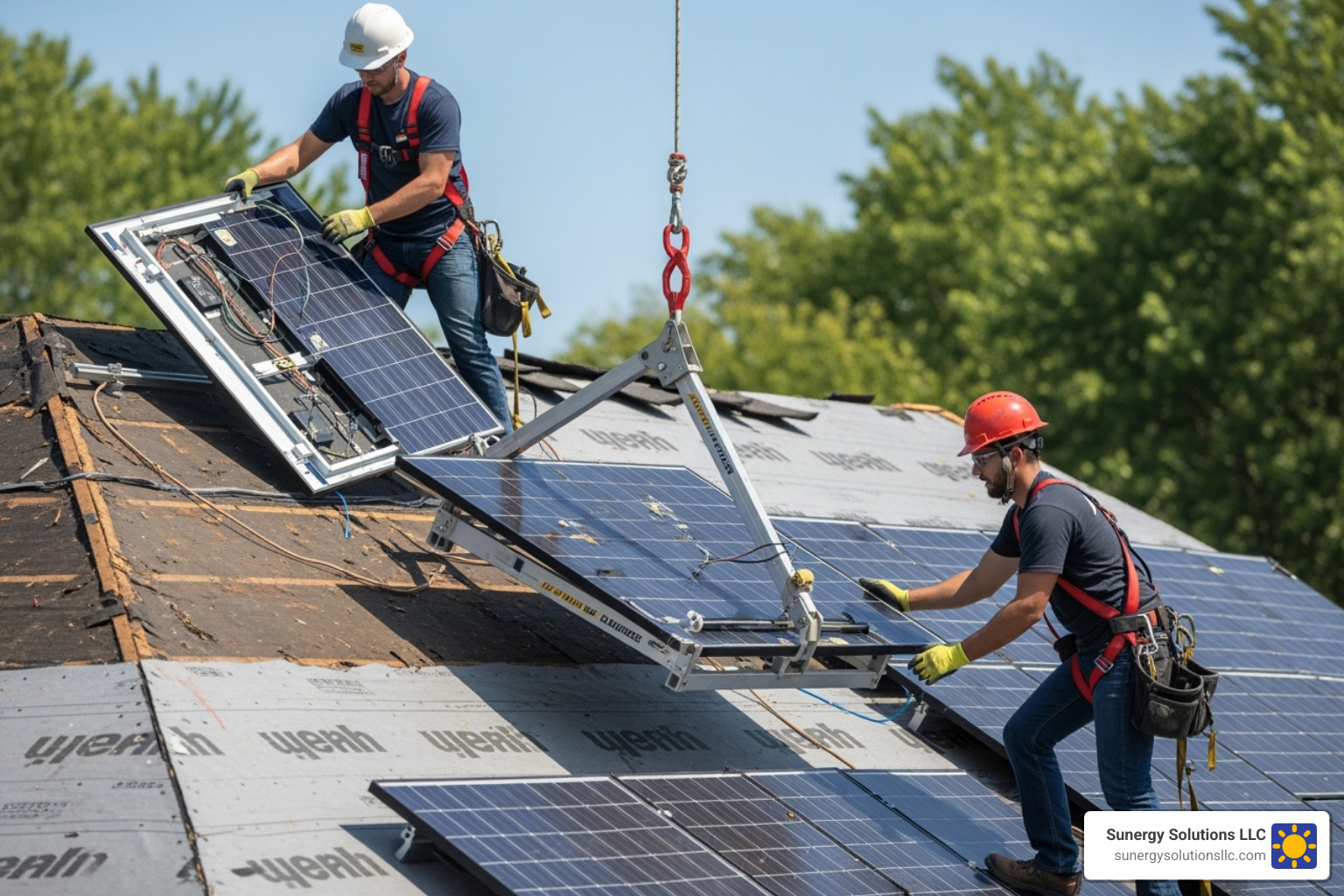
The solar team will shut down your system, disconnect the panels, and move them to a safe storage location on your property. During this downtime, which can last from a few days to two weeks, your home will run entirely on grid power.
With the panels safely stored, the roofing crew replaces your roof. This typically takes one to two days for most residential homes. Once the new roof is installed, the solar team returns. They will first conduct a mounting hardware check to ensure all attachment points are secure and watertight, especially if you’ve changed roofing materials.
Next comes panel reinstallation, where technicians carefully place each panel back and reconnect the electrical components. Finally, they perform system testing to verify that everything is running safely and efficiently before coordinating with your utility for re-interconnection. For roofing services that work seamlessly with solar, visit our roofing services page.
Budgeting, choosing materials, and understanding warranties are critical when planning your project. Let’s break down the key financial and practical considerations.
The biggest variable cost is the “detach and reset” fee for homes with existing solar panels. This service, which involves removing, storing, and reinstalling your panels, typically ranges from $2,800 to $8,000, or about $150 to $200 per panel. This is a significant expense that can be avoided by following the “5-year rule” and replacing an old roof before installing solar.
A new roof alone typically costs $10,000 to $25,000, depending on size, materials, and location. By combining a roof replacement with a new solar installation, you can achieve an average total cost of around $25,000, potentially realizing $4,000 in savings by avoiding a future detach and reset.
Here’s a quick overview of how the costs compare:
| Project Scenario | Estimated Cost Range |
|---|---|
| New Roof Only | $10,000 – $25,000 |
| Solar Installation Only | $19,000 – $30,000 |
| Roof Replacement + Solar Installation (Combined) | ~$25,000 (potential $4,000 savings) |
| Solar Panel Removal & Reinstallation (R&R) | $2,800 – $8,000 |
| New Roof After Existing Solar (Roof + R&R) | $12,800 – $33,000+ |
Note: These are average estimates; actual costs will vary.
Don’t forget the federal solar tax credit, which can significantly reduce your overall investment. Learn more in our guide on More info on solar tax credits.
Your roofing material choice affects the installation method, hardware, and cost.
If you change roofing materials (e.g., from asphalt to metal), you may need new mounting hardware, adding to the cost. Your roof’s structural integrity must also be confirmed to support the added weight.
When combining projects, you need to understand how warranties interact. Your new roof will have a manufacturer’s warranty (for materials) and an installer’s warranty (for labor). Your solar system has a 25-year production warranty on the panels and a workmanship warranty from the installer.
A key risk is voided warranties. A roofer may void their warranty if a third party installs solar panels improperly. Similarly, an improper panel removal can void the solar warranty. This is why choosing a reputable, experienced company like Sunergy Solutions LLC is crucial. We ensure our installations don’t compromise your roof’s warranty and often provide our own 10-year roof warranty for the area where panels are installed, giving you complete peace of mind.
While planning how to replace roof with solar panels, it’s a good time to confirm your roof is the best spot for them. Rooftop solar is the most popular choice, but it’s not the only one. If your roof has significant shading or faces north, an alternative might be more efficient.
Roof-mounted systems are the gold standard for most homes. They are cost-effective and use existing space. Your roof is ideal for solar if it has good sun exposure (south-facing is best, but east and west work well too) with minimal shading between 9 AM and 3 PM. Since you’re planning a replacement, your roof will be in perfect condition to support the system for decades.
If your roof isn’t ideal, consider these alternatives:
At Sunergy Solutions LLC, we assess your entire property to determine the most efficient solution for your home. Explore all your options in our guide to More info on types of solar systems.
Here are quick answers to the most common questions about combining a roof replacement with solar panels.
No. A proper roof replacement requires complete access to the roof deck, so panels and all mounting hardware must be removed first.
A qualified solar installation company. Roofers are not trained or insured to handle complex solar electrical systems.
Typically from a few days to two weeks. This accounts for panel removal (1 day), the roof replacement (1-3 days), and reinstallation/testing (1-2 days).
The main benefits are significant cost savings (averaging $4,000), a single streamlined project instead of two, and a dual boost to your home’s value.
The “detach and reset” service typically costs between $2,800 and $8,000, or about $150-$200 per panel. This is in addition to the cost of the new roof.
Different materials require different mounting hardware. Asphalt shingles use standard mounts, while metal roofs may allow for no-penetration clamps. Tile roofs require more complex, expensive mounts. Changing materials may require buying all new hardware.
Hire experienced professionals who have worked on combined projects before. Facilitate direct communication between your roofer and solar installer from the very beginning.
Asphalt roofs last 15-30 years, while solar panels are warrantied for 25 years and can last longer. To avoid voiding warranties, ensure a certified solar professional performs the installation and reinstallation. A reputable solar company may offer its own roof penetration warranty.
Look for curling or buckling shingles, granules in your gutters, water stains on your ceiling, a sagging roofline, or extensive moss growth. If your roof is over 20 years old, it’s time for an inspection.
Yes. If your roof isn’t ideal due to shading or orientation, you can consider solar shingles (which integrate into the roof) or a ground-mounted system (if you have available land).
Replacing a roof with solar panels is a significant project, but with smart planning and the right partners, it’s a manageable and highly rewarding investment. The key is to think ahead. If your roof is aging, replacing it before or during your solar installation is the most financially sound decision, saving you thousands in future costs.
By coordinating your roofing and solar professionals, you ensure a smooth process. By understanding the costs, materials, and warranties, you protect your investment. The result is a durable, high-performing home set up for decades of lower energy bills, increased property value, and a smaller carbon footprint. You’re not just making a home improvement; you’re investing in energy independence.
At Sunergy Solutions LLC, we are committed to making this transition easy and rewarding. We provide top-tier equipment, extensive warranties, and exceptional customer service to deliver reliable, cost-effective solar solutions. We’re here to guide you on your journey to a more efficient and valuable home powered by the sun.
Ready to take the next step?
Request a Residential Solar Estimate
Appointments Available, 7 Days a Week


