
5.0 Rating
Request A Free Estimate
Home solar energy systems convert sunlight into electricity for your house, helping you slash utility bills while reducing your carbon footprint. Here’s what you need to know:
Top Home Solar Energy Benefits:
Main System Types:
With installation costs dropping over 50% in the past decade and solar panels lasting 25-40 years, homeowners are saving $20,000 to $96,000 over their system’s lifetime. The average payback period is just 10 years.
More than 20% of American households now consider solar a top home improvement priority. Rising utility rates make solar an even smarter financial move – while your neighbors watch their bills climb, you’ll be generating free electricity from the sun.
I’m Robert Raffa, CEO and Founder of Sunergy Solutions LLC, where I’ve spent nearly a decade helping Northeast homeowners transition to home solar energy systems that maximize production and long-term savings.
Know your home solar energy terms:
Throughout this guide, we’ll walk you through everything you need to know about home solar energy systems. You’ll find the key benefits that make solar a smart financial investment, understand the different system types available, and learn about costs, incentives, and financing options.
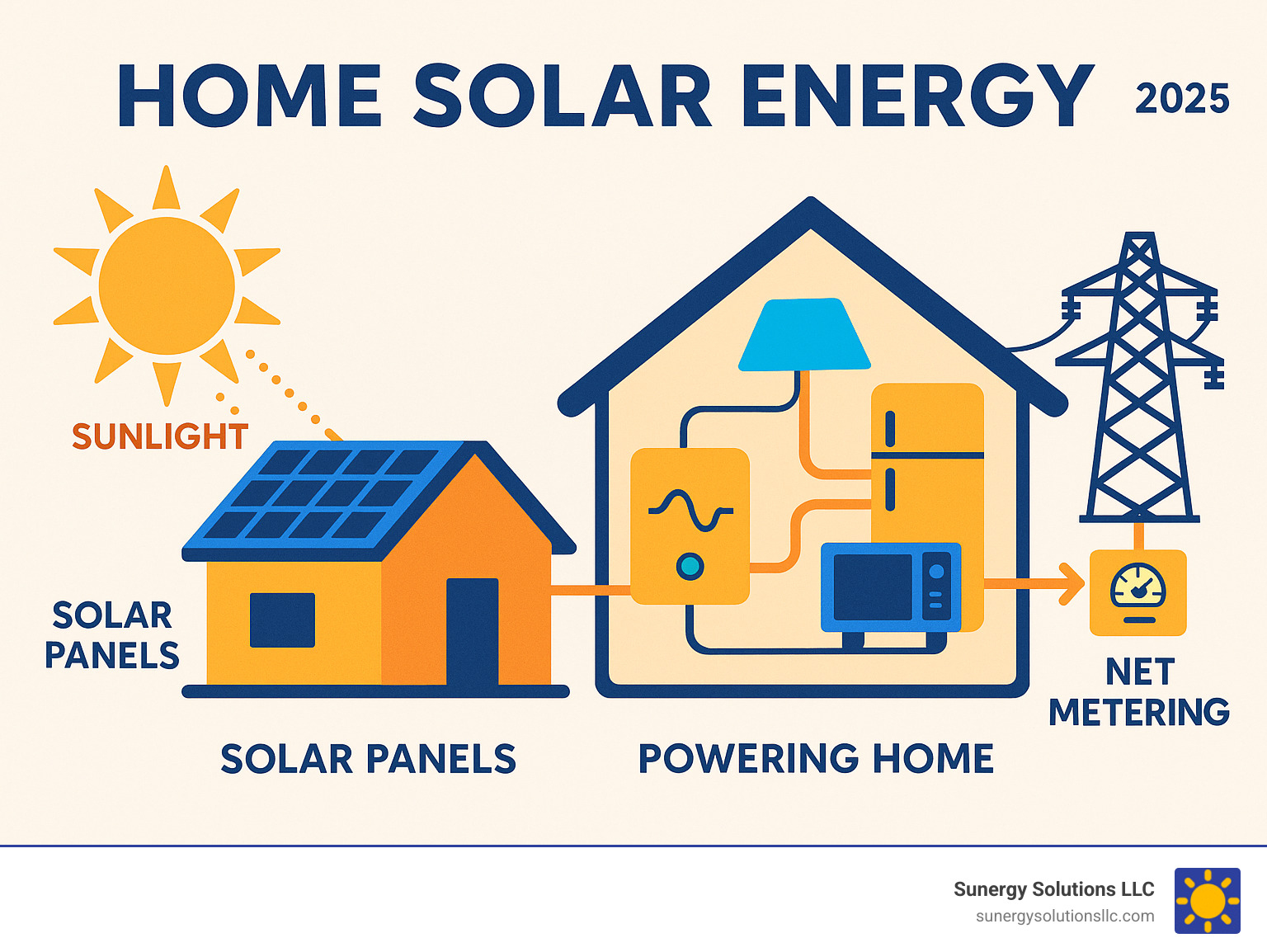
Think of home solar energy as nature’s most reliable power plant sitting right on your roof. When sunlight hits those sleek panels, photons knock electrons loose from silicon atoms, creating electricity. It’s the same process that powers satellites in space, just scaled down for your morning coffee maker.
The whole system works like a well-orchestrated team. Your solar panels capture sunlight and convert it into direct current (DC) electricity. But your home runs on alternating current (AC), so an inverter steps in to make the conversion. Think of it as a translator helping your solar panels speak the same language as your refrigerator.
What makes this really exciting is net metering – when your system produces more electricity than you’re using, that extra power flows back to the utility grid. Your electric meter literally spins backward, giving you credit for the clean energy you’re contributing to your neighborhood.
Modern panels are surprisingly efficient, capturing energy from both direct sunlight and scattered light on cloudy days. That’s why Solar Panel Efficiency Explained shows how solar works well across all U.S. regions.
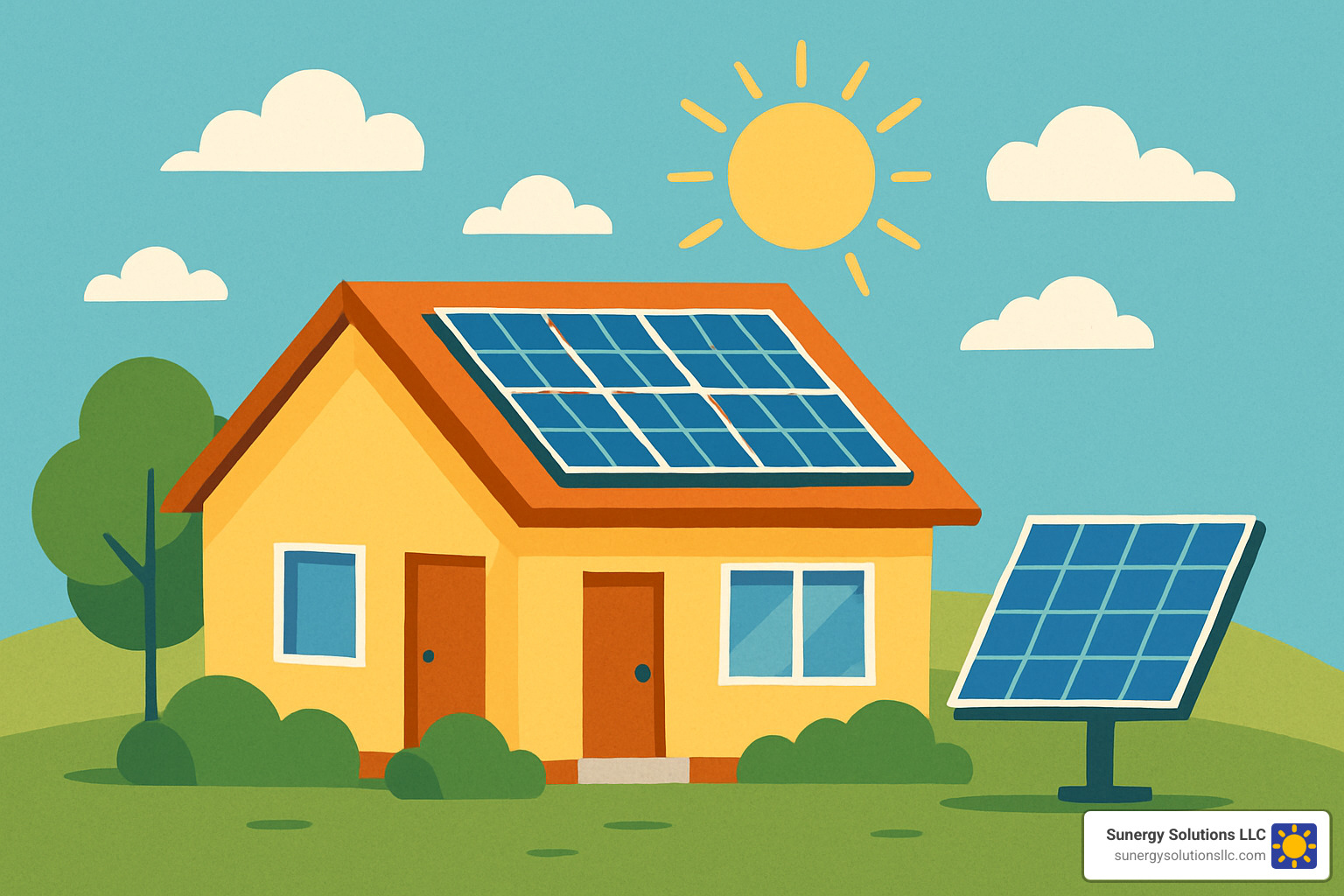
Every home solar energy system is built around a few essential components. Solar panels contain dozens of photovoltaic cells that produce about 1-2 watts of power each. Today’s panels typically range from 250 to over 420 watts.
Inverters convert the DC electricity from your panels into AC power that your home can actually use. You’ll encounter string inverters that handle your entire system from one central location, and microinverters that attach to each individual panel for maximum efficiency. Our guide on Solar Inverters: What They Are and Why You Need Them explains how choosing the right inverter can boost your system’s performance by 5-15%.
Racking systems secure your panels to your roof and are built to withstand winds up to 140 mph. Monitoring equipment turns you into your own energy detective through smartphone apps, letting you track real-time production and watch your savings grow.
During peak sun hours, your system often produces more electricity than you can use. Instead of wasting that power, it flows back to the utility grid through net metering, spinning your electric meter backward and crediting your account.
The financial benefits start immediately with the 30% federal Investment Tax Credit (ITC). This covers 30% of your total installation costs with no upper limit for systems installed between 2022-2032. Combined with state and local incentives, many homeowners recover 40-50% of their investment through rebates and tax credits alone.
Not every roof is created equal, and neither are home solar energy systems. Whether you’re dealing with a sprawling ranch-style home or a cozy colonial, there’s a solar solution that fits your specific needs and budget.
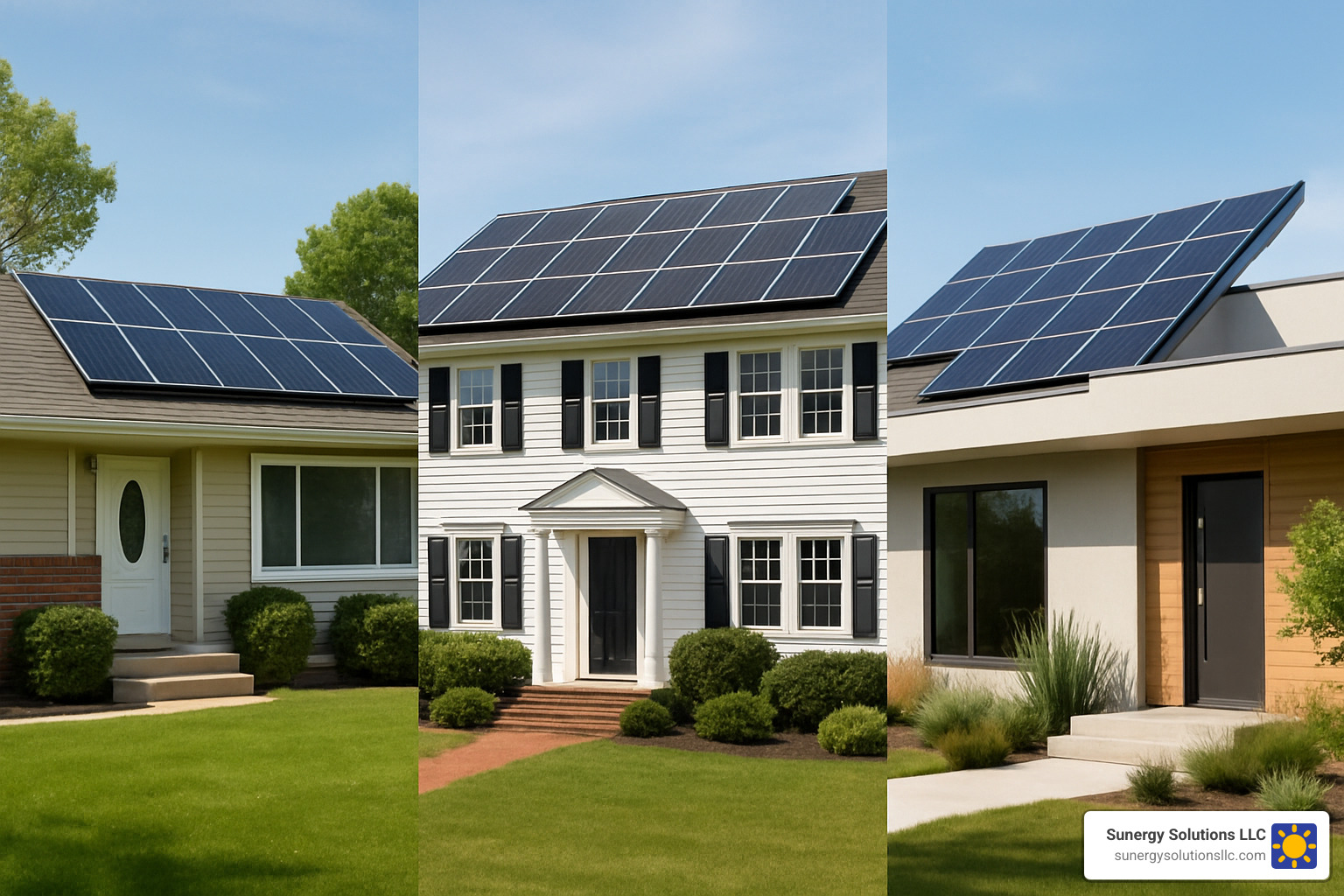
The three main system types each serve different situations. Grid-tied systems work best for most suburban homeowners, typically costing $15,000-$25,000 with an 8-10 year payback period. Off-grid systems provide complete independence for remote locations, running $25,000-$40,000 with a 10-15 year payback. Hybrid systems split the difference at $20,000-$35,000, offering grid connection plus battery backup with a 9-12 year payback period.
| System Type | Best For | Average Cost | Payback Period | Key Benefits |
|---|---|---|---|---|
| Grid-Tied | Most homeowners | $15,000-$25,000 | 8-10 years | Lowest upfront cost, net metering |
| Off-Grid | Remote locations | $25,000-$40,000 | 10-15 years | Complete independence, no utility bills |
| Hybrid | Backup power needs | $20,000-$35,000 | 9-12 years | Grid connection plus battery backup |
Grid-tied systems are perfect for most homeowners who want solar without diving into complex battery storage. These systems connect directly to your utility grid, generating most of your own electricity while staying connected to the power company.
Without expensive battery storage, you’ll spend 20-30% less upfront compared to battery-equipped alternatives. Net metering is where the magic happens – during sunny days when your panels produce more electricity than you use, that excess power flows back to the grid, crediting your account for the electricity you contribute.
The downside? When the grid goes down, so does your solar system for safety reasons. But for most homeowners with reliable utility service, grid-tied systems offer the fastest payback and highest financial returns.
Off-grid systems are for true energy independence seekers – folks who want to cut the cord completely or live in remote areas where grid connection isn’t practical. These systems require battery banks to store electricity for nighttime use and cloudy days.
Planning an off-grid system means thinking like a pioneer. You’ll need oversized panel arrays – typically 25-50% larger than grid-tied systems – to account for cloudy weather stretches. Deep-cycle LiFePO4 batteries have become the gold standard, lasting 10-15 years and handling thousands of charge cycles.
The trade-off for complete energy independence is higher upfront costs and more active energy management, but you’ll never see another utility bill.
Hybrid systems give you the best of both worlds. These systems maintain grid connection for net metering benefits while providing battery backup for power outages.
During normal operation, your hybrid system works just like a grid-tied setup. But when the lights go out in your neighborhood, your system automatically switches to battery power, keeping your critical loads running.
Hybrid systems shine for homeowners facing frequent power outages or those with time-of-use billing. You can store cheap solar power during the day and use it during expensive evening peak hours.
Nearly half of American households can’t install rooftop solar due to renting, condo living, or poor roof conditions. Community solar programs solve this problem neatly.
Instead of installing panels on your roof, you subscribe to a portion of a larger solar farm in your area. You get bill credits for your share of the electricity production without installation headaches or maintenance responsibilities.
The beauty is in the simplicity: no upfront costs, no roof work, no permits, and no equipment to maintain. Community solar works through the same Net Metering: How It Works and Why It’s Important principles as rooftop systems.
Let’s talk money – because that’s probably what you’re really wondering about when it comes to home solar energy. The good news? Solar has never been more affordable, and the savings are real.
Most homeowners invest between $15,000-$25,000 for a complete system before incentives. But you won’t actually pay that full amount thanks to generous federal and state programs.
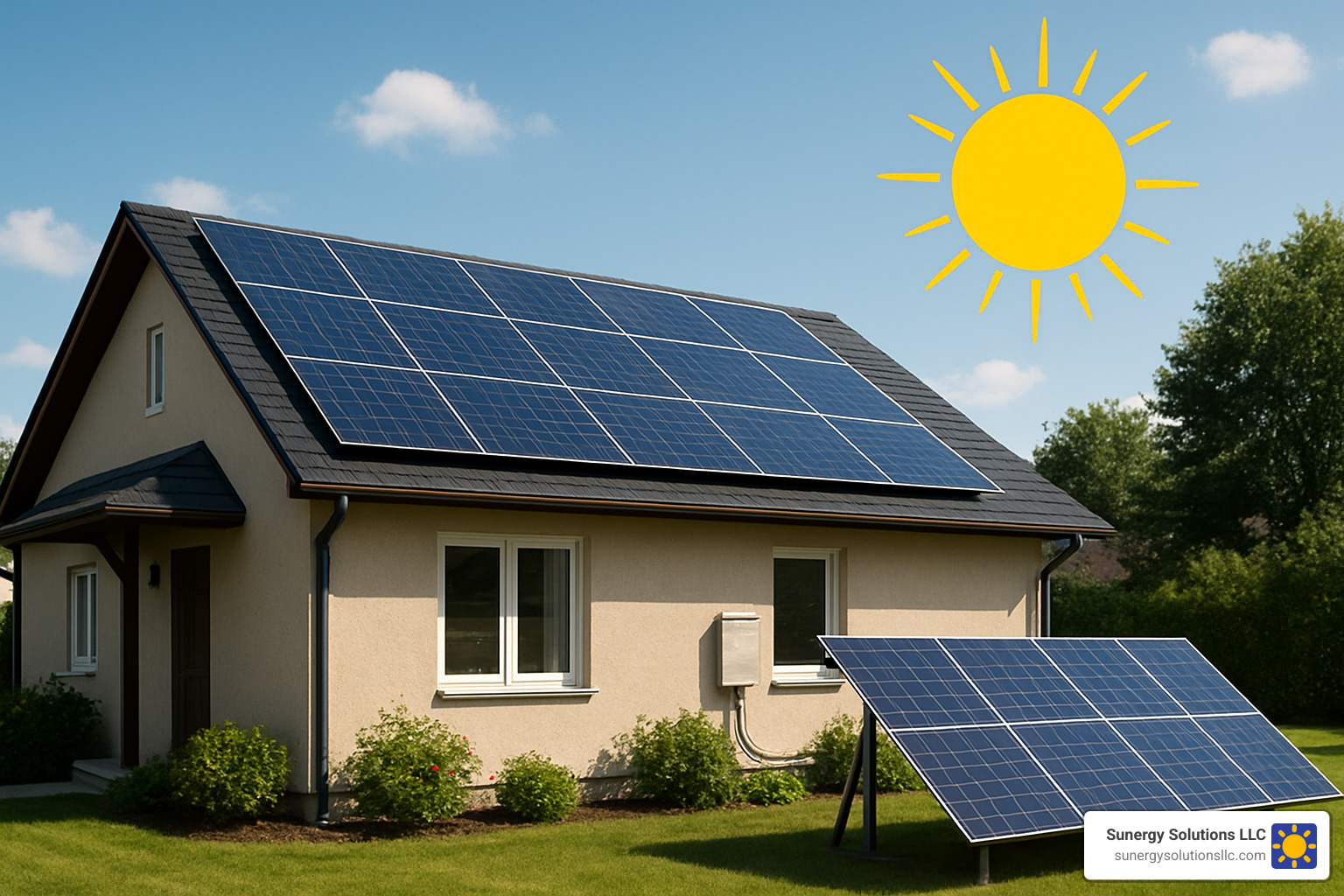
Equipment makes up 60-70% of costs – panels, inverters, racking systems, and monitoring equipment. Installation labor accounts for 15-20%, with the remaining costs covering permits, inspections, and utility connection fees.
The federal government offers a 30% tax credit on everything – equipment, installation, permits, even electrical work. If you invest $20,000 in a system, you’ll get $6,000 back at tax time, dropping your real cost to $14,000.
Many states and local utilities offer additional rebates and incentives. The Database of State Incentives for Renewables and Efficiency shows exactly what’s available in your area – some homeowners recover 40-50% of their total investment.
Our detailed guide Bright Ideas for Residential Solar System Financing walks you through every available option.
You’ve got several ways to make home solar energy work for your budget.
Paying cash upfront gives you the biggest bang for your buck. You’ll claim the full 30% tax credit, avoid interest charges, and typically see your investment pay off in 8-10 years.
Solar loans let you spread the cost over 10-20 years with rates as low as 2.99%. Many lenders offer no down payment options and will defer your first payment until after you receive your tax credit.
Solar leases work well if you want predictable monthly payments without any upfront costs. You’ll save less money over time, but you also have zero maintenance headaches.
Power Purchase Agreements (PPAs) let you buy electricity from solar panels at rates typically 10-20% below what your utility charges.
Figuring out your home solar energy return on investment is simpler than you might think. You need three key numbers: how much electricity you use annually, how much your system will produce, and how much you’re currently paying per kilowatt-hour.
Here’s a real-world example: A family using 12,000 kWh annually at $0.12 per kWh pays $1,440 per year for electricity. An 8 kW solar system in their area produces 11,000 kWh annually, saving them $1,320 per year. With a net system cost of $14,000 after incentives, they’ll break even in about 10.6 years.
Most homeowners see payback periods of 8-10 years, then enjoy 15-20 years of essentially free electricity. Total lifetime savings typically range from $20,000 to $96,000.
Finding the right installer for your home solar energy system can feel overwhelming, but focusing on key qualifications makes the process much simpler.
NABCEP certification is your gold standard. The North American Board of Certified Energy Practitioners sets rigorous standards for solar installers. These certified professionals also need local electrical licenses and comprehensive insurance coverage.
Don’t skip checking local references from recent customers. A quick conversation with neighbors who’ve gone solar can reveal whether an installer delivers on promises.
The installation timeline stretches longer than you might expect. While actual installation takes just 1-3 days for most homes, permitting and utility interconnection can extend the process to 2-3 months. Our Homeowner’s Guide to Solar Financing walks you through realistic timelines.
Site assessment and design kicks off the process, taking 1-2 weeks. Permit applications follow, requiring 2-6 weeks. Installation itself happens quickly over 1-3 days. Then comes inspection and interconnection, taking 2-4 weeks as your utility company reviews and approves your system.

Poor installation decisions can slash your home solar energy system’s performance by 10-25%. Our guide on Common Solar System Installation Mistakes to Avoid highlights the most costly errors.
Shading problems top the list of performance killers. Even small shadows can dramatically reduce your entire system’s output. Professional installers use sophisticated shade analysis tools to map your roof’s sun exposure throughout the year.
Roof age issues create expensive headaches. Installing solar on roofs older than 10 years often means you’ll need roof replacement first. It’s much cheaper to reroof before installation than to remove and reinstall panels later.
System undersizing might seem like a money-saving strategy, but it actually limits your long-term savings potential. Sizing your system to offset 90-100% of your electricity usage maximizes your financial benefits.
Here’s the best news about home solar energy systems – they’re remarkably low-maintenance once installed.
Cleaning happens naturally in most climates. Rain washes away dust and debris, keeping your panels operating efficiently. Performance monitoring through smartphone apps makes tracking your system’s health effortless.
Professional inspections once a year can identify potential problems before they become costly headaches. Most installers offer maintenance packages for $100-200 annually.
Warranty coverage provides long-term protection. Quality panels come with 20-25 year performance warranties guaranteeing 80-90% output after two decades. Inverters typically include 10-12 year warranties.
Adding energy storage to your home solar energy system transforms your solar installation from a simple bill-reduction tool into a comprehensive energy management powerhouse.
Today’s lithium iron phosphate batteries last 10-15 years with minimal maintenance. They can power your essential appliances during outages, store cheap solar power for expensive evening hours, and even charge your electric vehicle with pure sunshine.
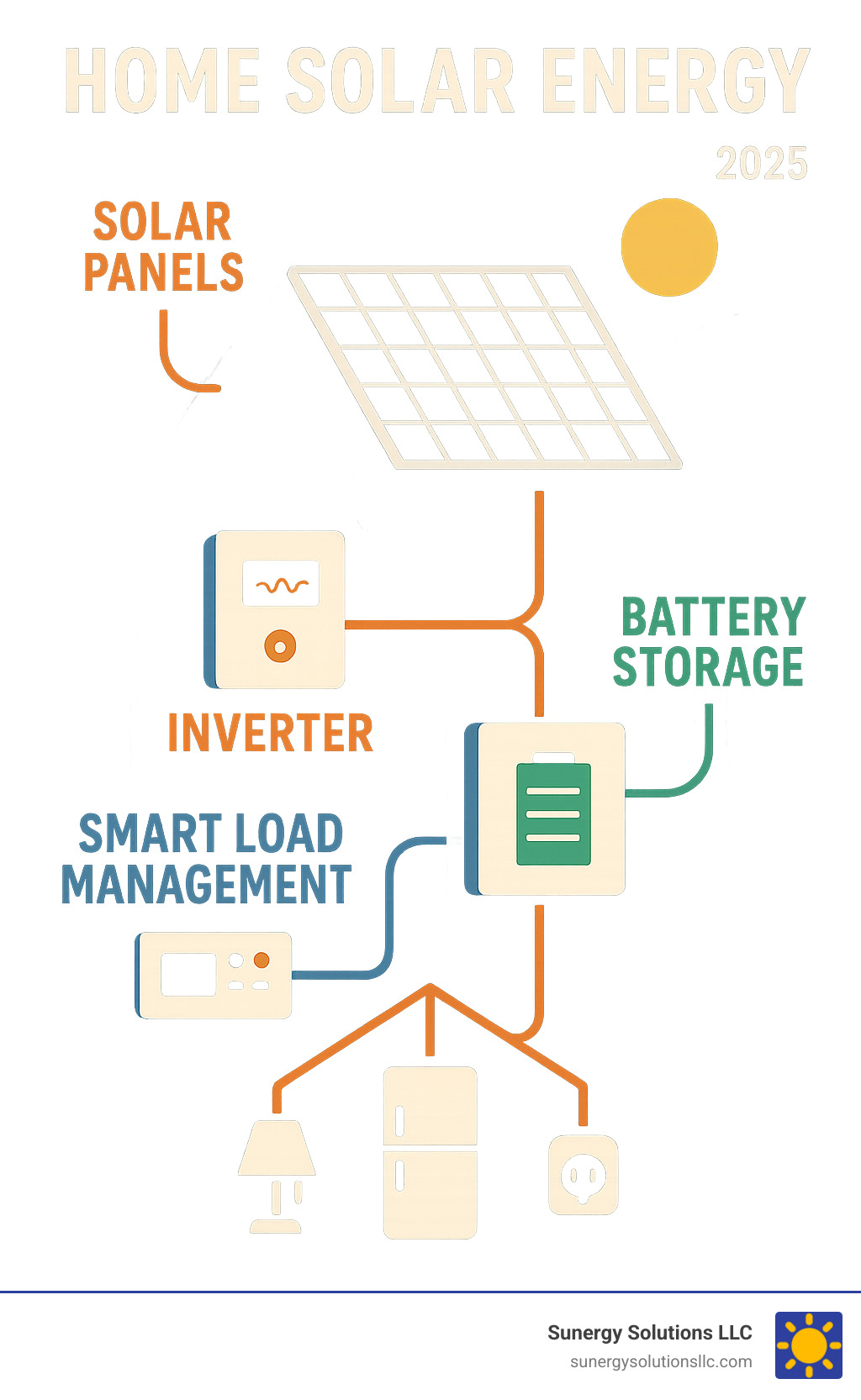
Costs have dropped 70% since 2015, making storage increasingly affordable. A typical home battery system runs $10,000-15,000, but it can pay for itself through utility bill savings and backup power peace of mind.
Backup power means your lights stay on when the grid goes down. Time-of-use optimization stores free solar power during the day and releases it during expensive evening peak hours. EV charging with stored solar power is the ultimate clean energy combo.
Our Residential Solar Facts page provides detailed information about integrating storage with existing solar installations.
Battery storage isn’t right for every homeowner, but it’s becoming increasingly valuable as the electrical grid faces new challenges.
Time-of-use billing is spreading across the country as utilities try to manage peak demand. If your utility charges higher rates during peak hours (typically 4-9 PM), batteries let you use stored solar power instead of expensive grid electricity.
Frequent outages make battery backup almost essential. Areas prone to storms, wildfires, or aging grid infrastructure benefit most from backup power capability.
Critical loads in your home might include medical equipment, home offices, or security systems that need uninterrupted power. Battery backup provides peace of mind that goes beyond simple convenience.
Future EV ownership is another compelling reason to add storage now. If you’re planning to buy an electric vehicle, batteries can store solar power for nighttime charging.
The beauty of modern home solar energy systems is that you don’t have to decide everything upfront. Many homeowners start with a basic grid-tied system and add batteries later as their needs change.
Let’s tackle the most common questions homeowners ask about home solar energy systems.
The typical American home needs 15-25 solar panels to cover their electricity usage, though your exact number depends on how much power you use, how sunny your location is, and what type of panels you choose.
The average U.S. household uses about 12,000 kWh of electricity annually. A standard 300-watt panel produces roughly 400-500 kWh per year, depending on your location’s sun exposure. Divide your annual usage by what each panel produces for your ballpark number.
High-efficiency panels (those rated 18-22% efficiency) can reduce the total number you need, though they cost more per panel.
Shade is solar’s biggest enemy, but modern technology has clever solutions.
Microinverters are game-changers for shaded roofs. Instead of having one central inverter that gets dragged down by a single shaded panel, microinverters let each panel work independently.
Tree trimming often costs just a few hundred dollars but can boost your solar production by thousands of kWh annually. If your roof is heavily shaded, consider ground-mounted panels in a sunny part of your yard.
North-facing roofs typically produce 20-30% less electricity than south-facing installations. While not ideal, they can still make financial sense in areas with high electricity rates or strong solar incentives.
Standard grid-tied systems shut down during power outages for safety reasons – to protect utility workers who might be repairing power lines.
Battery backup systems solve this problem. When the grid goes down, your system automatically disconnects from utility lines and switches to battery power. Your critical loads keep running using stored solar energy.
Hybrid systems offer the best of both worlds. During normal operation, they work like standard grid-tied systems. When outages strike, they seamlessly switch to battery backup mode.
Home solar energy represents one of the smartest investments American homeowners can make today. With costs dropping over 50% in the past decade and 30% federal tax credits available through 2032, there’s never been a better time to harness the sun’s power for your family’s benefit.

The numbers tell an incredible story. Homeowners are saving $1,000-$1,500 annually on electricity bills, with lifetime savings reaching $20,000-$96,000. That’s real money back in your pocket, year after year. Beyond the financial benefits, you’ll reduce your carbon footprint by 3-4 tons of CO2 yearly – equivalent to planting over 100 trees in your backyard.
Whether you choose a grid-tied system for maximum savings, an off-grid setup for complete energy independence, or a hybrid solution for backup power during outages, home solar energy delivers both environmental benefits and solid financial returns. The technology has matured, the costs have dropped, and the incentives are generous.
Think about it – while your neighbors watch their utility bills climb year after year, you’ll be generating free electricity from the sun. No more cringing when the electric bill arrives. No more wondering if you can afford to run the air conditioning during summer heat waves.
At Sunergy Solutions LLC, we’ve helped thousands of homeowners across Maine, Massachusetts, New Hampshire, Rhode Island, Vermont, Montana, and Virginia transition to clean, renewable energy. Our commitment to top-tier equipment, extensive warranties, and exceptional customer service ensures your solar investment delivers decades of reliable performance.
We understand that choosing solar feels like a big decision. That’s why we take the time to explain everything clearly, answer all your questions, and design a system that fits your specific needs and budget. No high-pressure sales tactics – just honest advice from people who genuinely care about your success.
Ready to start your solar journey? Visit our Solar Panels for Home page for a personalized quote today. Our team of NABCEP-certified professionals will design a custom system that maximizes your savings while protecting your investment for years to come.
The sun rises every day – isn’t it time you started profiting from it? Your future self will thank you for making the switch to home solar energy today.
Appointments Available, 7 Days a Week


