
5.0 Rating
Request A Free Estimate
NH solar energy project developments are experiencing unprecedented growth, changing the Granite State’s energy landscape. From massive federal funding to innovative community initiatives, New Hampshire is rapidly expanding its clean energy infrastructure.
Key NH Solar Energy Projects at a Glance:
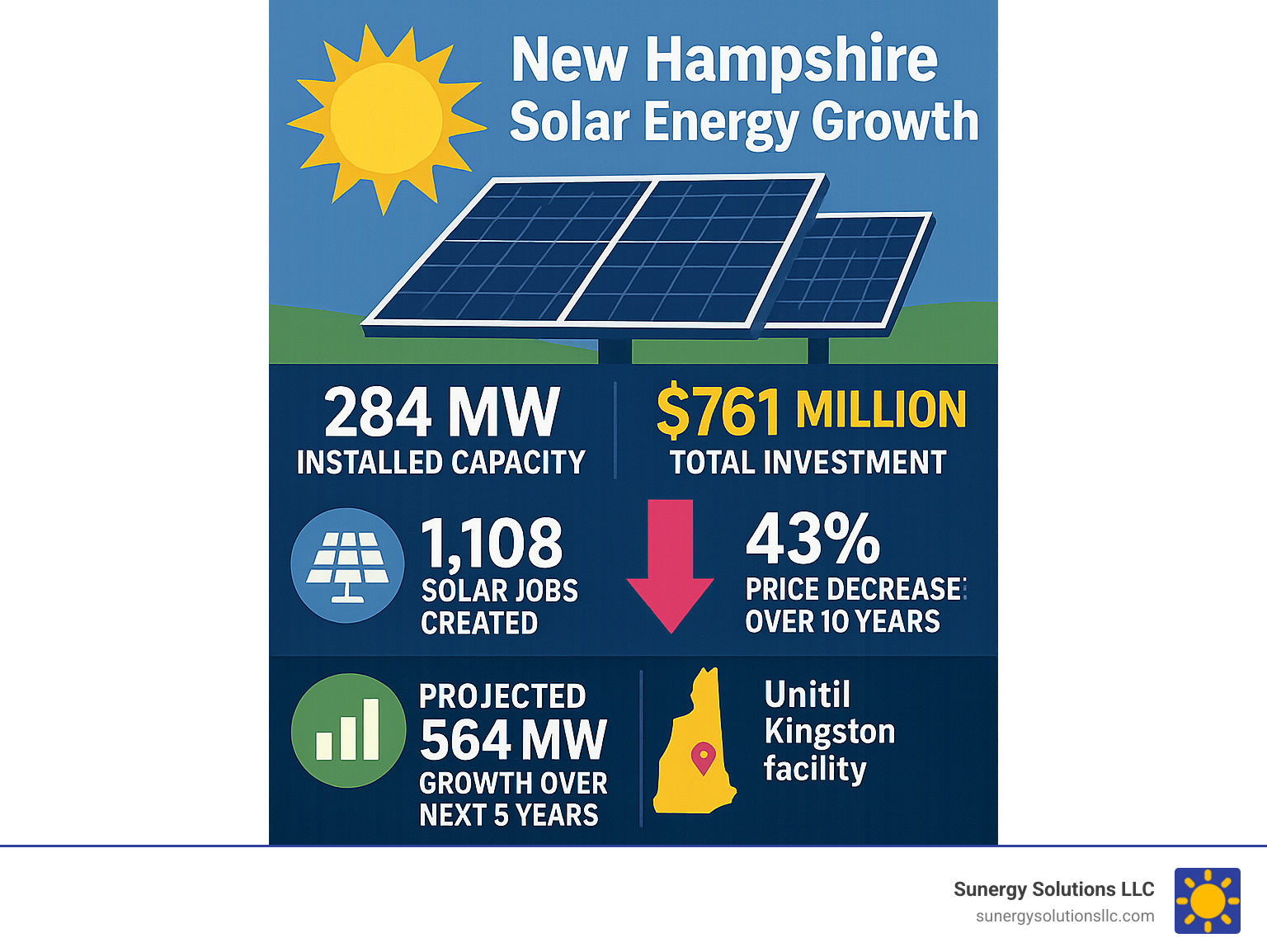
New Hampshire currently ranks 41st nationally for solar capacity with 284 MW installed, but that’s changing fast. The state has seen solar prices drop 43% over the last decade while creating 1,108 solar jobs and attracting $761 million in total investment.
Recent landmark projects showcase the state’s commitment to clean energy. The Somersworth Municipal Landfill solar project became New Hampshire’s first superfund site conversion, generating 3,500 MWh annually. Meanwhile, Unitil’s Kingston project features cutting-edge sun-tracking panels that maximize energy production throughout the day.
The biggest game-changer came in 2024 when New Hampshire secured over $43 million through the EPA’s Solar for All program. This funding specifically targets low-income households and communities, ensuring solar benefits reach beyond wealthy demographics. As one state official noted, “This funding is a major step forward for climate justice and ensuring all New Hampshire residents can access renewable energy benefits.”
I’m Robert Raffa, CEO and Founder of Sunergy Solutions LLC, and I’ve spent nearly a decade helping Northeast homeowners and businesses steer the evolving nh solar energy project landscape. My background in investment banking gives me unique insight into the financial opportunities driving New Hampshire’s solar boom.
Nh solar energy project terms simplified:
Let’s be honest – when it comes to solar energy, New Hampshire isn’t exactly the first state that comes to mind. With our 284 megawatts (MW) of installed solar capacity, we’re sitting at 41st place nationally. Not exactly bragging rights territory, right?
But here’s the thing – those numbers don’t tell the whole story. What they don’t show is the incredible momentum building across the Granite State. Over the past decade, we’ve watched solar installation costs plummet by 43%. That’s not a typo – nearly half the cost it used to be!
This price drop has been a game-changer for New Hampshire families and businesses. What once seemed like a luxury reserved for the wealthy has become an accessible option for everyday folks looking to cut their energy bills and reduce their carbon footprint.
Currently, solar energy provides about 1.94% of New Hampshire’s total electricity. It sounds small, but remember – we’re just getting started. Behind these modest percentages lies a thriving industry that’s quietly changing our state’s economy.
The nh solar energy project sector now supports 1,108 jobs across 64 companies throughout New Hampshire. We’re talking about real careers – from the 19 manufacturers producing solar components to the 22 installers and developers putting panels on roofs, plus 23 other businesses supporting this growing ecosystem. Together, they represent a whopping $761 million investment in our state’s clean energy future.
Now here’s where it gets exciting. Looking ahead, we’re projecting to add another 564 MW of solar capacity over the next five years. That means we’re essentially doubling our current solar infrastructure! While this puts us at 45th nationally for projected growth, it represents massive progress for the Granite State.
This isn’t just about numbers on a spreadsheet – it’s about New Hampshire families saving money on their electric bills, local businesses becoming more competitive, and our state taking meaningful steps toward energy independence.
For a more detailed look at New Hampshire’s solar statistics, you can check out the latest data from the Solar Energy Industries Association: New Hampshire Solar Data.
New Hampshire has always been a state that values independence and innovation. When it comes to solar energy, we’re proving that our “Live Free or Die” spirit extends to breaking free from fossil fuels. The nh solar energy project developments across our state aren’t just about installing panels—they’re creative solutions that turn challenges into opportunities.
From repurposing contaminated land to building the state’s largest solar farm, these projects show how New Hampshire is leading by example in the clean energy transition.
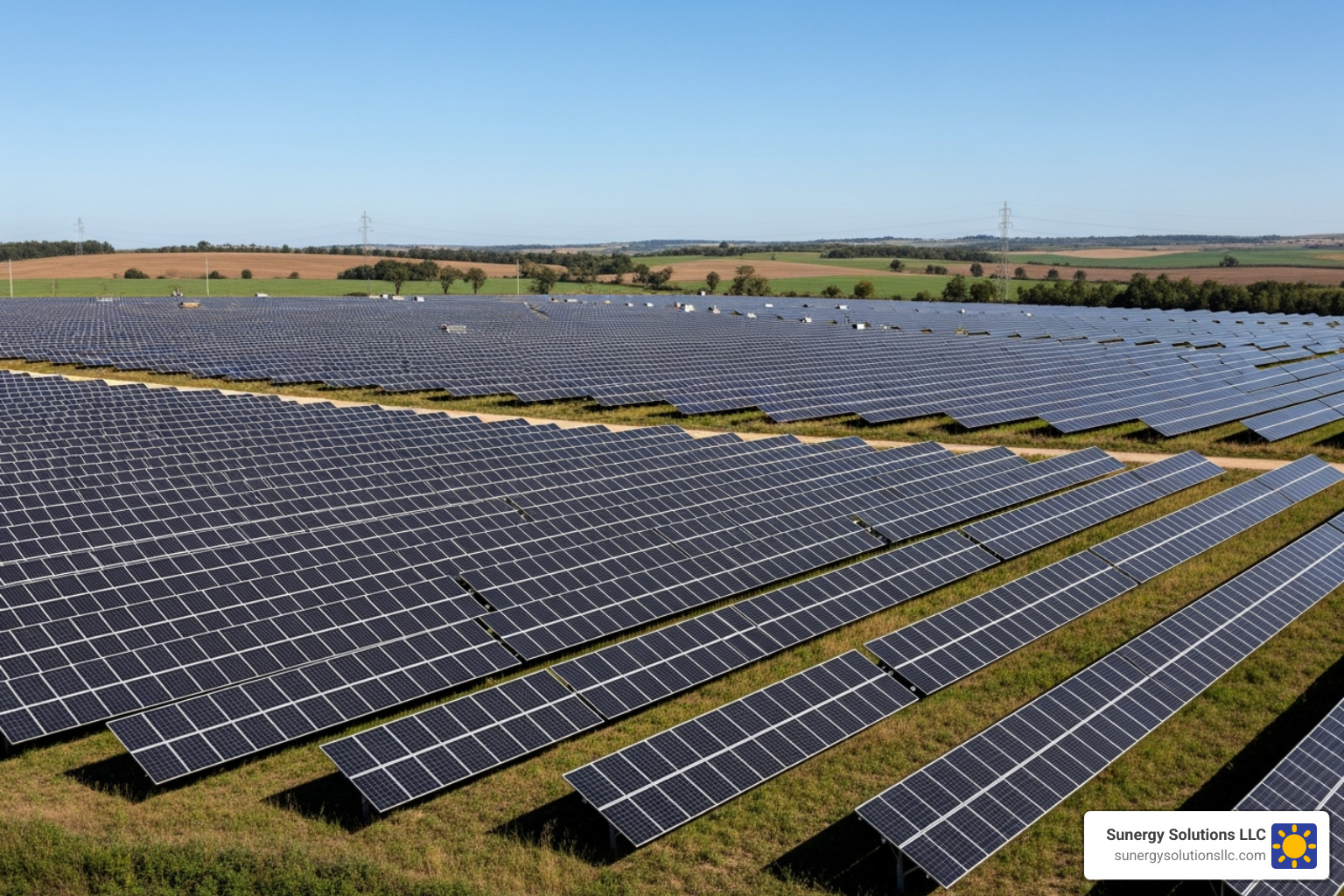
Sometimes the best solutions come from unexpected places. The Somersworth Municipal Landfill solar project proves that even a former superfund site can become a guide of clean energy hope.
This groundbreaking nh solar energy project transformed 2.6 MW of contaminated land into a powerhouse that generates 3,500 MWh of clean electricity every year. Over its 20-year lifespan, that adds up to more than 67,000 MWh—enough to keep the lights on for 480 homes annually.
The environmental impact is just as impressive. This single project prevents 2,500 metric tons of CO2 from entering our atmosphere each year. That’s like taking 580 gas-powered cars off New Hampshire roads permanently.
The economic benefits flow directly back to the community through the state’s group net metering program. The City of Somersworth receives over $2 million in combined energy savings, lease income, and payments in lieu of taxes. It’s a perfect example of how environmental responsibility and economic sense can work hand in hand.
When Unitil decided to build New Hampshire’s largest solar farm, they didn’t just think big—they thought smart. The Kingston project features over 11,000 solar panels equipped with advanced sun-tracking technology that follows the sun’s path throughout the day.
This isn’t your typical fixed-panel installation. The tracking system maximizes energy production by ensuring panels always face the sun at the optimal angle. The result? Enough clean electricity to power more than 1,200 homes while reducing peak demand when the grid needs it most.
What makes this nh solar energy project truly historic is that it’s the first utility-scale solar facility built by a public utility in New Hampshire. Unitil already proved this model works with their successful Fitchburg, Massachusetts project that’s been exceeding expectations since 2017.
The Kingston site even has room to grow. Future expansion could double the facility’s size, further cementing New Hampshire’s commitment to large-scale renewable energy. The project is expected to come online in 2025, marking a major milestone for the Granite State.
You can read more about this exciting development here: New Hampshire’s largest solar project underway.
Not every solar success story involves massive installations. Some of the most meaningful nh solar energy project developments focus on bringing clean energy benefits to communities that need them most.
NH Solar Shares has mastered the art of community-focused solar. Their Plymouth project may be just 28 kW, but it’s designed with New Hampshire winters in mind. The bi-facial solar panels capture sunlight from above and light reflected off snow from below—turning our harsh winters into an advantage.
The project goes beyond just generating power. NH Solar Shares plants pollinator-friendly vegetation and blueberry bushes around their arrays, creating habitat while producing clean energy. Their mission to “Share the Sun with Neighbors” ensures that 100% of the Plymouth project’s generation credits go to low-to-moderate-income households.
In Newport, a different approach is helping small businesses manage rising energy costs. The 1 MW ground-mount installation serves approximately two dozen local businesses through group net metering. The site’s history adds symbolic weight to the project—the land was previously owned by a fuel company, representing a literal transition from fossil fuels to renewable energy.
Even winter recreation gets consideration in these projects. The Newport site accommodates a snowmobile trail, proving that solar development can coexist with the outdoor activities New Hampshire residents love.
These community-focused projects demonstrate that solar energy isn’t just for those who can install panels on their rooftops. They’re expanding access and ensuring the benefits of clean energy reach every corner of our state.
New Hampshire just hit the solar jackpot! The U.S. Environmental Protection Agency recently announced that our state will receive $43,510,000 through the competitive Solar for All program. This isn’t pocket change – it’s part of a massive $7 billion nationwide initiative designed to bring clean energy to communities that have been left out of the solar revolution.
This funding represents a turning point for nh solar energy project development across the Granite State. For too long, solar benefits have primarily flowed to wealthier households who could afford the upfront costs. That’s about to change in a big way.

This massive grant isn’t just being thrown at random projects. It’s a carefully planned investment led by the New Hampshire Department of Energy, working alongside the New Hampshire Community Loan Fund and New Hampshire Housing Finance Authority. Think of it as a dream team for energy equity.
The partnership makes perfect sense. The Department of Energy brings policy expertise, the Community Loan Fund understands how to reach underserved communities, and the Housing Finance Authority knows affordable housing inside and out. Together, they’re creating a comprehensive approach to solar access.
Here’s what gets me excited about this nh solar energy project funding: every participating low-income household is guaranteed at least 20% savings on their utility bills. That’s not a maybe – it’s a promise backed by federal dollars.
The program focuses heavily on community solar installations. Instead of requiring individual rooftop installations, these projects create shared solar arrays that benefit multiple households. This approach works particularly well for renters, people with unsuitable roofs, or those living in manufactured housing parks.
The funding also supports some pretty innovative approaches. Up to 20% can go toward “enabling upgrades” like battery storage systems. This means communities won’t just get solar panels – they’ll get energy resilience that keeps the lights on even when the grid goes down.
There’s also a strong emphasis on local job creation through apprenticeship programs. As these projects roll out, they’ll create meaningful employment opportunities for New Hampshire workers while building our clean energy infrastructure.
You can dive deeper into the program details here: Solar for All – New Hampshire Department of Energy.
The Solar for All program tackles a fundamental fairness issue in clean energy. Historically, solar savings have flowed primarily to homeowners with good credit, suitable roofs, and extra cash for upfront investments. Meanwhile, renters and low-income families – who often pay the highest percentage of their income for energy – were left watching from the sidelines.
This funding changes that dynamic completely. By focusing on workforce housing projects, public housing authorities, and resident-owned communities, the program reaches people where they actually live. Imagine affordable housing developments where solar installations help keep rent affordable by reducing operating costs.
The community solar model is particularly brilliant for New Hampshire’s housing landscape. Many of our residents live in older homes with complicated rooflines, or in apartments where individual solar installation isn’t practical. Community solar lets them access clean energy benefits without needing their own panels.
What I find most promising is the program’s commitment to avoiding pushy sales tactics. There’s no unsolicited marketing or high-pressure pitches. Instead, the outreach focuses on education and genuine community benefit.
This nh solar energy project initiative represents more than just installing solar panels. It’s about building an energy system that works for everyone, not just those who can afford it upfront. As these projects come online over the next few years, they’ll demonstrate that clean energy and social equity can go hand in hand.
Every state has its own personality when it comes to solar energy, and New Hampshire is no different. The Granite State’s approach to nh solar energy project development reflects our practical, independent spirit—we want clean energy, but we want it done right and at a fair price.
Understanding our state’s solar landscape means looking at both the opportunities and the roadblocks that shape how solar projects get built and funded here.
The good news is that New Hampshire offers several solid incentives to help make solar more affordable. Net metering sits at the heart of our solar policy—it’s the system that lets you sell excess power back to the grid and get credits on your electric bill. Think of it as your solar panels paying you back for the sunny days.
On top of state programs, the federal Investment Tax Credit (ITC) remains one of the most powerful incentives available. This credit can cover a significant chunk of your installation costs, making solar much more accessible for homeowners and businesses alike.
State rebates and other programs pop up from time to time, though they can change based on funding and political priorities. The key is staying informed about what’s currently available.
For the most up-to-date list of incentives, I always recommend checking the DSIRE database: DSIRE Incentives Database – New Hampshire. It’s the go-to resource for finding every financial incentive available in our state.
Here’s where things get a bit more complicated. Like many states, New Hampshire has faced some bumps in the road when it comes to funding clean energy initiatives.
Recently, about $15 million was redirected from a dedicated renewable energy fund into the general fund. This fund, which started in 2007, was specifically designed to support clean energy projects using money from electric companies that couldn’t meet renewable energy requirements.
This budget shuffle hit programs like the Municipal Solar Grant Program particularly hard. This program had been helping small towns overcome one of the biggest problems in solar adoption—convincing voters to approve upfront costs, even when the long-term savings are clear.
New Hampshire voters are famously practical about spending. We don’t like high property taxes, and we’re naturally skeptical of big upfront investments. As Sarah Brock from Clean Energy New Hampshire puts it, there’s “substantial reluctance” among municipalities to approve solar funding, even when the math clearly shows future savings.
Despite these challenges, success stories keep emerging. Kensington’s town hall installed a 26-kilowatt solar array that now covers about 70% of the building’s electricity needs. Dublin’s fire station went even further—their solar installation meets all their power requirements.
The budget redirection has clean energy advocates concerned. Nick Krakoff from the Conservation Law Foundation called it “a big step backward for renewable energy in the state.” With limited funds remaining, continuing existing programs—let alone starting new ones—becomes much harder.
This is exactly why federal programs like the Solar for All grant are so crucial. When state funding gets tight, federal support can keep nh solar energy project development moving forward. It’s also a reminder that consistent, long-term commitment at all levels of government helps ensure that New Hampshire’s solar momentum doesn’t stall just when we’re gaining speed.
When I talk with New Hampshire families and business owners about solar, I hear the same thoughtful questions again and again. Let me share the answers to the most common ones, based on what I’ve learned helping folks across the state make smart energy decisions.
This is always the first question, and I completely understand why. The upfront investment can feel daunting, but here’s what makes me optimistic: solar prices in New Hampshire have dropped 43% over the last decade. That’s incredible progress that’s made solar accessible to so many more families.
The actual cost varies quite a bit depending on how big your system needs to be, what type of equipment you choose, and how complex your installation is. A small home might need a 4-kilowatt system, while a larger property could require 10 kilowatts or more.
But here’s where it gets exciting – the federal Investment Tax Credit can significantly reduce your upfront costs. When you combine that with potential state incentives and the money you’ll save on electricity bills year after year, most homeowners find their system pays for itself over time.
The key is looking beyond the initial price tag to the long-term savings. I’ve seen families cut their electricity bills by 80% or more with a properly sized nh solar energy project. Over 20-25 years, those savings really add up.
For current pricing information specific to New Hampshire, you can check out the average costs for installing solar in New Hampshire. At Sunergy Solutions LLC, we focus on finding the right balance of quality equipment and cost-effectiveness for each family’s unique situation.
Absolutely, and this might be one of the best-kept secrets in New Hampshire solar! Community solar is perfect for people who can’t install panels on their own roof – whether you’re renting, live in an apartment, or your roof just isn’t suitable for solar.
Here’s how it works: instead of putting panels on your roof, you subscribe to a share of a larger solar farm somewhere else in your area. You get credits on your electricity bill for the power your share produces, just as if those panels were on your own property.
This is ideal if your roof has too much shade, faces the wrong direction, or needs repairs before it can support solar panels. Renters love community solar because they can access clean energy benefits without needing their landlord’s permission for a rooftop installation.
The NH Solar Shares program we discussed earlier is a great example of how this works in practice. They’re specifically focused on helping low-to-moderate-income households access solar benefits through community projects.
With the new $43.5 million Solar for All grant, community solar options are expanding rapidly across New Hampshire. This makes it an increasingly viable option for more and more families who want to go solar but can’t do a traditional rooftop installation.
I love this question because it gives me a chance to bust a common myth! Many people assume solar panels don’t work well in our snowy New Hampshire winters, but that’s simply not true.
Cold temperatures actually help solar panels work more efficiently. While heat can reduce their performance, those crisp, sunny winter days when it’s 20 degrees outside? Your panels are running at peak efficiency.
Yes, shorter winter days mean less overall production compared to summer. But modern solar panels are designed to handle snow. When installed at the proper angle, snow typically slides right off the smooth surface. Even when snow does accumulate, it usually melts quickly once the sun hits the panels.
Some innovative nh solar energy project installations, like those used by NH Solar Shares, actually use bi-facial panels that can generate power from light reflected off snow. Talk about making winter work for you!
The bottom line is that your solar system is designed to work year-round. Higher production during our sunny spring and summer months balances out the lower winter output. I’ve seen systems perform beautifully through multiple New Hampshire winters, continuing to generate clean power and savings for their owners.
So don’t let our winters discourage you from going solar – your panels are tougher than you might think!
The energy landscape in New Hampshire is changing fast, and it’s exciting to be part of this change. From the impressive Unitil Kingston project with its sun-tracking panels to the innovative Somersworth landfill conversion, we’ve seen how nh solar energy project developments are reshaping our state’s energy future. The $43.5 million Solar for All grant is opening doors for communities that never had access to clean energy before.
What does this mean for you as a New Hampshire resident or business owner? Simply put, you’re living in the best time ever to go solar. The costs have dropped 43% over the past decade, federal tax credits are still strong, and our state’s net metering policies make solar a smart financial choice.
Whether you’re a homeowner in Portsmouth dealing with rising electricity bills or a small business in Concord looking to reduce operating costs, solar can make a real difference. You’ll see lower monthly energy bills, gain more control over your electricity costs, and know you’re doing something good for New Hampshire’s environment. Plus, you’ll be joining a growing community of over 1,100 solar workers across our state.
The momentum is building, and there’s never been a better time to join New Hampshire’s solar revolution. At Sunergy Solutions LLC, we’ve been helping Northeast families and businesses make this transition for nearly a decade. We understand that every home and business is different, which is why we create customized solar solutions that fit your specific needs and budget.
Our approach is straightforward: we use top-tier equipment that’s built to handle New Hampshire’s weather, from summer heat waves to snowy winters. Every installation comes with extensive warranties because we believe in the quality of our work. Most importantly, we’re here to guide you through every step of the process with exceptional customer service that doesn’t end when your system goes live.
Ready to see how much you could save with solar? We’d love to help you explore your options and answer any questions you might have about making the switch.
Learn more about solar solutions in New Hampshire
Appointments Available, 7 Days a Week


