
5.0 Rating
Request A Free Estimate
Solar return on investment is the financial metric that shows how much money you’ll save over time compared to what you spend on your solar system. Here’s what you need to know:
Key Solar ROI Facts:
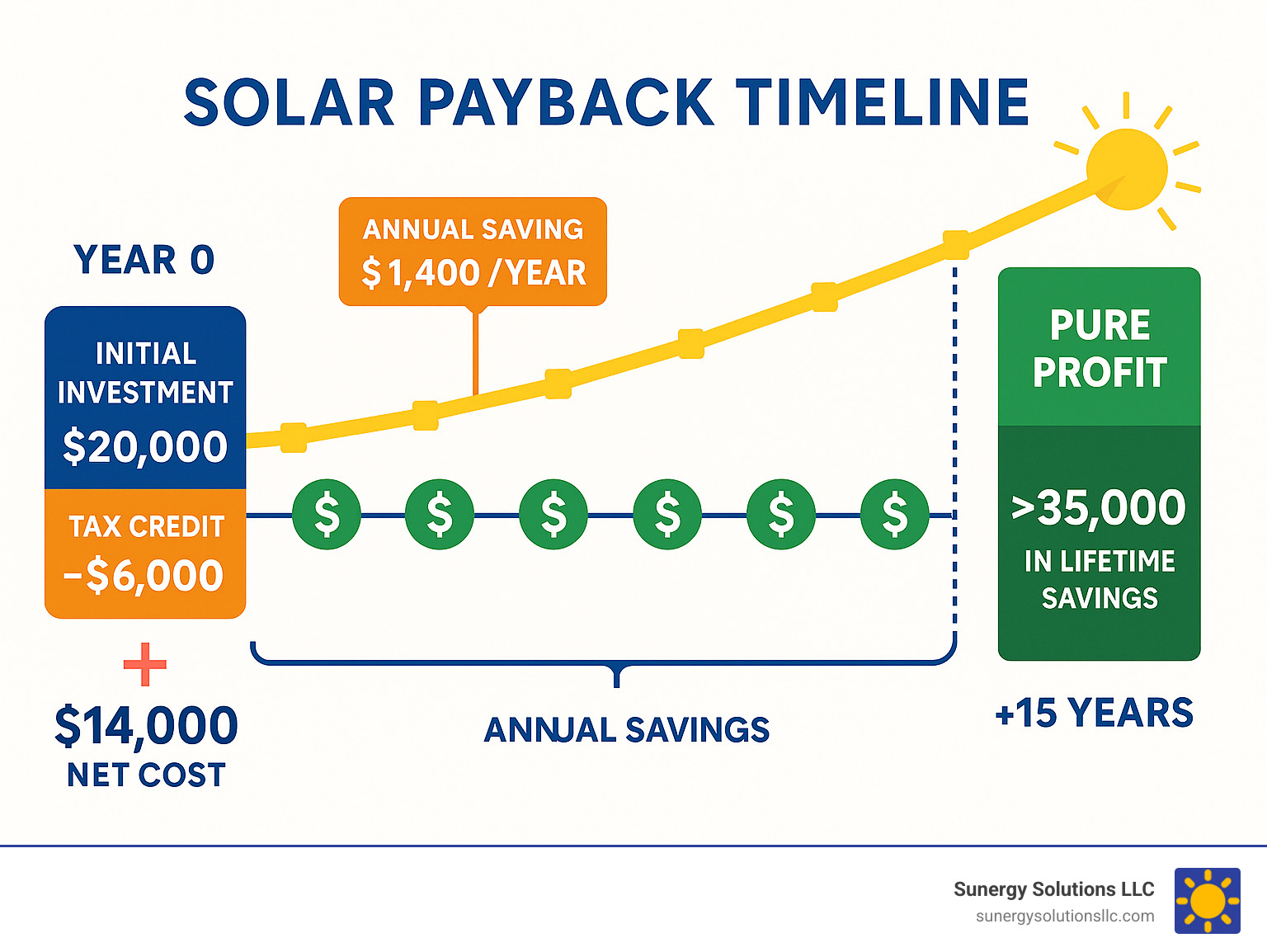
The math is straightforward: take your total system cost, subtract federal and state incentives, then divide by your annual electricity savings. A $20,000 system with $6,000 in tax credits and $1,400 in yearly savings pays for itself in exactly 10 years.
Why this matters right now: Electricity rates have increased by an average of 2.5% annually over the past 25 years, with some states like California seeing increases as high as 10% per year. Solar panels lock in your energy costs and provide predictable savings for decades.
As Robert Raffa, CEO and Founder of Sunergy Solutions LLC, I’ve spent nearly a decade helping Northeast homeowners understand solar return on investment through rigorous financial analysis of thousands of installations. My background in investment banking allows me to break down the numbers in simple terms that make sense for your specific situation.
Simple solar return on investment word guide:
When homeowners ask me about going solar, they want to know two things: “How much money will I make?” and “How long before I break even?” These questions get to the heart of what makes solar such a smart investment. Understanding your solar return on investment means getting comfortable with two key numbers that work hand-in-hand to show your financial future.
Think of it this way: your solar panels are like buying a money-making machine for your roof. The payback period tells you when that machine has earned back what you paid for it. The ROI tells you how much extra money it’ll make you over its lifetime. Both numbers are crucial for making a smart decision about your energy future.
Solar panel ROI is simply how much money you’ll earn compared to what you spend. It’s like asking, “If I put $20,000 into solar panels, how much will I get back over the years?”
The typical solar return on investment ranges from 10% to 30% annually, with most homeowners seeing around 15%. To put this in perspective, the stock market has averaged about 8% over the past 90 years. Your solar panels are potentially beating Wall Street while sitting quietly on your roof.
What makes solar ROI especially attractive is that your electricity savings aren’t taxed as income. When you save $150 on your electric bill, you keep the full $150. Compare that to earning $150 in the stock market, where you’d owe taxes on any gains.
Solar also gives you predictable performance. Unlike stocks that can crash overnight, your panels produce consistent, measurable returns every sunny day. You’re also hedging against inflation – as electricity rates rise (and they always do), your savings grow automatically.
Your solar payback period is when your system has officially paid for itself through energy savings. It’s your break-even point – the moment when every dollar you save going forward is pure profit.
Most American families reach their payback period between 8 and 12 years. States with high electricity rates like Massachusetts often see payback in just 5-7 years, while areas with cheaper power might take 12-15 years.
Here’s the exciting part: solar panels typically last 25-30 years with minimal maintenance. After your payback period, you’ll enjoy 15-20 years of essentially free electricity. Solar Panels: How They Work and Their Efficiency explains how modern panels maintain over 80% of their original performance even after 25 years.
Don’t worry – you don’t need an MBA to figure this out. The formula is refreshingly simple:
Payback Period = (Total System Cost – Incentives) ÷ Annual Electricity Savings
Let me walk you through a real example. Say you’re looking at a $25,000 solar system. You’ll get the federal tax credit of 30% (that’s $7,500 back), plus maybe $2,000 in state incentives. Your net cost becomes $15,500.
If your system saves you $1,550 per year on electricity, divide $15,500 by $1,550. Your payback period is exactly 10 years.
But here’s a bonus: this calculation assumes your electric bill stays the same. Since utility rates typically increase 2.5% annually, your actual payback will likely be shorter as your savings grow each year.
Calculating your solar return on investment means looking at the big picture – your total lifetime savings versus what you paid upfront.
ROI = (Total Lifetime Savings – Total System Cost) ÷ Total System Cost × 100
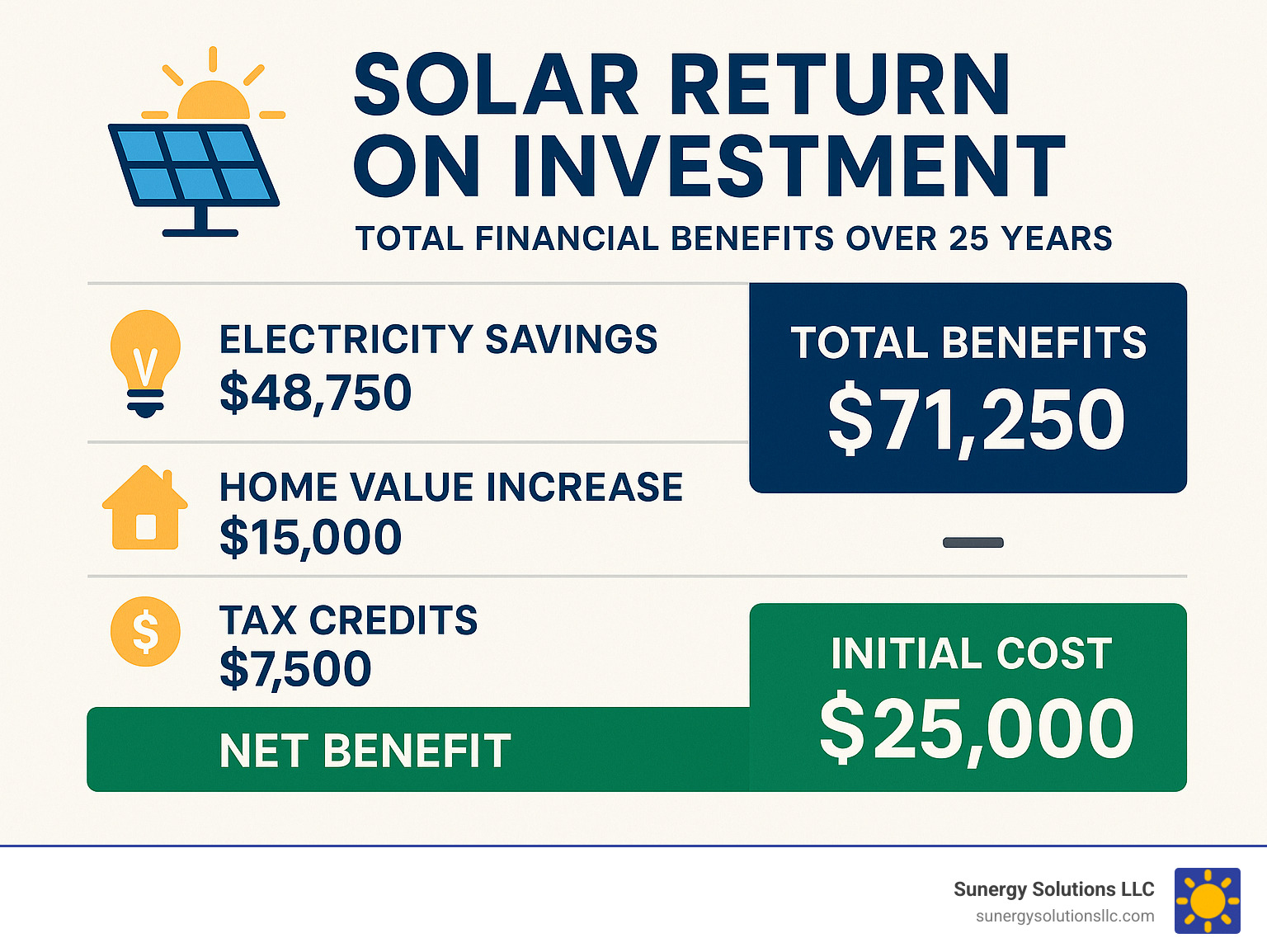
Using our $15,500 system example, let’s project 25 years of savings. Starting with $1,550 in year one and assuming electricity rates rise 2.5% annually, you’d save approximately $48,750 over 25 years.
Your net profit would be $48,750 minus your $15,500 investment, giving you $33,250 in pure profit. That’s a 214% return on investment – or about 8.5% annually.
For investment professionals, we often use Internal Rate of Return (IRR), which accounts for the time value of money. Most solar installations achieve an IRR of 10-15%, comparing favorably to the stock market while offering much lower risk and the peace of mind that comes with energy independence.
Your solar return on investment isn’t just about the panels on your roof – it’s shaped by a mix of factors that can make or break your financial success. Think of it like baking a cake: you need the right ingredients in the right proportions to get the perfect result.
The good news? Most of these factors work in your favor, especially here in the Northeast where we serve homeowners. Let’s break down what really matters for your solar investment.
The sticker price might make you gulp, but here’s the thing: most homeowners pay between $15,000 and $25,000 before incentives. That translates to about $2.50 to $4.00 per watt installed – and every dollar you spend wisely upfront pays dividends for decades.
Equipment quality makes a huge difference in your long-term returns. Premium panels cost more initially but generate more electricity over their lifetime. It’s like buying a reliable car versus a lemon – you’ll thank yourself later when your neighbors are dealing with repairs while your system hums along trouble-free.
Installation complexity affects your costs too. A simple installation on a single-story home with a south-facing roof costs less than a complex multi-story project. But don’t let a challenging roof scare you away – the right installer can work with almost any situation.
At Sunergy Solutions LLC, we believe in doing things right the first time. Our Solar System Financing Options for Homeowners can help spread those upfront costs while preserving your solar return on investment. We use only top-tier equipment with rock-solid warranties because we’ve seen too many homeowners get burned by cheap systems that fail after a few years.
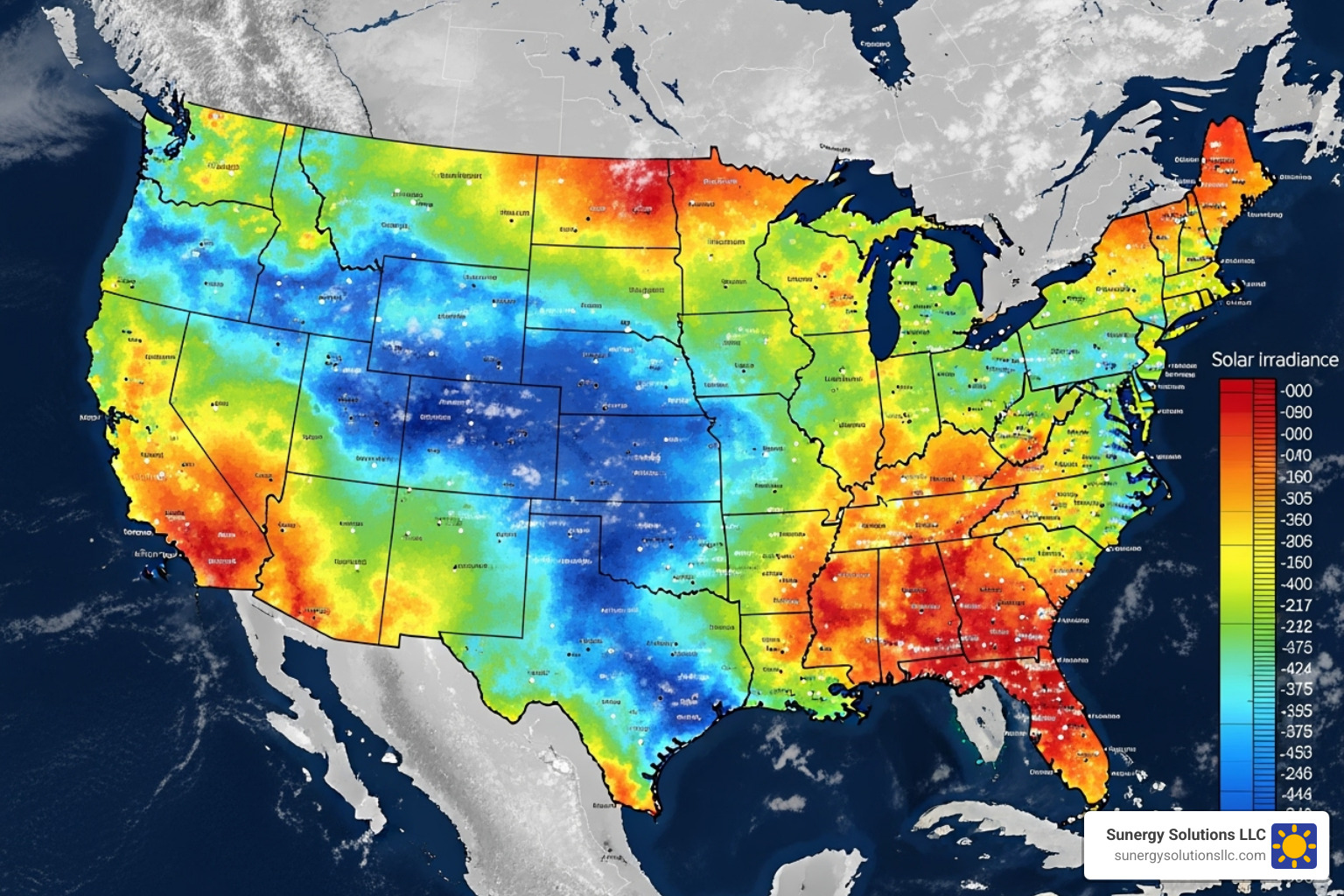
Here’s where geography gets interesting. You might think Arizona homeowners have all the advantages, but you’d be wrong. Location affects your solar return on investment through two key factors: available sunlight and local electricity costs.
Sun hours vary dramatically across the country. The Southwest enjoys 5-7 peak sun hours daily, while we get 3.5-4.5 hours here in the Northeast. But before you start feeling sorry for yourself, consider this: electricity rates tell a completely different story.
We’re talking about some serious rate differences. Hawaii residents pay around $0.33 per kilowatt-hour, while Massachusetts averages $0.22 and Connecticut hits $0.21. Compare that to Louisiana at $0.09 or Washington at $0.10, and you’ll see why location matters so much.
The beautiful irony? States with less sunshine often deliver better solar returns because of high electricity rates and generous incentive programs. Massachusetts homeowners regularly achieve payback periods of 5-7 years despite getting less sun than their southern neighbors.
Utility rates keep climbing too – about 2.5% annually over the past 25 years. That means your solar savings grow every year, making your investment more valuable over time. Our Commercial Solar Power: A Smart Business Decision shows how businesses in our service areas achieve excellent returns despite varying regional conditions.
This is where the magic happens. Financial incentives can slice 30-50% or more off your solar investment, turning a good deal into an absolute no-brainer.
The Federal Solar Investment Tax Credit leads the charge at 30% of your total system cost through 2032. There are no income limits, and it covers everything – panels, inverters, installation labor, even permits. If you owe taxes, you can claim this credit.
State and local programs add another layer of savings. Massachusetts offers the SMART program with performance-based incentives. New Hampshire provides excellent net metering with full retail credit. Maine kicks in rebates up to $2,000 per installation. Vermont combines net metering with renewable energy certificates for additional income.
Some utilities offer time-of-use rates that pay premium prices for electricity generated during peak hours. Others provide Solar Renewable Energy Certificates (SRECs) that create an additional revenue stream from your system’s environmental benefits.
The Homeowner’s Guide to the Federal Tax Credit walks you through claiming your federal incentive. Our team helps you steer all available programs through our comprehensive Solar Tax Credits and Rebates: What You Need to Know resource.
Net metering is like having a bank account with your utility company. When your panels produce more electricity than you use, that excess power flows back to the grid and you get credits on your bill. It’s a beautiful system that maximizes the value of every kilowatt-hour your panels generate.
Here’s how it works: excess production from your solar panels gets exported to the grid, credits accumulate on your utility bill, and you can use those credits to offset electricity you draw from the grid when the sun isn’t shining.
Net metering variations matter for your solar return on investment. Full retail rate credit means you get paid the same amount you pay for electricity. Avoided cost rate bases credits on the utility’s cost to generate power. Time-of-use rates vary credits based on when electricity is produced.
The good news for our customers? All states in our service area maintain strong net metering policies. The specific rules vary, but they’re all designed to make solar financially attractive for homeowners.
Our Net Metering: How It Works and Why It’s Important guide explains exactly how these policies affect your specific situation and maximize your solar investment returns.

Knowing what makes a good solar return on investment helps you decide if solar panels make sense for your family’s budget. The simple rule of thumb? If your system pays for itself in less than half its expected lifespan, you’ve got a winner.
A solid solar return on investment varies depending on where you live and your local electricity costs, but the numbers tell a clear story across the country.
Payback periods of 5-8 years represent excellent investments, typically found in states like Massachusetts and Connecticut where high electricity rates meet strong incentive programs. Good payback periods fall between 8-12 years, covering most of the United States. Even acceptable payback periods of 12-15 years still generate substantial profits over your system’s 25-30 year lifespan.
When we look at annual returns, excellent solar investments deliver 15-30% returns, while good investments provide 10-15% annually. Even acceptable solar ROI at 6-10% annual returns often beats traditional investment options.
Here’s what’s fascinating: states with less sunshine often deliver better returns than you’d expect. Massachusetts homeowners frequently achieve 16-20% internal rates of return despite receiving less sunlight than Arizona. The reason? Sky-high electricity rates and generous state incentives more than make up for fewer sunny days.
Compared to the S&P 500’s historical 8% average annual return, solar investments in most states offer competitive or superior returns with much lower risk. Your solar panels won’t lose half their value in a market crash, and they provide predictable, measurable returns month after month.
The difference between good and great solar return on investment often comes down to smart decisions during the planning and installation process.
Right-sizing your system stands as the most critical factor. Too small, and you miss out on economies of scale. Too large, and you’re paying for power you can’t use effectively. We analyze your past three years of electricity usage to find that sweet spot where your system generates maximum savings without overproducing.
Choosing high-efficiency panels might cost more upfront, but they often deliver better long-term returns, especially if you have limited roof space. Premium panels generate more power per square foot and typically come with better warranties, protecting your investment for decades.
Taking advantage of all available incentives can reduce your net cost by 30-50% or more. The federal tax credit alone saves you 30% of your total system cost, but state and local programs can add thousands more in savings. We help you steer every available program to maximize your upfront savings.
Working with a reputable installer protects your investment through proper system design, quality installation, and comprehensive warranties. Poor installation can reduce your system’s performance by 10-20%, directly impacting your returns for decades. Our Affordable Solar Panels program ensures you get premium equipment and installation without compromising your ROI.
Your solar return on investment extends far beyond monthly electricity bill savings, creating multiple streams of financial benefit that add substantial value over time.
Increased home value represents one of the most significant additional benefits. Zillow’s research shows homes with solar panels sell for an average of 4.1% more than comparable homes without solar. For a $400,000 home, that’s an extra $16,400 in value – money you can access when you sell, even if you move before your payback period ends.
Energy independence provides protection against rising utility costs that have averaged 2.5% annual increases nationwide. Some states have seen much steeper increases – California utilities raised rates over 10% in recent years. Your solar system locks in your electricity costs for 25+ years, providing predictable savings that grow larger as utility rates climb.
Tax advantages multiply your savings beyond the obvious federal tax credit. Your electricity bill reductions aren’t taxed as income, unlike returns from stocks or bonds. Most states also exempt solar installations from property tax increases, so you get the home value boost without paying extra property taxes.
Hedging against utility inflation becomes increasingly valuable over time. While your neighbors see their electricity bills rise year after year, your costs remain stable. After 15 years, this protection alone can be worth thousands of dollars annually.
Our Residential Solar System with Battery Backup solutions add even more value by providing energy security during power outages, protecting your home and family when the grid fails.
Here’s some great news for your solar return on investment: modern solar panels are built to last much longer than most people realize. Most panels come with 25-year warranties, but they typically keep producing electricity well beyond that timeframe – often 30 years or more with proper care.
Think of solar panels like a reliable car that just keeps running. In the first year, your panels operate at 100% of their rated capacity. By year 10, they’re still humming along at 95-97% efficiency. Even after 20 years, you can expect 85-90% of original performance. The warranty guarantees at least 80% efficiency after 25 years, but many panels exceed this benchmark.
What affects how long your panels last? Climate conditions play a role – extreme heat, cold, and severe weather can impact longevity. Installation quality is crucial too, which is why we use rigorous mounting and wiring standards at Sunergy Solutions LLC. Regular maintenance like cleaning and inspections helps extend system life, and equipment quality matters – premium panels often outlast budget options by years.
The beauty of this longevity is that after your system pays for itself (usually in 8-12 years), you’ll enjoy 15-20 years of essentially free electricity. That’s a lot of extra money in your pocket!
This is one of the most common concerns we hear, and thankfully, the answer is usually very good news. Most states actively encourage solar adoption by providing favorable property tax treatment – meaning you won’t get hit with higher taxes just for making a smart energy investment.
The most common approach is full exemption, where solar installations add zero to your property tax burden. Some areas offer partial exemptions or assessment caps that limit how much solar can increase your taxable value. A few places provide temporary exemptions for a specific number of years.
Here in our service area, the news gets even better. Massachusetts exempts solar installations from property tax entirely. New Hampshire won’t add any property tax for your solar system. Maine, Vermont, and Rhode Island all provide similar exemptions, protecting your investment from additional tax burden.
Even in the rare areas where solar might slightly increase property taxes, the additional cost is typically far outweighed by electricity savings and increased home value. You’re still coming out way ahead financially.
This might surprise you, but New England actually offers some of the best solar return on investment opportunities in the entire country! I know it sounds counterintuitive – after all, we’re not exactly Arizona when it comes to sunshine – but the numbers don’t lie.
Here’s why our region is fantastic for solar: high electricity rates make every kilowatt-hour of solar production more valuable. Massachusetts averages $0.22 per kWh compared to the national average of $0.12 per kWh. That means your solar savings add up much faster, even with fewer sun hours.
Strong incentive programs throughout New England sweeten the deal considerably. State rebates, performance incentives, and excellent net metering policies that give you full retail credit for excess production all boost your returns. Plus, our region has stable, long-term policies supporting renewable energy, so you can count on these benefits.
Here’s something that might blow your mind: solar panels actually perform better in cooler temperatures. Those scorching summer days in the Southwest actually reduce panel efficiency. Our cold, clear winter days often produce more electricity than you’d expect, and snow reflects additional light to your panels.
Real results speak for themselves. Massachusetts homeowners typically see 7-9 year payback periods. New Hampshire’s strong net metering drives 8-10 year paybacks. Maine and Vermont offer similar excellent returns through their combination of incentives and high electricity rates.
Our 10 Compelling Reasons to Choose a Solar Installation Company in MA, NH, ME, or RI dives deeper into why our region is ideal for solar investment, despite what you might think about our climate.
The bottom line? Don’t let New England’s reputation for cloudy weather fool you. When you factor in our high electricity costs, generous incentives, and favorable policies, solar delivers outstanding returns right here in our backyard.
After nearly a decade of helping homeowners across the Northeast make informed energy decisions, I can tell you that solar return on investment isn’t just about the numbers – though those numbers are pretty compelling. It’s about taking control of your energy future while making a smart financial move that pays dividends for decades.
The math speaks for itself: Most homeowners in our service areas see payback periods between 7-12 years, followed by 15-20 years of essentially free electricity. That’s a solar return on investment that consistently outperforms traditional investments while providing something the stock market can’t – predictable, measurable returns that actually improve your daily life.
But here’s what really excites me about solar: it’s one of the few investments that gets better with time. While your neighbors watch their electricity bills climb year after year, you’ll be sitting pretty with locked-in energy costs. That 2.5% annual increase in utility rates? It actually works in your favor, making your solar investment more valuable each year.
The environmental benefits are the cherry on top. Your average home solar system prevents over 100,000 pounds of CO2 from entering the atmosphere over its lifetime. That’s equivalent to planting 2,500 trees or taking two cars off the road for 10 years. You’re not just saving money – you’re leaving a cleaner planet for your kids and grandkids.
Every home tells a different story, which is why we never give cookie-cutter advice. Your roof angle, shading patterns, energy usage, and local utility rates all factor into your unique solar return on investment calculation. Some customers save $2,000 per year, others save $800 – both can represent excellent investments depending on the system size and cost.
At Sunergy Solutions LLC, we’ve built our reputation on honest assessments and transparent communication. If solar doesn’t make financial sense for your specific situation, we’ll tell you straight up. But in our experience serving thousands of homeowners across New England and beyond, the vast majority of homes are excellent candidates for solar.
Ready to find your solar potential? Our team provides detailed financial analysis custom to your exact situation – your actual energy bills, your specific roof conditions, and all available local incentives. We’ll show you exactly what your payback period and lifetime savings look like, with no pressure and no obligation.
The consultation is completely free, and we’ll give you all the information you need to make an informed decision. Whether you move forward with us or not, you’ll walk away understanding exactly how solar could work for your home.
Request a free, no-obligation solar estimate for your New Hampshire home or contact us about opportunities in Maine, Massachusetts, Rhode Island, Vermont, Montana, or Virginia.
Your journey to energy independence starts with understanding your numbers. Let us show you exactly how much you can save – both for your wallet and for the planet.
Appointments Available, 7 Days a Week


