
5.0 Rating
Request A Free Estimate
NH solar power incentives can save you thousands of dollars on your solar installation, making clean energy an affordable reality for New Hampshire homeowners and businesses. With electricity rates 35% higher than the national average and solar costs dropping 45% over the past five years, there’s never been a better time to go solar in the Granite State.
Here are the top NH solar power incentives available right now:
The average New Hampshire homeowner can save $4,925 on solar panels with these rebates and incentives combined. A typical 5kW system costs around $16,417 before incentives, but drops to just $11,492 after applying the federal tax credit alone.
With high electricity costs averaging 30.67 cents per kilowatt-hour and strong solar incentives, New Hampshire ranks as one of the best states for solar investment. The typical payback period is just over 8 years, with lifetime savings exceeding $55,000.
I’m Robert Raffa, CEO and Founder of Sunergy Solutions LLC, and I’ve spent nearly a decade helping Northeast homeowners steer NH solar power incentives to maximize their solar investments. My background in investment banking gives me unique insight into the financial strategy behind solar incentives, ensuring our clients capture every available dollar of savings.
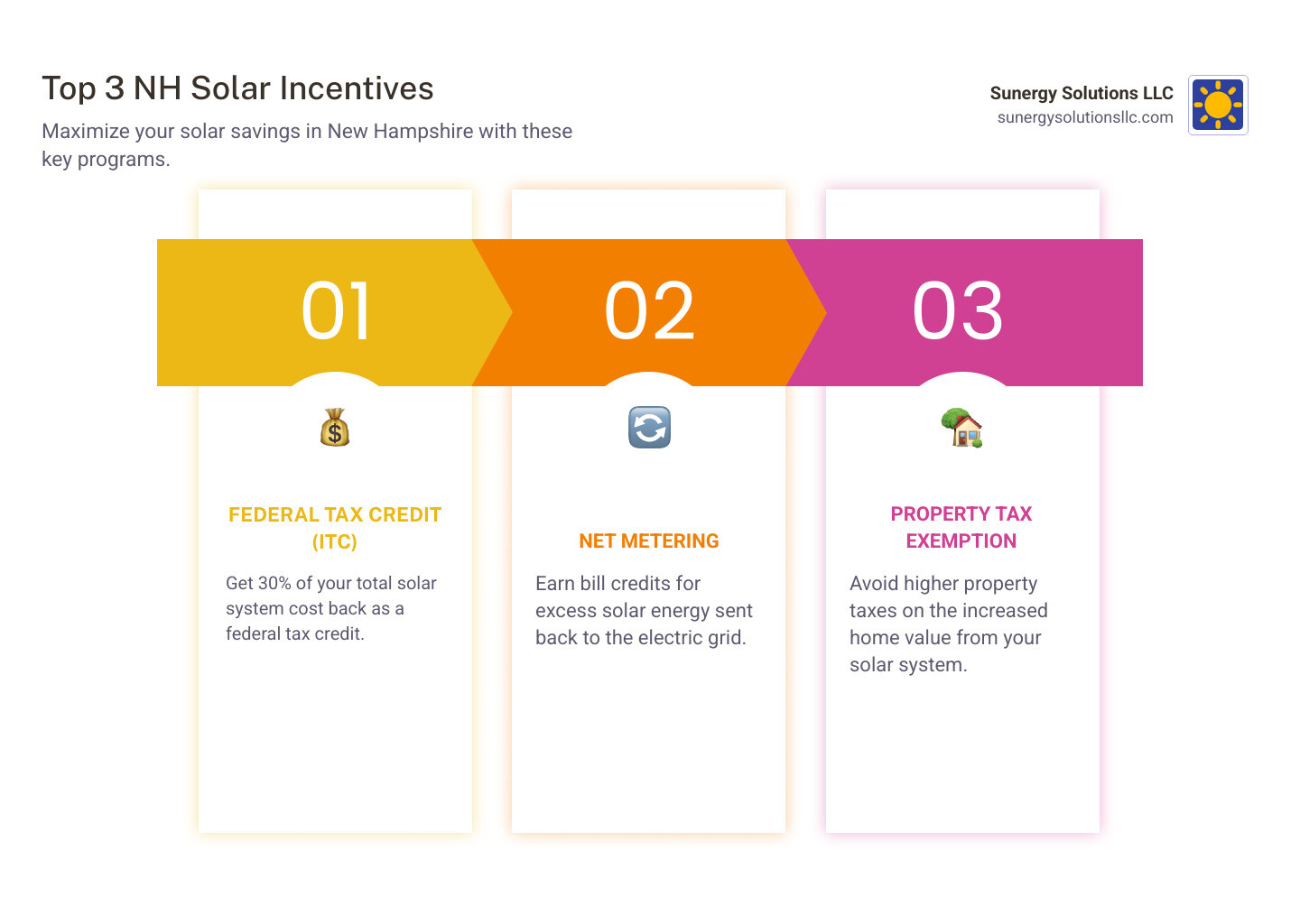
Nh solar power incentives terms at a glance:
Let’s talk about the superstar of NH solar power incentives – the Federal Solar Investment Tax Credit, officially called the Residential Clean Energy Credit. This isn’t your typical small discount coupon. We’re talking about a 30% tax credit on your entire solar system cost. That’s right – nearly one-third of your investment comes back to you!
Here’s what makes this credit so amazing: it covers everything. Your solar panels, installation labor, electrical work, permits, and even solar batteries if you decide to add energy storage. Since New Hampshire doesn’t have sales tax anyway, you’re already ahead of the game there.
The best part? This generous 30% rate is locked in through 2032, thanks to the Inflation Reduction Act. That gives you plenty of time to plan your solar investment without worrying about the incentive disappearing.

Here’s the key requirement: you must own your solar system. Leasing or power purchase agreements won’t qualify, which is why we always recommend ownership options to our clients. You want to capture every dollar of savings possible!
The credit is non-refundable, meaning it reduces your federal tax liability but won’t generate a refund check if it exceeds what you owe. Don’t worry though – any unused credit can roll over for up to five years. Most homeowners can use the full credit over time.
To claim your credit, you’ll file IRS Form 5695 with your tax return. While it’s straightforward, we recommend working with a tax professional to make sure you get every benefit. Keep all your installation receipts – you’ll need them!
Let’s crunch some real numbers. The average solar system in New Hampshire costs around $16,417 before incentives. With the federal tax credit, here’s what happens:
Your $16,417 system drops to just $11,492 after the credit. That’s $4,925 back in your pocket! For most New Hampshire homeowners, the federal tax credit value ranges from $6,600 to $7,300, depending on system size.
Planning to add solar batteries? Even better! Battery storage qualifies for the same 30% credit. A system with batteries can boost your total tax credit by thousands more, making energy independence surprisingly affordable.
This is exactly why NH solar power incentives make going solar such a smart financial move. When you can get nearly a third of your investment back from the federal government alone, solar becomes a no-brainer for most homeowners.
The federal tax credit might be the star of the show, but New Hampshire’s own NH solar power incentives are the supporting cast that can really make your solar investment shine. These state and local programs work hand-in-hand with federal incentives, creating a powerful combination that makes going solar in the Granite State incredibly attractive.

What makes New Hampshire’s incentive landscape particularly interesting is that many programs are “local-option” incentives. This means your specific town or city gets to decide whether to participate. It’s like a solar incentive buffet where different communities offer different options. That’s exactly why we always take the time to research your specific location – we want to make sure you don’t miss out on a single dollar of savings available in your area.
Net metering is hands-down one of the most valuable NH solar power incentives you’ll use every single day. Think of it as turning your electric meter into a two-way street. When your solar panels are cranking out more electricity than you’re using (which happens a lot on sunny days), that extra power doesn’t just disappear – it flows back into the grid, and your utility company gives you credits for it.
Here’s how it works in real life: Let’s say it’s a beautiful Saturday afternoon, your family’s out at the lake, but your solar panels are working hard on your roof. All that electricity they’re producing gets sent to the grid, and you earn credits. Later that evening when you’re back home cooking dinner and the sun’s going down, you use those credits to power your home. It’s like having an energy savings account!
New Hampshire requires most major utility companies to offer net metering, including Eversource, Liberty Utilities, New Hampshire Electric Cooperative (NHEC), and Unitil. You can dive deeper into the specifics by checking out NH’s net metering rules on the state’s website.
Right now, we’re operating under NEM 2.0 in New Hampshire. Under this system, you still get credits for your excess energy, though they’re slightly less than the full retail rate you pay for electricity. The difference comes from small fees called “non-bypassable charges” that help maintain the electrical grid. Don’t worry though – net metering still provides incredible value and can dramatically reduce or even eliminate your monthly electric bill.
Here’s something important to keep in mind: New Hampshire is currently developing NEM 3.0, which could potentially reduce the value of the credits you earn for excess solar power. We’ve seen this trend in other states, and it’s one reason why we often encourage homeowners to move forward with solar sooner rather than later. Installing your system now could grandfather you into the current, more favorable rates for years to come.
Here’s a pleasant surprise that many homeowners don’t expect: when you add solar panels to your home in New Hampshire, you won’t pay extra property taxes on the value they add. Normally, when you make a significant improvement to your home, your property taxes go up because your home is now worth more. But with solar panels, New Hampshire says “not so fast!”
This property tax exemption is one of those local-option NH solar power incentives, which means your city or town has to choose to participate. The good news is that many communities across the state have acceptd this program because they recognize the benefits of encouraging clean energy. You can check if your municipality participates by looking at this map of participating NH municipalities.
The savings from this exemption really add up over time. On average, homeowners save about $433 per year in avoided property taxes. Over the 20-year lifespan of your solar system, that adds up to more than $8,600 in savings – nothing to sneeze at!
To claim this exemption, you’ll need to file Form PA-29 (the Permanent Application for Property Tax Credits/Exemptions) with your local municipality. The deadline is typically April 15th each year, so it’s something to mark on your calendar once your system is up and running.
The solar incentive landscape in New Hampshire has evolved quite a bit over the years, and it’s worth understanding both what’s currently available and what’s changed recently.
One program that used to be a great option was the Residential Renewable Electrical Generation Rebate Program. This offered cash rebates of $0.20 per watt installed, up to $1,000 or 30% of your total system cost. Unfortunately, this program was permanently closed due to recent legislative changes. While some applications submitted before June 30, 2025, might still be processed, new solar installations can’t take advantage of this rebate anymore.
On the bright side, New Hampshire has no statewide sales tax, which means you’re not paying extra tax on your solar equipment like you would in many other states. While this isn’t technically a solar-specific incentive, it’s a real financial benefit that makes going solar more affordable here than in states with hefty sales taxes.
If you’re an Eversource customer considering battery storage, the ConnectedSolutions battery program is worth exploring. This program pays you for allowing Eversource to access your battery during peak demand periods, helping stabilize the grid. Participants can receive around $230 per kWh installed, with average cashbacks reaching up to $3,000. The program has limited funding, so availability can vary.
Looking ahead, there’s exciting news on the horizon. New Hampshire is set to receive over $43 million through the federal Solar For All initiative. This EPA-administered program is specifically designed to expand solar access to low-income and underserved households. We’re keeping a close eye on how these funds will be deployed and encourage you to monitor the NH Department of Energy website for updates on this and other future programs that might emerge from the state’s Renewable Energy Fund.
While some states offer additional programs like Solar Renewable Energy Credits (SRECs) or residential PACE financing, these aren’t currently available to New Hampshire homeowners. But honestly, with the combination of the federal tax credit, net metering, and property tax exemptions, NH solar power incentives still make solar an incredibly smart investment for your home and your wallet.
Getting the most out of NH solar power incentives doesn’t have to feel overwhelming. Think of it like following a recipe – once you know the steps, it’s surprisingly straightforward. We’ve helped hundreds of New Hampshire families steer this process, and honestly, most of our clients are amazed at how simple it actually is once you break it down.
The key is understanding that each incentive has its own timeline and requirements. Some happen automatically, others require a bit of paperwork on your part. The good news? We’re here to guide you through every step, and many of these processes happen behind the scenes while you’re already enjoying the benefits of solar power.
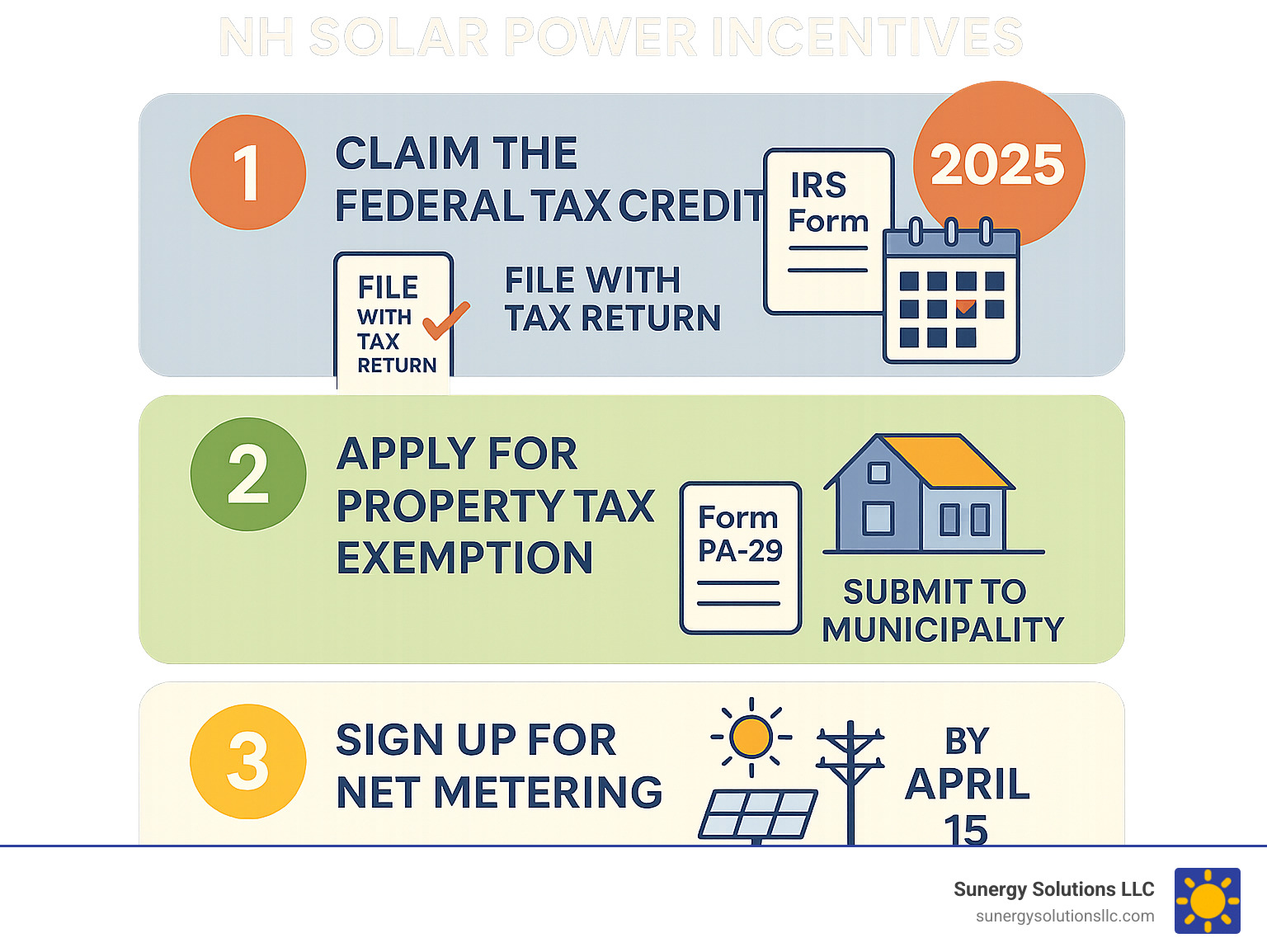
The federal tax credit is your biggest money-saver, and claiming it is more straightforward than most people expect. Since this credit can put thousands of dollars back in your pocket, it’s worth getting right from the start.
First things first – make sure you own your system. This might seem obvious, but it’s crucial. If you lease your panels or enter into a power purchase agreement, you won’t qualify for this credit. That’s one of the many reasons we always recommend solar ownership to our clients.
Keep every single receipt and document related to your solar installation. This includes invoices for equipment, labor costs, permit fees, and any battery storage you add. Your future self (and your tax preparer) will thank you for being organized. We provide all our clients with a comprehensive documentation package to make this easy.
When tax season rolls around, you’ll complete IRS Form 5695 and attach it to your federal tax return. This form walks you through calculating your credit amount based on your total eligible solar expenses. We strongly recommend working with a qualified tax professional for this step. They can ensure you’re capturing every eligible expense and help you plan if you need to carry the credit forward to future years.
This is a tax credit that reduces what you owe the IRS, not an upfront rebate. But the impact on your overall solar investment is immediate and substantial.
The property tax exemption is like getting a permanent discount on your annual property taxes – it’s definitely worth the small amount of paperwork involved. This NH solar power incentive can save you over $400 annually, which adds up to thousands over your system’s lifetime.
Start by confirming your town participates in this local-option program. Most New Hampshire municipalities do, but it’s always smart to double-check. You can reference the map of participating NH municipalities or simply call your town’s assessor’s office.
Once you’ve confirmed eligibility, you’ll need to file the Permanent Application for Property Tax Credits/Exemptions (PA-29) with your local municipality. The deadline is April 15th each year, so mark your calendar. This is an annual filing requirement to maintain your exemption.
The form itself is pretty straightforward – it asks for basic information about your property and solar system. We often help our clients steer any local quirks in the application process, since requirements can vary slightly from town to town.
Here’s where things get really easy for you. Net metering enrollment is primarily handled by your solar installer – that’s us! – so you don’t have to worry about navigating utility company bureaucracy on your own.
Once your solar system is installed and ready for connection, we’ll prepare and submit all the necessary interconnection paperwork to your utility company. This includes detailed specifications about your system and ensures everything meets their technical requirements. Your utility company – whether that’s Eversource, Unitil, NHEC, or Liberty – will review the application and schedule the installation of your new net meter.
This special meter is what makes the magic happen. Unlike your old meter that only measured electricity flowing into your home, your net meter tracks electricity flowing both ways. When your panels produce more power than you’re using, that excess flows back to the grid, and you earn credits.
After your system receives Permission to Operate (PTO), you should start seeing those valuable credits appear on your monthly electricity bills. We always recommend reviewing your first few bills carefully to make sure everything looks right. If you have questions about your credits or notice anything unusual, don’t hesitate to reach out to us or contact your utility company directly.
The beauty of net metering is that once it’s set up, it works automatically in the background, continuously reducing your electricity costs month after month. Many of our clients are delighted when they receive their first $0 electric bill – or even better, a credit balance that carries forward to the next month.
As someone who’s helped hundreds of New Hampshire families make the switch to solar, I hear the same questions over and over again. Let me address the big ones that keep homeowners up at night – and hopefully put your mind at ease about making this important investment.
Absolutely, yes! I know what you’re thinking – New Hampshire isn’t exactly known for its year-round sunshine. We get somewhere between 90 to 199 sunny days per year, which honestly sounds pretty modest. But here’s the thing that surprises most people: our high electricity prices more than make up for any cloudy days.
When you’re paying residential electricity rates that hover around $0.23 to $0.3067 per kilowatt-hour – significantly above the national average – every bit of solar energy your panels produce translates into real money back in your pocket. It’s like having your own personal money-printing machine on your roof (okay, maybe that’s a bit dramatic, but you get the idea!).
The NH solar power incentives we’ve covered make the financial case even stronger. With the 30% federal tax credit and net metering working in your favor, the average payback period for solar in New Hampshire is just over 8 years. That’s actually faster than the typical 10-15 year national average, which might surprise you given our northern location.
But here’s where it gets really exciting – the long-term savings potential. A typical 5 kW solar system in New Hampshire can save you over $55,000 on electricity costs over 20 years if you pay cash upfront. Plus, installing solar panels typically boosts your home’s value by around 4.1%, adding another layer of financial benefit. So yes, despite our sometimes-gloomy New England weather, solar panels are definitely worth it here in the Granite State!
This is probably the question I get asked most often, and for good reason – net metering changes can significantly impact your long-term solar savings. New Hampshire’s net metering landscape has been evolving, and staying informed is crucial for making smart decisions.
We’ve already moved from the original NEM 1.0 (which was quite generous) to the current NEM 2.0 system. Under NEM 2.0, you still receive valuable credits for excess energy your panels send back to the grid, but those credits are worth slightly less than the full retail rate due to “non-bypassable charges” – essentially small fees that utilities use to maintain the grid infrastructure.
Here’s what has many of us in the solar industry paying close attention: NEM 3.0 is currently in development. The state is actively working through a stakeholder process to determine what the next version of net metering will look like. Based on what we’ve seen in other states (California’s NEM 3.0 being a prime example), there’s a real possibility that future net metering policies could further reduce the value of the electricity you export to the grid.
This is why I often tell homeowners that acting sooner rather than later could be a smart financial move. By installing your solar system now, you may be able to lock in the current, more favorable net metering rates for a set period through grandfathering provisions. It’s like getting a head start before the rules potentially change. While we don’t know exactly what NEM 3.0 will bring, protecting your investment from potential future policy changes is worth considering.
I wish I had better news on this front, but I believe in giving you the straight facts. The Residential Renewable Electrical Generation Rebate Program, which historically offered up to $1,000 or 30% of system costs (whichever was less), has been permanently closed. This happened due to recent legislative changes, specifically Senate Bill 303 (2024) and House Bill 2 (2025).
If you submitted an application before June 30, 2025, there’s still a chance it might be processed, but no new projects can apply for this particular state rebate. It’s disappointing, I know, especially since this was a nice chunk of change that helped make solar even more affordable for New Hampshire families.
But here’s the silver lining – the story isn’t over. The New Hampshire Department of Energy is actively exploring new program ideas through ongoing stakeholder processes. They’re managing the Renewable Energy Fund and looking at ways to continue supporting renewable energy adoption in our state.
Even more exciting is the Solar For All initiative funding that’s coming to New Hampshire. We’re talking about over $43 million in federal funding specifically designed to expand solar access, particularly for low-income and underserved households. While we’re still waiting for details on how this will roll out, it represents a significant opportunity to make solar accessible to even more residents.
My advice? Keep an eye on the NH Department of Energy website for updates. The landscape of NH solar power incentives is always evolving, and new opportunities often emerge when you least expect them. While we can’t rely on state rebates right now, the federal incentives and local programs we’ve discussed still make solar a fantastic investment for New Hampshire homeowners.
The numbers don’t lie – NH solar power incentives have created the perfect storm for homeowners looking to break free from rising electricity costs while making a positive environmental impact. With New Hampshire’s electricity rates sitting 35% above the national average and solar costs dropping 45% over the past five years, there’s never been a more compelling time to make the switch.
Think about it: the federal tax credit alone saves you $4,925 on an average system, net metering puts money back in your pocket every month, and the property tax exemption protects you from higher taxes on your home’s increased value. When you add it all up, you’re looking at potential lifetime savings exceeding $55,000 with a payback period of just over 8 years.

But the benefits go far beyond your bank account. Every kilowatt-hour your solar panels produce is clean energy that doesn’t rely on fossil fuels. You’re not just cutting your electric bill – you’re reducing your carbon footprint and contributing to a cleaner future for New Hampshire. Plus, there’s something incredibly satisfying about watching your electric meter spin backward on sunny days!
Energy independence is another huge win. With solar panels on your roof, you’re less vulnerable to utility rate hikes and power outages (especially if you add battery storage). You’re taking control of your energy future instead of being at the mercy of rising electricity costs.
At Sunergy Solutions LLC, we’ve helped countless New Hampshire families steer NH solar power incentives and turn their rooftops into money-saving power plants. Our approach is simple: we use top-tier equipment, back everything with extensive warranties, and treat every customer like family. From your initial consultation through system activation and beyond, we’re with you every step of the way.
We know that choosing solar can feel overwhelming with all the technical details and paperwork involved. That’s exactly why we handle the heavy lifting – from designing your custom system to filing interconnection paperwork with your utility company. Our goal is to make your solar journey as smooth and stress-free as possible.
Ready to see how much you could save with solar? The incentives are strong right now, but as we’ve seen with net metering changes and the closure of the state rebate program, NH solar power incentives can evolve over time. Acting sooner rather than later helps ensure you lock in today’s benefits.
Learn more about our New Hampshire solar solutions and find how we can help you harness the power of the sun while maximizing every available incentive. Your future self (and your wallet) will thank you!

Appointments Available, 7 Days a Week


