
5.0 Rating
Request A Free Estimate
If you have been researching solar energy systems for your home, you have probably come across the terms “photovoltaic panels” and “solar panels.”
Many people assume they mean the same thing, but there are important differences between the two.
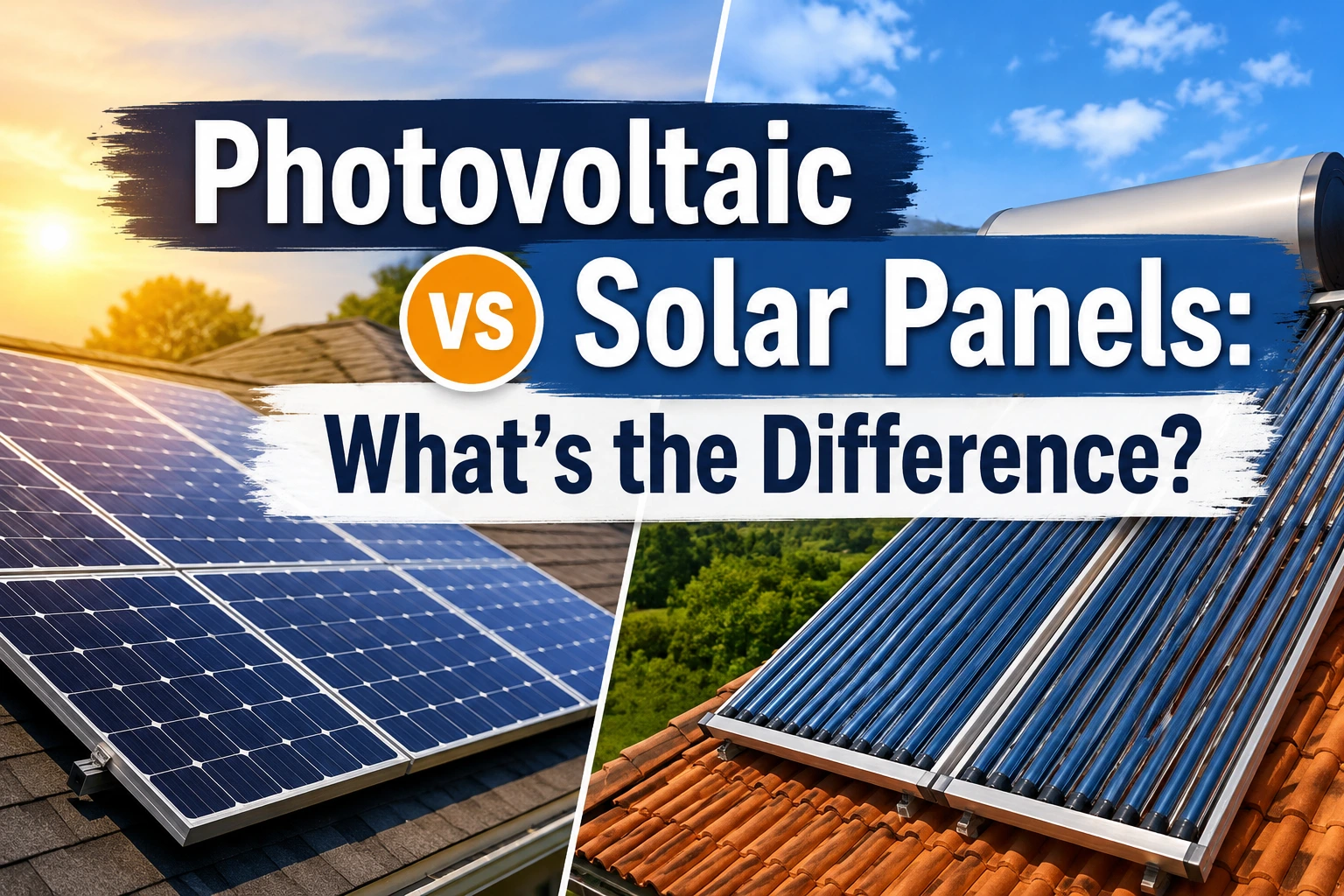
The short answer is that photovoltaic panels are a type of solar panel.
However, not all solar panels are photovoltaic panels.
Photovoltaics generate electricity from sunlight, while other solar technologies use solar energy to create heat instead.
Understanding the difference between photovoltaic vs solar panels can help homeowners choose the right solar installation for their energy needs, long-term savings goals, and property setup.
In this guide, we will explain what photovoltaic panels are and the difference between photovoltaic and solar panels.
SEE HOW YOU CAN SAVE WITH SOLAR POWER
Photovoltaic panels, often called PV panels, are designed to convert sunlight into electricity.
These systems use photovoltaic cells, usually made from silicon, to absorb sunlight and generate direct current (DC) electricity.
An inverter then converts that electricity into alternating current (AC), which powers appliances, lights, electronics, and other systems in your home.
Today, when most homeowners talk about solar panels, they are usually referring to photovoltaic solar panels.
Photovoltaic systems are commonly used for:
Because they generate electricity, photovoltaic systems are the most versatile type of solar energy system for modern homes.
The term “solar panels” is a broad category that includes different technologies that use energy from the sun.
The two most common types are:
Photovoltaic systems generate electricity, while solar thermal systems generate heat.
This is why the phrase “photovoltaic vs solar panels” can sometimes be confusing.
Photovoltaic panels are technically solar panels, but solar panels can also refer to thermal systems that do not generate electricity.
Solar thermal panels collect heat from the sun instead of generating electricity.
These systems circulate a fluid through collectors that absorb solar heat.
The heated fluid is then used to warm water or support heating systems inside the property.
Solar thermal systems are commonly used for:
Unlike photovoltaic panels, solar thermal systems cannot power appliances or electronics.
The biggest difference between photovoltaic and solar thermal panels is the type of energy they produce.
Photovoltaic panels create electricity, while solar thermal systems create heat.
| Feature | Photovoltaic Panels | Solar Thermal Panels |
| Main Purpose | Generate electricity | Generate heat |
| Energy Output | Electrical power | Hot water or heating |
| Most Common Use | Powering homes and appliances | Water heating systems |
| Battery Compatibility | Yes | No |
| Maintenance Needs | Generally lower | Can require more maintenance |
| Installation Complexity | Moderate | More plumbing components |
| Typical Lifespan | 25-30+ years | 15-25 years |
| Can Power Appliances | Yes | No |
This is one of the most common questions homeowners ask.
All photovoltaic panels are solar panels because they use sunlight to produce energy.
However, not all solar panels are photovoltaic panels.
Solar thermal systems are also considered solar panels because they use solar energy, but they serve a different purpose.
A simple way to think about it is:
That distinction is the key difference between photovoltaic vs solar panels.
Photovoltaic panels work through something called the photovoltaic effect.
When sunlight hits the photovoltaic cells inside the panel, electrons begin moving and create direct current electricity.
The inverter then converts that electricity into usable AC power for the home.
A photovoltaic solar system typically includes:
Many modern systems can also send excess electricity back to the power grid through net metering programs.
Solar thermal systems work differently from photovoltaic systems.
Instead of generating electricity, they absorb solar heat through collectors.
A heat-transfer fluid moves through the system and transfers that heat into water tanks or heating systems.
For example, solar thermal systems may help provide:
These systems focus entirely on heating rather than electricity production.
For most modern homes, photovoltaic systems are usually the more practical and flexible option.
That is because homes rely heavily on electricity every day for:
Photovoltaic systems can help reduce electrical costs across the entire home while also supporting battery backup systems and energy independence.
Solar thermal systems can still be useful for homes with high hot water usage, but they are far less common as full residential energy solutions.
Photovoltaic systems have become increasingly popular because they offer flexibility and long-term energy savings.
Because photovoltaic systems produce electricity directly, they can support many parts of daily life throughout the home.
SEE HOW YOU CAN SAVE WITH SOLAR
Solar thermal systems also have benefits in certain situations.
For properties focused mainly on hot water production, solar thermal systems may still provide value.
Some homeowners ask whether solar thermal systems are more efficient than photovoltaic systems.
The answer depends on what you are measuring.
Solar thermal systems can be highly efficient at capturing and transferring heat energy.
However, photovoltaic systems are more versatile because they generate electricity that can power almost every part of a home.
| Category | Photovoltaic Panels | Solar Thermal Panels |
| Main Output | Electricity | Heat |
| Energy Flexibility | High | Limited |
| Can Power Appliances | Yes | No |
| Supports Battery Storage | Yes | No |
| Works for Whole-Home Energy | Yes | No |
| Best for Modern Homes | Usually yes | Sometimes |
For most households today, the flexibility of photovoltaic systems makes them the preferred option.
The cost of either system depends on several factors, including:
Photovoltaic systems often have higher upfront costs than smaller solar thermal systems, but they may also provide broader long-term savings because they offset overall electrical usage.
The best value depends on the household’s energy usage and long-term goals.
Photovoltaic systems are generally known for being durable and low maintenance.
Most modern photovoltaic panels can last 25 to 30 years or longer with proper solar installation and routine upkeep.
Maintenance usually includes:
Solar thermal systems may require more maintenance because they involve:
Those additional components can increase maintenance needs over time.
Yes.
Photovoltaic panels can still generate electricity during winter and colder temperatures.
In fact, solar panels often perform efficiently in cooler weather because excessive heat can reduce panel performance.
Snow can temporarily block sunlight if panels become fully covered, but many systems are installed at angles that help snow slide off naturally.
Photovoltaic systems are widely used in colder climates and can still provide reliable energy production throughout the year.
Yes.
Some properties combine photovoltaic and solar thermal systems together.
For example:
Hybrid setups can improve overall energy efficiency, although most residential properties today focus primarily on photovoltaic solar systems.
While photovoltaic systems offer many advantages, there are still some factors homeowners should consider.
Despite these factors, many homeowners still find photovoltaic systems provide strong long-term value and energy savings.
The right system depends on your goals.
If you want to reduce electricity bills and power your home, photovoltaic panels are usually the better option.
If your primary goal is heating water or supporting home heating systems, solar thermal panels may make more sense.
For most modern households, photovoltaic solar systems provide the best combination of:
SEE WHICH SOLAR OPTION IS RIGHT FOR YOU
When comparing photovoltaic vs solar panels, the most important thing to understand is that photovoltaic panels are a type of solar panel designed to generate electricity.
Solar thermal systems also use energy from the sun, but they focus on producing heat rather than electrical power.
For many homeowners, photovoltaic systems offer the flexibility, efficiency, and long-term savings needed to support modern energy demands.
Understanding the difference between these technologies can make it easier to choose the right solar installation for your property and energy goals.
Photovoltaic panels are often considered the better option for modern homes because they generate electricity that can power appliances, lighting, HVAC systems, and electronics. However, solar thermal systems may still be useful for heating water or supporting heating systems. The better choice depends on your energy goals.
Some disadvantages of photovoltaic systems include higher upfront installation costs, dependence on sunlight exposure, and the need for suitable roof space and positioning. Battery storage systems can also increase the total cost of installation.
Most modern photovoltaic solar panels last between 25 and 30 years or longer with proper installation and maintenance. Many systems continue producing electricity beyond that timeframe, although efficiency may gradually decrease over time.
The main types of solar systems include grid-tied systems, off-grid systems, and hybrid solar systems. Grid-tied systems connect to the local utility grid, while off-grid systems operate independently using battery storage. Hybrid systems combine solar panels with batteries and grid access for added flexibility and backup power.
Many roofs are suitable for solar panels, but factors like roof age, condition, angle, shading, and available space all matter. South-facing roofs with minimal shade often provide the best solar production, although east- and west-facing roofs can still work well in many cases.
The best time to install solar panels is usually before peak summer energy usage begins, but solar systems can be installed throughout the year. Many homeowners choose to install solar before utility costs rise or before replacing an aging roof.
Solar panels can help businesses reduce operating costs, lower electricity expenses, improve energy independence, and support long-term financial savings. Commercial solar systems may also help businesses stabilize energy costs while supporting sustainability goals and improving property value.
Appointments Available, 7 Days a Week


