
5.0 Rating
Request A Free Estimate
Putting gutters on a house is a crucial investment to protect your property from water damage. A proper gutter system is your home’s first line of defense against foundation issues, basement flooding, and damaged siding.
Quick Answer for Putting Gutters on a House:
Here’s what gutters do for your home:
As Robert Raffa, CEO of Sunergy Solutions LLC, I’ve seen how vital water management is for protecting Northeast homes. My experience in residential construction confirms that putting gutters on a house is often the difference between a well-maintained home and one with expensive water damage.

Putting gutters on a house glossary:
Proper planning is the key to a successful gutter installation, as it saves time and prevents a faulty system. Your roof’s pitch and area determine the gutter system you need. A steep roof in a rainy area like New Hampshire requires wider gutters or more downspouts to handle faster water flow. In the Northeast, climate is a major factor. At Sunergy Solutions LLC, we’ve installed gutters across CT, MA, ME, NH, RI, VT, and VA, and know that heavy rain, ice dams, and leaves all impact design.
Before you start, get a professional assessment of your roof’s condition with our Roof Inspection Services to identify any issues. For more details, see A Guide To Gutters and Downspouts. Finally, consider your budget. DIY saves on labor, but professional installation includes warranties and expertise.
The material you choose for putting gutters on a house affects your budget and maintenance needs. Each option has pros and cons.
| Material | Cost (per linear foot) | Lifespan | Durability | DIY-Friendliness |
|---|---|---|---|---|
| Aluminum | $2.75 – $6 (average) | 20-30 years | Good | High |
| Vinyl (PVC) | $1 – $3 | 10-20 years | Fair | High |
| Steel | $4 – $8 | 20-40 years | Excellent | Moderate |
| Copper | $20 – $40+ | 50-100+ years | Excellent | Low (Pro-only) |
Aluminum gutters are a popular choice. They’re lightweight, rust-resistant, and great for DIY. At around $2.75 per linear foot, they’re affordable but can dent easily.
Vinyl gutters are the most budget-friendly and easiest to install. However, they can become brittle in extreme temperatures and have a shorter lifespan than metal.
Steel gutters are durable workhorses that handle heavy snow and resist dents. Galvanized steel is rust-resistant and long-lasting, but heavier and harder to install.
Copper gutters are a beautiful, durable luxury option that develops a patina over time. They require professional installation and are a long-term investment, but their 50+ year lifespan can be cost-effective.
Style-wise, you’ll choose between K-style (like crown molding, holds more water) and half-round (classic look, smooth interior) gutters. You’ll also decide between sectional (DIY-friendly pre-cut lengths) and seamless (professionally installed, custom-made to eliminate seams and leaks).
Gathering all your tools and materials beforehand will make the installation process much smoother.
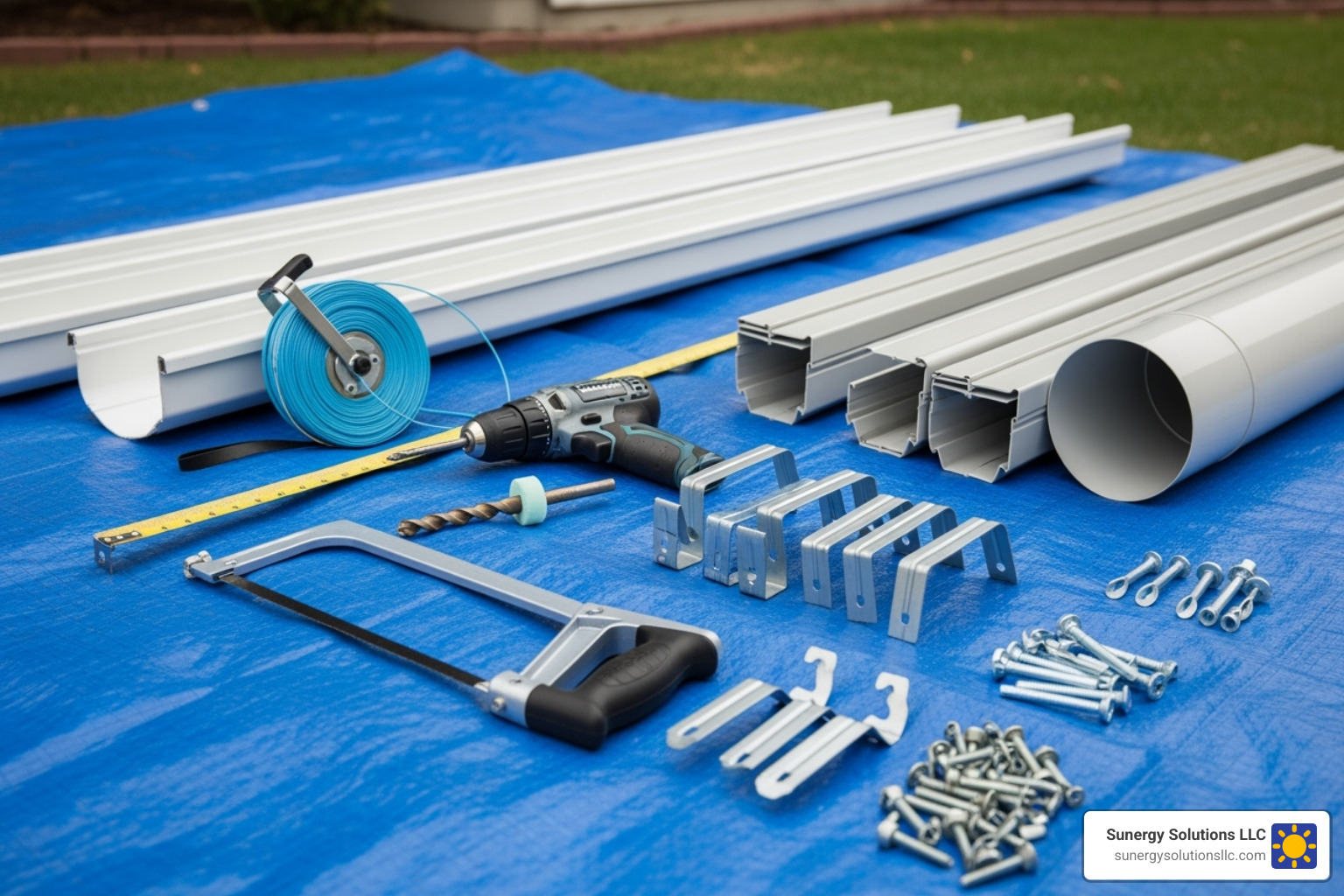
Tools: You’ll need a tape measure, chalk line, drill/driver, hacksaw or miter saw, aviation snips, and a pop rivet gun.
Safety Gear: Safety is non-negotiable. Use a sturdy extension ladder with ladder brackets, and always wear safety glasses and gloves.
Materials: Get your gutter sections (plus 10% extra), downspouts, fascia brackets, end caps, lag screws (2-inch), self-tapping screws or pop rivets, machine screws, sheet metal screws, 100% silicone gutter sealant, downspout elbows, downspout brackets, and drop outlets.
Precision is key to prevent water pooling or overflowing when putting gutters on a house. Measure each fascia board where gutters will go, adding an inch of overhang at each end.
The slope calculation is crucial: plan for a ¼ to ½ inch drop per 10 feet of gutter run to ensure water moves toward downspouts. For runs over 40 feet, create a high point in the middle and slope down to downspouts at both ends.
Downspout placement is strategic. Position them away from obstacles and where water can be directed away from your foundation. Plan for one downspout every 30-40 feet.
Before you begin, inspect your fascia boards for rotted or damaged wood. Gutters need a solid attachment point, so repair or replace any compromised boards. A healthy roofline is essential for water management, which is why we also offer Roof Installation services.
After planning and preparation, it’s time to install your gutters. Breaking the process into manageable steps makes it less intimidating.
Safety is paramount when working at heights. Ensure your ladder is on level ground and follow all guidelines. Safety glasses, gloves, and a helper are essential, especially when handling long gutter sections. Take your time with each phase to avoid problems later.
A correct slope is critical for proper water flow when putting gutters on a house. Start by marking your high point on the fascia, about 1.25 inches below the eaves flashing, to ensure water flows into the gutter. Calculate the low point toward the downspout using a ½ inch drop for every 10 feet of run. Snap a chalk line (blue or white) between your high and low points. This line is your guide for bracket placement. Find the rafter tails (usually 16 inches apart) behind the fascia for the strongest mounting points. Mark your bracket locations every 16 inches along the chalk line, aligning with rafter tails when possible, especially in snowy areas.
Do as much work as possible on the ground for safety and precision. Cut gutters to length with a miter saw or hacksaw, accounting for an 8-inch overlap where sections join. To create downspout outlets, mark the flange outline on the gutter bottom, make a starter hole, and cut the opening with aviation snips or a hole saw. Apply a generous bead of 100% silicone sealant around the opening before securing the downspout outlet with pop rivets. Attach end caps by crimping them and securing with rivets and sealant. When joining sections, overlap them by 8 inches in the direction of water flow, using sealant and screws or rivets.
With proper prep, this step moves quickly. Install fascia brackets by pre-drilling pilot holes and securing them into rafter tails with 2-inch lag screws. To hang the gutter sections, hook the front lip into the bracket, rotate the back edge up until it clicks, and lock it with a machine screw. Add sheet metal screws through the back for extra security. Assemble the downspout starting with an elbow at the outlet. Secure the downspout to the wall with brackets (two for a single story, three for two stories). The final elbow at the ground should direct water at least 4 feet away from your foundation.
While DIY putting gutters on a house can be satisfying, it’s important to consider if it’s the right choice. DIY materials cost $2 to $6 per linear foot, plus tools. Professional installation costs more upfront but includes labor, materials, and expertise, potentially saving you from costly water damage repairs later.
A DIY project can take 6-8 hours, while our professional teams at Sunergy Solutions LLC can often finish in a single day. Gutter installation requires moderate skill, but mistakes like an incorrect slope or a bad seal can lead to leaks and damage. Working on ladders, especially on two-story homes, also carries safety risks. Professionals are trained and equipped for safety.
A key benefit of professional installation is access to seamless gutters. Formed on-site, they have fewer leak points and a cleaner look but require specialized equipment. Our Gutter Installation Services also include warranties on materials and labor, which you don’t get with DIY.
Consider these key factors before deciding between DIY and professional installation:
For many homeowners in our service areas (CT, MA, ME, NH, RI, VT, VA), the combination of safety, expertise, and reliability makes professional installation the smarter choice. We’re always happy to provide a free estimate to help you decide.
Congratulations on putting gutters on a house! Now, regular maintenance is key to protecting your investment. Clean your gutters at least twice a year—in the spring after pollen season and in the late fall after leaves have dropped. If you have many trees, you may need to clean them more often.
The goal is clog prevention. Leaves, twigs, and shingle grit can block water flow, causing overflows that damage your fascia, siding, and foundation.
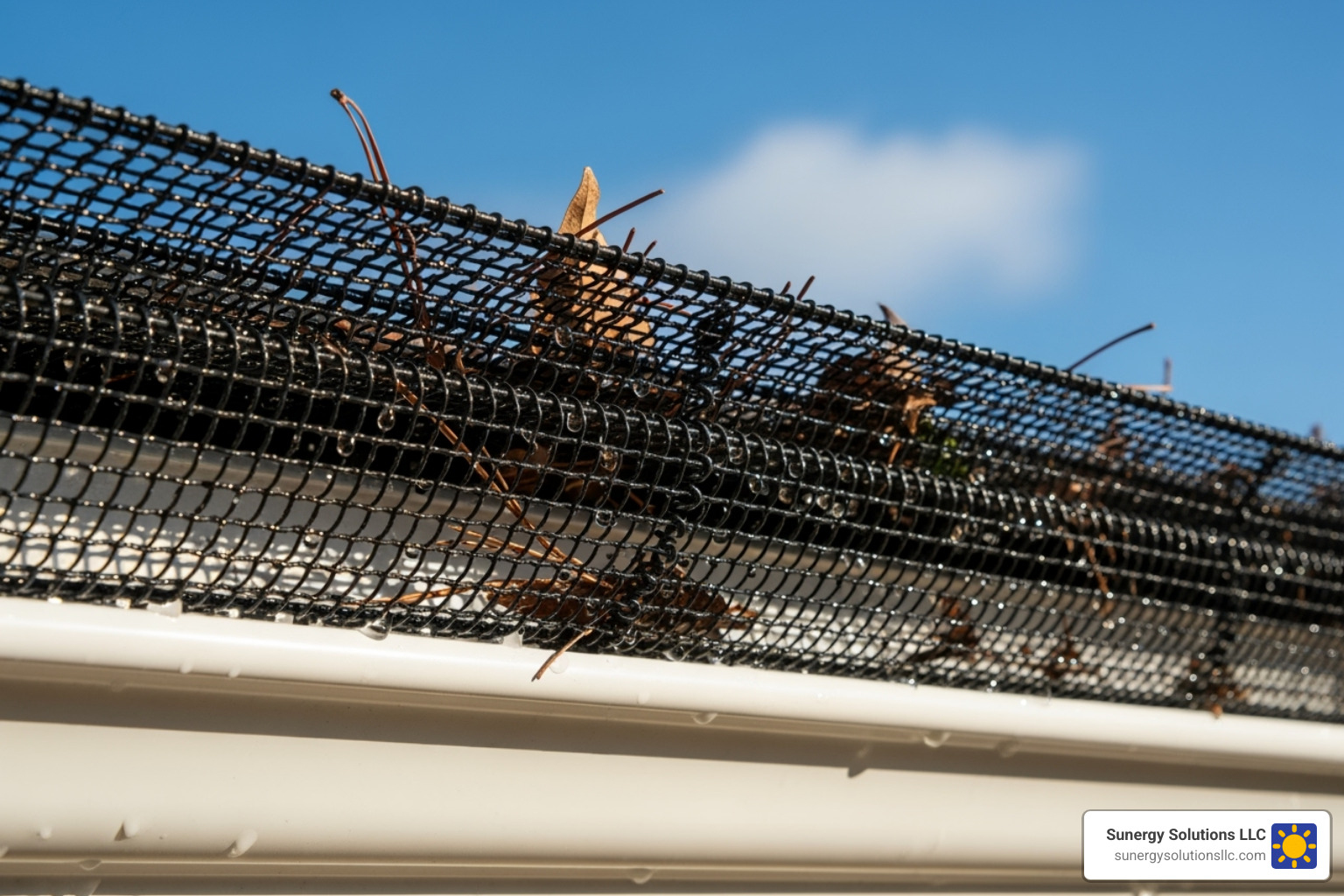
Gutter guards are an excellent solution. Options like mesh screens, reverse curve systems, or foam/brush inserts can dramatically reduce cleaning frequency.
After heavy rain, inspect your gutters for drips, leaks, or pooling water, which can indicate sagging or slope issues. Brackets can loosen over time, disrupting water flow. Catching these minor repairs early saves you from bigger headaches. Simple fixes include tightening brackets or adding sealant. For more significant damage, contact our Gutter Repair Services to keep your system running smoothly.
A well-maintained gutter system quietly protects your home year after year.
Here are answers to the most common questions we hear about putting gutters on a house.
The ideal slope is ¼ to ½ inch for every 10 feet of gutter run. This gentle slope ensures water moves steadily toward your downspouts without pooling, which can lead to sagging, debris buildup, and leaks.
A general rule is one downspout for every 30-40 feet of gutter. For runs over 40 feet, it’s best to pitch the gutter from the middle toward downspouts at both ends. In New England, where rainfall can be heavy, we often recommend closer spacing to handle the volume and prevent overflows.
Most basement water problems stem from faulty gutters. Improperly installed gutters pose serious risks, including:
Properly installed gutters are crucial for protecting your home investment.
Putting gutters on a house is a crucial home improvement that protects your biggest investment. This guide has covered everything from planning to installation and maintenance. Whether you choose DIY or hire a professional, the goal is the same: a solid gutter system that directs water away from your foundation, siding, and landscaping.
While DIY offers satisfaction and cost savings, professional installation provides peace of mind, expertise, and access to superior products like seamless gutters. At Sunergy Solutions LLC, we’ve been protecting homes across Connecticut, Massachusetts, Maine, New Hampshire, Rhode Island, Vermont, and Virginia for years. We understand the unique challenges of the Northeast climate, from heavy rains to winter ice.
Neglecting your gutters is a gamble. A quality system prevents expensive problems like foundation damage and basement flooding. Don’t wait for the next storm to find that your home’s water management system isn’t up to the task. Take action to protect your home.
Ready to give your home the protection it deserves? Get a Professional Gutter Installation Estimate and let our team help you create a flawless rain defense system that’ll keep your home safe and dry for decades to come.

Appointments Available, 7 Days a Week


