
5.0 Rating
Request A Free Estimate
A roof home inspection is a critical evaluation that protects your investment and ensures the structural integrity of your potential new home. The roof is one of the most expensive systems to replace, often costing $7,500 to $15,000 or more.
What a roof home inspection covers:
A thorough inspection can reveal hidden issues that aren’t visible during a casual walkthrough but could cost thousands in repairs later. During the home buying process, a professional roof inspection protects you from unexpected expenses, provides negotiation leverage, and helps secure proper homeowners insurance. Many insurance companies now require roof inspections for older homes or may adjust premiums based on the roof’s condition.
As Robert Raffa, CEO of Sunergy Solutions LLC, my decade of experience in residential solar and roofing has shown me that understanding your roof’s condition is essential before making any major home investment.
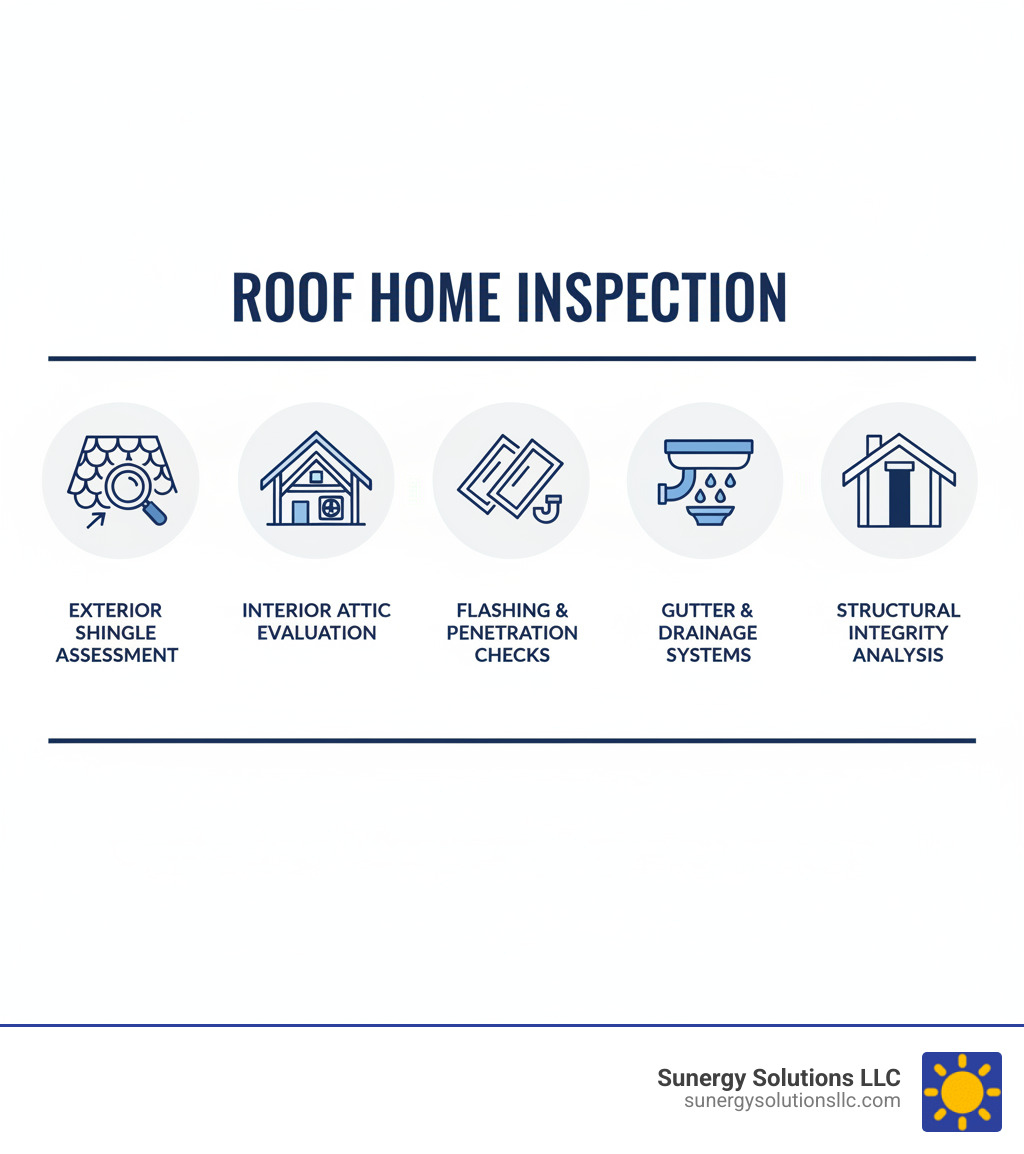
Roof home inspection vocab explained:
When you find your dream home, it’s easy to focus on the kitchen and backyard. But what’s happening 20 feet above your head could make or break the investment. A roof home inspection isn’t just another checklist item—it’s your financial lifeline. Ignoring the roof’s condition is like buying a car without looking under the hood; it’s a very expensive gamble.
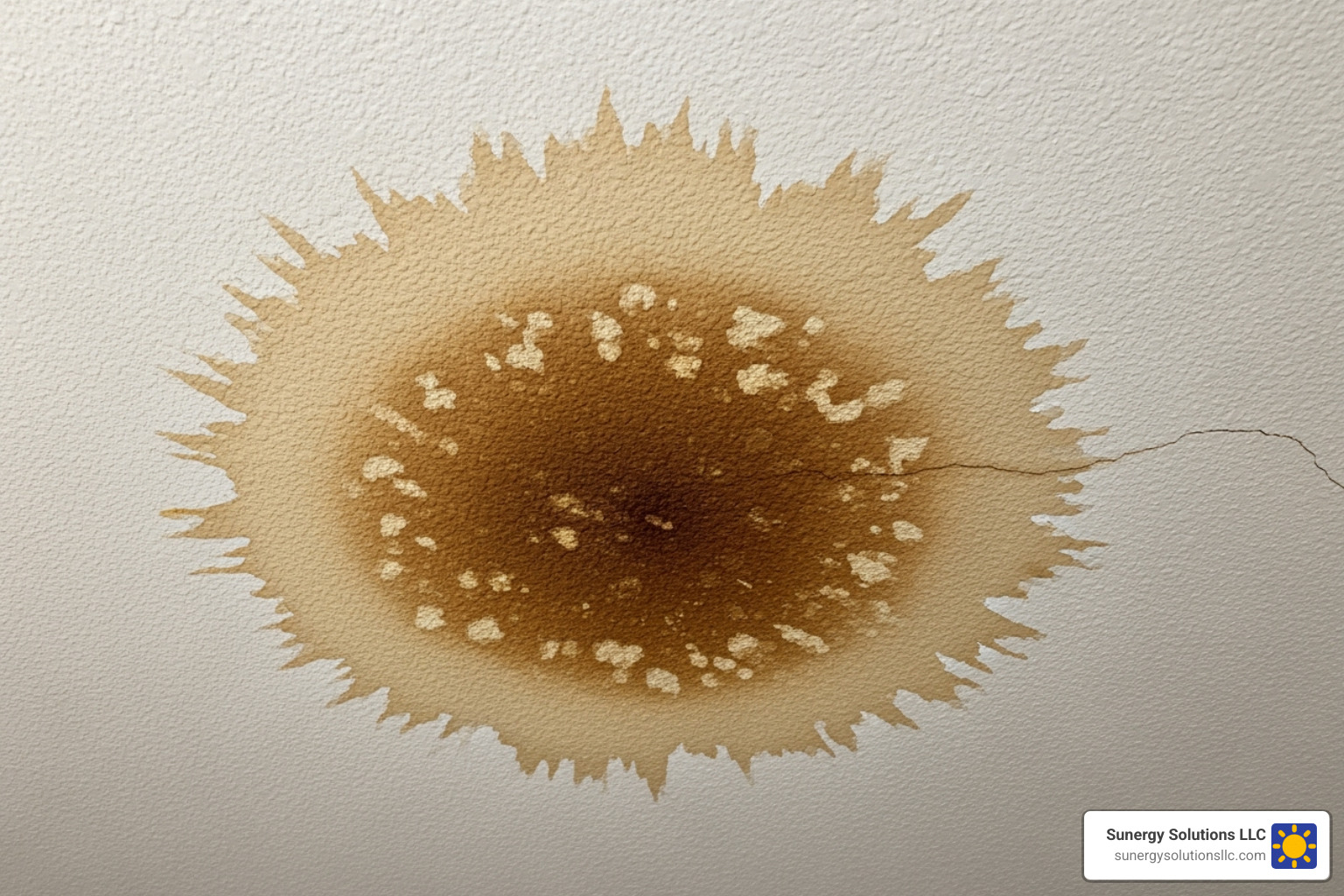
A roof replacement can cost $15,000 to $25,000 or more. Finding issues before you buy gives you options: negotiate with the seller, walk away, or budget for repairs. A thorough inspection report is a powerful negotiation tool, turning you into an informed buyer with leverage.
Homeowners insurance providers are also wary of aging or damaged roofs, which can lead to higher premiums, limited coverage, or even policy rejection. Many roof problems are masters of disguise. Identifying hidden damage like water intrusion, structural issues, and poor ventilation requires a trained eye. Beyond the cost, long-term safety is at stake. A compromised roof can lead to mold, structural decay, and even foundation problems, threatening your family’s health and safety.
You might ask, “Isn’t my general home inspection enough?” While a general inspector provides a broad overview of your home’s systems, they are generalists. A dedicated roof inspector is a specialist.
The scope of inspection differs greatly. General inspectors typically perform a visual check from the ground or a ladder, looking for obvious issues. However, they face inspector limitations. Safety risks like steep pitches, height, or poor weather can prevent them from walking on the roof. This is when to call a roofer. A specialist has the tools and expertise for a hands-on evaluation that goes beyond a surface-level look.
| Feature | Standard Home Inspection (Roof Component) | Dedicated Roof Inspection (Specialist) |
|---|---|---|
| Inspector’s Role | Generalist checking all home systems | Roof specialist with deep expertise |
| Depth of Inspection | Visual assessment, identifies obvious issues | Comprehensive hands-on evaluation |
| Tools Used | Binoculars, basic ladder access | Drones, infrared cameras, moisture meters |
| Expertise Level | Broad knowledge across home systems | Deep roofing material and construction knowledge |
| Reporting Detail | General overview with recommendations | Detailed report with specific repair costs |
| Access Limitations | May skip unsafe areas or steep sections | Uses specialized methods for complete access |
Both inspections serve important purposes. Your general home inspection gives you the big picture, while a dedicated roof home inspection zooms in on one of your home’s most critical and expensive systems.
Your insurance company is just as interested in your roof as you are, seeing it as their first line of defense against claims. Insurers conduct risk assessment by examining your roof’s age, condition, and materials.
Policy eligibility can depend entirely on the roof’s condition, with some insurers refusing to cover homes with roofs over 20 years old. Premium costs also reflect this risk; a new roof may earn discounts, while an old one will cost more.
It’s also crucial to understand Actual Cash Value (ACV) vs. Replacement Cost Value (RCV) coverage. ACV pays the depreciated value, while RCV pays for a new roof. An insurer can even cancel your policy if they find problems after it’s issued. Securing coverage for older roofs is challenging, but a clean inspection report is a powerful tool.
Learn about insurance requirements in your specific state, as regulations vary across our service areas in the Northeast and Virginia.
The bottom line? A professional roof home inspection protects more than just your investment – it protects your insurability and your peace of mind.
A professional roof home inspection is more than a quick glance at your shingles; it’s a comprehensive evaluation of the entire roof system, inside and out. An inspector follows a detailed checklist to identify current problems, predict future issues, and assess the roof’s remaining lifespan. This thorough approach ensures you know exactly what you’re getting into before buying a home.
The inspection covers three main areas: the exterior roof system, the interior structural components, and uses modern technology to catch issues that might otherwise go unnoticed.
The exterior inspection begins with the roof covering materials. For asphalt shingles, inspectors look for curling, cracking, missing pieces, and granule loss. Other materials have unique warning signs, such as rot on wood shakes, cracks in tiles, or rust on metal panels.
Flashing, the material that seals joints around chimneys, vents, and skylights, is checked for corrosion, cracks, or failed sealant, as this is a common source of leaks. Gutters and downspouts are inspected for secure attachment and proper drainage. The inspection also covers fascia and soffits, vent pipes and boots, and the overall roofline. Any sagging or bowing is a red flag for structural issues. According to experts, roofs last about 15-20 years, but proper maintenance can help your system last even longer.
The attic inspection reveals hidden problems. Inspectors look for water stains on decking, rafters, or insulation, which are clear signs of leaks. Proper ventilation is also assessed, as inadequate airflow leads to moisture buildup, premature shingle aging, and ice dams in colder climates like the Northeast.
The presence of mold or mildew growth is a major red flag for moisture issues that can affect your home’s structure and your family’s health. Structural components are also checked. Sagging decking can indicate water damage, while the rafter and truss integrity is reviewed for cracks or splits. Finally, the insulation condition is noted, as wet or compressed insulation is ineffective and signals moisture problems.
Modern inspections combine traditional methods with new technology. A physical walk-through is performed when safe, but for steep or inaccessible roofs, drone inspections provide high-resolution aerial views.
Infrared thermographic inspections use specialized cameras to detect hidden moisture and insulation gaps not visible to the naked eye. Infrared thermographic inspections for hidden moisture can catch problems before they become expensive disasters.
Throughout the process, high-resolution photography documents all findings. You receive detailed reporting with photos, specific repair recommendations, and an assessment of the roof’s remaining lifespan. This comprehensive approach gives you the information needed to make smart decisions.
Knowing when to schedule a roof home inspection can save you thousands. The most critical times for a professional inspection are:
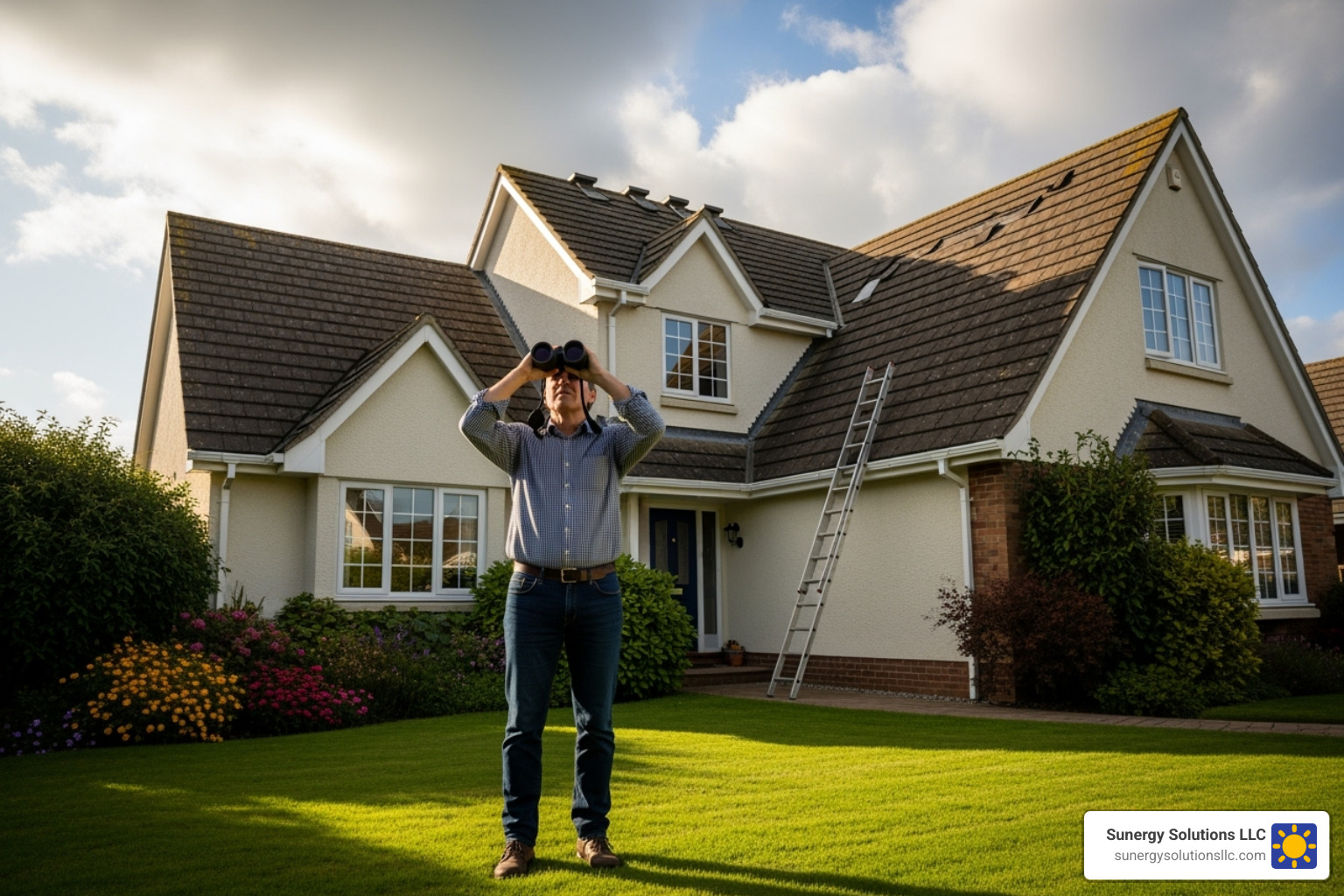
While you should never climb onto your roof, a ground-level inspection with binoculars can reveal key warning signs. Here’s what to look for:
The following red flags require immediate professional attention:
A roof home inspection is about protecting your investment and ensuring your family’s safety. When in doubt, always have a professional take a closer look.
After your roof home inspection, you’ll receive a comprehensive report that serves as your roadmap. This document analyzes the roof’s condition, organizes findings by severity levels, provides repair recommendations, and gives an estimated remaining lifespan. It includes professional photographs as visual evidence for each issue.
The cost of a professional inspection is typically $100 to $300—a small price to avoid a $15,000+ roof replacement surprise. Many reputable roofing companies also offer free estimates for any needed repairs, providing additional insight if your inspection reveals concerns.
If the inspection reveals major issues, don’t panic. This knowledge gives you leverage and several options:
If your roof home inspection indicates a replacement is needed, consider it an opportunity to add solar panels. Combining a roof replacement with solar installation is financially and practically smart. It aligns the 25+ year lifespan of your solar system with your new roof, avoiding the cost of removing panels for a future roof replacement.
Solar panels also protect your new roof from UV rays and weather, potentially extending its life. The long-term energy savings from solar help offset the investment, and you’ll be enhancing your home’s value with both a new roof and a modern energy system.
When you explore the Cost to Replace a Roof with Solar Panels, you’re investing in your home’s future energy independence. At Sunergy Solutions LLC, we help homeowners throughout Connecticut, Massachusetts, Maine, New Hampshire, Rhode Island, Vermont, and Virginia turn a challenge into an opportunity.
Here are straightforward answers to the most common questions we hear about roof home inspections.
A roof should be professionally inspected at least every two years and always after a severe weather event. In addition, we recommend performing your own visual inspection from the ground twice a year (spring and fall) with binoculars. Regular checks help you catch small problems early, saving you from costly water damage or structural issues down the road.
A roof home inspection is a detailed assessment of the roof’s current condition, identifying any existing damage or wear. You receive a report with photos and repair recommendations.
A roof certification, on the other hand, is a formal document stating a professional opinion that the roof is likely to last for a specific period (usually 2-5 years). Mortgage lenders and insurance companies often require a certification for older homes, as it provides a guarantee of the roof’s short-term viability.
Yes, a bad roof inspection can stop a home sale. If an inspection reveals significant problems, the buyer gains powerful negotiating leverage. They can request repairs, ask for a price reduction, or walk away from the deal entirely, thanks to the inspection contingency in most purchase agreements.
For sellers, a failing roof can make it difficult to find a buyer or force a price reduction. A roof home inspection protects everyone by ensuring all parties are aware of the roof’s true condition before the sale is final. It keeps you from making a costly mistake.
A roof home inspection isn’t just a checklist item; it’s your shield against financial surprises and your key to peace of mind. A thorough inspection saves you money and ensures your family is safe under a structurally sound roof. The knowledge you’ve gained empowers you to negotiate effectively, plan for maintenance, and make confident decisions about your investment.
For homeowners across our service areas in Connecticut, Massachusetts, Maine, New Hampshire, Rhode Island, Vermont, and Virginia, a solid roof is critical.
If your inspection reveals the need for work, see it as an opportunity. Whether it’s repairs, replacement, or a new roof with solar, addressing issues proactively puts you in control. At Sunergy Solutions LLC, our expert team is ready to help you steer any roofing challenges, ensuring your home is protected from the top down.
Explore our comprehensive roofing services to see how we can help make your home safer, more efficient, and ready for whatever Mother Nature brings your way.
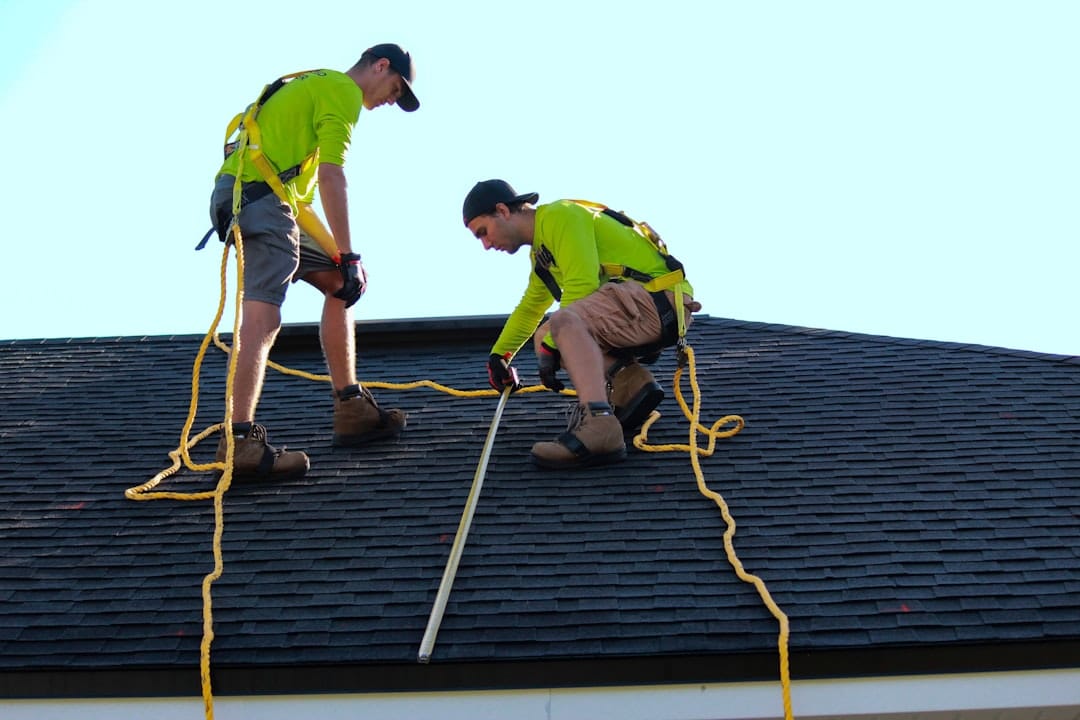
Appointments Available, 7 Days a Week


