
5.0 Rating
Request A Free Estimate
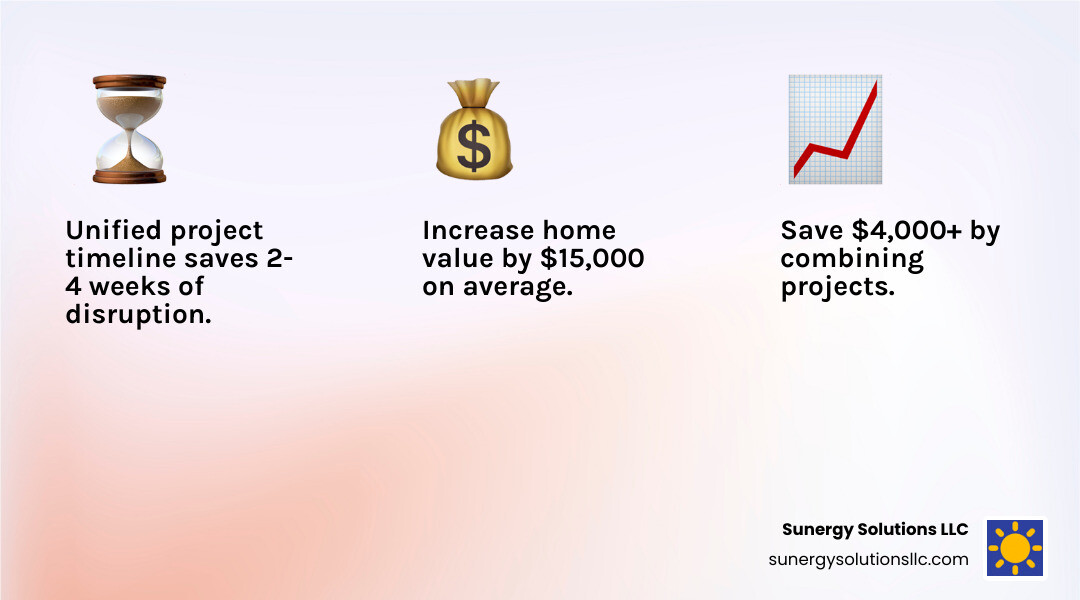
Roofing and solar installation together can save you thousands while creating the perfect foundation for decades of energy savings. When you combine these projects, you avoid the $1,500-$6,000 cost of removing and reinstalling panels later, while potentially saving $4,000 compared to separate installations.
Key Benefits of Combined Roofing and Solar Installation:
The numbers tell the story clearly. The average roof replacement costs $10,000 and lasts 20-50 years depending on materials. Solar installation averages $19,000 for a residential system. But when you do them together, you’re looking at around $25,000 total – saving you significant money while ensuring your roof can support solar panels for their entire 25-30 year lifespan.
The timing matters more than you think. If your roof is older than 5-10 years (for asphalt shingles), replacing it before going solar prevents costly panel removal and reinstallation down the road. Plus, homes with solar panels sell faster and command an average premium of $15,000.
I’m Robert Raffa, CEO and Founder of Sunergy Solutions LLC, and I’ve spent nearly a decade helping Northeast homeowners steer roofing and solar installation projects that maximize both financial returns and energy independence. My background in investment banking taught me that the best deals happen when you align timing, costs, and long-term value – which is exactly what combined roofing and solar projects deliver.
Easy roofing and solar installation glossary:
Picture this: you’re sipping your morning coffee, looking out at your neighbor’s house where workers are tearing off old shingles. Six months later, the same crew is back, carefully removing brand-new solar panels to fix a roof leak underneath. That’s exactly the kind of expensive headache you can avoid with a combined roofing and solar installation project.
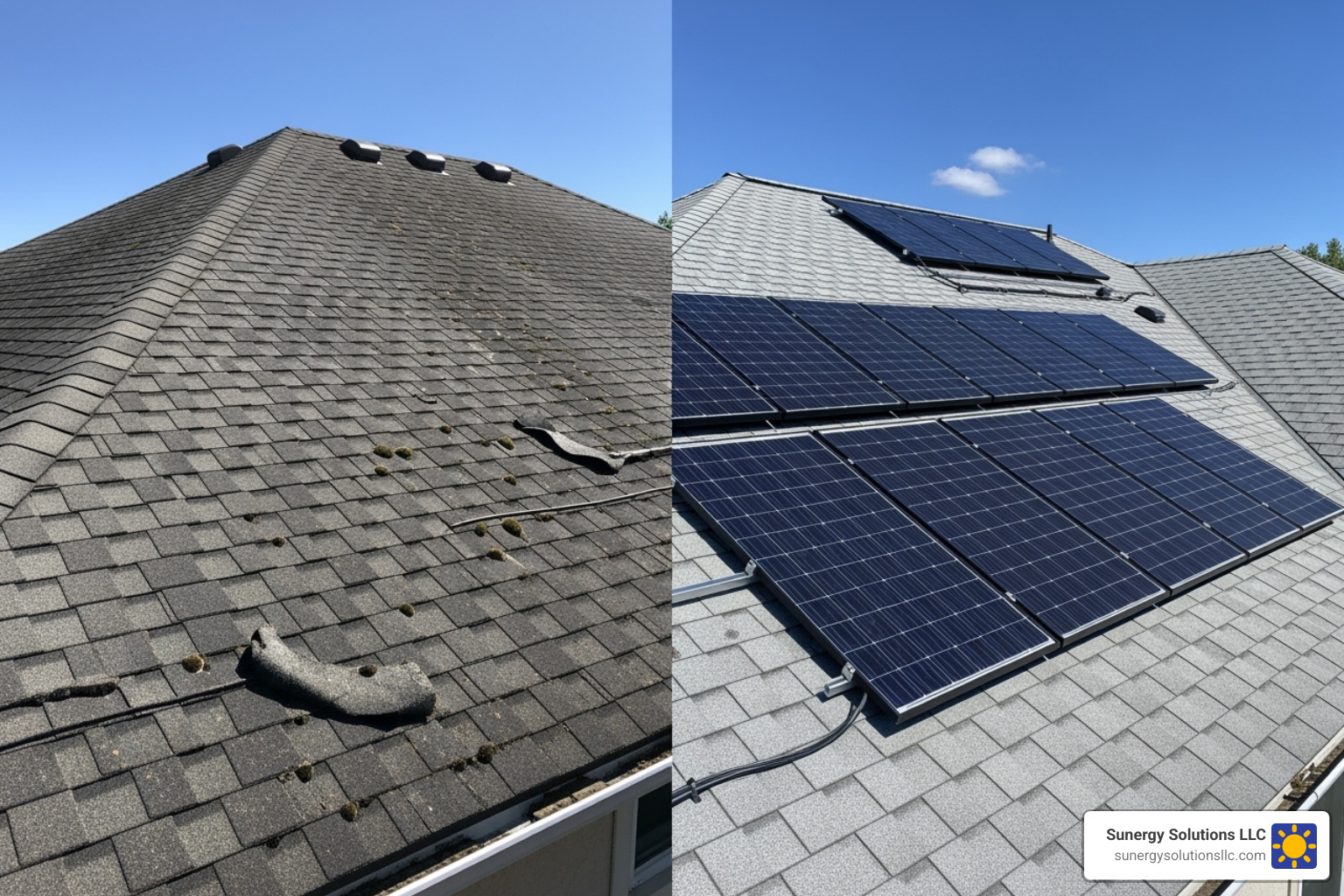
When you combine these two major home improvements, you’re not just saving money—you’re making a smart long-term investment that protects your home’s future. Think of it as building the perfect foundation for decades of energy savings and peace of mind.
Here’s where the math gets really exciting. A typical roof replacement costs around $10,000, while a residential solar system averages $19,000. Do them separately, and you’re looking at nearly $30,000. But here’s the beautiful part: when you bundle them together, you’re looking at approximately $25,000 total.
That’s $4,000 staying right in your pocket instead of going to contractors’ overhead costs and duplicate work. But the savings don’t stop there.
If you install solar panels on an aging roof, you’re setting yourself up for what I call the “solar shuffle”—that expensive dance where you pay $1,500 to $6,000 just to remove panels, replace the roof underneath, and put everything back together. It’s like buying a beautiful new car and then realizing you need to rebuild the garage to fit it.
The financial benefits extend beyond your immediate savings too. According to a report from Lawrence Berkeley National Laboratory, homes with solar panels sell for an average premium of about $15,000 and typically spend less time on the market. Your combined project isn’t just an upgrade—it’s an investment that pays dividends for years to come.
This is where timing becomes everything. Solar panels are built like marathoners—they’re designed to keep producing clean energy for 25 to 35 years. Your roof? Well, that depends on what you choose.
Traditional asphalt shingles typically last 15 to 20 years, while metal roofs can easily exceed 30 years. See the problem? If you put those long-lasting solar panels on an aging asphalt roof, your roof might call it quits long before your panels do.
It’s like pairing a fine wine with a paper cup—technically it works, but you’re not getting the full experience. When you combine your roofing and solar installation, you can choose materials that work together for the long haul.
Metal roofing, for example, creates the perfect partnership with solar panels. Both are designed to last decades, their warranties align beautifully, and you avoid the nightmare scenario of premature roof failure underneath your solar investment. You’re essentially building a system where every component is designed to work together for maximum performance and longevity.
Let’s be honest—home improvement projects can feel like hosting a three-ring circus in your driveway. Between permits, contractors, deliveries, and inspections, it’s enough to make anyone want to hide indoors until it’s all over.
That’s exactly why the convenience of a single, coordinated project is such a game-changer. Instead of managing two separate timelines, dealing with two different contractors, and navigating two sets of permits, you get one streamlined experience from start to finish.
One point of contact handles everything—from the initial roof assessment to the final solar activation. No finger-pointing between contractors, no scheduling conflicts, and no confusion about who’s responsible for what. Your project moves efficiently from roof removal to solar connection without the typical delays that happen when separate crews have to coordinate their work.
The result? Less disruption to your daily life, faster completion times, and the satisfaction of watching your home transform into an energy-efficient powerhouse in one smooth process. It’s home improvement the way it should be—efficient, coordinated, and designed around your convenience.
Getting started with a combined roofing and solar installation project might seem like a big undertaking, but we’ve turned it into a smooth, well-orchestrated process. Think of it as building your home’s energy future, one careful step at a time.
Everything starts with understanding what you’re working with. Our professional roof inspection goes way beyond a quick peek from the ground. We’re up there checking every detail – looking at structural integrity, measuring load capacity, and spotting any issues that could affect your solar installation down the road.
This assessment helps us determine whether your current roof can support solar panels for the next 25-30 years, or if it makes more sense to replace it first. It’s like getting a health checkup for your roof before asking it to carry the weight of your energy independence.
Choosing the right roofing material becomes crucial when solar panels are part of the picture. While solar works with most roof types, some materials are definitely better teammates than others.
Asphalt shingles are the most common choice in America, covering about three-quarters of all homes. They’re affordable and reliable, but their typical 15-20 year lifespan creates a timing challenge. If your shingles are already showing their age, you’ll likely need to remove those expensive solar panels for a roof replacement later – not exactly ideal.
Metal roofing changes the game completely. Metal roofing and solar are the perfect match because they’re designed to last 30+ years, perfectly matching your solar panels’ warranty period. Even better, many metal roofs allow for non-penetrating solar mounts, which means we can attach your panels without making any holes in your roof. Talk about peace of mind!
When we install metal roofing, we use high-performance coatings that provide superior UV protection and weather resistance. These advanced coatings keep your roof looking great and performing optimally for decades, ensuring it ages gracefully alongside your solar investment.
We’ll walk through all your options, considering your budget, local weather patterns, and how you want your home to look. The goal is finding the perfect foundation for your solar system.
Now comes the fun part – designing your custom solar system! This is where we get to be energy detectives, analyzing your electricity bills, studying your roof’s sun exposure, and figuring out exactly how many panels you need to slash those monthly utility costs.
We look at everything: which direction your roof faces, any shade from trees or neighboring buildings, and your family’s energy usage patterns. Do you run the air conditioning all summer? Have teenagers who never turn off lights? We factor it all in to create a system that works specifically for your lifestyle.
The design process covers panel placement for maximum sun exposure, inverter selection to efficiently convert solar energy into usable electricity, and battery storage options if you want backup power during outages. Think of batteries as your energy insurance policy – storing sunshine for a rainy day.
Financing your combined project is often simpler than homeowners expect. Instead of juggling separate loans for roofing and solar, we can bundle everything into one manageable payment. Many of our customers find their monthly loan payment is less than what they were spending on electricity bills.
Solar loans let you own your system outright from day one, building equity while you save on energy costs. Power Purchase Agreements offer a different approach – we handle the upfront costs and maintenance, and you simply pay for the clean energy your panels produce, often at rates lower than your utility company charges.
Our financing experts will crunch the numbers with you, showing exactly how much you’ll save each month and over the life of your system. Most homeowners are pleasantly surprised by how affordable energy independence really is.
Once the paperwork is signed and permits are in hand, the real change begins. We handle every detail of turning your vision into reality.
The permitting process happens behind the scenes while you go about your daily life. We work with local authorities and your utility company to secure all necessary approvals. It’s bureaucratic stuff that we’re good at so you don’t have to be.
If you’re getting a full roof replacement, we start by carefully removing your old roofing materials down to the deck. Our crew protects your landscaping and keeps the work area clean – nobody wants roofing debris scattered across their flower beds.
New roof installation comes next, with our skilled team installing your chosen materials using the latest techniques and highest quality standards. Whether it’s asphalt shingles or metal roofing, we’re building the foundation that will support your solar investment for decades.
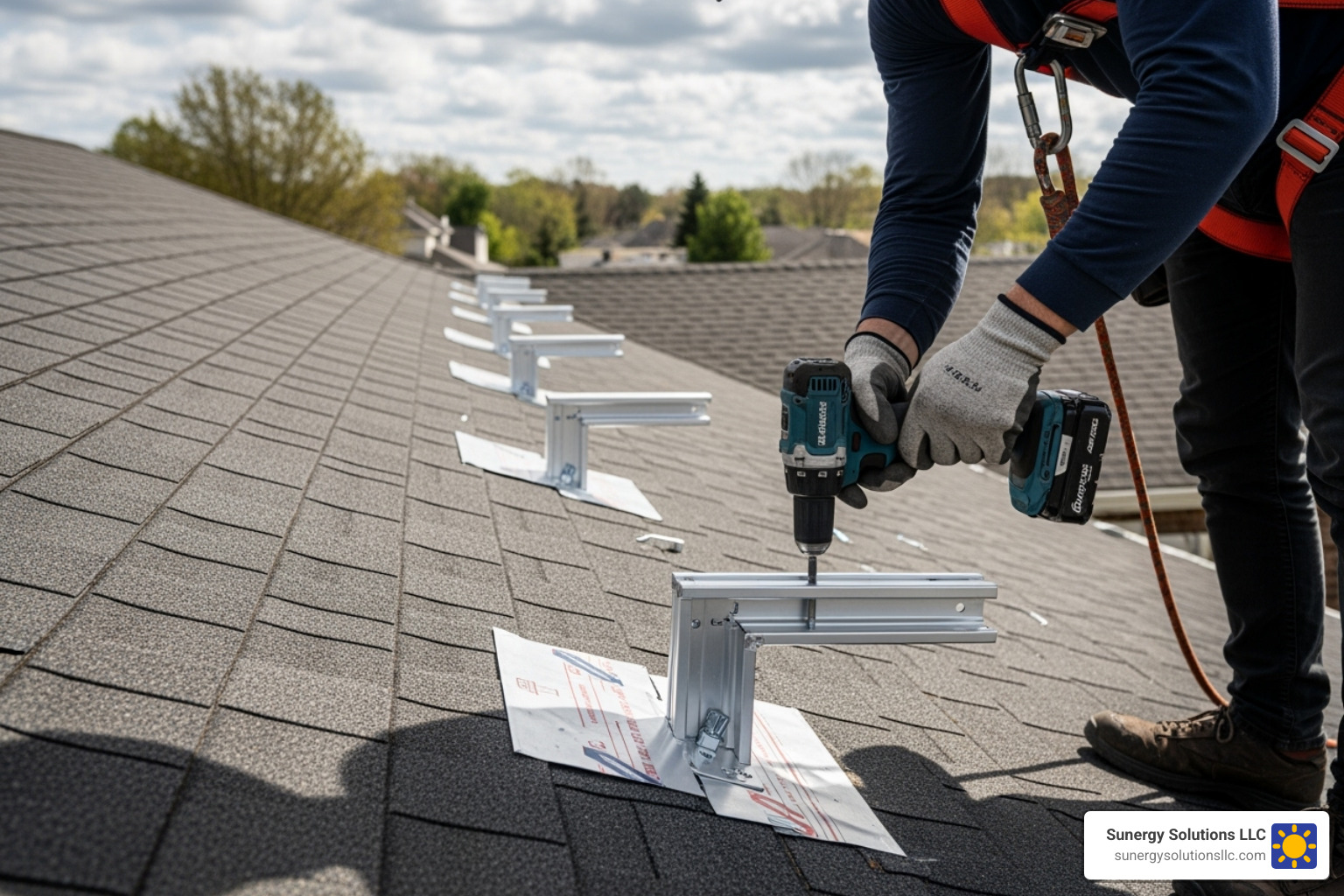
Once your new roof is complete and weather-tight, our certified solar installers take over. Solar racking and mounting requires precision – every bracket must be perfectly positioned and properly sealed to prevent any chance of leaks. We use professional-grade mounting hardware that’s designed to last as long as your panels.
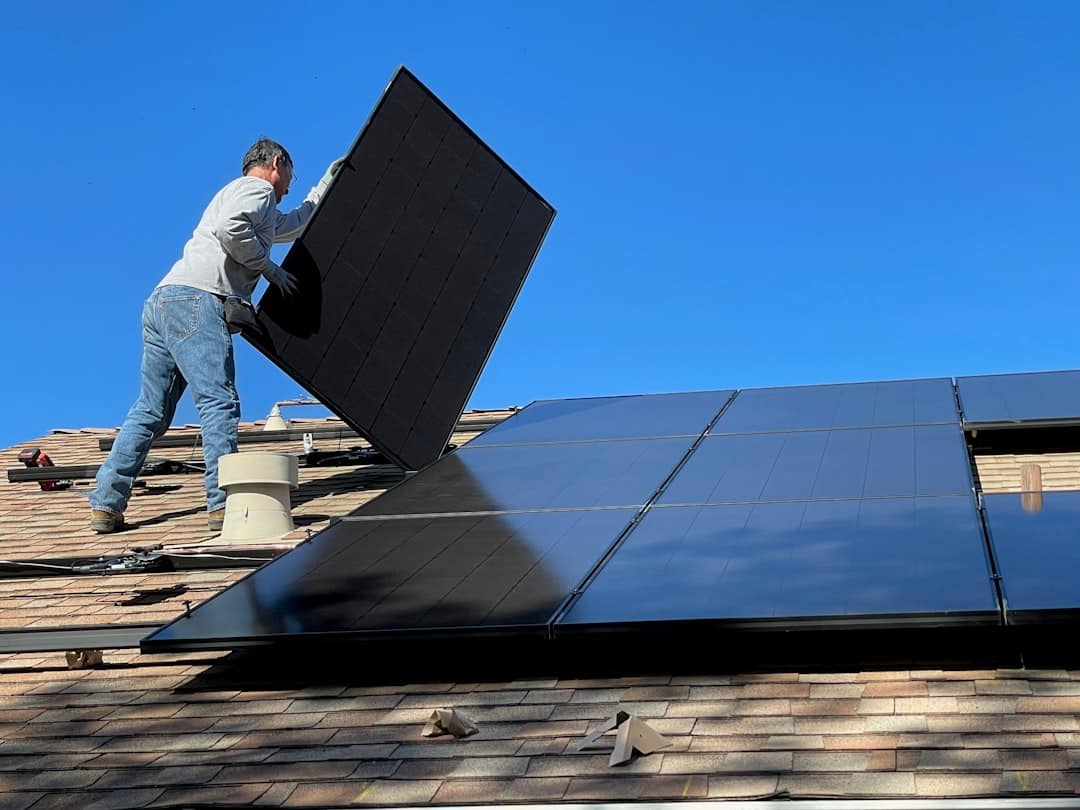
Panel installation is where you really start to see your energy future taking shape. Each panel is carefully positioned to capture maximum sunlight throughout the day. Electrical wiring connects everything together – panels to inverters, inverters to your home’s electrical panel, and ultimately to the utility grid.
The final inspection ensures everything meets local codes and safety standards. Once we get the green light from inspectors and your utility company gives the okay for grid connection, you’re officially generating your own clean, renewable energy.
That first month when your electricity bill drops dramatically? That’s when the excitement really kicks in. You’re not just saving money – you’re taking control of your energy future while helping create a cleaner world for the next generation.
Understanding the financial landscape of a combined roofing and solar installation is key to appreciating its long-term value. It’s not just an expense; it’s an investment that pays dividends for decades.

Let’s break down the numbers that make roofing and solar installation such a smart financial move. When you look at the average cost of a roof replacement at around $10,000 and a residential solar array at approximately $19,000, doing them separately means you’re looking at nearly $29,000 total.
But here’s where the magic happens: combining these projects typically brings your total investment down to around $25,000. That’s an immediate savings of about $4,000 – money that stays right in your pocket instead of going to redundant labor costs, equipment mobilization, and project overhead.
The savings don’t stop there. Remember those $1,500 to $6,000 panel removal and reinstallation costs we mentioned earlier? By doing everything at once, you completely avoid this expense. Plus, you’re getting the benefit of having both projects managed by a single team who understands how these systems work together.
Here’s a clear picture of what you can expect:
| Project Approach | Average Investment | Key Benefits |
|---|---|---|
| Separate Projects | $29,000+ | Two different timelines, potential panel removal costs later |
| Combined Project | $25,000+ | Immediate $4,000+ savings, coordinated installation, no future removal costs |
The return on investment speaks for itself. Most homeowners see their electricity bills drop by 70-90% immediately after installation, with many achieving complete energy independence during peak production months.
The financial benefits of roofing and solar installation get even better when you factor in available incentives. The federal solar tax credit currently allows you to claim 30% of your solar installation costs as a tax credit through 2032. This means on a typical $19,000 solar system, you could receive a $5,700 credit directly off your federal taxes owed.
But the federal credit is just the beginning. Many states and local utilities offer additional rebates and incentives that can further reduce your investment. The Database of State Incentives for Renewables & Efficiency is an excellent resource to find what’s available in your area.
Net metering programs are another fantastic way to maximize your savings. These programs allow you to sell excess electricity your panels generate back to the grid, essentially running your meter backward on sunny days. When your system produces more power than your home uses, you earn credits that offset your electricity costs during less sunny periods.
In some states, you can even earn Solar Renewable Energy Credits (SRECs) for the clean energy your system produces. These credits can be sold to utility companies, creating an additional income stream that further improves your return on investment.
The combination of immediate installation savings, federal tax credits, state and local incentives, net metering benefits, and potential SREC income creates a powerful financial package. Most homeowners find that their monthly solar loan payment is less than their previous electricity bill, meaning they start saving money from day one while building equity in a valuable home improvement.
When you factor in the typical 25-30 year lifespan of solar panels and the fact that electricity rates continue to rise while your solar production remains consistent, the long-term savings can easily reach $30,000 to $50,000 or more over the life of your system. That’s a pretty impressive return on a $25,000 investment!
Appointments Available, 7 Days a Week


