
5.0 Rating
Request A Free Estimate
Solar installers New Hampshire are seeing unprecedented demand as homeowners seek energy independence from rising electricity costs. With New England electricity prices increasing by 83% over the last 20 years and the average New Hampshire electric bill hitting $170 monthly, solar has become a compelling financial solution for Granite State residents.
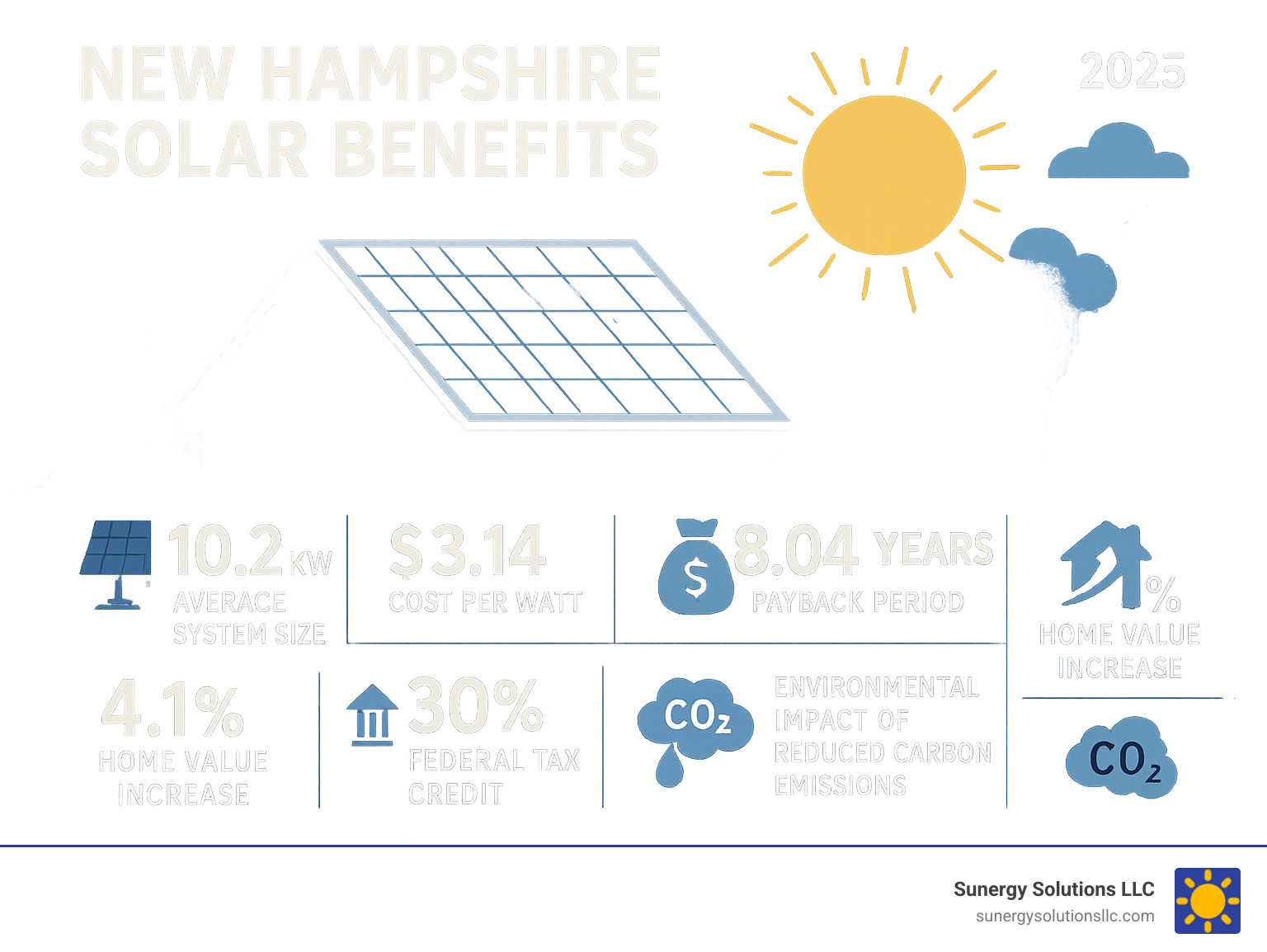
The numbers tell a compelling story. The average New Hampshire homeowner needs a 10.2 kW solar system costing approximately $3.14 per watt before incentives. After the federal tax credit, homeowners can save an average of $93,597 over 25 years with systems paying for themselves in just 8.04 years. Plus, solar panels can increase home values by up to 4.1%.
Choosing the right installer is one of the most critical decisions in this process. A quality partner ensures your system delivers on its financial and environmental promise for decades to come.
I’m Robert Raffa, CEO and Founder of Sunergy Solutions LLC, and I’ve spent nearly a decade helping Northeast homeowners steer the solar marketplace and select quality solar installers New Hampshire residents can trust. My background in investment banking gives me a unique perspective on evaluating both the financial and operational aspects of solar installations.
Solar installers New Hampshire terms simplified:

When considering solar for your New Hampshire home, the bottom line is clear: it’s a smart financial move that puts money back in your pocket. Beyond the environmental benefits, solar offers real savings that can fund retirement, college tuition, or simply provide more breathing room in your monthly budget. Let’s walk through how the math works for New Hampshire families.
A typical New Hampshire home needs a 10.2 kW solar system. At the current rate of $3.14 per watt, the initial investment is around $32,000. However, powerful incentives significantly reduce this cost.
The Federal Solar Tax Credit is your biggest ally, providing a dollar-for-dollar credit for 30% of your entire installation cost on your federal taxes. Additionally, New Hampshire’s Residential Renewable Electrical Generation Rebate Program can offer further savings.
Here’s how the federal tax credit transforms your investment:
| System Size (kW) | Average Cost Before Incentives | Federal Tax Credit (30%) | Average Cost After Federal Tax Credit |
|---|---|---|---|
| 10.2 | $32,028 | $9,608.40 | $22,419.60 |
Suddenly, that $32,000 investment becomes a much more manageable $22,420.
Want to see how this all comes together? Check out this helpful video: Will Solar Save you Money Video.
Even with incentives, you don’t need to have all the cash upfront.
For a deep dive into all your financing options, I recommend this comprehensive guide: A Homeowner’s Guide To Solar Financing, Leases, Loans, and PPAs.pdf. There’s also this excellent explainer video: Rooftop Solar Financing 101 Video.
This is where the benefits truly shine. The average New Hampshire homeowner sees their solar system pay for itself in just 8 to 12 years. After that, it’s pure savings.
Over 25 years, you can expect savings of $93,597 or more. That’s nearly $100,000 that stays in your pocket instead of going to the utility company. On top of that, solar panels are potentially increasing your home’s value by up to 4.1%. On a $350,000 home, that’s over $14,000 in added value.
The math is compelling, but a custom analysis is key. The best solar installers New Hampshire has to offer will show you exactly what solar can do for your family’s finances.

Choosing the right solar installers New Hampshire is critical to a successful solar experience. A poor choice can lead to system failures and warranty headaches, while the right partner ensures your system performs for decades. Your solar system is a 25+ year investment, so careful vetting pays massive dividends.
This Choosing A Solar Installer Video offers a great overview, but here are the key factors to consider.
The best solar installers New Hampshire will welcome your questions and readily provide proof of their qualifications. Here’s what to look for:
Credentials show they can do the job; reputation shows how they do it.
Both local and national installers can provide excellent service, but they have different strengths. A study by the National Renewable Energy Laboratory (NREL) found that national installers can sometimes cost more due to higher overhead. Local companies often offer more personalized service and deep knowledge of local regulations. National companies may have more standardized processes and resources. Regardless of size, apply the same vetting criteria to find a partner who prioritizes transparency, experience, and customer satisfaction.
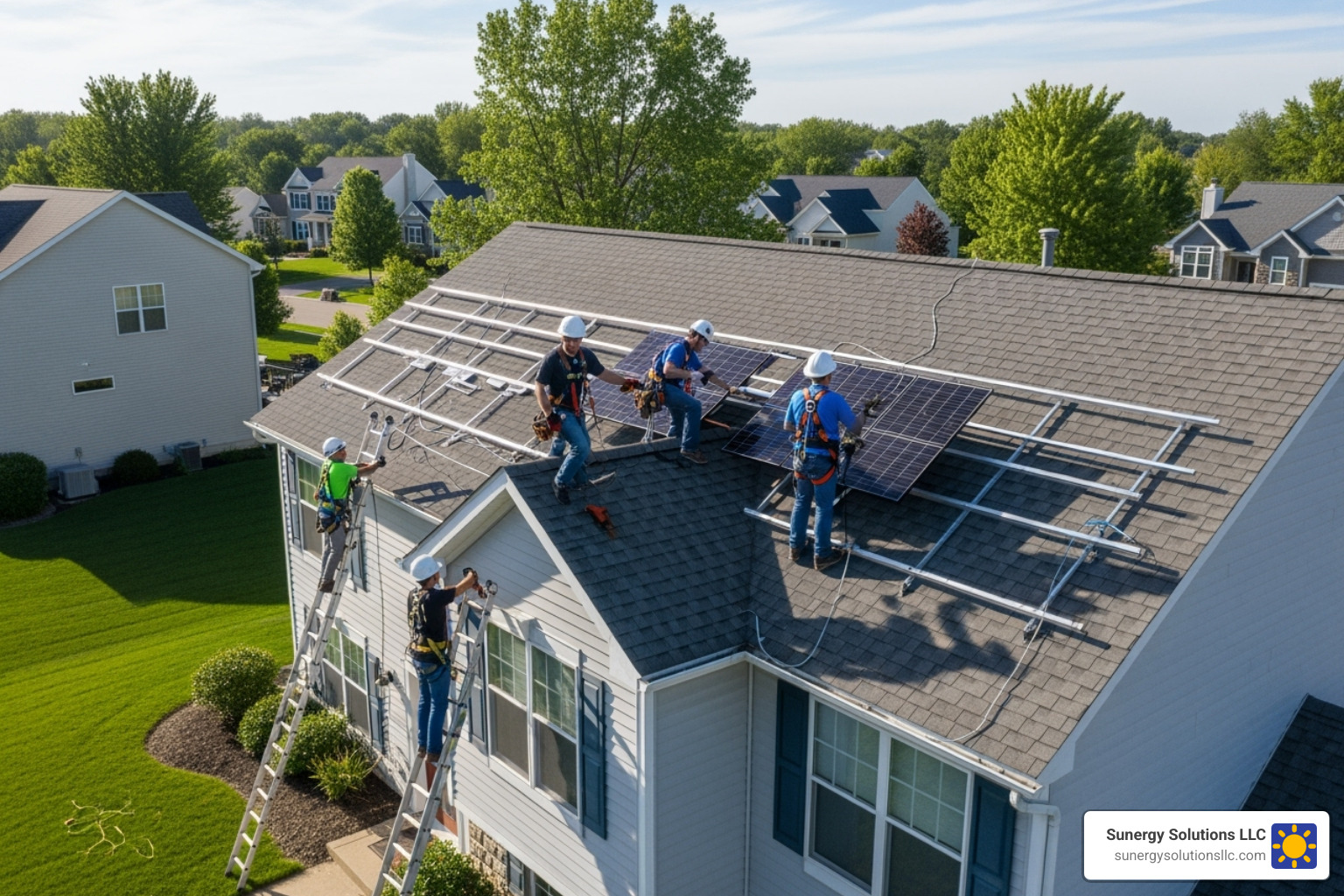
The solar journey is a straightforward process when guided by experienced solar installers New Hampshire residents trust. The entire process, from consultation to activation, typically takes six to twelve weeks, with most of that time dedicated to design and administrative approvals. Here’s a breakdown of the key stages.
The process begins with a conversation to understand your energy goals and usage. We conduct a thorough site assessment, including an analysis of your past electric bills, a structural and spatial evaluation of your roof, and a shading analysis to map how shadows affect your property throughout the year. This information allows us to create a detailed, custom proposal outlining your system design, costs, and projected savings.
Once you approve the proposal, our engineering team creates detailed system designs and electrical schematics custom to your home. These plans ensure maximum energy production while meeting all safety codes and aesthetic considerations. A key advantage of working with a professional installer is that we handle all the paperwork, including submitting for local building permits and filing the utility interconnection application on your behalf.
This is the most exciting phase. The physical installation is surprisingly fast, typically taking only one to three days. Our professional crew will mount the panels, run the wiring, and install the inverter, prioritizing safety and craftsmanship. Following the installation, the system must pass two inspections: one from your local municipal building department and another from the utility company to ensure everything is safe and code-compliant.
After passing inspections, we receive the official Permission to Operate (PTO) from your utility. Our team then commissions the system, testing every component and ensuring it’s performing perfectly. We’ll also help you set up your monitoring app, which allows you to track your system’s energy production in real-time from your smartphone. Watching your home generate its own clean power is a deeply satisfying experience.
It’s natural to have questions about investing in solar, especially given New Hampshire’s unique climate. Experienced solar installers New Hampshire residents trust have designed systems to thrive in the Granite State for years. Let’s tackle some of the most common concerns.
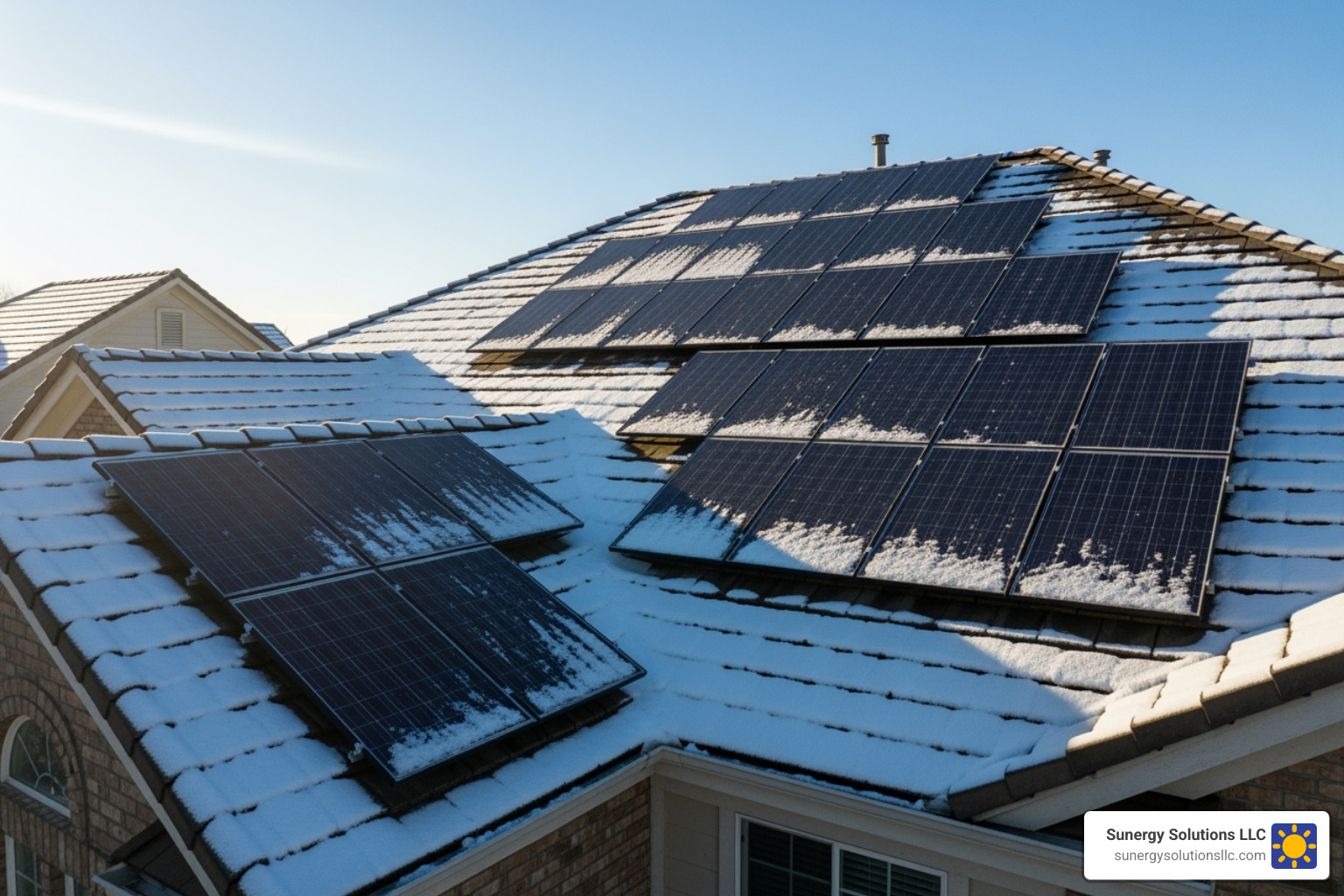
Yes. While heavy snow cover will temporarily stop production, solar panels are highly efficient in cold, sunny weather. The dark surface and tilt of the panels help snow melt and slide off naturally. We generally advise against trying to clear them yourself, as this can be unsafe and may damage the panels. Modern panels are built to withstand heavy snow loads and harsh winter conditions, ensuring their durability for 25+ years.
Standard grid-tied solar systems shut down during a power outage for safety reasons. To keep your lights on during an outage, you need to add battery storage. A solar battery system, like the Homegrid battery, stores excess solar energy for use at night or during a grid failure. This creates true energy independence, allowing your panels to recharge the battery each day and providing a reliable, self-sustaining power source.
Solar contracts contain important technical and financial details. A reputable installer will walk you through every line. It’s crucial to understand the difference between a workmanship warranty (covering the installation quality) and an equipment warranty (covering the panels and inverters). Also, look for a production guarantee, which ensures your panels will perform to a certain capacity for 25 years. If considering a lease or PPA, be sure to understand any annual payment escalators. Don’t sign anything until you are completely comfortable with the terms.
Modern solar panels are built to withstand New Hampshire’s challenging weather and last for 25 to 30 years or more. Manufacturers provide performance warranties guaranteeing panels will still produce at a high capacity (typically around 80%) after 25 years. With a minimal annual degradation rate of less than 0.5%, your system will provide long-term value for decades.
Solar panels are a great selling point, potentially boosting your home’s value by up to 4.1%. If you own the system, it transfers to the new homeowner as a home asset, just like an updated kitchen. If you have a lease or PPA, the contract typically needs to be transferred to the new buyer, which is a manageable process. In either case, solar is an attractive feature for prospective buyers.
We strongly recommend against DIY solar installation. The process involves significant safety risks (high-voltage electricity, working at heights) and requires deep knowledge of complex electrical codes. Furthermore, DIY installation can void equipment warranties and may prevent you from getting the necessary permits and utility approval to operate the system. Professional installation by licensed solar installers New Hampshire homeowners trust ensures safety, compliance, and access to all financial incentives.
Going solar in New Hampshire is a smart financial decision that pays dividends for decades. With potential savings over $93,597 in 25 years and a home value increase of up to 4.1%, solar is one of the best investments a homeowner can make. Modern solar technology, especially when paired with battery storage, is perfectly suited to thrive in the Granite State’s climate.
However, the success of your investment hinges on one critical factor: the quality of your installation partner. The right solar installers New Hampshire team ensures your system is installed correctly to deliver maximum savings. This means choosing a partner with proper licensing, NABCEP certification, and robust workmanship and equipment warranties. A quality installer educates, not pressures, and stands behind their work for the long haul.
At Sunergy Solutions LLC, our commitment is to guide you through every step of the process. We provide top-tier equipment, extensive warranties, and exceptional customer service to ensure your journey to energy independence is smooth and rewarding. With rising electricity costs and strong federal incentives, there has never been a better time to join the solar revolution in New Hampshire.
Ready to see how solar can transform your energy bills and increase your home’s value? Let’s start the journey together.
Find a trusted solar provider near me
Appointments Available, 7 Days a Week


