
5.0 Rating
Request A Free Estimate
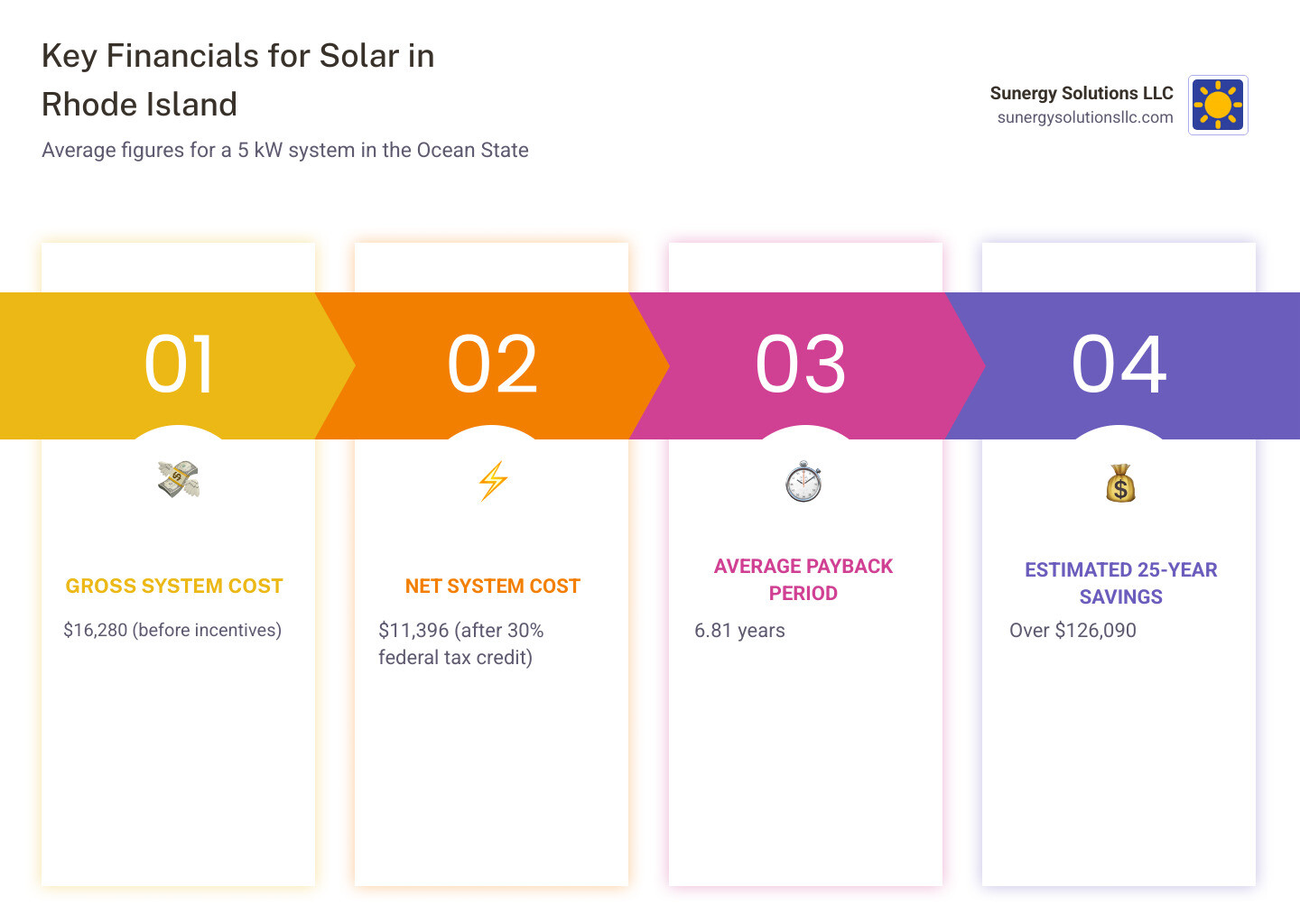
Understanding the solar panel cost ri is the first step for homeowners considering the switch. Due to high electricity rates, many Rhode Island residents are turning to solar to reduce costs and gain energy independence. Here’s a quick look at what you can expect for a common system size:
I’m Robert Raffa, CEO and Founder of Sunergy Solutions LLC. With nearly a decade in renewable energy, I’ve helped many homeowners steer the solar panel cost ri and achieve energy independence. This guide will walk you through everything you need to know about going solar in Rhode Island.
Must-know solar panel cost ri terms:
As of March 2025, the average solar panel cost ri is around $3.26 per watt. For a typical 5-kilowatt (kW) system, this means an upfront cost of approximately $16,280 before any incentives. However, after applying the 30% federal solar tax credit, the net cost for that same system drops to about $11,396. A larger 6 kW system would average around $15,456 after the credit. These figures show why solar is an increasingly attractive investment for homeowners in the Ocean State.
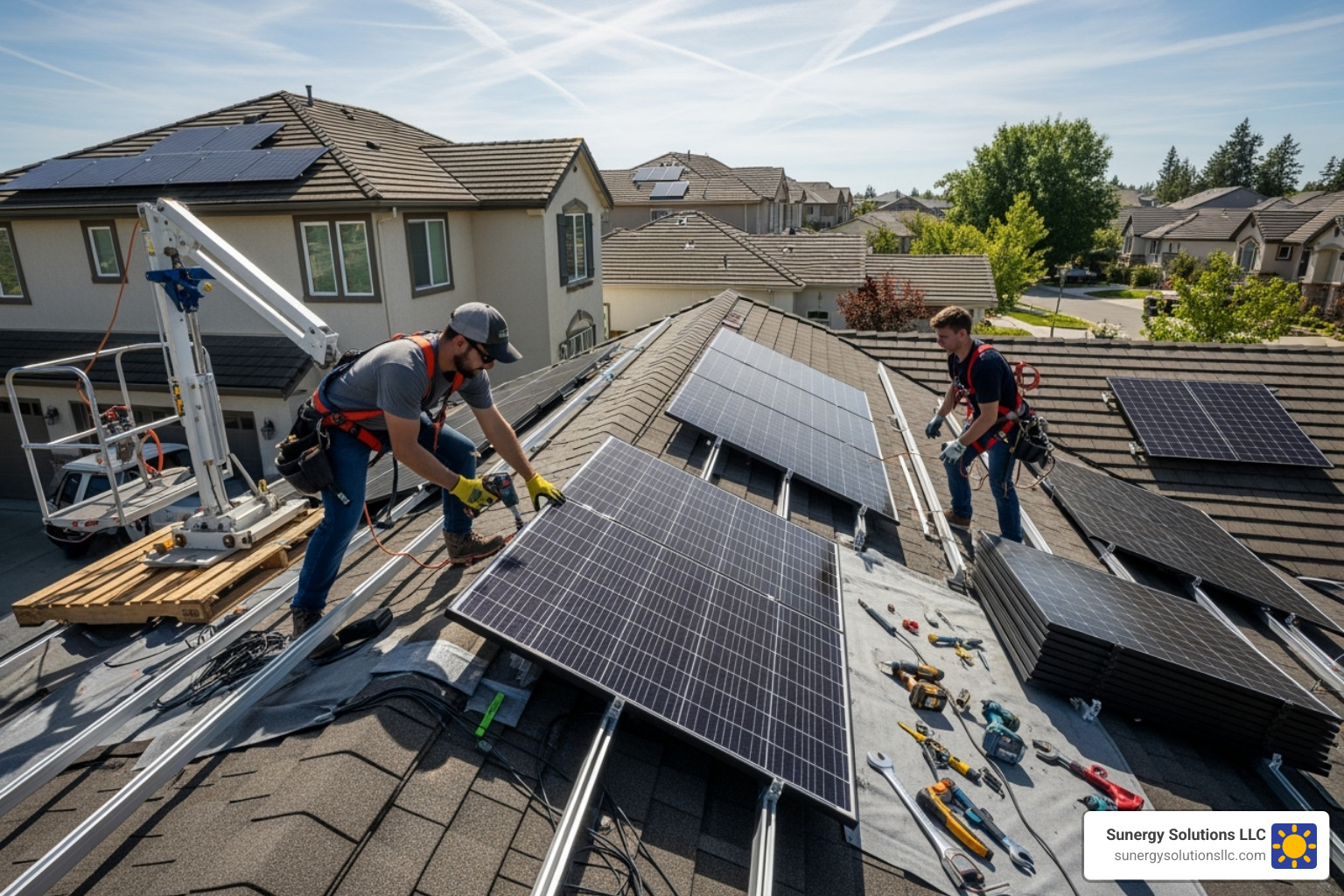
The total solar panel cost ri is a blend of hardware and “soft” costs. The average cost per watt in Rhode Island generally falls between $2.97 and $4.01. While a 5 kW system is a common size, many homes require larger systems to fully offset their energy use.
Hardware costs include the solar panels, inverters, and racking systems. Soft costs include labor, permitting, inspection fees, and other overhead. Understanding these components helps clarify the comprehensive price of a professional installation that ensures a safe, efficient, and compliant system.
The final price for your solar installation is determined by several key factors:
Rhode Island’s high electricity rates, averaging 27.31 cents per kilowatt-hour (kWh), mean that solar panels provide significant savings. With the average monthly bill around $160.15, generating your own power can have a major financial impact. Fortunately, federal and state incentives are available to reduce the initial solar panel cost ri and improve the long-term benefits.

A strong set of incentives dramatically lowers the overall cost of going solar:
Homeowners may need to choose between certain state programs, as they are not always stackable. At Sunergy Solutions LLC, we help you steer these options to maximize your savings.
Net metering is a key policy that allows you to receive credit for any excess electricity your solar panels generate and send to the grid. On sunny days when production exceeds your home’s consumption, the surplus power flows to the utility. You receive a credit for this energy at the full retail rate, which can be used to offset your electricity costs at night or on cloudy days.
These credits apply up to 100% of your monthly usage. Any generation beyond that is typically credited at a slightly lower “avoided cost rate,” with total excess credits capped at 125% of your usage. This system ensures you get fair value for all the power your system produces, significantly reducing your utility bills.
Beyond the initial solar panel cost ri, the long-term financial return is what makes solar a smart investment. With high electricity rates and strong incentives, the payback period for solar panels in Rhode Island is quick, averaging around 6.81 years. After this period, the electricity your system generates is essentially free.
Over 25 years, a typical 5 kW system in Rhode Island can save an estimated $126,090 on electricity costs. This figure accounts for rising utility rates, making solar an effective way to protect your budget from price hikes. Solar panels also increase your home’s value.
Here is a sample 25-year savings projection for a typical 6 kW system in Rhode Island:
| Year | Annual Electricity Savings (Estimated) | Cumulative Savings (Estimated) |
|---|---|---|
| 1 | $1,921.80 | $1,921.80 |
| 5 | $2,130.00 | $10,400.00 |
| 10 | $2,450.00 | $23,500.00 |
| 15 | $2,820.00 | $40,500.00 |
| 20 | $3,250.00 | $62,000.00 |
| 25 | $3,750.00 | $89,000.00 |
| Total (extrapolated) | N/A | $126,090+ |
Your personal payback period can be estimated with a simple formula:
Payback Period = (Total System Cost After Incentives) / (Annual Electricity Savings)
For example, a 5 kW system costing $11,396 after incentives and saving $1,921.80 annually would have a payback period of about 5.93 years. Your specific payback time depends on your electricity usage, local utility rate, the incentives you qualify for, and your system’s performance.
Choosing solar in Rhode Island offers significant long-term advantages:
Several financing options are available to make the solar panel cost ri manageable for any budget. The main paths to going solar are cash purchases, solar loans, and third-party arrangements like leases or Power Purchase Agreements (PPAs). Each has distinct advantages depending on your financial situation.
With both leases and PPAs, you do not own the system and are therefore ineligible for the federal tax credit and other ownership-based incentives. The long-term savings are significantly lower than with ownership. These contracts can also complicate the sale of your home. At Sunergy Solutions LLC, we prioritize ownership options to ensure our customers receive the maximum financial benefit.
A smooth transition to solar energy requires understanding state regulations, local permitting, and choosing the right installation partner. We are here to guide you through every step of the process.

Despite its northern location, Rhode Island is an excellent state for solar energy. The state receives about 202 sunny days per year and an average of 4.59 peak sun hours daily, providing ample sunlight for efficient energy production. Solar panels perform well in cold, sunny weather, and snow typically slides off their smooth surface.
Rhode Island has a long history of supporting renewable energy, ranking 15th in the nation for solar readiness. The state’s Solar Easements law, enacted in 1981, protects a property owner’s right to sunlight for solar energy. This supportive environment, combined with high electricity rates, makes Rhode Island a prime location for solar investment.
Selecting the right installer is critical for ensuring your system is safe, efficient, and durable. Here’s what to look for:
Choosing a qualified installer is an investment in a reliable, long-lasting energy solution for your home.
Going solar is a major decision, and it’s common to have questions about the solar panel cost ri and the overall process. Here are answers to some of the most common inquiries.
As of March 2025, the average upfront cost for a 5 kW solar system in Rhode Island is approximately $16,280. After applying the 30% federal tax credit, the average net cost drops to around $11,396. This is an average figure; your final cost will depend on factors like the specific equipment you choose, your roof’s complexity, whether you add battery storage, and your chosen installer.
The average payback period for solar panels in Rhode Island is remarkably short, at about 6.81 years. Some homeowners may see a return on their investment even sooner. This quick payback is driven by two main factors: Rhode Island’s high electricity rates, which maximize your savings per kWh produced, and the state’s robust solar incentives, which significantly lower the initial investment. After the payback period, the electricity your system generates is effectively free for the rest of its 25+ year lifespan.
The term “free solar panels” typically refers to financing options with $0 upfront costs, such as solar leases or Power Purchase Agreements (PPAs). With these arrangements, a solar company installs and maintains the panels on your roof, and you pay a monthly fee or a set rate for the power produced. While this eliminates the initial investment, it’s crucial to understand that you do not own the system.
This means you are not eligible for the federal tax credit or other ownership-based incentives, and your long-term savings are significantly lower compared to owning the system. These long-term contracts can also complicate selling your home. We believe that owning your system, either through a cash purchase or a solar loan, provides the greatest financial benefits for Rhode Island homeowners.
This guide has detailed the solar panel cost ri and the significant benefits of solar power in the Ocean State. With high electricity rates and strong incentives, going solar is a smart financial decision for homeowners. You can reduce your carbon footprint, gain energy independence, and achieve long-term savings that can exceed $126,090 over 25 years.
At Sunergy Solutions LLC, we specialize in making this a reality. We provide personalized residential and commercial solar installations using top-tier equipment, backed by extensive warranties and exceptional customer service. Our mission is to deliver reliable, cost-effective solar solutions that generate significant energy savings. We proudly serve customers in Rhode Island, Maine, Massachusetts, New Hampshire, Vermont, Montana, and Virginia.
Are you ready to achieve energy independence and open up your solar savings? Contact us for a personalized consultation. Let us show you how much you can save and how simple the switch to solar can be.
Appointments Available, 7 Days a Week


