
5.0 Rating
Request A Free Estimate
How much are solar panels in new hampshire? It’s the first question most homeowners ask. With New Hampshire having the fourth-highest electricity costs in the country, understanding solar pricing is more important than ever for Granite State residents.
Here’s what you can expect to pay for solar panels in New Hampshire:
The good news is that solar panel costs have dropped by 43% over the past decade in New Hampshire, while electricity rates continue to climb. This creates a great opportunity for homeowners to lock in energy costs and gain independence from utility companies.
As CEO of Sunergy Solutions LLC, I’ve spent nearly a decade helping New Hampshire families understand how much are solar panels in new hampshire. I’ve seen how the right solar investment can transform both monthly budgets and long-term financial security.
If you’re wondering how much are solar panels in New Hampshire, the answer depends on your home’s energy needs and the equipment you choose. Let’s break down the costs you can expect in the Granite State.
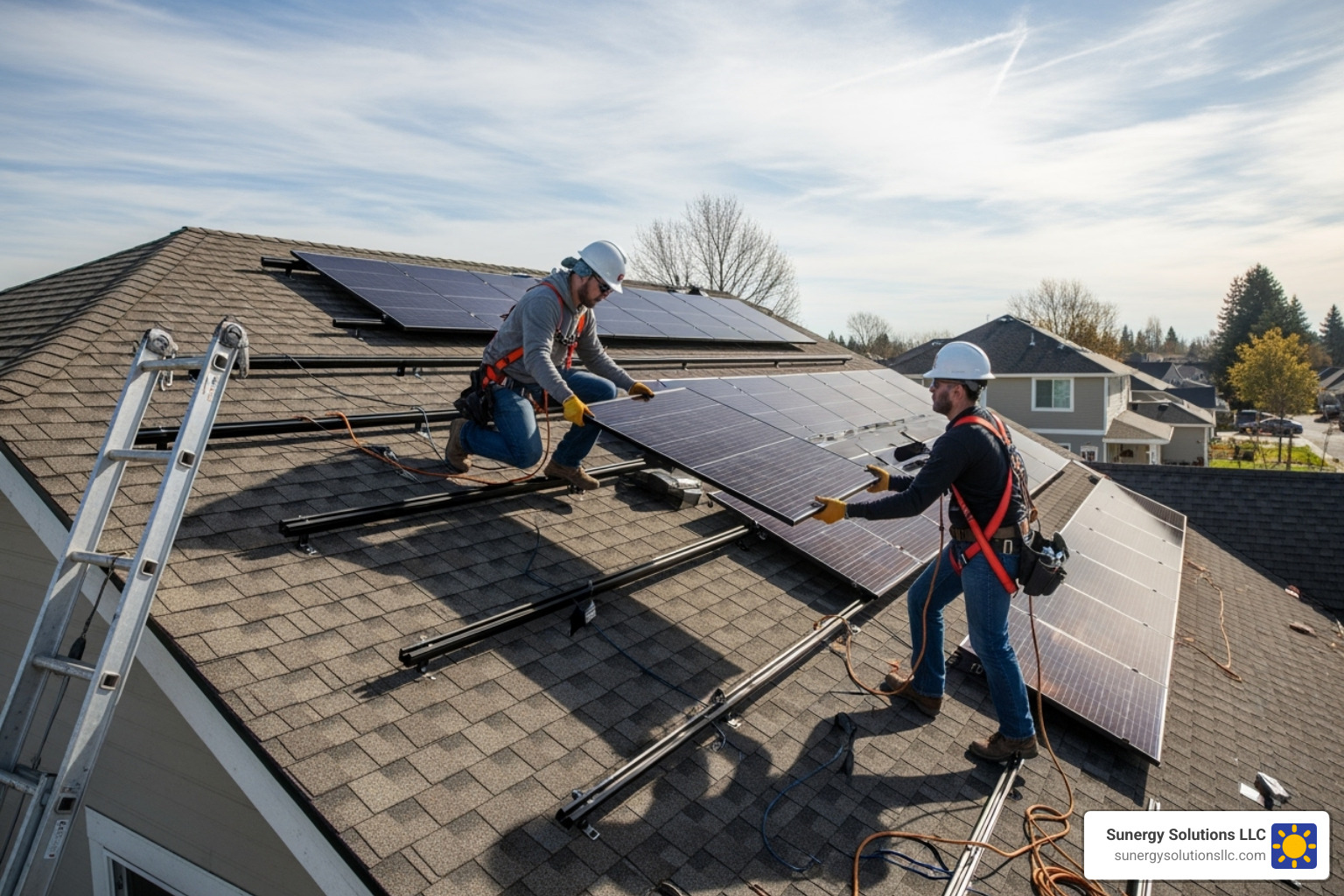
Currently, solar panels in New Hampshire cost between $2.99 and $3.96 per watt before incentives. This all-inclusive price covers panels, inverters, mounting, permits, and installation. For a typical 5-kilowatt system, this means a pre-incentive cost of about $14,953 (ranging from $12,710 to $17,196). After the federal tax credit, the cost drops to around $10,467 to $14,455.
Interestingly, while New Hampshire’s cost per watt can be higher than the national average ($3.33), our total system costs are often lower. This is because NH homes tend to use less electricity, requiring smaller, more affordable systems. The average total system cost after the federal tax credit in New Hampshire is $17,154, significantly less than the national average of $20,979.
System size is a primary driver of your final cost. Most New Hampshire families require a system between 5 kW and 10 kW. Smaller homes may only need a 5 kW system, while larger homes with higher electricity consumption might need a 10 kW system.
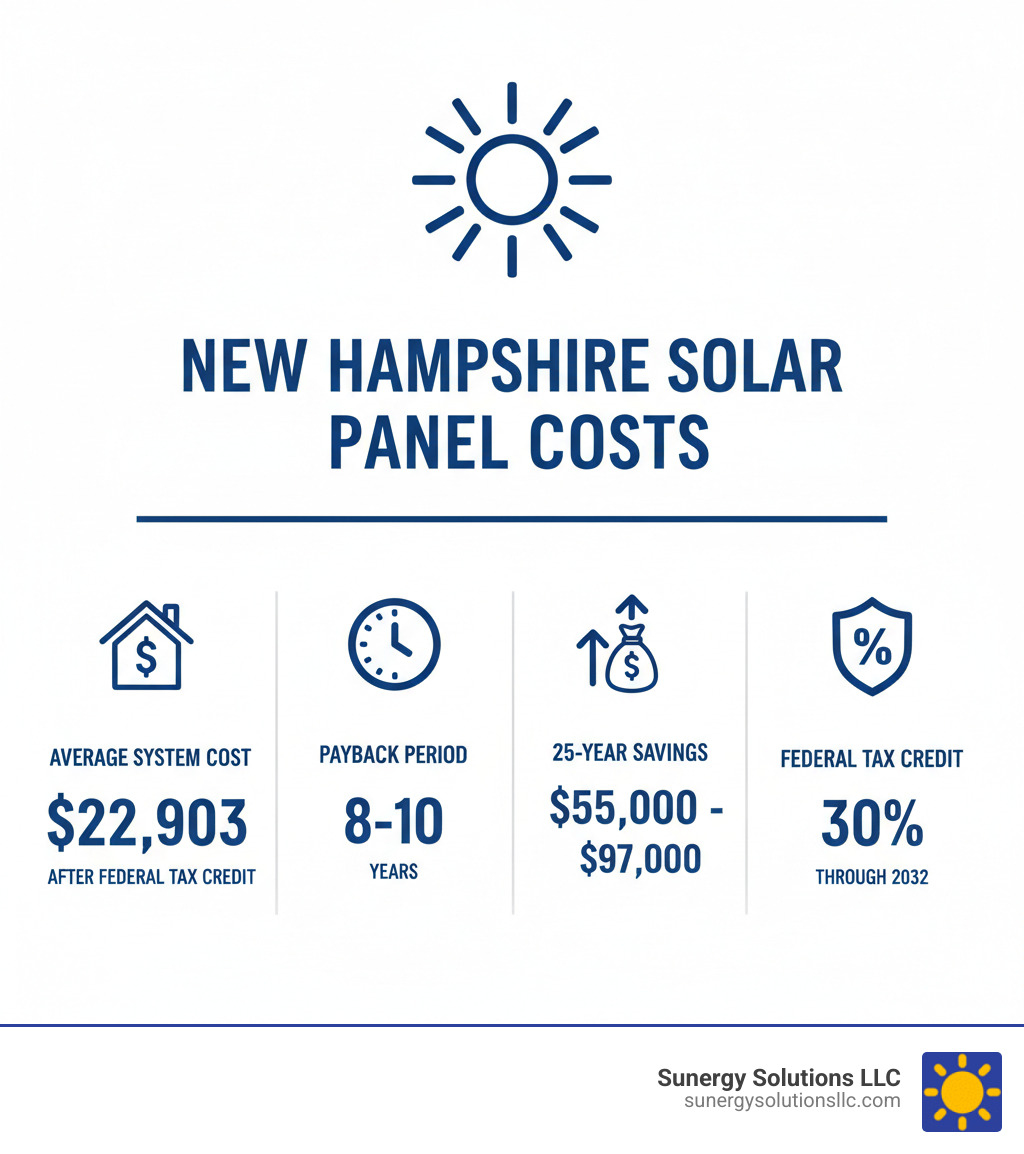
The average New Hampshire homeowner installs a 9.97 kW system, costing about $32,719 before incentives. After the 30% federal tax credit, the net cost is $22,903.
Here’s a breakdown of costs by system size:
| System Size (kW) | Estimated Gross Cost (Before Incentives) | Federal Tax Credit (30%) | Estimated Net Cost (After Tax Credit) |
|---|---|---|---|
| 2 kW | $7,920 | $2,376 | $5,544 |
| 5 kW | $14,953 – $20,650 | $4,486 – $6,195 | $10,467 – $14,455 |
| 6 kW | $23,760 | $7,128 | $16,632 |
| 9.97 kW | $32,719 | $9,816 | $22,903 |
| 10 kW | $39,600 | $11,880 | $27,720 |
These are estimates. Your final cost will depend on your roof, electrical system, and chosen equipment.
New Hampshire’s solar prices are competitive with neighboring states like Vermont, Massachusetts, and Maine. While factors like labor costs in Massachusetts or permitting in Vermont can cause slight variations, New Hampshire benefits from experienced local installers and the need for smaller average system sizes. These factors ensure you get solid value for your solar investment in the Granite State. You can see how New Hampshire compares to solar panel costs across the U.S.
Financial incentives are key to understanding the true value of solar. They transform the question of how much are solar panels in new hampshire into a compelling investment opportunity.

The federal solar tax credit, or Residential Clean Energy Credit, is the most significant incentive. It allows you to claim 30% of your total solar system cost as a direct credit against your federal income taxes. This is a dollar-for-dollar reduction of your tax bill. For example, a $20,000 system earns you a $6,000 tax credit, lowering your net cost to $14,000.
The 30% rate is available through 2032, stepping down to 26% in 2033 and 22% in 2034. Any unused credit can be carried forward to future tax years. To claim it, file IRS Form 5695 with your tax return. You can find more info about the federal tax credit from the IRS.
New Hampshire offers several local incentives that stack on top of the federal credit.
For current details, see our NH Solar Power Incentives: Complete Guide and the state government’s solar programs page.
Net metering allows you to send excess solar energy back to the grid for credits on your utility bill. In New Hampshire, the current program provides credits worth about 75% of the retail electricity rate. While not a 1:1 exchange, this still significantly reduces your annual electricity costs. You can use these credits to offset power drawn from the grid at night or on cloudy days.
Net metering policies can evolve, but installing solar now often means you’ll be “grandfathered” into the current, favorable rules for years to come. This protects your investment from future policy changes.
For the latest details, visit the state’s page on New Hampshire’s current version of net metering or check with your utility, such as Eversource or Unitil.
The long-term financial picture is what truly matters. In New Hampshire, the average solar payback period is 8 to 10 years. Since panels are warrantied for 25-30 years, you’ll enjoy decades of free electricity after this point.
Over 25 years, a cash-purchased system can generate savings of $55,000 to $97,000, depending on system size and energy usage. This represents a return on investment that often outperforms traditional markets, all while providing energy independence. We can help you maximize savings: NH Solar Power Incentives and calculate the precise value for your home.
The final cost of how much are solar panels in new hampshire depends on several key variables related to your equipment, property, and installation.
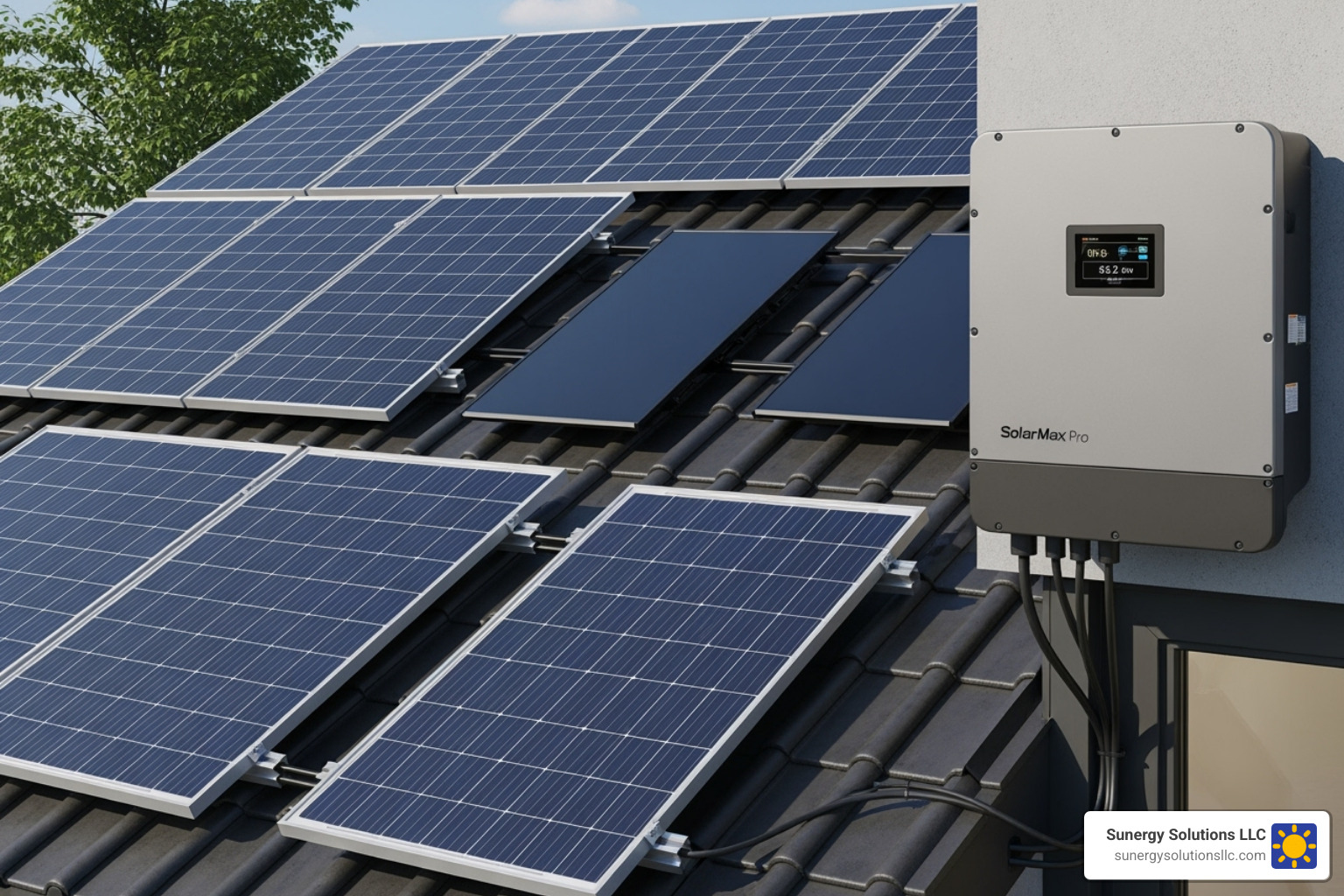
The equipment you choose is a primary cost driver and affects long-term performance.
Your home’s specific characteristics are crucial for determining the final cost.
Several additional costs are part of the total investment. These include:
A reputable installer, like Sunergy Solutions, will include all these costs in your quote for full transparency, so there are no surprises.
With high electricity rates and strong incentives, going solar is a compelling financial decision for many in the Granite State. The numbers show potential savings of $55,000 to $97,000 over 25 years and payback periods of just 8-10 years, making the financial case quite strong.
Here are the key benefits and considerations for solar ownership in New Hampshire.
Pros:
Cons:
For most homeowners in cities like Manchester or Nashua, the pros of going solar far outweigh the cons.
Knowing how much are solar panels in new hampshire is the start; knowing how to minimize that cost is where real savings begin. Here are some effective strategies:
These strategies, especially for residents in areas like Concord, can save you thousands. An experienced local installer is key to navigating these options.
Ongoing maintenance costs for solar panels are remarkably low. With no moving parts, panels are highly reliable and typically maintenance-free. Rain and snow naturally keep them clean.
Most panels come with a 25-year performance warranty. The only significant maintenance expense you might encounter is replacing the inverter, which typically has a 10-15 year warranty and may need to be replaced once over the system’s lifespan.
The right installer is crucial for your system’s performance and savings. Look for these qualities:
Sunergy Solutions LLC meets all these criteria, ensuring quality craftsmanship and customer service.
Solar panels are designed to perform well in New Hampshire’s climate, including snowy winters.
While heavy snow cover will temporarily stop production, the panels are installed at an angle that helps snow slide off naturally. Furthermore, cold, sunny winter days are actually very efficient for solar production.
Most importantly, all professional annual production estimates already account for typical snowfall and shorter winter days. Your projected savings are based on year-round performance, so there are no surprises.

Understanding how much are solar panels in new hampshire is the first step toward a smart financial decision that pays dividends for decades.
To recap, an average system in New Hampshire costs around $22,903 after the federal tax credit. With a payback period of just 8-10 years and potential 25-year savings of $55,000 to $97,000, going solar is a powerful way to combat the state’s high electricity rates.
The timing is ideal. The 30% federal tax credit is available through 2032, and state incentives like the property tax exemption and favorable net metering policies make the investment even more attractive. These opportunities may not last forever.
Going solar offers more than just savings. It provides increased home value, a smaller carbon footprint, and energy independence from volatile utility rates. It’s peace of mind knowing your energy costs are predictable.
At Sunergy Solutions LLC, our expertise covers both expert solar installations and roofing services. We ensure your home is fully prepared for a seamless transition to clean energy, from the roof down.
The question isn’t just about cost; it’s about how much you want to save. Your energy future is in your hands, and the sun is ready to power it.
Appointments Available, 7 Days a Week


