
5.0 Rating
Request A Free Estimate
Massachusetts residents have excellent opportunities to save on energy bills and adopt clean power through robust ma solar incentives. The Bay State offers some of the country’s most generous programs, making solar more affordable than ever for homeowners and businesses. These incentives help cut high electricity costs and contribute to a cleaner environment.
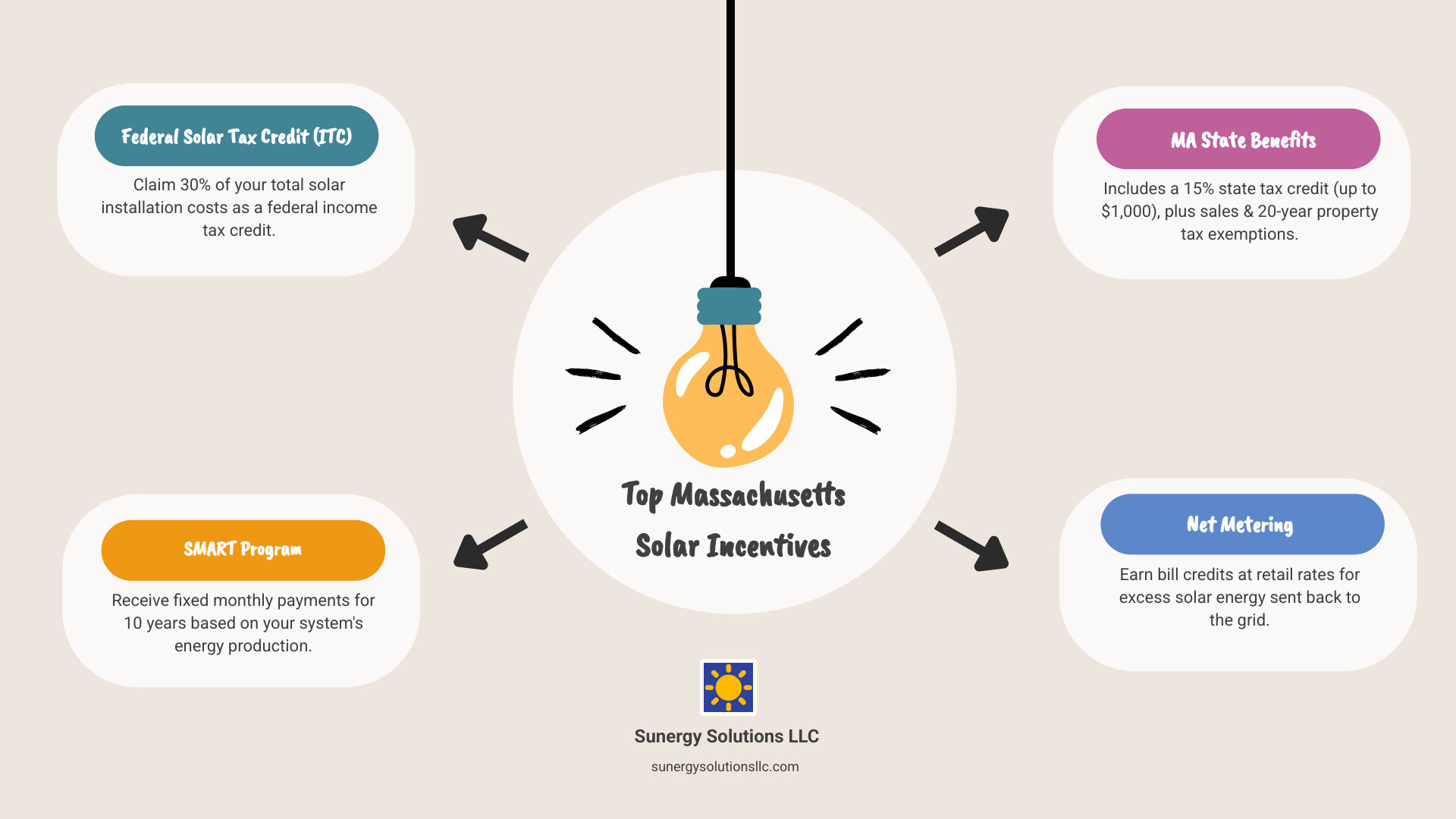
Here are the key MA solar incentives:
This guide is from Sunergy Solutions LLC. Our team, led by CEO & Founder Robert Raffa, has nearly a decade of experience specializing in high-performance solar systems that maximize ROI and long-term savings. We leverage our expertise in ma solar incentives to help clients achieve energy independence.
Explore more about ma solar incentives:
When making solar affordable, the most substantial savings come from federal and state tax incentives. These are not small discounts; they are significant reductions in your overall cost that make solar a valuable long-term investment.
The most significant of all ma solar incentives is the federal Residential Clean Energy Credit, often called the Investment Tax Credit (ITC). It allows you to claim 30% of your total solar system cost as a dollar-for-dollar reduction on your federal income taxes.
Key points to remember:
The 30% rate is locked in through 2032, then steps down to 26% in 2033 and 22% in 2034. This gives you a great window of opportunity. While the credit is non-refundable, any unused portion can be carried forward to future tax years. To claim it, you’ll file IRS Form 5695 with your federal taxes. We recommend consulting a tax professional to ensure you maximize your credit.
Massachusetts adds its own tax benefits, creating even more savings for homeowners.

Beyond tax savings, Massachusetts offers performance-based incentives that pay you for the clean energy your system produces.
The Solar Massachusetts Renewable Target (SMART) program is the state’s primary solar incentive, available to customers of National Grid, Eversource, and Unitil. Launched in 2018, SMART provides a steady, predictable monthly payment for the electricity your system generates, typically for 10 years.
How it works:
The SMART program remains a cornerstone of ma solar incentives, ensuring solar is a smart financial choice. For more information, visit the Official SMART Program Information page.
What happens when your panels produce more power than you’re using? With net metering, that extra energy isn’t wasted—it earns you money.

How Net Metering Works: Net metering is a billing mechanism where your utility company credits you for excess electricity sent to the grid. Your meter tracks this outflow, and for every kWh you send back, you get a credit on your utility bill. When you need to draw power from the grid (like at night), your credits offset the charges.
Massachusetts has one of the best net metering policies in the country, typically crediting homeowners at nearly the full retail rate. These credits roll over month-to-month, allowing you to build them up in sunny months for use in winter. This can drastically reduce or even eliminate your electric bills.
Net metering is required for most residential systems in Massachusetts, making it an accessible and fundamental part of the financial puzzle for going solar. Learn more from the state’s Net metering guide.
Beyond major state and federal programs, Massachusetts offers specialized local incentives that can add up to significant savings.
Depending on your electricity provider, you may be eligible for additional rebates. Major utilities like Eversource and National Grid participate in the SMART program and offer other incentives, like the ConnectedSolutions Program, which pays you for sharing power from a home battery during peak demand.
Many Municipal Light Plants (MLPs), which are not part of the statewide SMART program, offer their own excellent local rebates. Towns like Concord (CMLP), Taunton (TMLP), Reading (RMLD), and Hudson (HLP) have historically offered generous rebates per kilowatt for solar installations. It’s always a smart move to check directly with your local utility provider to see what specific programs are available in your area. Our team at Sunergy Solutions can help you steer these local opportunities. You can find more details about demand response programs like the ConnectedSolutions Program.
Energy storage is a crucial part of a modern solar system, providing backup power and energy independence. Massachusetts offers excellent ma solar incentives to lower the cost of adding a battery.
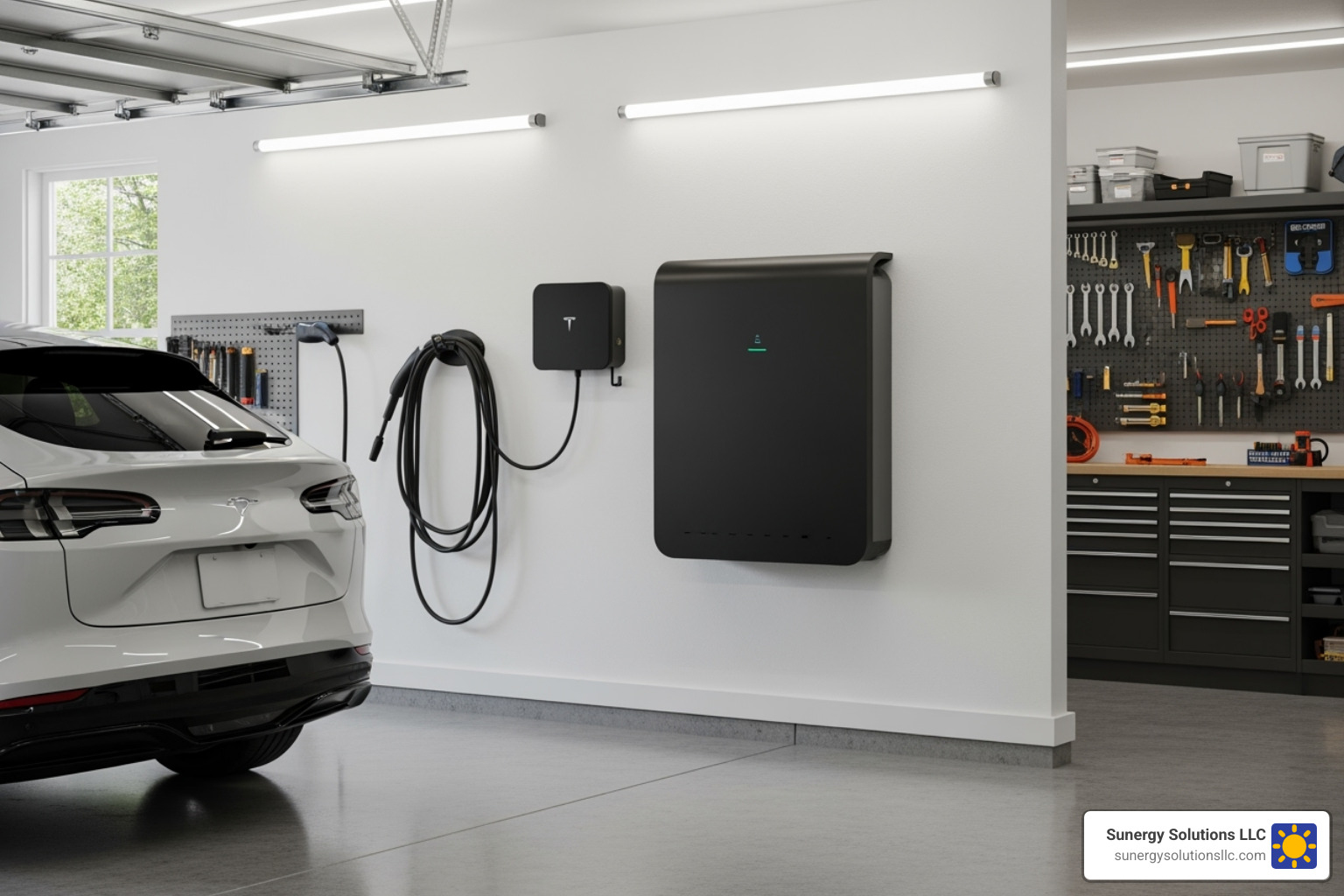
Key battery incentives include:
Adding a battery can also increase your compensation through the SMART program, boosting the financial return of your entire solar investment.
What if your roof isn’t suitable for solar? Community solar programs in Massachusetts offer a fantastic alternative. These programs allow you to subscribe to a portion of a large, off-site solar farm and receive credits on your utility bill for the energy your share produces.
Benefits of community solar include:
Community solar makes the benefits of clean energy accessible to a wider range of residents. Explore options through resources like the Massachusetts Clean Energy Center.
Understanding how incentives impact your costs and long-term savings is key to seeing the value of solar in Massachusetts.
The upfront cost of solar varies based on system size, equipment, and installation complexity. However, the powerful combination of federal and state ma solar incentives significantly reduces this initial investment.
For example, a 5 kW system in Massachusetts might cost around $16,150 before incentives. Here’s how the incentives can drastically lower that price:
| System Size (kW) | Average Cost (Before Incentives) | After 30% Federal Tax Credit | After MA State Incentives (est.) |
|---|---|---|---|
| 5 kW | $16,150 | $11,305 | $10,305 |
| 7 kW | $22,610 | $15,827 | $14,827 |
| 9 kW | $29,070 | $20,349 | $19,349 |
Note: The “MA State Incentives” in this table include the $1,000 MA Residential Energy Credit and the state sales tax exemption. Ongoing benefits from SMART and net metering are not included in these upfront cost reductions.
As you can see, incentives make a substantial difference. For a 5 kW system, you could save over $5,800 on the initial cost, bringing your out-of-pocket expense down significantly.
With Massachusetts electricity rates among the highest in the nation (averaging around $0.25/kWh), your solar investment provides an incredible return.
If your monthly electricity bills are $150 or more, solar offers one of the most compelling financial returns available. To understand your personalized savings, we recommend getting a custom estimate from a trusted solar professional.
Here are answers to some of the most common questions we hear from homeowners considering solar in Massachusetts.
Yes, absolutely. Massachusetts is one of the best states for solar for several key reasons:
The good news is that your solar installer handles most of the paperwork. When you work with Sunergy Solutions LLC, our process is straightforward:
Our goal is to make the process as seamless as possible for you.
The landscape for ma solar incentives is dynamic. Here’s what you should know:
Massachusetts is a national leader in solar energy, thanks to a powerful combination of ma solar incentives. The 30% federal tax credit, the state’s SMART program, tax exemptions, and net metering work together to dramatically lower the cost of solar and maximize your return on investment.
Going solar is about more than just saving money on electricity bills; it’s about achieving energy independence, protecting yourself from rising utility rates, and contributing to a cleaner future. With payback periods as short as five to seven years and significant long-term savings, the financial benefits are clear.
At Sunergy Solutions LLC, we specialize in helping Massachusetts residents harness the power of the sun. Our expert team will guide you through every step, ensuring you take full advantage of every available incentive. We provide top-tier equipment, extensive warranties, and exceptional customer service to make your transition to solar smooth and rewarding.
Don’t wait to start saving. Now is the perfect time to take advantage of the incredible ma solar incentives available.
Get your free solar quote for your Massachusetts home and find how much you can save!

Appointments Available, 7 Days a Week


