
5.0 Rating
Request A Free Estimate
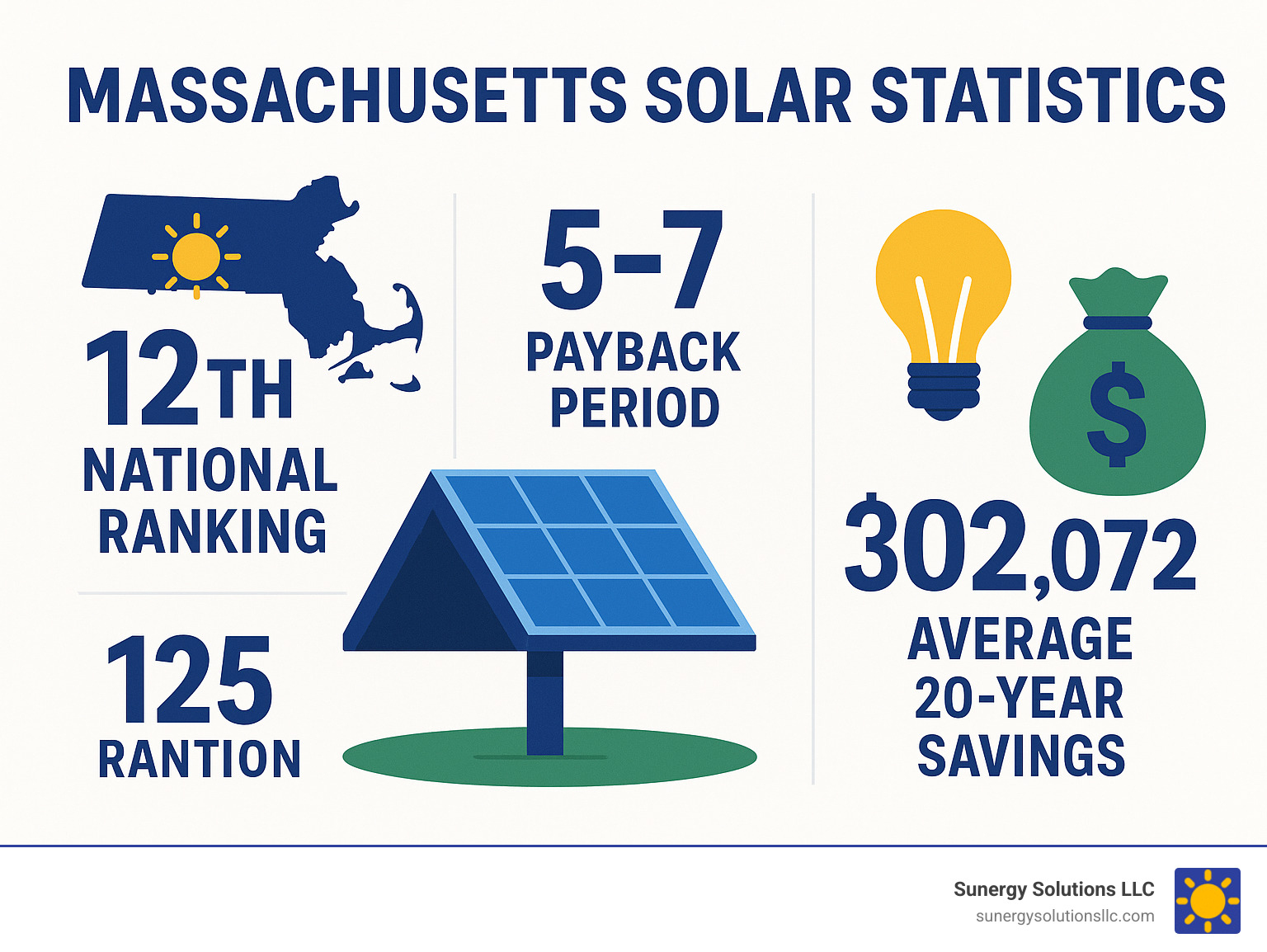
Finding the right solar companies in boston can feel overwhelming, but the area boasts many highly-rated installers. Boston has become a solar powerhouse for several compelling reasons. Massachusetts ranks 12th in the nation for solar energy adoption and leads all New England states. With electricity rates averaging 30.4 cents per kilowatt-hour—well above the national average—Bay State homeowners see faster payback periods of just 5-7 years compared to the national average of 8-10 years.
The state’s ambitious goal of achieving net-zero carbon emissions by 2050 has created a robust support system for solar adoption. Strong grid infrastructure, generous incentives, and progressive clean energy policies make Massachusetts one of the best places in the country to go solar.
For Boston homeowners, the average 7.52 kW solar system costs approximately $26,895 before incentives but drops to $18,827 after the 30% federal tax credit. Over 20 years, the average Boston homeowner saves $82,072 on electric bills while increasing their home’s value.
I’m Robert Raffa, CEO and Founder of Sunergy Solutions LLC, and I’ve spent nearly a decade helping Northeast homeowners steer the solar companies in boston landscape. My background in investment banking allows me to apply rigorous financial analysis to every solar project, ensuring our clients receive both environmental and economic benefits.
Learn more about solar companies in boston:
The financial benefits of going solar in Boston are clear. Massachusetts consistently has some of the highest electricity rates in the nation, with averages around 30.4 cents per kilowatt-hour. This high cost makes solar an incredibly attractive alternative, as every bit of sunshine your panels capture means less power you need to buy from the grid.
The impact on monthly budgets can be immediate and substantial, with many homeowners saving hundreds of dollars each month. Imagine what you could do with that extra money!
Beyond immediate savings, Boston homeowners enjoy remarkably fast solar payback periods, often just 5-7 years—considerably faster than the national average of 8-10 years. This means your system pays for itself quickly, after which the electricity it generates is practically free.
Furthermore, installing solar panels is a smart investment in your property. Studies consistently show that homes with solar energy systems sell faster and for a higher value than comparable homes without them. This increased home value contributes to a fantastic return on investment (ROI), making solar an asset that truly pays dividends.
Massachusetts has established itself as a pioneering force in the clean energy revolution. The state proudly ranks 12th in the nation for solar energy capacity as of 2024 and is the undisputed leader among all New England states. This is the result of strategic planning, ambitious goals, and a supportive policy environment.
Our state has set a commendable goal: to achieve net-zero greenhouse gas emissions by 2050. Solar energy plays a critical role in reaching this target. To meet this climate goal, Massachusetts will need to install 27 to 34 gigawatts of solar energy, more than 10 times the amount currently installed. This highlights the immense growth potential and the state’s commitment to a sustainable future.
Massachusetts also benefits from a strong and reliable grid infrastructure, which is essential for integrating renewable energy. This robust infrastructure ensures that the clean energy from your panels can be efficiently distributed, benefiting the entire community. The combination of progressive policies, high electricity prices, and a supportive regulatory framework makes Massachusetts one of the most advantageous states to adopt solar power.

When choosing between solar companies in boston, understanding the real costs is crucial. A typical 6-8 kilowatt solar system in Massachusetts costs around $14,545, while the larger 7.52 kW system that many Boston homes need runs about $26,895 before incentives.
This breaks down to roughly $939 per professionally installed solar panel. The price per watt typically ranges from $2.30 to $3.44, with the Boston average at $3.58 per watt.
The great news is that Massachusetts solar costs are below the national average of $19,619. Better yet, generous state and federal incentive programs can dramatically slash that upfront investment, providing thousands of dollars in immediate savings and decades of reduced electricity bills.
The Cost Of Installing A Residential Solar System A Comprehensive Guide
Massachusetts has one of the most generous solar incentive packages in the country. The Federal Solar Tax Credit (ITC) alone reduces your total system cost by 30%. On a $26,895 system, that’s over $8,000 back, bringing your net cost down to around $18,827.
Additionally, Massachusetts offers its own Personal Income Tax Credit worth 15% of your system cost, up to $1,000.
The Property Tax Exemption means that even though a solar installation increases your home’s value, you won’t pay higher property taxes on that added value for 20 years. Similarly, the Sales Tax Exemption means you skip the 6.25% state sales tax on your solar equipment and installation.
| Incentive Name | Type | Level | Description | Link |
|---|---|---|---|---|
| Federal Solar Tax Credit (ITC) | Tax Credit | Federal | 30% of total system cost | Learn More |
| MA Personal Income Tax Credit | Tax Credit | State | 15% of system cost, up to $1,000 | Details |
| Property Tax Exemption | Tax Exemption | State | 20-year exemption on added home value | Info |
| Sales Tax Exemption | Tax Exemption | State | 100% exemption on solar equipment | Guide |
When stacked together, these incentives make the financial picture incredibly compelling and are a key reason Massachusetts leads New England in solar adoption.
Beyond upfront savings, Massachusetts offers ongoing financial benefits. The Solar Massachusetts Renewable Target (SMART) program guarantees fixed payments for 10 years based on the electricity your system produces.
These SMART payments, typically ranging from $0.13 to $0.35 per kilowatt-hour, create a predictable revenue stream that helps your system pay for itself even faster.
For homeowners who prefer financing, the Mass Save® HEAT Loan offers 0% interest loans up to $50,000 for energy improvements like solar. This is essentially free financing to help you go solar today and pay it back over time without interest charges.
Many Municipal Light Plant Rebates across the state offer an additional $0.50 to $1.25 per watt installed, providing another significant layer of savings for customers of municipal utilities.
The SMART program also includes an energy storage adder, providing additional incentives if you pair your solar system with a battery. This makes battery storage not just a smart backup power solution, but a financially attractive one too.
Solar Tax Credits And Rebates What You Need To Know

Choosing the right solar companies in boston is one of the most important decisions in your solar journey. You are investing in a long-term energy solution, so pick the best partner.
Look for a company that prioritizes quality, transparency, and customer satisfaction. Working with an experienced local company offers significant benefits, as they understand Massachusetts’ unique building codes, weather patterns, and architectural styles. This local expertise ensures your system is perfectly designed for our climate and regulations. Local companies can also offer quicker service and a more personal touch.
Customer reviews are an invaluable tool. Check sites like EnergySage, Google, and Yelp for consistent feedback on professionalism, communication, and installation quality. A reputable company will have a long history of happy customers.
Learn more about How To Find A Reputable Solar Company.
When comparing solar companies in boston, certain credentials indicate a reliable, high-quality provider. Look for companies with at least five years of experience, as this suggests financial stability and the ability to honor long-term warranties.
Licensing and insurance are non-negotiable. Solar installation involves electrical work and must be performed by a licensed electrician. Ensure any company you consider holds the necessary licenses from the Department of Public Utilities (DOER) and carries general liability and workers’ compensation insurance to protect you and the installation team.
The top mark of expertise for installers is NABCEP certification (North American Board of Certified Energy Practitioners). This certification shows an installer has met strict industry standards for knowledge and experience.
Finally, ask if the company uses in-house installers or subcontractors. Companies with their own installation teams often have better control over quality, training, and scheduling, leading to a smoother experience.
Curious about how local expertise makes a difference? Check out our insights on Local Solar Companies.
Once you have a shortlist of solar companies in boston, it’s time to evaluate their quotes. We recommend getting at least three proposals to compare system size, estimated energy production, and price. Look beyond the total cost and focus on the “price per watt” to make a fair comparison between different systems.
Equipment quality is critical. Ask about the brands of solar panels and inverters. Look for panels with high efficiency ratings (above 19%) and robust 25-year product warranties. Quality equipment is key to a reliable, high-performing system.
Warranties are your long-term safety net. You’ll typically see equipment warranties (from the manufacturer) and workmanship warranties (from the installer). Choose an installer that offers at least a 10-year workmanship warranty to cover any issues with the installation itself. Some companies offer comprehensive 25-year system warranties for complete peace of mind.
Lastly, ask about production guarantees. Reputable companies may guarantee the amount of electricity your system will produce, giving you extra assurance that your investment will deliver the expected energy savings.
Explore more about the panels themselves on our Residential Solar Panels page.

The journey to solar energy might seem complex, but a refined process makes it smooth and stress-free. Each step builds toward the moment you start generating your own clean electricity.
It begins with a consultation to understand your energy needs, review your electricity bills, and discuss your goals. This is a genuine conversation to determine if solar is right for your home and budget.
Next is the site assessment. Our technicians visit your property to evaluate your roof’s condition, measure available space, check for shading, and find the optimal angle for panel placement. This step is crucial for designing a system that maximizes performance, especially for Boston’s diverse housing stock.
With this data, our engineering team creates a custom system design for your home. We use advanced software to model your system’s year-round electricity production, balancing energy output with aesthetics.
The final preparatory step is securing all necessary permits and approvals. We handle this entire administrative process, submitting applications to your local building department and coordinating with your utility company to ensure everything meets Massachusetts’ strict standards.
Massachusetts has a comprehensive regulatory framework that supports solar while ensuring safety. For solar companies in boston, understanding these regulations is essential for a smooth project.
Regulations center on utility interconnection standards from the Massachusetts Department of Public Utilities. These standards ensure your system safely connects to the grid. Massachusetts has solar-friendly policies, making the process straightforward for experienced professionals.
Massachusetts Department of Public Utilities standards
One key guideline is the “20% rule,” which simplifies approval if your system is sized to produce no more than 20% above your home’s historical annual electricity use. This streamlines the process for most residential installations.
Boston’s rich architectural heritage means that homes in historic districts may require additional approval from local historic commissions. Experienced installers know how to work within these guidelines, using low-profile panels or strategic placement to minimize visual impact.
Every installation must pass a thorough inspection and commissioning process. Local building inspectors verify that all work meets code, while utility representatives ensure proper interconnection, protecting both homeowners and the grid.
Once permits are approved, the installation is surprisingly quick, typically taking just two to three days. We pride ourselves on an efficient, clean process that minimizes disruption.
However, the entire journey from consultation to activation usually takes two to three months. Most of this time is for administrative tasks like permitting and inspections, which ensures everything is done correctly and safely.
After installation, the local building department conducts a final inspection to verify all work meets state building and electrical codes. Once approved, you’re one step closer to solar independence.
The final milestone is receiving Permission to Operate (PTO) from your utility company. This official approval allows you to turn on your system and start generating clean electricity.
Our service doesn’t end there. We set up system monitoring so you can track your energy production and savings in real-time through user-friendly apps. It’s satisfying to watch your meter run backward on sunny days, knowing you’re producing more clean energy than you’re using.
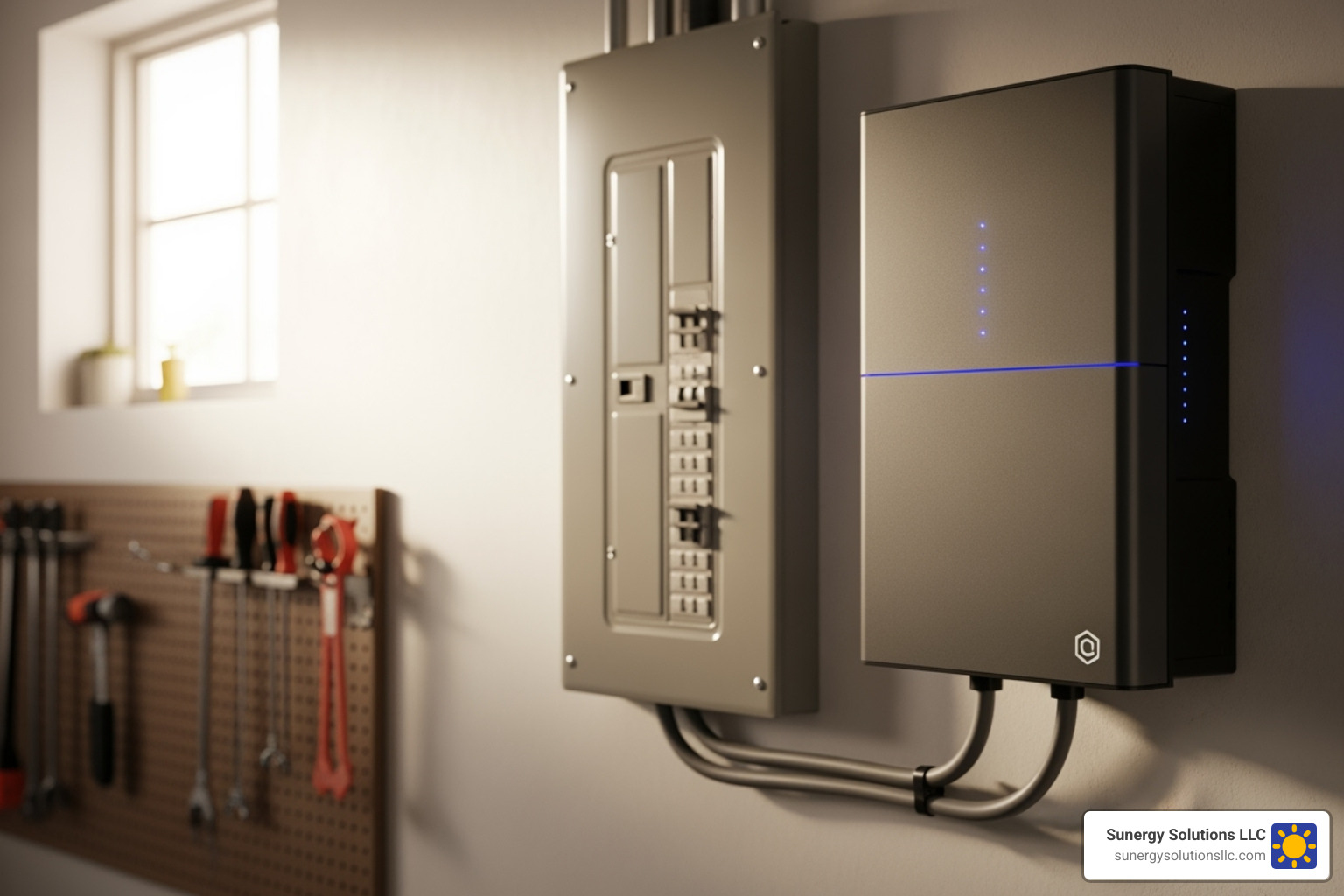
Many Boston homeowners often ask us if adding battery storage to their solar system is a wise choice. And our answer is a resounding yes! Think of it this way: your solar panels are hard at work generating electricity all day long. But what happens when the sun goes down, or if the power grid decides to take a vacation? That’s where a battery storage system steps in. It’s designed to capture and store that excess energy your panels produce, ready for you to use whenever you need it.
The biggest benefit, especially here in Massachusetts, is backup power. We all know those unexpected nor’easters and winter storms can knock out power for hours, or even days. With a solar battery, you won’t be left in the dark. Your home can keep essential appliances running, lights on, and even your heating or cooling system comfortable. It offers incredible nor’easter resilience and true peace of mind.
Beyond just emergencies, battery storage gives you greater energy independence. You can rely less on the utility grid, especially during those expensive peak demand hours when electricity rates are highest. Instead of buying pricey power, you can simply draw from the clean, free energy you’ve stored in your battery. This puts you firmly in control of your home’s energy use and your monthly bills. Even with Massachusetts’ excellent net metering policy, where you get credit for sending excess energy back to the grid, batteries offer unique advantages for security and optimizing your energy flow.
Types Of Residential Solar Systems
Massachusetts truly understands the value of energy storage. They want to build a more resilient and sustainable grid, and they’ve put incentives in place to help you add a battery. Remember the SMART program we discussed earlier? It gets even better with a battery! If you pair your solar system with storage, you can qualify for an “energy storage adder.” This means you’ll receive additional performance-based payments on top of your standard solar incentives, making the financial case for a battery even stronger.
Another fantastic program is the ConnectedSolutions Program, offered by utilities like National Grid. This program actually pays you to participate! Homeowners with battery storage can allow their utility to draw power from their battery during periods of very high electricity demand. These are known as demand response events. In return, you receive financial compensation for helping to stabilize the grid. It’s a fantastic win-win situation: you help your community, and you get paid for it!
By strategically using these incentives, adding battery storage can significantly boost the overall ROI (Return on Investment) of your solar system. It transforms your solar setup from just an energy generator into a complete energy management solution. For solar companies in boston like ours, integrating battery storage is all about empowering you with comprehensive control over your home’s energy future, providing both financial benefits and unparalleled peace of mind.
Your journey through solar companies in boston doesn’t have to feel overwhelming. With the right information and a trusted partner by your side, the path to energy independence becomes not just clear, but genuinely exciting. We’ve explored together how Massachusetts has earned its reputation as a solar powerhouse, and frankly, the numbers speak for themselves.
Think about it: with electricity rates at 30.4 cents per kilowatt-hour and payback periods as short as 5-7 years, going solar in Boston isn’t just an environmental statement—it’s one of the smartest financial moves you can make. The average homeowner saves over $82,000 over 20 years while watching their home’s value increase. That’s real money staying in your pocket instead of disappearing into utility bills.
The incentive landscape in Massachusetts is truly remarkable. Between the 30% federal tax credit, state rebates, the SMART program, and various exemptions, you’re looking at thousands of dollars in immediate savings. Add in programs like ConnectedSolutions for battery storage, and you’ve got a comprehensive support system that makes solar incredibly accessible.
But here’s what we’ve learned matters most: choosing the right installer makes all the difference. Look for NABCEP certification, strong local presence, and companies that use their own crews rather than subcontractors. Quality equipment, transparent pricing, and solid warranties aren’t luxuries—they’re necessities for a system that will serve your family for decades.
The installation process itself, while involving several steps from permitting to activation, becomes surprisingly smooth when handled by experienced professionals who know Massachusetts regulations inside and out. And if you’re considering battery storage, the resilience it provides during our famous nor’easters, combined with the financial incentives available, makes it an investment worth serious consideration.
At Sunergy Solutions LLC, we’ve built our reputation on delivering exactly what Massachusetts homeowners need: customized solar solutions with top-tier equipment, extensive warranties, and the kind of customer service that makes this journey feel less like a major home improvement project and more like partnering with people who genuinely care about your success.
Your home’s energy future is in your hands. With Massachusetts’ incredible solar incentives, our region’s commitment to clean energy, and the right installation partner, you’re not just making a smart financial decision—you’re joining a movement that’s reshaping how we power our communities.
Ready to see what solar can do for your specific situation? We’re here to help you take that next step with confidence.
Take the next step and explore your solar options in Massachusetts
Appointments Available, 7 Days a Week


