Request A Free Estimate

Sunergy Solutions logo with a sun, solar panel graphic, and the tagline Clean Alternative Energy below the company name.

5.0 Rating

Small Solar Panels for Home Use

A small or mini solar panel can charge your phone, light up a shed, or run a mini fridge while camping, but it can’t replace a full home electric bill.

These panels range from a few watts to about 100 watts and cost anywhere from $5 to a few hundred dollars.

If you want real savings on your utility bill, you’ll eventually need a full residential solar system sized for your actual energy use.

Type “small solar panels for home” into Google and you’ll get a strange mix of results: $10 phone chargers, $150 camping panels, and $2,000 cabin kits, all lumped together under the same search term.

It’s no wonder people end up more confused than when they started.

This guide breaks down what a mini solar panel can and can’t do at home, what different sizes cost, and where the real limits are.

By the end, you’ll know whether a small setup fits what you actually need, or whether it’s time to look at a full home solar system instead.


SEE HOW YOU CAN SAVE WITH SOLAR


What Counts as a Small or Mini Solar Panel?

A small or mini solar panel is generally any panel rated under about 100 watts, small enough to sit on a windowsill, strap to a backpack, or mount on a shed roof.

Standard residential solar panels used in residential solar installations are much larger, producing 350 to 450 watts each.

These panels use the same core technology as the ones on a neighbor’s roof.

Monocrystalline or polycrystalline solar cells absorb sunlight and convert it into electricity.

The difference is scale and purpose.

Panels built for personal and outdoor use range from less than 1 watt up to about 100 watts, often housed in a rugged, portable case.

A “mini solar panel” is usually the same product marketed toward home use instead of industrial sensors or off-grid equipment.

Full-size panels used in a home installation are a different category entirely.

They typically cost $300 to $400 per panel before labor and are wired together into a system, not sold as standalone gadgets.


What Can a Mini Solar Panel Actually Power at Home?

A mini solar panel works well for small, low-draw devices like phone chargers, shed lighting, security cameras, and camping gear.

It won’t run a refrigerator, air conditioner, or other major appliance without a much larger array and a battery bank to store the power.

Phones, Laptops, and Small Electronics

A 5 to 20 watt panel can trickle-charge a phone, tablet, or laptop over the course of a sunny day.

Pair it with a small power bank and you have a backup charging setup that costs less than a dinner out.

These panels won’t charge anything instantly.

They work slowly, storing power in a battery so you can use it later, which is exactly what makes them useful for travel, power outages, or off-grid weekends.

Sheds, Garages, and Outdoor Spaces

For a shed, garage, or chicken coop, a slightly bigger panel (50 to 100 watts) paired with a small battery can run LED lights, a fan, or a phone charger without running an extension cord from the house.

Retailers even sell ready-made kits sized for sheds, small homes, and cabins, bundling a panel, charge controller, and battery into one plug-and-play package.

Camping, RVs, and Emergency Backup

This is where mini solar panels shine.

Foldable panels in the 20 to 200 watt range can keep a cooler, fan, or portable power station running during a camping trip, a power outage, or a long drive in an RV.

They’re not built to power a whole house during an outage.

Think of them as a way to keep essentials running, not a backup generator replacement.


How Much Do Small Solar Panels Cost?

Price scales almost directly with wattage.

A tiny 1 to 5 watt panel can cost as little as $5.50, while a 100-watt panel built for daily outdoor use runs closer to $150.

Add a battery, charge controller, and inverter, and a complete small system for a shed or tiny home can run anywhere from a few hundred dollars to a couple thousand, depending on how much power you want stored.

If you’re comparing that to what goes on a roof, residential solar panels aren’t purchased or installed the same way.

A home system is engineered, permitted, and installed as one connected unit, not assembled piece by piece.


Can a Small Solar Panel Actually Lower Your Electric Bill?

A small solar panel can shave a little off your electric bill, but not by much.

The average U.S. home uses about 28 kWh of electricity a day.

Even an 800-watt plug-in kit only produces a few kilowatt-hours on a sunny day, covering a small slice of that total.

The Energy Information Administration puts the average U.S. home’s electricity use at about 28 kilowatt-hours a day.

An 800-watt panel setup, running for a few peak sunlight hours, might generate somewhere around 2 to 4 kilowatt-hours on a good day.

That’s real savings, just not enough to meaningfully change your monthly bill.

It’s closer to offsetting one or two loads of laundry than powering your home.

That’s why a full home solar system works differently.

Instead of covering a small slice of your usage, it’s sized around your actual electricity habits, using your utility bills and roof space to calculate how many panels you actually need.

 

GET HELP PLANNING YOUR SOLAR SYSTEM


What About Off-Grid Kits for Cabins, Tiny Homes, and Sheds?

Off-grid kits for cabins and tiny homes bundle several 370 to 450 watt panels with a large battery bank and inverter, letting a small structure run independently of the grid.

These complete systems typically cost $4,000 to $9,000 depending on battery capacity.

A typical off-grid cabin kit combines 6 to 12 panels, a battery bank storing 5 to 20 kilowatt-hours, and an inverter rated between 6,000 and 8,000 watts, enough to run lighting, a refrigerator, and small appliances in a compact space.

They’re popular for tiny homes, hunting cabins, and sheds that will never connect to the grid.

What they aren’t is a scaled-down version of a home solar system.

They’re built for a completely different kind of structure and a much smaller energy load than a typical house.


Safety and Code Rules to Check Before You Buy

Not every small solar panel is plug-and-play, legally speaking.

The moment a system connects to your home’s electrical panel instead of just charging a standalone battery, code requirements come into play.

Electrical engineer Bill Brooks, who studies solar safety standards, has pointed out that certified equipment matters because an improperly
connected system could pose a real risk
 to utility workers and the home itself.

Most U.S. jurisdictions still require any grid-connected solar setup, including small plug-in units, to meet the same standards as a full rooftop system.

For anything that ties into your home’s wiring rather than just charging a portable battery, a licensed installation makes sure the equipment is certified, permitted, and wired to code.

It’s a detail that’s easy to skip with a $400 plug-in kit, and an expensive one to get wrong.


When Does It Make Sense to Go Bigger Than a Mini Panel?

It’s time to go bigger than a mini panel once you want to meaningfully lower your electric bill, power major appliances, qualify for solar tax incentives, or add real home value.

A mini panel is a supplement, not a substitute for a properly sized home solar system.

A small panel makes sense for a specific, limited job: charging devices, lighting a shed, or backing up a few essentials during an outage.

Once your goal shifts to lowering your actual utility bill, the math stops working in its favor.

Full-size systems have also improved.

Newer residential panel technology produces more electricity per panel than older models, which means fewer panels are needed to cover the same amount of roof space and energy use.

A properly sized system is also the only way to access programs like the federal solar tax credit, which doesn’t apply to small standalone panels the way it does to a full home installation.


How Sunergy Solutions Helps Homeowners Go Solar the Right Way

If a mini solar panel got you curious about what solar could do for your whole home, that’s a great place to start.

Sunergy Solutions works with homeowners across Connecticut, Maine, Massachusetts, New Hampshire, Rhode Island, Vermont, and Virginia to design residential solar systems sized around real energy use, not guesswork.

That starts with understanding your options.

Our team walks homeowners through residential solar tax incentives available in their state, along with financing options that range from ownership to little-to-nothing-down agreements.

Every solar installation comes backed by a 25-year manufacturer warranty, so you’re not stuck guessing whether your system will hold up.

If you still have questions along the way, our frequently asked questions page covers everything from panel types to net metering.

A mini solar panel is a fine place to experiment.

A full home solar system from Sunergy Solutions is how you actually bring your electric bill down.


GET A FREE ESTIMATE


FAQs: Small Solar Panels for Home Use

What is the difference between a mini solar panel and a regular solar panel?

A mini solar panel is rated under about 100 watts and is built for portable or small-scale use, like charging devices or running shed lights. A regular residential solar panel produces 350 to 450 watts and is designed to be installed as part of a larger system on a roof.

Can a small solar panel power a whole house?

No. A small solar panel can only generate a few watts to a couple hundred watts, while the average home uses about 28 kilowatt-hours of electricity a day. Powering a whole house requires a full-size system with enough panels to match that usage.

How many watts do I need for a small solar setup?

It depends on what you’re powering. A 5 to 20 watt panel can charge phones and small electronics. A 50 to 100 watt panel can run shed lighting or a small fan. Anything beyond that, like running a mini fridge or several devices at once, usually calls for a 200 watt or larger setup paired with a battery.

Are plug-in solar panels legal in my state?

It depends on where you live. Utah currently allows plug-in solar systems without formal registration if they meet safety standards, and a few other states have similar legislation pending. Most states still require any system connected to your home’s wiring to follow the same rules as a full rooftop solar installation.

How long do small solar panels last?

Most small solar panels last 5 to 10 years with regular outdoor use, though battery components inside a kit often wear out sooner than the panel itself. Full-size residential panels are built to a higher standard and typically come with 25-year performance warranties.

Do mini solar panels work on cloudy days?

Yes, but at a reduced output. A mini solar panel might produce 10 to 25 percent of its rated power on a cloudy day, since solar cells still generate electricity from diffused sunlight, just far less of it than on a clear day.

Find Out If Your Home Qualifies for No Money Down Solar

Solar Estimate Form
Please Read and Select
Please check the box above, and then click the submit button.
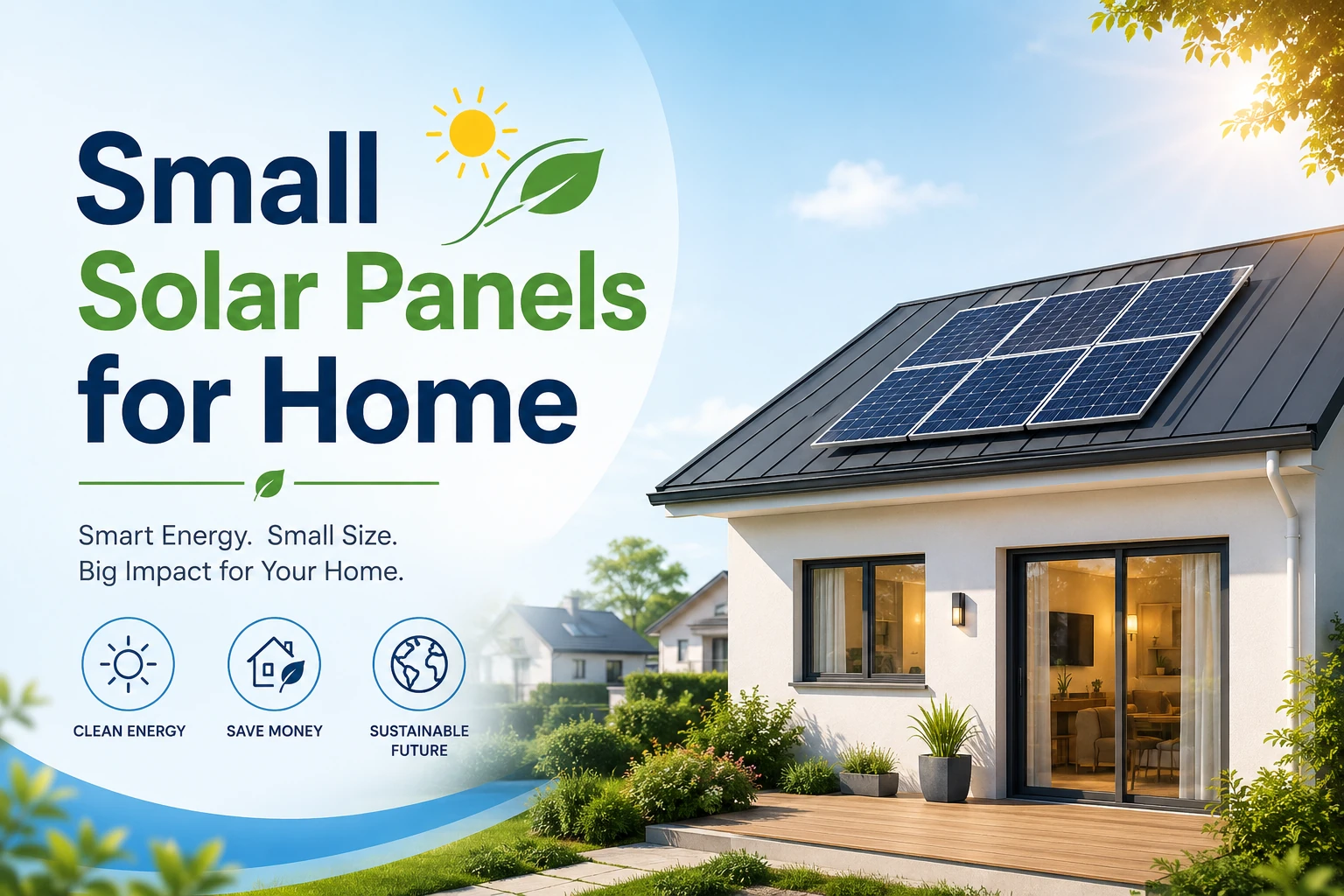
Small solar panel system installed on the roof of a modern home, with sunlight and clean energy graphics alongside text reading “Small Solar Panels for Home.”

Appointments Available, 7 Days a Week

Blue banner with a globe and sunburst design on the left, and the text TOP 100 Installers in white and yellow on the right.Badge with the SolarReviews logo and text: Verified Installer 2024 on a blue geometric background.Circular badge with NESEA MEMBER and Northeast Sustainable Energy Association text in blue and black on a light background.
Request a Free Estimate
Home Page Form
What Can We Help You With Today?
Agree to Submit
})