
5.0 Rating
Request A Free Estimate
Solar energy options for homes are a crucial consideration for homeowners facing rising electricity costs and environmental concerns. With utility rates on the rise, the search for energy independence has never been more urgent.
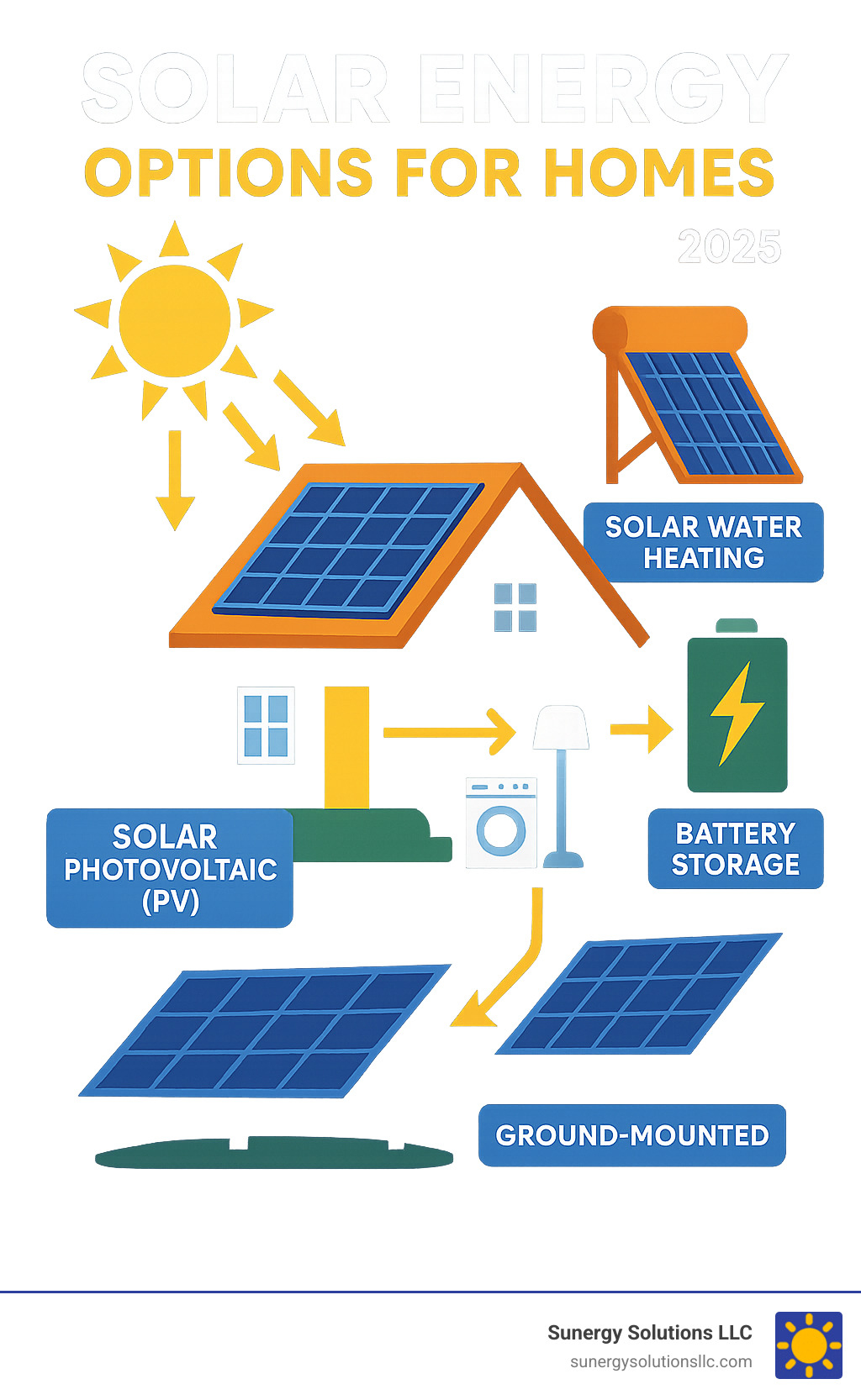
Here are the main solar energy options available for your home:
The benefits are compelling: lower utility bills, energy savings, and even earnings through net metering. A typical 7-kilowatt solar system can provide 20 to 35 kilowatt-hours of electricity per day, and while it costs about $21,000 to install, incentives can significantly reduce this price.
The key is starting with energy efficiency first. Making your home more efficient before installing solar maximizes your investment by reducing the size and cost of the system you’ll need.
I’m Robert Raffa, CEO and Founder of Sunergy Solutions LLC. For nearly a decade, I’ve helped Northeast homeowners find solar energy options for homes that are both environmentally responsible and economically sound through strategic financial planning and custom design.
Simple guide to solar energy options for homes terms:
When homeowners first think about solar, they often picture themselves as environmental heroes. While that’s true, solar energy options for homes offer more practical and immediate benefits that directly impact your financial well-being.

Choosing solar is a smart financial strategy that puts money back in your pocket while giving you more control over your energy future. It’s about taking charge of a major monthly expense and turning it into an investment that pays you back.
The primary benefits of solar are both financial and practical. You’ll see significant financial savings as you generate free power from the sun, drastically reducing or even eliminating your monthly electric bill. Solar also provides protection from rising utility rates, locking in your energy costs for decades.
Your home’s value gets a boost, too. A recent study on home value increase shows that homes with solar panels command about a $15,000 premium on average and tend to sell faster. Furthermore, generous federal and state tax incentives make solar more affordable. The Residential Clean Energy Credit allows you to claim 30% of your installation cost as a tax credit, and you can find more local rebates on the Database of State Incentives for Renewables & Efficiency (DSIRE).
Finally, solar offers energy independence during outages. When paired with battery storage, your system can keep essential appliances running when the grid goes down, providing invaluable peace of mind.
To maximize your solar investment, make your home as energy-efficient as possible first. This allows you to install a smaller, less expensive solar system that still meets all your needs.
Focus on high-consumption appliances, as heating and cooling usage (47%) and water heating (14%) account for most of your energy use. A home energy audit can identify key areas for improvement, such as sealing air leaks, adding insulation, or upgrading windows.
Simple changes like upgrading to ENERGY STAR appliances and switching to LED lighting can also significantly cut your energy consumption. By reducing overall energy consumption before sizing a system, you ensure you get the most value from your investment in solar energy options for homes.
Now that your home is running like an energy-efficient machine, it’s time to dive into the exciting world of solar energy options for homes. Each option has its own strengths, and we can design a system that fits your needs perfectly.

Photovoltaic (PV) systems are what most people imagine when they think of “going solar.” They convert sunlight directly into electricity for your home. Sunlight hits solar panels, creating direct current (DC) electricity. An inverter then converts this to the alternating current (AC) your home uses.
A PV system’s key components include durable solar panels, a secure racking system, and monitoring software that lets you track energy production.
Solar water heating systems specifically target the energy cost of heating your water. They use solar thermal collectors on your roof to capture the sun’s heat and transfer it to an insulated storage tank.
A properly sized system can meet about 50% of a family’s hot water needs, with payback periods often between 6-10 years. A backup water heater is integrated to ensure you always have hot water, even on cloudy days.
If your roof isn’t suitable for solar due to shade, orientation, or condition, you still have options. Ground-mounted solar arrays are a fantastic solution if you have yard space. While the upfront cost is higher due to construction, they can be positioned for optimal sun exposure. They are also easier to clean and maintain. An experienced professional can evaluate your property and recommend the best approach for your home.
Choosing the right solar energy options for homes is a long-term decision. With the right guidance, you can select a system that will save you money for the next 25+ years.
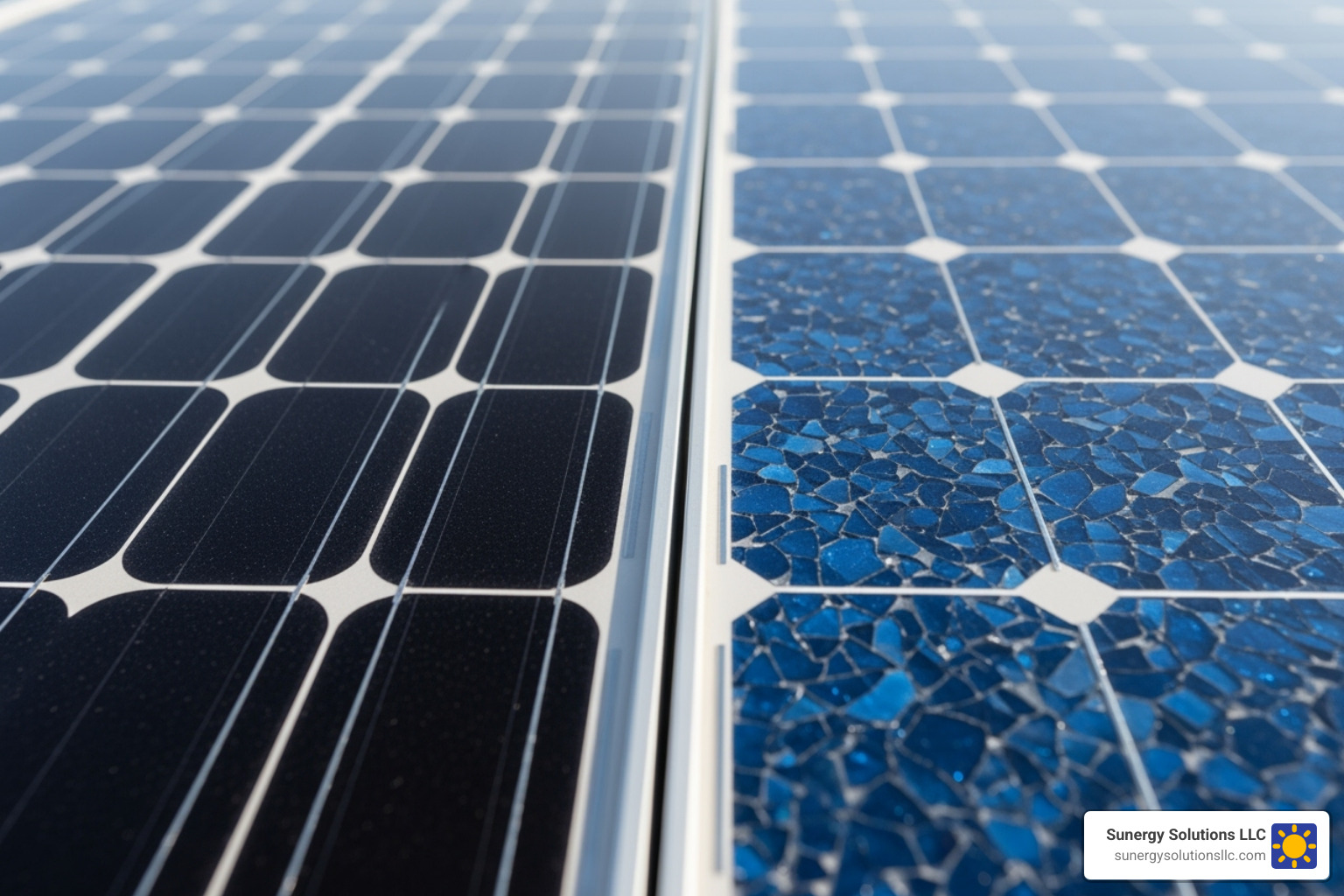
The three main types of solar panels each have distinct advantages:
| Panel Type | Efficiency | Cost (per watt) | Lifespan | Appearance | Best Suited For |
|---|---|---|---|---|---|
| Monocrystalline | 17%-22% | Higher | 25+ years | Sleek, uniform black | Homes with limited roof space, prioritizing efficiency and aesthetics. Considered the most efficient and best for residential. |
| Polycrystalline | 15%-17% | More Affordable | 25+ years | Textured blue | Homeowners seeking a balance of affordability and performance, with more available roof space. |
| Thin-Film | 9%-18% | Most Affordable | 20-25 years | Flexible, various | Larger commercial installations, integrated into building materials, or applications where flexibility is key. Less common for typical residential rooftops. |
For most homes, we recommend monocrystalline panels for their superior efficiency (often exceeding 22%) and long-term performance.
Beyond panel type, several technical specifications are crucial for ensuring you get the best solar energy options for homes:
By weighing these factors, we help you select a system that balances performance, durability, and value for your specific needs.
One of the biggest questions homeowners have about solar energy options for homes is, “How much does it cost, and how will it save me money?” The good news is that solar has never been more affordable, and the financial benefits are remarkable.

While solar installation costs have plummeted, it’s still a significant investment. A typical 7-kilowatt residential system costs around $21,000 before incentives, or about $3 per watt installed. However, powerful incentives dramatically reduce this cost.
The Residential Clean Energy Credit is the most significant incentive, allowing you to claim 30% of your total installation costs as a direct reduction on your federal income taxes. This turns a $21,000 system into a $14,700 investment. The credit applies to panels, batteries, and installation labor.
State and local governments often offer additional rebates, tax credits, and exemptions. You can find a complete list for your area on the Database of State Incentives for Renewables & Efficiency (DSIRE).
With these incentives, the payback period typically ranges from 10 to 20 years. After that, your system generates free electricity for the remainder of its 25+ year lifespan.
There are several ways to finance your solar system, each with unique benefits:
We can help you analyze which option best fits your financial goals.
Net metering is a billing mechanism that allows you to get credit for the excess electricity your solar panels generate. When your system produces more power than you’re using, the surplus is sent to the utility grid. Your utility credits your account for this energy.
Later, when you need to draw power from the grid (like at night), you use these credits. This process can dramatically lower or even eliminate your electricity bills. Policies vary by state and utility, but net metering is a key financial benefit of a grid-tied solar system, turning it into a dynamic energy asset.
As someone who’s been helping homeowners steer solar energy options for homes for nearly a decade, I can tell you that most people have very similar concerns and questions. Let me address the ones I hear most often.
Installing solar panels is a smart home improvement that pays you back monthly. On average, solar panels add about $15,000 to your home’s value. Homes with solar also tend to sell faster due to high buyer demand for energy efficiency.
Modern, sleek solar panels can improve curb appeal, and potential buyers appreciate the immediate savings on utility bills. To ensure you get full credit for your system’s value during an appraisal, tools like the PV Value® tool can be used. Even leased systems generally have a neutral to positive impact on a home’s sale.
Yes, in most cases you can. Many states have solar access laws that prevent HOAs from unreasonably restricting solar installations.
We handle the HOA approval process for you. We start by reviewing your HOA’s guidelines and then submit professional plans that meet their aesthetic requirements. Modern, sleek panels often win over hesitant boards. While it may add a few weeks to the timeline, we manage all the paperwork and communication to ensure a smooth process.
Solar panels require almost no maintenance. They are built to withstand harsh weather for 25+ years and are typically cleaned naturally by rain. In dusty areas, an occasional rinse with a garden hose is sufficient.
We use monitoring software to track your system’s performance remotely, so we can often spot any potential issues before you do. The main planned maintenance is replacing the inverter after 10-15 years, a process covered by warranties and for which we provide guidance. Overall, solar panels are a “set it and forget it” home improvement.
Choosing from the available solar energy options for homes puts you on the path to energy independence. It’s about taking control of your energy future and changing your relationship with electricity bills, rate hikes, and power outages.
The benefits are clear: lower electricity costs, protection from rising utility rates, increased home value, and a smaller carbon footprint. Thanks to the 30% federal tax credit and flexible financing, going solar is more accessible than ever. Whether you choose a PV system, solar water heating, or battery storage, you’re investing in long-term value.
Energy independence is an achievable reality. With solar, your home can stay powered during grid outages, and you’ll be insulated from unpredictable utility costs. It’s a powerful feeling of security and control.
At Sunergy Solutions LLC, we make the transition to solar effortless. We provide top-tier equipment, extensive warranties, and exceptional customer service to ensure your system delivers reliable performance and savings for decades. We are committed to empowering you to power your life on your own terms.
Ready to see how solar can transform your home and your energy bills?
Get a free quote for your residential solar system
Appointments Available, 7 Days a Week


