
5.0 Rating
Request A Free Estimate
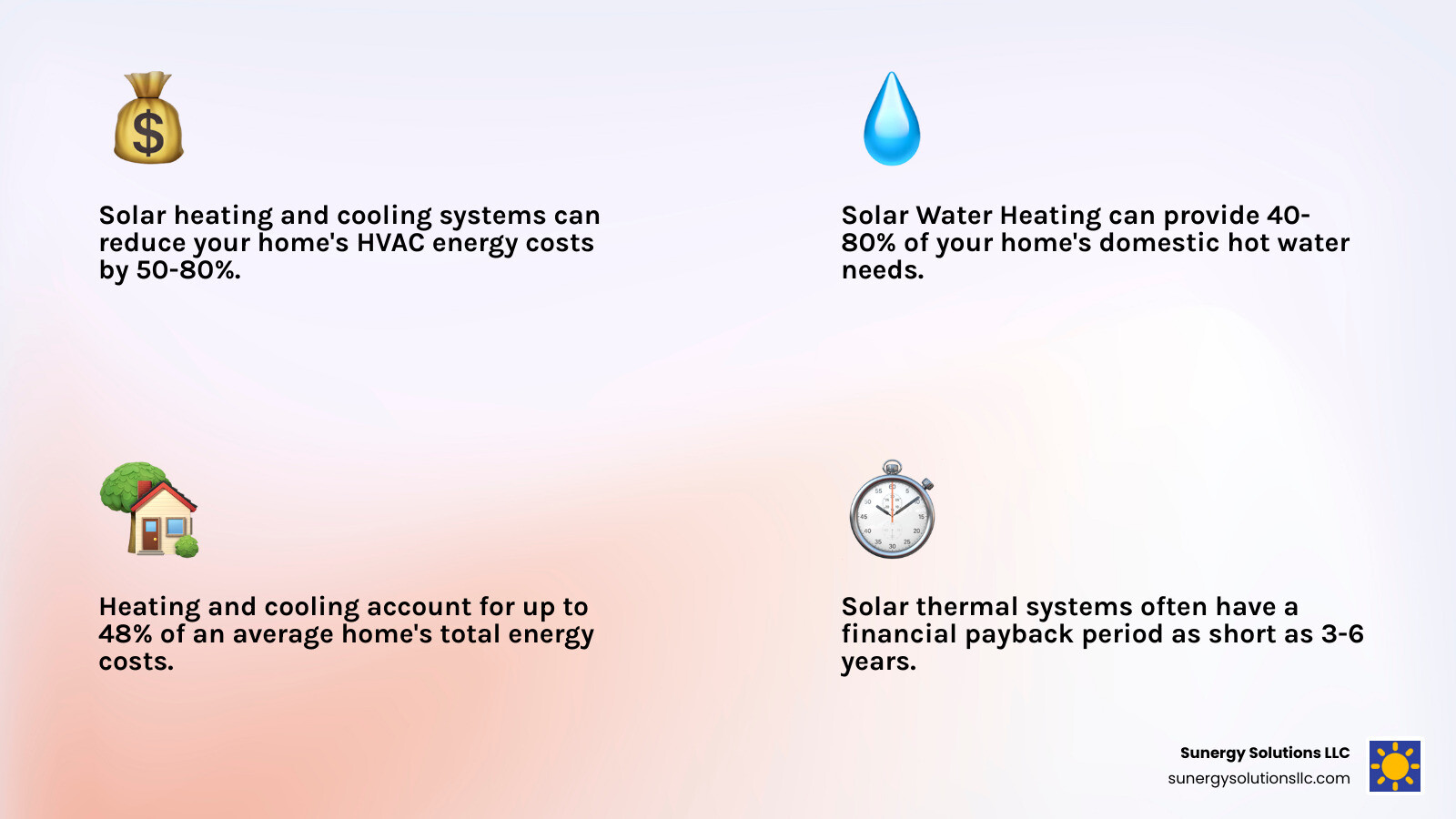
Solar heating and cooling systems for homes use the sun’s energy to provide space heating, hot water, and even cooling through various technologies. These systems can reduce your heating and cooling costs by 50-80% while providing energy independence and environmental benefits.
Key types of solar heating and cooling systems:
With heating and cooling accounting for up to 48% of your home’s energy costs, solar thermal systems offer a direct path to significant savings. The research shows payback periods as short as 3-6 years, making these systems both environmentally responsible and financially smart.
Modern solar heating systems work effectively even in cold climates through advanced technologies like evacuated tube collectors. These systems integrate seamlessly with existing HVAC equipment and require minimal maintenance once installed.
As the CEO and Founder of Sunergy Solutions LLC, I’ve spent nearly a decade helping homeowners transition to clean energy. My background in finance and renewable energy gives me a unique perspective on how solar heating and cooling systems for homes deliver both environmental benefits and strong financial returns.
Relevant articles related to solar heating and cooling systems for homes:
Understanding the basics of solar heating and cooling is key to making an informed decision. At its core, solar thermal energy is simple: it converts sunlight directly into heat. Unlike photovoltaic (PV) panels that generate electricity, solar thermal systems capture the sun’s radiant energy and turn it into usable warmth for your home.
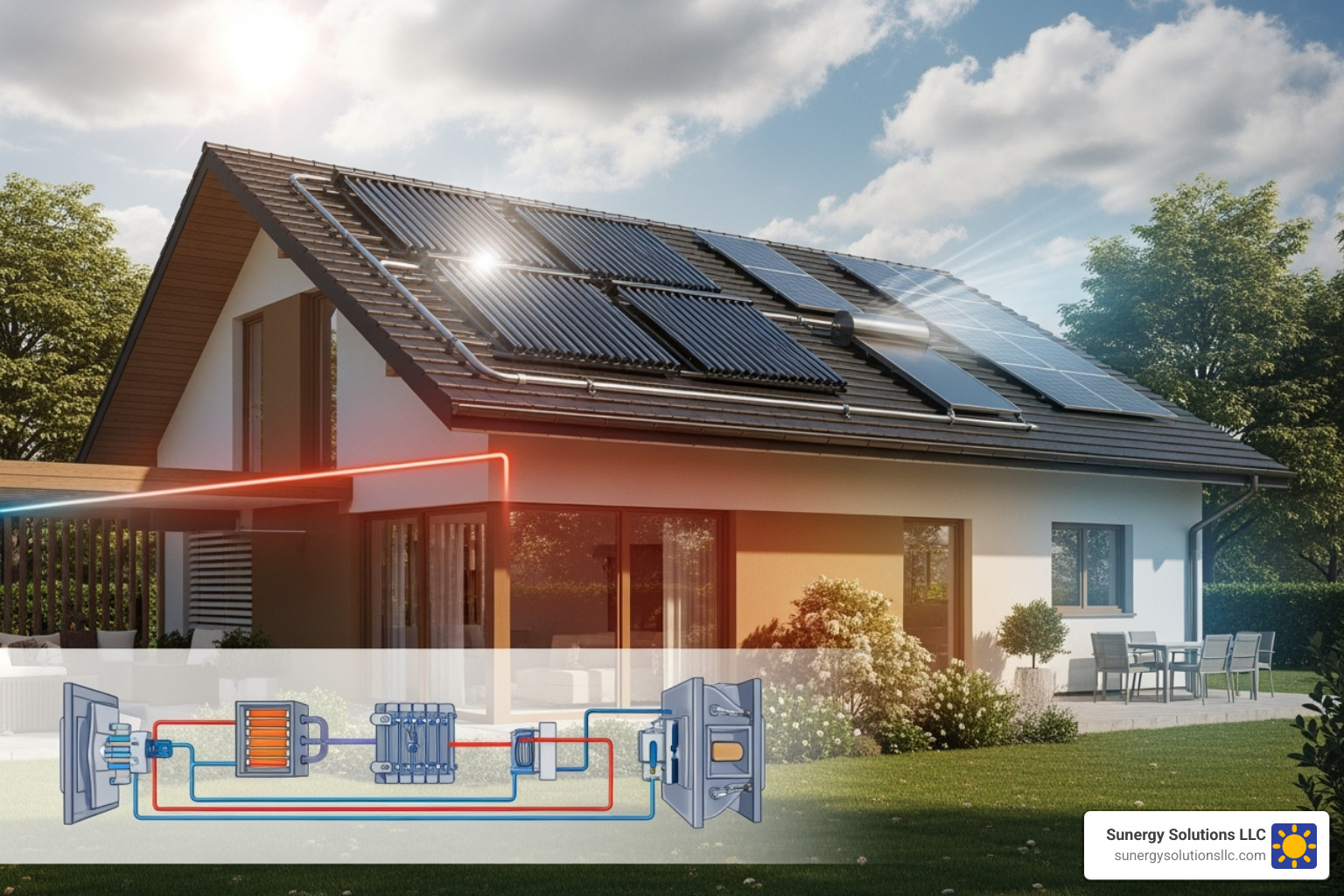
The heart of any solar thermal system is the solar collector, which absorbs solar radiation and transforms it into heat. A heat transfer fluid (liquid or air) circulates through the collectors, picking up this warmth. The heated fluid then travels through insulated pipes to a storage tank, which acts as a thermal battery. From the tank, the stored heat is distributed for domestic hot water, space heating, or to power a solar cooling process. This efficient, closed-loop system uses the sun’s energy to keep your home comfortable.
When we talk about solar heating, two primary applications often come to mind: solar water heating and solar air heating. Each serves a distinct, yet equally valuable, purpose in home comfort.
Solar Water Heating: As the most common residential application, solar water heating systems use solar radiation to heat your domestic hot water. A well-designed system can provide 40% to 80% of your home’s hot water needs for showers, laundry, and dishes, reducing reliance on traditional water heaters. These systems can also integrate with hydronic setups, piping hot water through radiators or in-floor heating for space heating.
Solar Air Heating: Solar air heating systems capture the sun’s energy to heat air for space heating, reducing heating costs by up to 70%. Many residential systems are wall-mounted, with collector panels that heat air as it circulates through them. This warm air is then ducted into your home’s HVAC intake. Transpired collectors are a highly efficient variation, often used for pre-heating ventilation air in residential and commercial buildings.
A solar thermal system relies on several key components working in harmony:
The variety of solar heating and cooling systems for homes can seem overwhelming, but each type is designed for specific needs, making it easier to find a perfect match. Systems can be categorized as active (using mechanical components), passive (relying on design), or hybrid (combining approaches). The right choice depends on your home’s characteristics, climate, budget, and energy goals. Let’s explore each type.
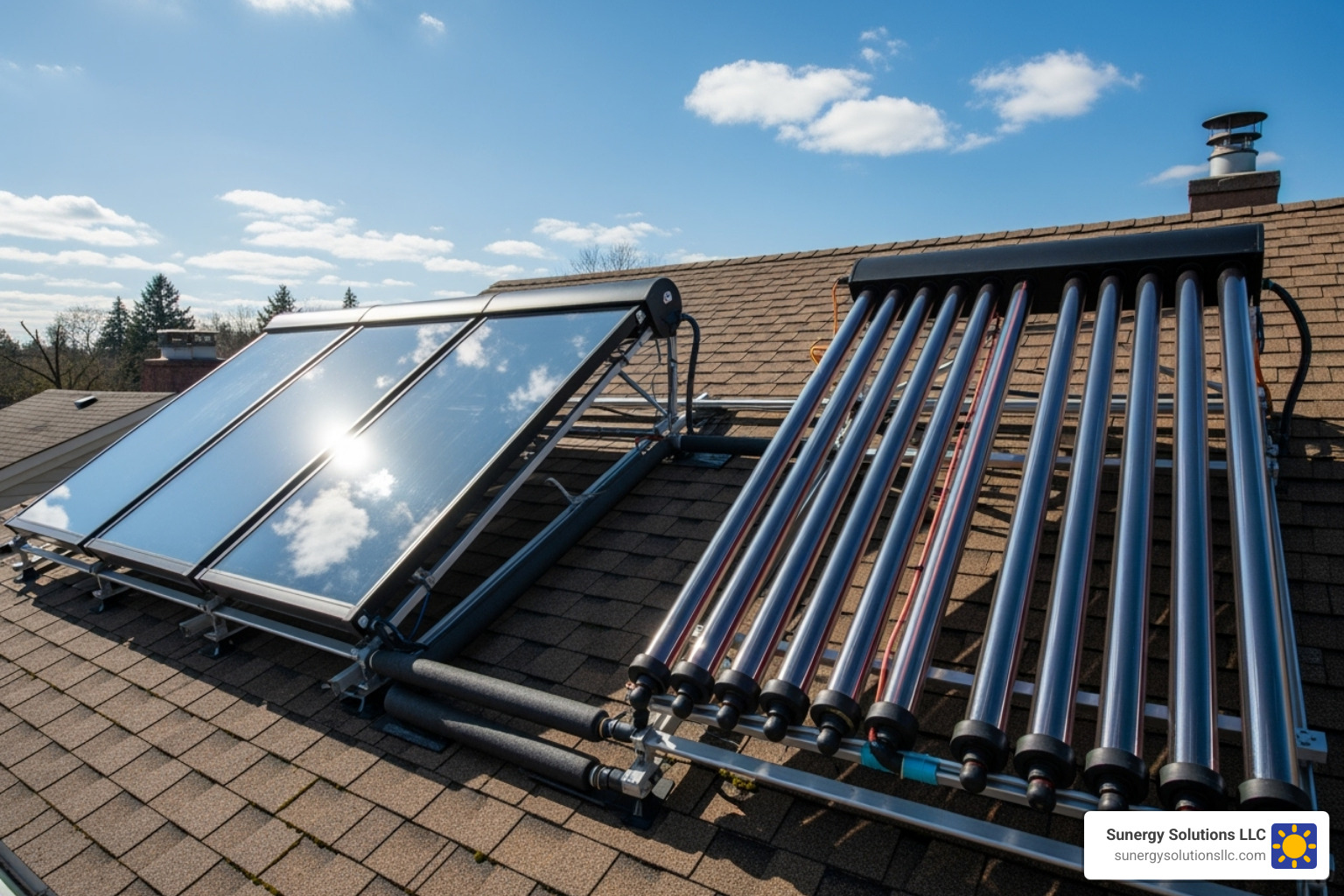
Active solar systems use pumps, fans, and electronic controllers to collect, store, and distribute solar heat, offering high efficiency and precise control.
For solar water heaters, direct (open-loop) systems circulate potable water through collectors and are best for warmer climates. Indirect (closed-loop) systems use a non-potable heat transfer fluid and a heat exchanger, making them ideal for freezing climates. Two common indirect types are:
For solar space heaters, active systems work similarly to heat living spaces, integrating with your existing HVAC to supplement traditional heating. More on Solar Heating Systems.
Passive solar design uses a home’s natural characteristics and the sun’s patterns without any moving parts—no pumps, fans, or electricity. It relies on smart building design, using south-facing windows to capture winter sunlight. This energy is absorbed by materials with high thermal mass, like concrete floors or brick walls, which act as thermal batteries, slowly releasing heat overnight.
Natural convection circulates the warm air. A sunspace or sunroom can improve this effect, collecting heat that can be vented into the main living area. The primary benefit of passive design is its simplicity and reliability, requiring virtually no maintenance once implemented. Learn about Passive Solar Design.
Advanced systems represent the cutting edge of solar heating and cooling systems for homes.
Solar-assisted heat pumps (SAHP) combine heat pump technology with solar thermal collectors. The collectors pre-warm the fluid entering the heat pump, dramatically improving its efficiency and reducing electricity use for heating and cooling.
Photovoltaic-Thermal (PVT) panels are multitaskers that generate both electricity and hot water from the same panel. The process of removing heat to create hot water also cools the photovoltaic cells, increasing their electricity production by up to 20%. This dual-functionality and increased efficiency make PVT panels ideal for maximizing energy output from limited roof space, delivering up to four times the total energy of traditional PV panels. Scientific review of solar assisted heat pump systems.
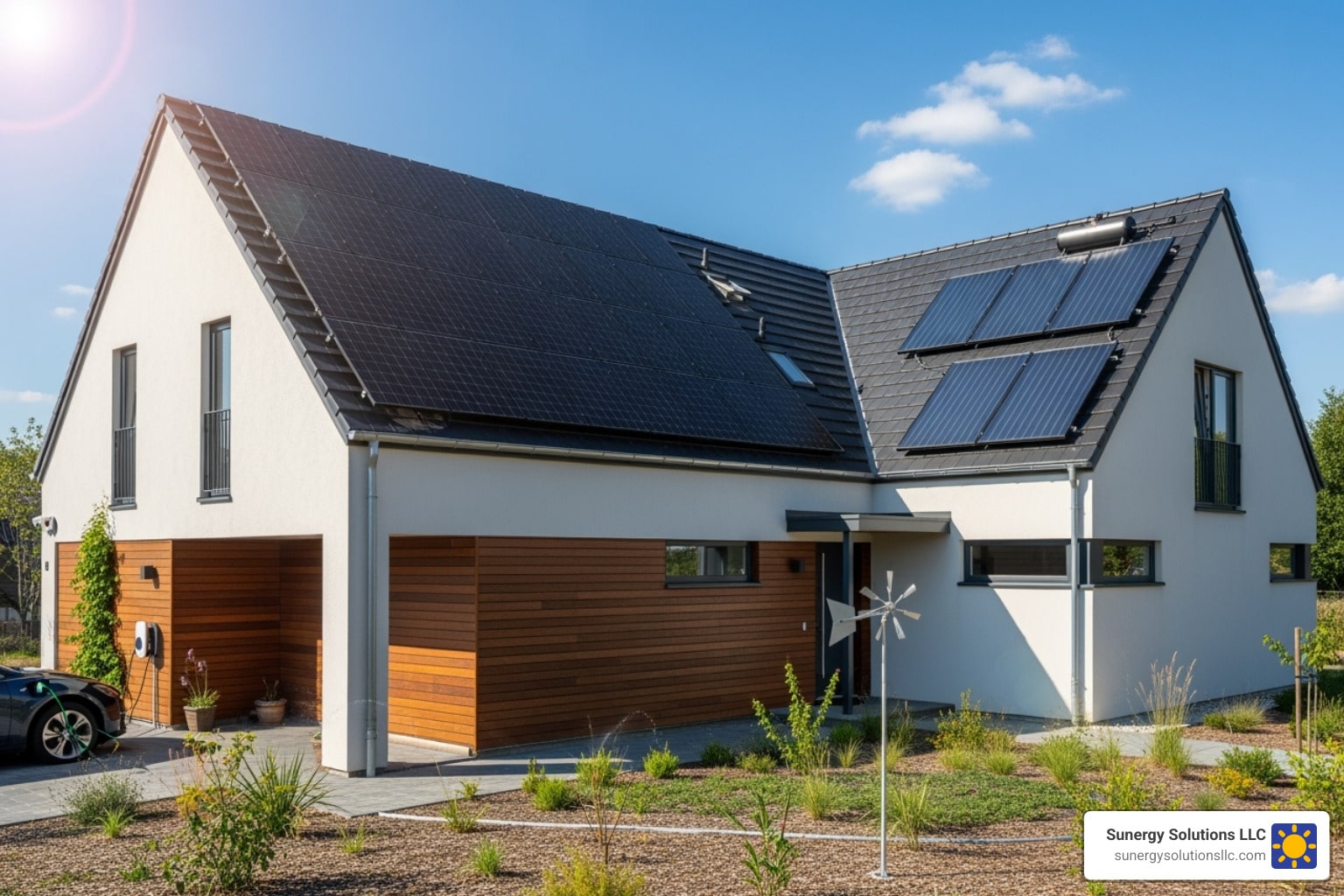
Proper installation of solar heating and cooling systems for homes begins with understanding how a system is custom-designed for your property. At Sunergy Solutions LLC, we ensure every installation fits your home’s unique energy needs. The process starts with a detailed site assessment, where our experts evaluate your property to determine the optimal placement and size for your system to maximize your solar investment.
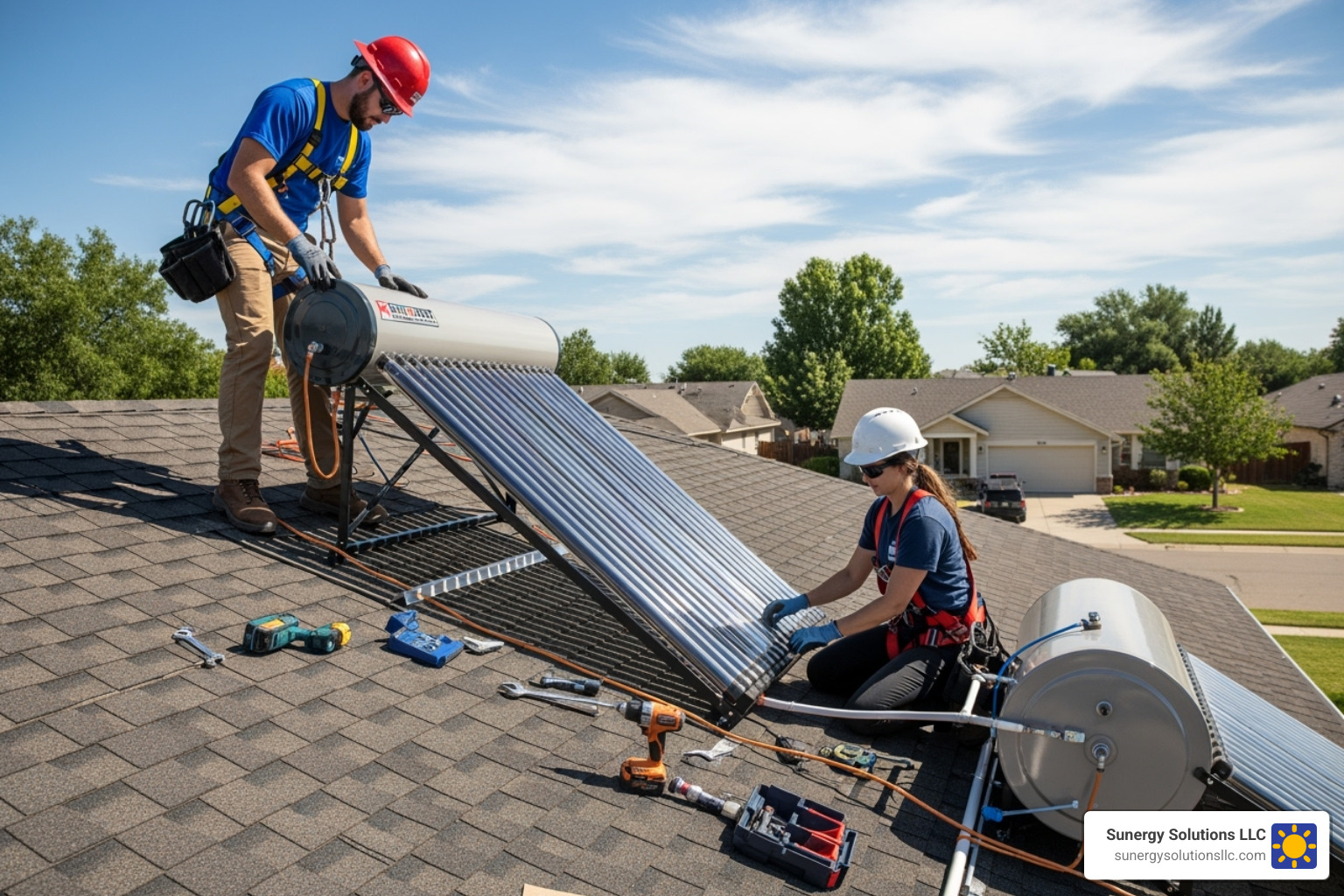
A key factor is solar access, or the amount of direct sunlight your property receives. Your roof or other chosen location must have unobstructed sun exposure, especially between 9 AM and 3 PM. Our team assesses the sun’s path across your property throughout the year, accounting for potential obstructions like trees or nearby buildings to guarantee maximum sun exposure.
Your roof orientation and tilt are also critical. For optimal performance, solar collectors should face true south, but systems still perform well if oriented within 30 degrees of south. The ideal tilt is typically close to your home’s latitude. We will determine the best orientation and tilt for your specific location.
Local climate considerations are vital. In colder regions, we recommend systems with freeze protection, such as drainback or antifreeze systems, to ensure safe operation in low temperatures. We analyze local climate data, including average winter temperatures and solar availability, to size your system correctly.
System sizing and load calculation are essential for efficiency. We perform a detailed load calculation to determine your home’s heating and cooling needs, allowing us to size the system precisely. The goal is to meet a significant portion of your energy demand without oversizing, which can be cost-prohibitive. For hot water, a general guideline is 10-15 square feet of collector area and 20-30 gallons of storage per person.
We ensure seamless integration with existing HVAC systems. Modern solar heating and cooling systems for homes are designed to work with your current furnace, boiler, or heat pump. Solar-heated water can feed into your existing hot water tank or supplement your space heating, reducing the workload on your conventional system and cutting down on utility bills.
We know that navigating the installation process, including regulations and permits, can seem a bit overwhelming. But don’t you worry, we’ve got you covered every step of the way! Navigating the Sunshine: Residential Solar System Installation Regulations and Permits.
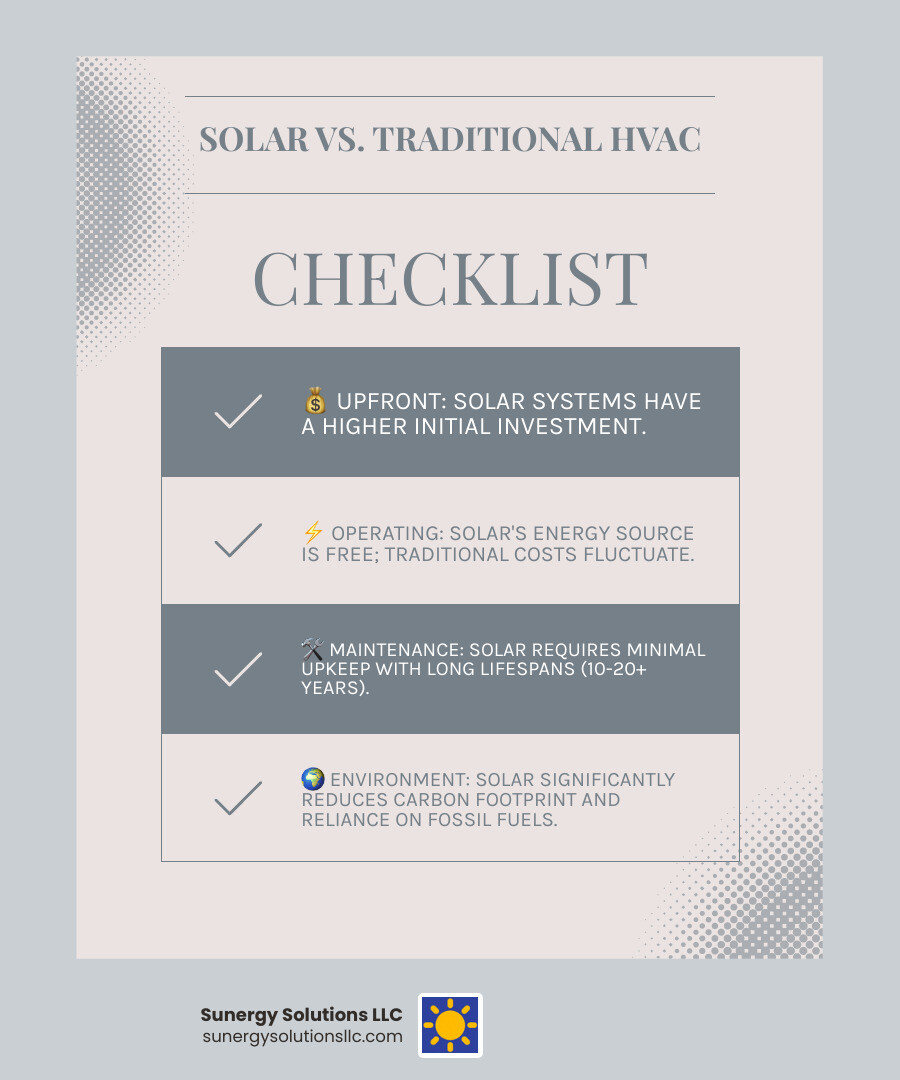
Investing in your home’s comfort and efficiency is a significant decision. With solar heating and cooling systems for homes, you’re investing in a future of lower bills, greater comfort, and a healthier planet. A comparison with traditional HVAC systems highlights the clear advantages of solar:
| Feature | Solar Heating/Cooling Systems | Traditional HVAC Systems |
|---|---|---|
| Upfront Cost | Higher initial investment | Lower initial investment |
| Operating Cost | Significantly lower (free fuel from the sun!) | Variable, dependent on fossil fuel prices/electricity rates |
| Maintenance | Minimal, annual checks, long lifespan (10-20+ years) | Regular, more frequent component replacements |
| Fuel Source | Renewable (sunlight) | Non-renewable (natural gas, oil, electricity from fossil fuels) |
| Energy Security | High (reduced reliance on grid/fuel suppliers) | Lower (vulnerable to utility outages, price volatility) |
| Environmental Impact | Very low carbon footprint, reduced emissions | High carbon footprint, contributes to air pollution |
| Property Value | Increases home value (up to 4% premium) | No direct increase related to HVAC type alone |
| Incentives | Eligible for tax credits, rebates, utility programs | Limited or no specific incentives |
With solar, your heating and cooling bills can be dramatically smaller. Since this can account for nearly half of your home’s energy budget, using the sun leads to significant savings. Solar space heaters can cut heating costs by up to 70%, and solar water heaters can provide 40-80% of your hot water. Over the system’s lifespan, this can translate to tens of thousands of dollars in savings.
Solar heating and cooling systems for homes offer freedom from rising energy prices and utility dependence. By generating your own heat, you are less reliant on external sources, protecting you from price hikes and providing peace of mind during power outages. Your home can remain comfortable using the power of the sun.
While the upfront cost of a solar thermal system is higher than a conventional one, these systems pay for themselves quickly. Many solar heating systems see a return on investment in just 3 to 6 years, with solar pool heaters often breaking even in under 7 years. These durable systems are built to last, providing decades of free, clean energy after the initial payback period. Learn more about the financial benefits on our Solar Return on Investment page.
Beyond monthly savings, solar energy systems increase your home’s value. Studies show that homes with solar sell for a premium of about 4% more than comparable homes without solar, making it a smart real estate investment.
Choosing solar heating and cooling systems for homes is a powerful act of environmental stewardship. Clean, renewable solar energy drastically cuts greenhouse gas emissions. A typical residential solar panel system, which can power system components, can offset 3 to 4 tons of CO2 annually—equivalent to planting over 100 trees. By choosing solar, you contribute to cleaner air and a more sustainable future.
You don’t have to go it alone. The federal government, along with many states (including Maine, Massachusetts, New Hampshire, Rhode Island, Vermont, Montana, and Virginia), offer incentives like tax credits and rebates to make solar more affordable. We can help you steer these programs to maximize your benefits. Find out more in our guide: Solar Tax Credits and Rebates: What You Need to Know.
Here are answers to some of the most common questions we receive about solar heating and cooling systems for homes:
Yes. This is a common misconception. Modern solar heating and cooling systems for homes are effective even in cold and cloudy climates, including our service areas like Montana, Vermont, and Maine. The key is using advanced technology like evacuated tube collectors. Their vacuum insulation minimizes heat loss, allowing them to capture significant heat even on cold or overcast days. For extended sunless periods or extreme cold, an integrated backup heating system automatically activates to ensure your comfort. The goal is to significantly reduce your reliance on conventional energy, not necessarily eliminate it entirely.
Solar heating and cooling systems for homes require minimal maintenance. Unlike traditional HVAC, these robust systems are designed for longevity. We recommend an annual inspection to check pumps, fluid levels (for antifreeze systems), and overall integrity. Collectors should be kept clean, which usually just requires a rinse with a garden hose a few times a year. With proper installation and routine care, your system will provide comfort for decades. Maintenance and Cleaning of Residential Solar Systems.
Yes, advanced systems can provide both. The most common example is a solar-assisted heat pump (SAHP). These systems use solar thermal energy to boost a heat pump’s efficiency for both heating and cooling. In warmer months, the heat pump reverses its cycle to cool your home, a process made more efficient by the solar collectors. Solar thermal energy can also power absorption or desiccant cooling cycles, which use heat instead of electricity for refrigeration. While more common in commercial applications due to cost and complexity, residential-scale versions are emerging, especially for hot, sunny climates. The potential for integrated solar heating and cooling solutions is growing, promising comprehensive, sustainable climate control.
As you’ve seen, solar heating and cooling systems for homes are a practical pathway to a more comfortable, efficient, and cost-effective home. They offer a powerful combination of financial wisdom and environmental responsibility, delivering significant cost savings, greater energy security, and a reduced carbon footprint.
The future of home comfort is solar. While these thermal systems are specialized, a robust photovoltaic (PV) system is often the foundation for total home energy savings. Sunergy Solutions LLC designs premier Residential Solar panel systems that power your home’s electrical needs, perfectly complementing any thermal installations.
We are proud to offer top-tier equipment, extensive warranties, and exceptional customer service to families across Maine, Massachusetts, New Hampshire, Rhode Island, Vermont, Montana, and Virginia. Let us help you harness the sun’s power and step into a brighter, more sustainable future!
Appointments Available, 7 Days a Week


