
5.0 Rating
Request A Free Estimate
Solar energy project management is how we plan, carry out, and finish solar projects. It makes sure these projects are done on time, on budget, and built to last. It’s about bringing together all the pieces needed for a successful solar installation, big or small.
Here’s what solar energy project management covers:
The world is rapidly moving to clean energy. This shift creates huge opportunities. There are already 12.7 million renewable energy jobs. Experts predict 13.3 million more jobs will be added by 2030. Mastering solar project management is key to this clean energy future.
My name is Robert Raffa, and as the CEO and Founder of Sunergy Solutions LLC, I’ve spent nearly a decade building one of the most trusted residential and commercial solar energy companies in the Northeast by applying rigorous financial analysis and strategic planning to every solar energy project management initiative. My passion lies in ensuring our solar solutions are not just green, but also economically sound, driving real ROI for homeowners and businesses.
Learn more about solar energy project management:
Becoming a successful solar energy project manager is a truly rewarding path, but it takes more than just a passing interest in clean energy. It calls for a special mix of know-how: strong technical skills, natural leadership, clear communication, and a solid educational background, often backed up by professional certifications. As we’ve seen, the solar industry is growing fast, and with that growth comes a huge need for skilled people who can lead these complex projects.
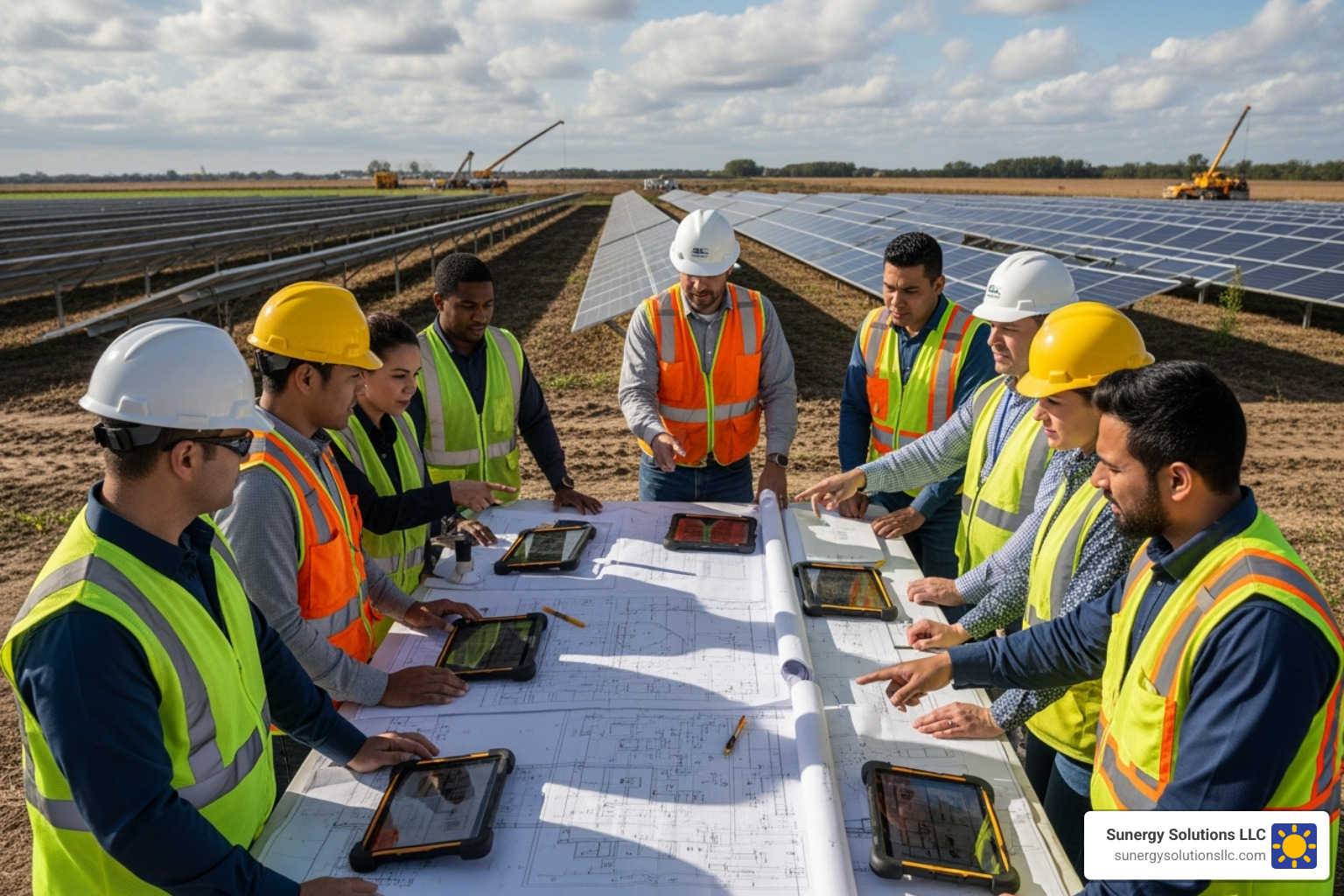
A strong educational start is super important for anyone dreaming of leading solar projects. While learning on the job is great, a formal degree gives you the structured knowledge you need to grasp all the different technical and management parts of the field.
We often look for folks with a background in engineering, like:
Beyond engineering, degrees in Environmental Science or Business Administration can also set a great stage. They offer important viewpoints on things like following rules, making sure projects are financially sound, and keeping work flowing smoothly.
But a degree is just the start! You’ll also need to know a lot about solar technologies themselves. This means really understanding:
Most importantly, a deep understanding of electrical systems and grid interconnection is a must-have. This means knowing how solar arrays safely and efficiently hook up to the existing power lines, how to handle utility requirements, and how to follow all local electrical codes. For those curious to learn more about the basics of solar power for your home, we have more information available.
More info about our residential solar facts
While your education gives you the basics, professional certifications really show you’re serious about the field and that you’ve mastered the best practices in the industry. These credentials can truly boost your career journey in solar energy project management.
Some of the most helpful certifications include:
These certifications don’t just prove your skills; they also give everyone a common language and framework for managing projects. This makes you a more effective and sought-after professional in the fast-growing solar sector.
While knowing your stuff technically and having certifications are vital, a truly outstanding solar energy project manager also has a strong set of “soft skills.” These are the people skills that help everything run smoothly, especially when you’re working with diverse teams and many different people involved in the project.
These skills ensure that while the technical side of things is sound, the project also runs smoothly from a human perspective. This leads to happier teams, better teamwork, and ultimately, more successful solar installations. To see how these skills shine in larger projects, take a look at our commercial solar installations.
More info about our commercial solar installations
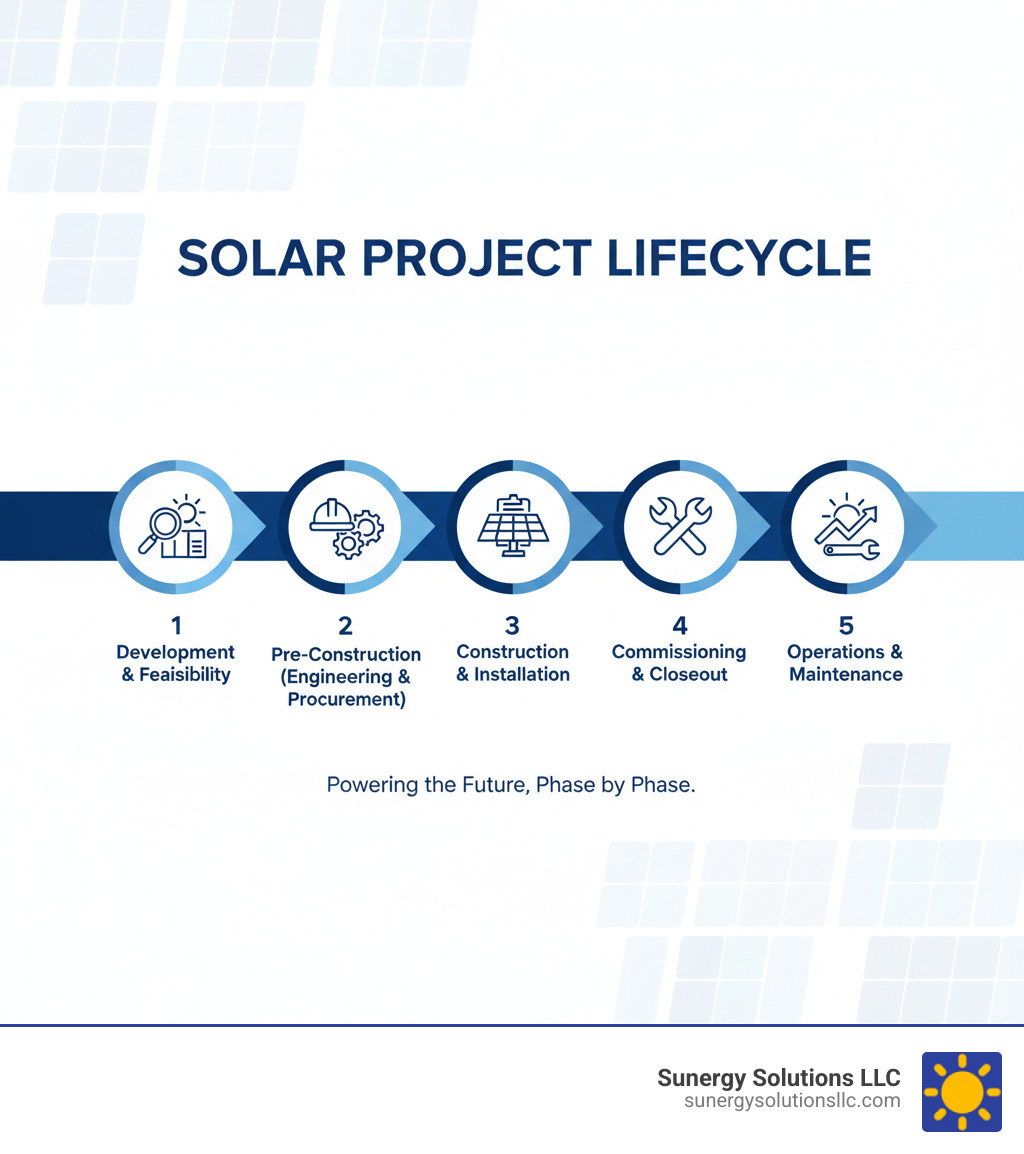
Every single solar project, big or small, takes a journey. Think of it like building a house – you wouldn’t just start nailing boards together without a plan, right? As your friendly solar energy project managers, we’re here to guide these projects through every twist and turn. Our goal is always the same: keep things moving, head off any problems, and make sure we finish with a shining, successful solar system. This journey typically starts as just a bright idea and ends when your system is happily making clean electricity.
This is where the magic begins – the dream takes shape! We figure out if that great idea for solar can actually become a reality. It’s a super important step that lays the groundwork for everything else.
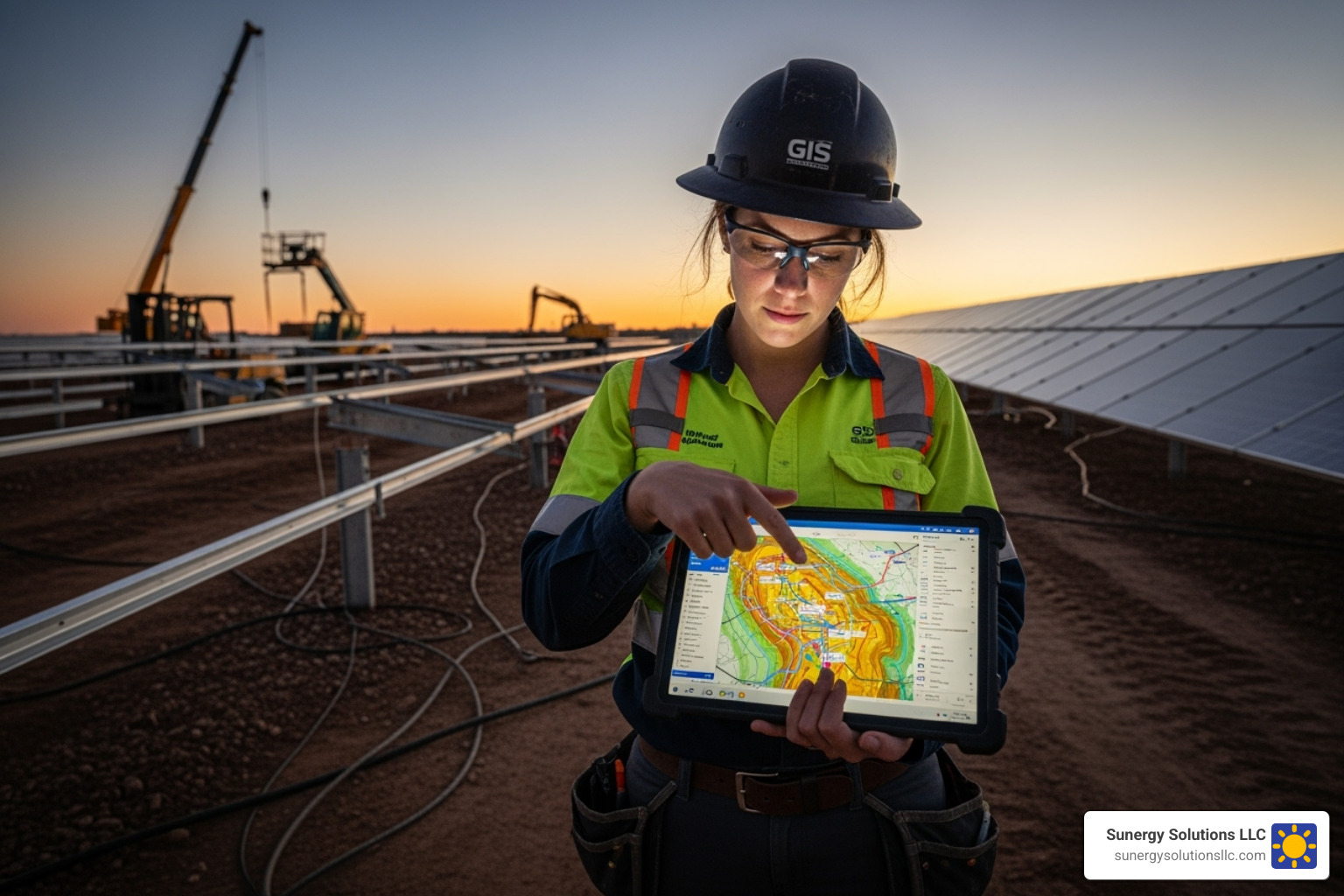
First, we do a careful site selection and assessment. We look at potential spots, checking things like how much sunlight they get (no shade trees allowed!), the land’s shape, and how close it is to the power grid. We even use cool tools like GIS (Geographic Information Systems) to help us see and understand all the details. We also do a solar resource analysis to figure out just how much energy the sun can provide at your spot. This helps us predict how much power your system will make.
Then comes the money talk! We dive into financial modeling and securing financing. This means creating detailed plans for costs and savings, finding investors, and getting the money needed. We also make sure to include any helpful incentives and rebates, which can make a big difference in how affordable your project is. After that, we create an initial system design – a first draft of what your solar setup will look like.
One of the trickier parts is navigating land use permits and zoning. This can be a bit of a maze, as every town has its own rules! We know the local regulations in all our service areas, from New Hampshire to Virginia, to help make this process smoother. Finally, we focus on identifying key stakeholders. This means figuring out who all needs to be involved, from local communities and environmental groups to utility companies. Talking to everyone from the very beginning is key to keeping things running smoothly.
In this first phase, our job is all about planning, spotting any potential problems early, and making sure everyone is on the same page. If you’re a homeowner just starting to think about solar, understanding these first steps can be really helpful!
More info about residential solar panels
Once we know your solar dream is possible, we move into the nitty-gritty details. This is where the blueprint really comes to life, turning initial ideas into solid plans.
Our engineers get busy with detailed engineering and system design. They finalize everything – from the electrical drawings and structural plans to how your system will connect to the grid. This ensures everything performs perfectly and follows all the rules. Next up is equipment procurement, which is a fancy way of saying we buy all the parts! We source top-quality solar panels, inverters, and racking. We work to get the best prices and make sure everything arrives on time. Managing this whole supply chain and logistics process is crucial to avoid any delays.
For bigger projects, we often work with specialized firms called EPC (Engineering, Procurement, and Construction) partners. They help us handle the design, buying, and building all in one go. And of course, we spend a lot of time finalizing all necessary permits. This includes construction permits, electrical permits, and the all-important utility connection agreements. This step can sometimes be a bit of a waiting game, which is why we stay on top of all the regulations and follow up diligently.
As project managers, this phase is all about managing our suppliers, negotiating contracts, and planning every detail to prevent costly slowdowns.
Now for the exciting part – the physical work begins! This is when those plans start to become a real, working solar system. It’s a phase that needs careful watching and strict adherence to our high standards.
First, we get the site ready with site preparation and civil works. This can involve clearing land, leveling it out, and preparing the foundations for your solar panels and other equipment. Then, we get to managing construction crews and subcontractors. We make sure all the different teams work together efficiently and safely, staying on schedule and maintaining our quality goals.
Safety is always our top priority. We are very strict about adhering to safety protocols (HSE). Regular safety meetings and equipment checks keep our teams safe and protect the environment. Throughout the whole process, we have quality assurance and control during installation. We perform checks at every step, from how the panels are mounted to the electrical wiring, to make sure your system will work perfectly. We also provide regular progress reporting to keep everyone – you included – updated on how things are going, what we’ve accomplished, and what’s next.
Our role here is very hands-on. We’re often on-site, making sure safety is paramount, quality is top-notch, and we’re sticking to the project timeline and budget. We’re really proud of how smoothly we make our installations happen!
More info about solar installations
We’re almost at the finish line! This final phase ensures your system is fully operational and that the project is officially wrapped up.
First, we do thorough system testing and performance verification. We test everything to make sure your solar system works exactly as it should and delivers the power we promised. Then comes grid interconnection and utility approval. This involves working with your local power company to connect your new solar array to their grid and get their final “all clear” to start operating.
Next, we arrange final inspections and code compliance. Local authorities and other groups will perform their last checks to ensure everything meets building and electrical codes. We then put together as-built documentation, which is a complete and accurate record of your final system design, including any small changes made during construction.
Finally, we have client handover and training. We give you all the important documents, warranties, and teach you how to operate and maintain your new solar system. It’s like handing over the keys to your new, clean energy future! We also conduct a post-project review and lessons learned. This helps us look back at what went well and what we can improve for our next projects, so we’re always getting better.
As project managers, we oversee all these final checks, get all the necessary approvals, make sure you’re completely happy, and then officially close out the project. It’s a great feeling to mark another successful contribution to a greener future!
Building a successful solar project is like building a sturdy home: it needs strong foundations. In solar energy project management, these foundations aren’t made of concrete, but of smart planning, careful budgeting, and watchful risk management. These aren’t just steps we check off; they’re ongoing practices that demand our constant attention and expertise from start to finish.

You know the saying, “Failing to plan is planning to fail”? It’s especially true in solar energy. Good planning points us in the right direction, and careful scheduling keeps us on track every step of the way.
First, we begin by defining project scope, goals, and deliverables. This means we clearly figure out what we want the project to achieve, what its limits are, and what specific results we expect. This helps everyone on the team know exactly what we’re aiming for, avoiding confusion later on.
Next, we get down to the nitty-gritty by creating a Work Breakdown Structure (WBS). Think of it like organizing a big puzzle: we break the huge project into smaller, more manageable pieces. This makes it easier to assign tasks, estimate costs, and keep an eye on how things are coming along. We then work on developing realistic timelines and milestones. While we always strive for efficiency, we also know that large renewable energy projects take time. For example, some big wind farm projects can take years! Solar projects can be quicker, but we always build in a bit of wiggle room for those unexpected bumps in the road.
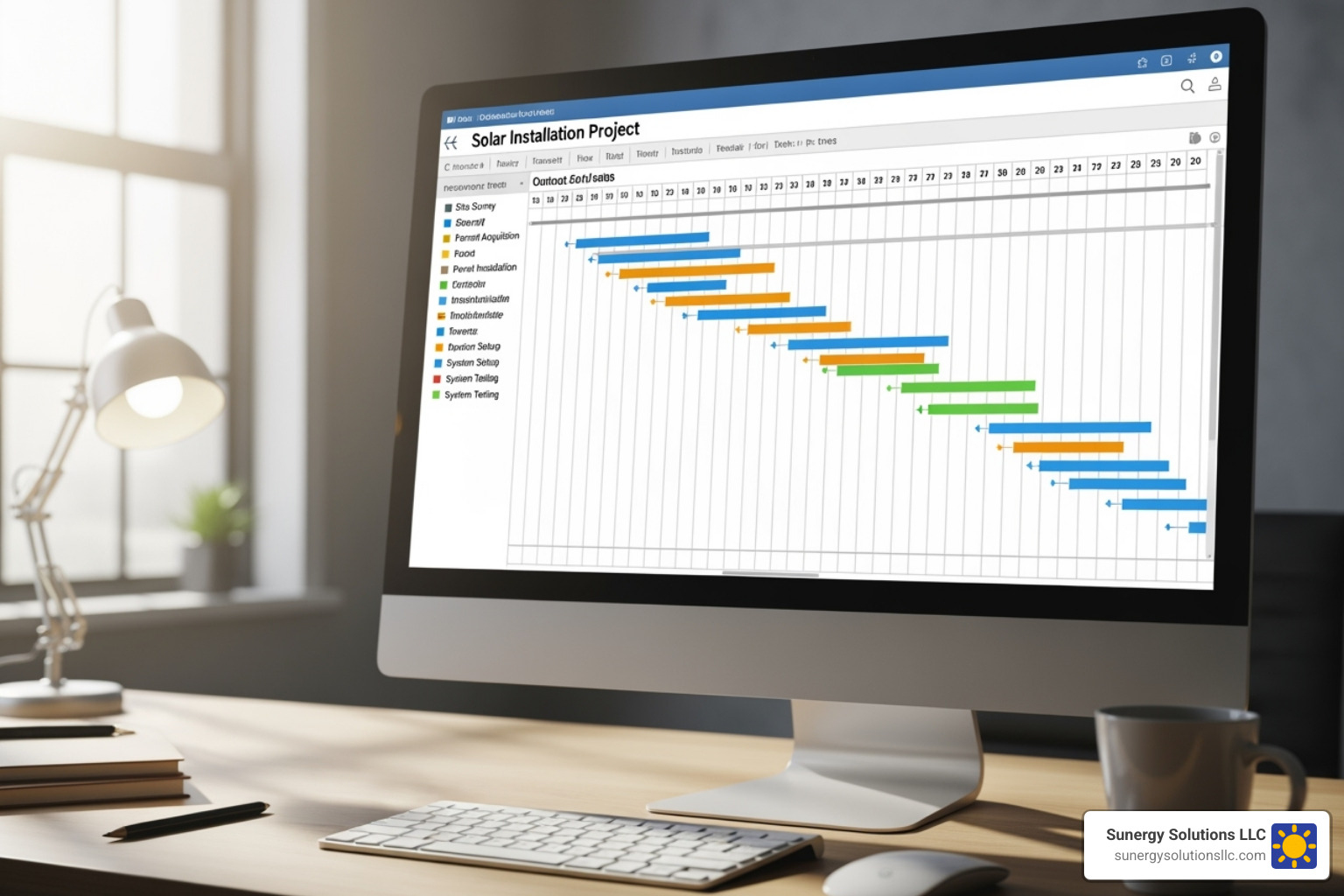
We also focus on smart resource allocation for labor and equipment. This means making sure we have the right skilled people and specialized tools for each job, using them efficiently to avoid any wasted time. And to keep everything running smoothly, we’re always utilizing scheduling tools to track progress.
These modern tools let us see exactly where we are, spot any potential holdups, and make adjustments in real-time. Effective planning and scheduling don’t just keep us organized; they help us see challenges coming and deal with them head-on. By the way, a strong roof is often the first step for many of our amazing solar projects!
More info about our roofing services
Whether it’s for a home or a business, a solar project is a big investment. That’s why having a solid budget and tight financial control is super important. It’s how we make sure your investment pays off and gives you the best return.
We start with accurate cost estimation and forecasting. This means we carefully figure out the costs for every single part and every hour of work. Our goal is to be as precise as possible to avoid any nasty surprises or budget overruns down the line. Then, we’re constantly tracking actual costs against the budget. By keeping a close eye on spending, we can quickly spot any differences and fix things before they become bigger issues.
Managing project cash flow is also crucial. It’s about making sure the money is there exactly when it’s needed and that we receive payments on time, keeping the project financially healthy. A big part of our job, especially in states like Connecticut, Massachusetts, and New Hampshire, is incorporating financial incentives, rebates, and tax credits into the budget.
We help our clients steer amazing programs like the Federal Tax Credit (which can cover a big chunk of the system cost!), Solar Renewable Energy Credits (SRECs), and Federal Accelerated Depreciation. These can dramatically lower the true cost of a solar installation. Imagine an 880kW system in Illinois getting a $220,000 rebate – that’s real savings!
Lastly, we have a clear process for change order management. Sometimes, unexpected things happen, and the project scope might need to shift a bit. We make sure these changes are properly documented, approved, and that we understand their financial impact. Our financial know-how ensures you not only get a fantastic solar system but also get the most bang for your buck!
More info about residential solar tax incentives
Solar projects, while incredibly rewarding, come with their own unique set of challenges. Think about everything from unexpected weather to changes in local rules. That’s where proactive risk management comes in. It’s not about avoiding every single risk (because that’s just not possible!), but about knowing what could go wrong, understanding it, and having a plan to soften its blow.
We start with thorough risk identification. This means we sit down with everyone involved and brainstorm all the potential bumps in the road. These could be anything from regulatory changes (like new zoning laws), unpredictable weather delaying construction, supply chain issues (imagine waiting on panels or inverters!), or tricky technical problems during setup. Even local community concerns can be a significant risk we need to address.
Once we’ve spotted these potential issues, we move to qualitative and quantitative risk analysis. In simple terms, we figure out how likely each risk is to happen and how big of an impact it would have. For the really big risks, we might even use special tools to estimate their potential cost or time delay. After that, we focus on developing mitigation strategies.
For each important risk, we come up with a plan. We might avoid a risk by changing how we do things, transfer it to someone else (like through insurance), mitigate it by taking steps to prevent it, or simply accept it if the impact is small. Sometimes, we even need to escalate a risk to higher management. For example, to avoid price jumps for materials, we might lock in prices with fixed contracts. To handle community concerns, we engage in early outreach and clear communication.
Finally, we believe in maintaining a dynamic risk register. Risks aren’t set in stone. We continuously keep an eye on this list, adding new risks, updating the status of existing ones, and checking if our plans to deal with them are actually working. This strong approach to risk management helps us handle the twists and turns of large projects, making sure we always deliver on our promises.
Read the Asset Management Best Practice Guidelines
In today’s world, technology isn’t just a nice-to-have; it’s a must-have for effective solar energy project management. Digital advancements have completely changed how we plan, carry out, and keep an eye on projects. This shift has made our work much more efficient and successful.
Modern solar projects deal with a lot of information and need careful coordination. Having the right digital tools is absolutely essential to manage all these moving parts.
We use a variety of key software features. Our project management platforms are central to everything. They help us manage timelines, assign tasks, track important milestones, and make sure everyone on the team is working together smoothly. These tools are especially helpful for big projects spread across many locations, or for keeping a close eye on finances.
Next, GIS (Geographic Information Systems) software is a game-changer for picking the best sites and laying out our designs. It lets us visually see and analyze locations, helping us place panels just right to catch the most sunlight. This also helps us understand any potential impacts on local communities.
We also rely on data analytics. This isn’t just about looking at numbers; it helps us predict how well a solar system will perform and spot any potential issues before they become big problems. This way, we can always make sure our installed systems produce the most energy possible.
And who can forget drones? These amazing tools give us quick and accurate aerial views of sites. They help us survey land, check on construction progress, and even inspect completed installations. This saves a lot of time and effort compared to older, manual methods.
Finally, mobile apps for real-time field reporting keep our teams connected. Our crews can log their progress, report issues, and capture important data right from their phones or tablets. This means information is shared instantly, allowing us to make quick decisions and keep things moving smoothly, no matter where our construction sites are located.
All these tools work together to make our operations run smoother, cut down on delays, and keep our projects on track. They give us a complete picture that old-fashioned methods simply can’t provide.
Many large-scale solar projects involve teams working in different places. You might have engineers in an office and installation crews on-site in various states. Good teamwork is vital to overcome these distances and make sure everyone is working towards the same goals.
We use centralized cloud-based platforms for document control. Think of it as a shared digital filing cabinet where everyone can access the latest plans, permits, and documents. This stops confusion and ensures everyone is working with the correct information.
Real-time communication tools, like Slack or Teams, are also a must. They allow for quick messages and group chats, which are perfect for solving problems fast and keeping the project moving forward.
Regular video conferencing is essential for remote teams. These virtual meetings help everyone stay connected, discuss progress, tackle challenges, and keep team spirit high.
We also set up clear digital workflows and responsibilities. This means everyone knows their role, and automated steps help track tasks efficiently. It doesn’t matter if team members are in different states; tasks get assigned, followed up on, and completed.
Finally, we foster a culture of accountability and transparency. With teams working remotely, trust and clear expectations are key. We encourage open communication and give regular feedback. This ensures everyone feels supported and responsible for their part in the project.
By using these smart technologies and best practices, we can ensure great teamwork and communication. This helps Sunergy Solutions LLC successfully deliver large-scale solar projects, even when our teams are spread across places like Vermont, Rhode Island, and Maine.
More info about the communities we serve
Got questions about what it takes to manage solar projects? You’re not alone! It’s a complex and exciting field. Here are some of the most common questions we hear, answered in a way that helps you understand the ins and outs of solar energy project management.
Every big project comes with its own set of challenges, and solar is no different. The biggest risks in a solar project often come from a few key areas. First up are regulatory and permitting delays. Think about it: getting all the necessary approvals can be tricky, especially with different rules in places like New Hampshire, Virginia, and Massachusetts. These delays can really push back timelines and add to costs.
Then there’s the supply chain. If we can’t get the solar panels, inverters, or even the right mounting hardware when we need them, everything grinds to a halt. We also keep a close eye on the weather. Unexpected weather events, like heavy snow in Vermont or a hurricane along the coast, can stop construction in its tracks, costing time and money. And finally, sometimes technical issues pop up during the final testing, like problems connecting to the grid or the system not performing as expected. That’s why having a solid plan to spot and handle these risks early on is so incredibly important!
That’s a great question, and the answer really depends on the size and complexity of the project. A smaller commercial rooftop installation, like the ones we often do for businesses, might take anywhere from 3 to 6 months from the very first plans to when it’s fully up and running.
However, if you’re talking about a huge utility-scale solar farm, one that covers many acres, that’s a whole different ballgame. Those can take several years to get from the initial idea and permits to finally generating power. Just to give you an idea, some large renewable projects, like big wind farms, can take over four years to go from concept to energy production. Our main goal is always to get projects done efficiently, but without ever cutting corners on quality or safety.
While a Project Management Professional (PMP) certification isn’t always a must-have for every single solar energy project management job, it’s definitely a big plus! Think of it like this: the PMP shows that you understand the gold-standard way of managing projects, from planning to execution and handling risks. These skills are super valuable in the solar world.
Having a PMP certification really highlights your dedication to your career and can open up some fantastic opportunities. Many experienced project managers in the renewable energy sector hold this certification, and here at Sunergy Solutions LLC, we certainly see its value. It helps ensure our operations run smoothly and our projects are managed with top-notch expertise.
Wow, what a journey we’ve taken through the exciting world of solar energy project management! We’ve seen that bringing a solar project to life, from a glimmer of an idea to a fully humming power source, truly is an art and a science. It’s about combining some serious smarts – like technical know-how and strategic planning – with the warmth of strong leadership.
It’s all about mastering that entire project lifecycle. This means understanding every step, from figuring out if a site is even good for solar, to the detailed engineering, getting everything built, and finally, flipping the switch. And let’s not forget how crucial it is to accept all the amazing new technology out there, keep a sharp eye on potential risks, and work smoothly with everyone involved. These aren’t just good ideas; they’re the secret sauce for delivering successful, complex solar projects that light up a cleaner future.
The solar industry isn’t just growing; it’s absolutely skyrocketing! With millions of new jobs on the horizon, the need for skilled project managers who can expertly guide these intricate projects will only become more vital.
Here at Sunergy Solutions LLC, we see the incredible impact that expert project management has every single day. It’s how we ensure we’re delivering safe, reliable, and truly affordable solar solutions to homes and businesses across our beloved Northeast and Mid-Atlantic regions, including Connecticut, Massachusetts, Maine, New Hampshire, Rhode Island, Vermont, and Virginia. We’re so proud to play our part in building a greener tomorrow, one carefully managed project at a time.
Curious to see how we bring our commercial solar projects to life, from start to finish? We invite you to explore our commercial solar services and learn more!

Appointments Available, 7 Days a Week


