
5.0 Rating
Request A Free Estimate
A lot of homeowners wonder if solar panels still work in winter, or whether cold temperatures and snow make solar “not worth it.”
Here’s the quick answer:
Solar panels absolutely work in winter.
If you live in Connecticut, Massachusetts, Maine, New Hampshire, Rhode Island, Vermont, or Virginia, understanding how winter affects solar can help you decide if solar is worth it for your home and what kind of performance to expect.
Let’s break it down and see if solar installation is right for you.
SEE HOW YOU CAN SAVE WITH A SOLAR INSTALLATION
Yes, solar power work in winter.
Solar panels don’t need heat; they need sunlight, and they continue generating electricity as long as the sun is out.
Here’s why they perform better than many people expect:
Winter doesn’t stop solar production, it’s just different from summer production.
Most systems in northern states see 20–40% lower production in winter compared to summer.
That’s normal, expected, and factored into system sizing.
Why winter production is lower:
Your system is designed for year-round output, not just peak summer days, so this seasonal shift is already accounted for in your overall energy plan.
Here’s a quick breakdown of what most homeowners experience:
| Season | Average Sunlight Hours | Expected Solar Output | Notes |
| Summer | 6–8 hours/day | Highest | Long days + high sun angle |
| Winter | 3–5 hours/day | 20–40% lower | Shorter days + snow but better efficiency |
| Cold, clear days | Varies | Surprisingly strong | Cold weather boosts panel voltage |
This simple difference, sunlight hours, explains most of the seasonal variation.
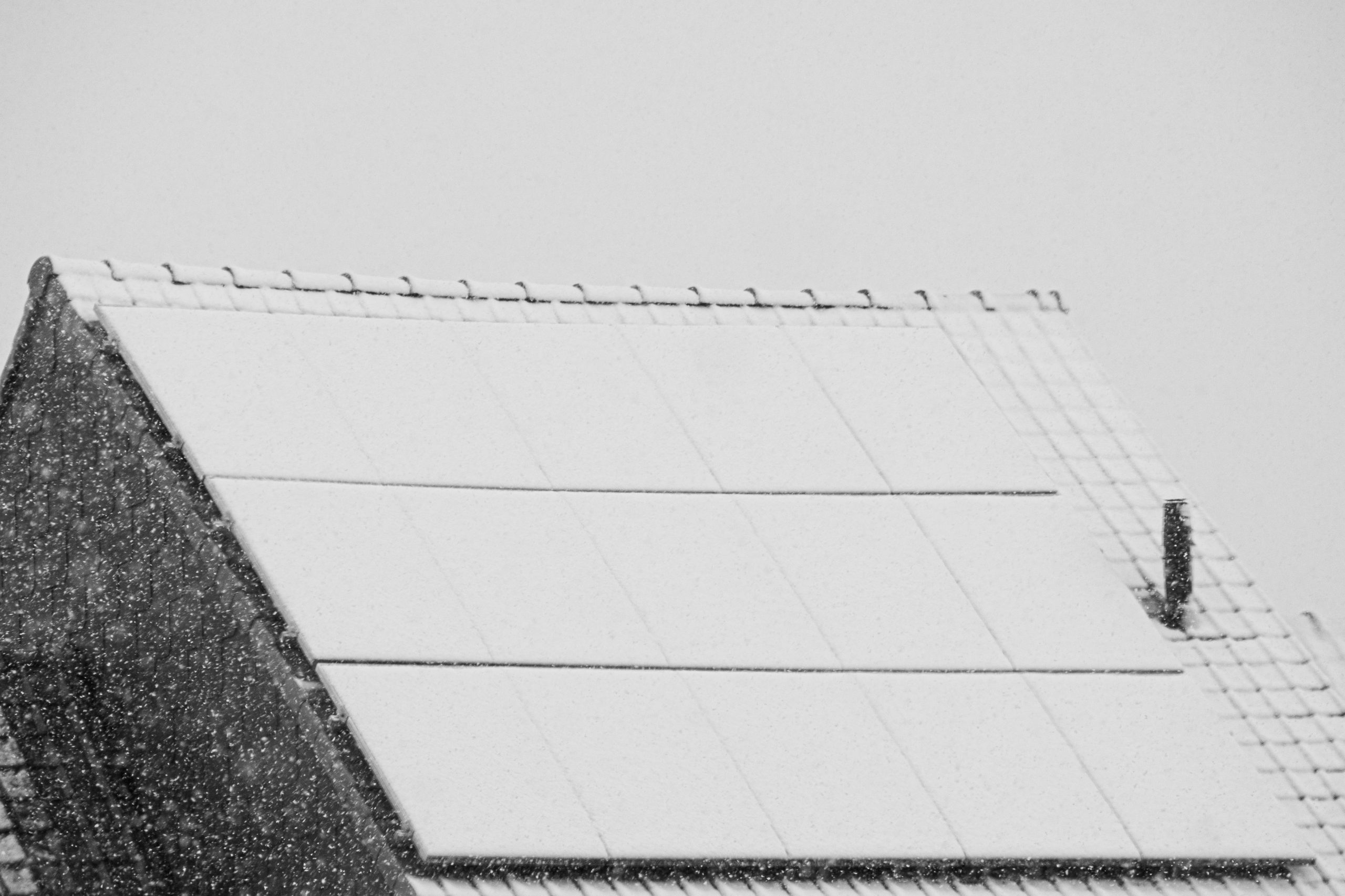
It depends on the amount of snow:
Panels often continue producing because sunlight can still pass through or reflect off the snow.
Production pauses temporarily, but the pause is usually short-lived because:
Most winter interruptions last only a few hours to a couple of days depending on snowfall.
In almost every case: No.
Manually removing snow can damage panels, void warranties, and create safety risks.
Let the snow melt naturally, panels warm up quickly when the sun appears, and melted snow slides off on its own.
Professional installers design systems with this in mind, so you do not need to climb onto your roof.
It may sound odd, but solar panels perform best when they are cold and sunny.
This is why homeowners sometimes see unexpected spikes on crisp winter days.
If you live in CT, MA, ME, NH, RI, VT, or VA, here’s what winter solar realistically looks like:
These regions consistently perform well with solar despite snowy winters.
Solar power performance in winter isn’t just about the panels, it’s about how the system is engineered.
Sunergy Solutions designs every system to handle winter weather in New England and Virginia with:
These solar installation methods significantly improve real-world winter performance.
Many homeowners assume summer is the best season for solar installation.
In reality, winter often has some advantages:
Solar installation is year-round, and winter is a strategic time to start.
You don’t need heavy maintenance.
Just a few simple habits help your system stay consistent:
Homeowners in Connecticut, Massachusetts, Maine, New Hampshire, Rhode Island, Vermont, and Virginia rely on Sunergy Solutions because their systems are engineered for real winter conditions, heavy snow, freezing temperatures, low-angle sun, and long stretches of cloud cover.
Sunergy Solutions designs winter-ready systems that produce reliable energy all year long.
If you’re curious how solar would perform on your home, Sunergy offers a free, custom solar assessment.
What happens when solar panels get covered in snow?
When panels are covered in a thick layer of snow, production temporarily slows or stops until the snow melts or slides off. Once the sun comes out, the dark surface of the panels warms quickly, helping the snow melt faster than it does on the roof. Light snow may still allow some sunlight through, and snow melt often leaves the panels cleaner and more efficient.
What temperature is too cold for solar panels?
There is no temperature that is “too cold” for solar panels. In fact, cold weather improves efficiency because solar cells perform better at lower temperatures. Panels are built to handle extreme winter conditions, including subzero temperatures.
What are the worst months for solar?
The lowest production months are typically December and January because of shorter daylight hours and a lower sun angle. Cloudy winter weather can also reduce output, but cold, clear days often produce surprisingly strong power.
Are you supposed to remove snow from solar panels?
No, homeowners should not manually remove snow from solar panels. Scraping or brushing them can damage the glass or void warranties. Panels naturally melt snow on their own as soon as sunlight hits them, and installers design systems to account for occasional winter buildup.
Do solar panels work if covered in ice?
If a panel is covered in a solid sheet of ice, production is temporarily reduced until the ice melts. However, the surface warms as soon as the sun comes out, and ice typically breaks up and slides off quickly. Thankfully, ice buildup is usually short-lived and does not harm the panels.
When is the best time to install solar panels?
Winter is actually one of the best times to install solar. Installation schedules move faster, permitting is often quicker, and your system is ready to take full advantage of stronger spring and summer sunlight. Solar can be installed year-round, and each season has its own advantages.
How long does it take to install solar panels?
Most residential solar installations take one to three days once the crew is on-site. The full process, including design, permitting, utility approval, and final activation, typically takes several weeks, depending on your state and utility requirements.
What are commercial vs residential solar panels?
Residential solar panels are designed for homes, with standard sizes that fit pitched roofs and meet typical household energy needs. Commercial solar panels are larger, built for higher output, and often installed on flat roofs, warehouses, or open land. Both work in winter, but commercial systems are engineered for larger-scale energy production.
Appointments Available, 7 Days a Week


