
5.0 Rating
Request A Free Estimate
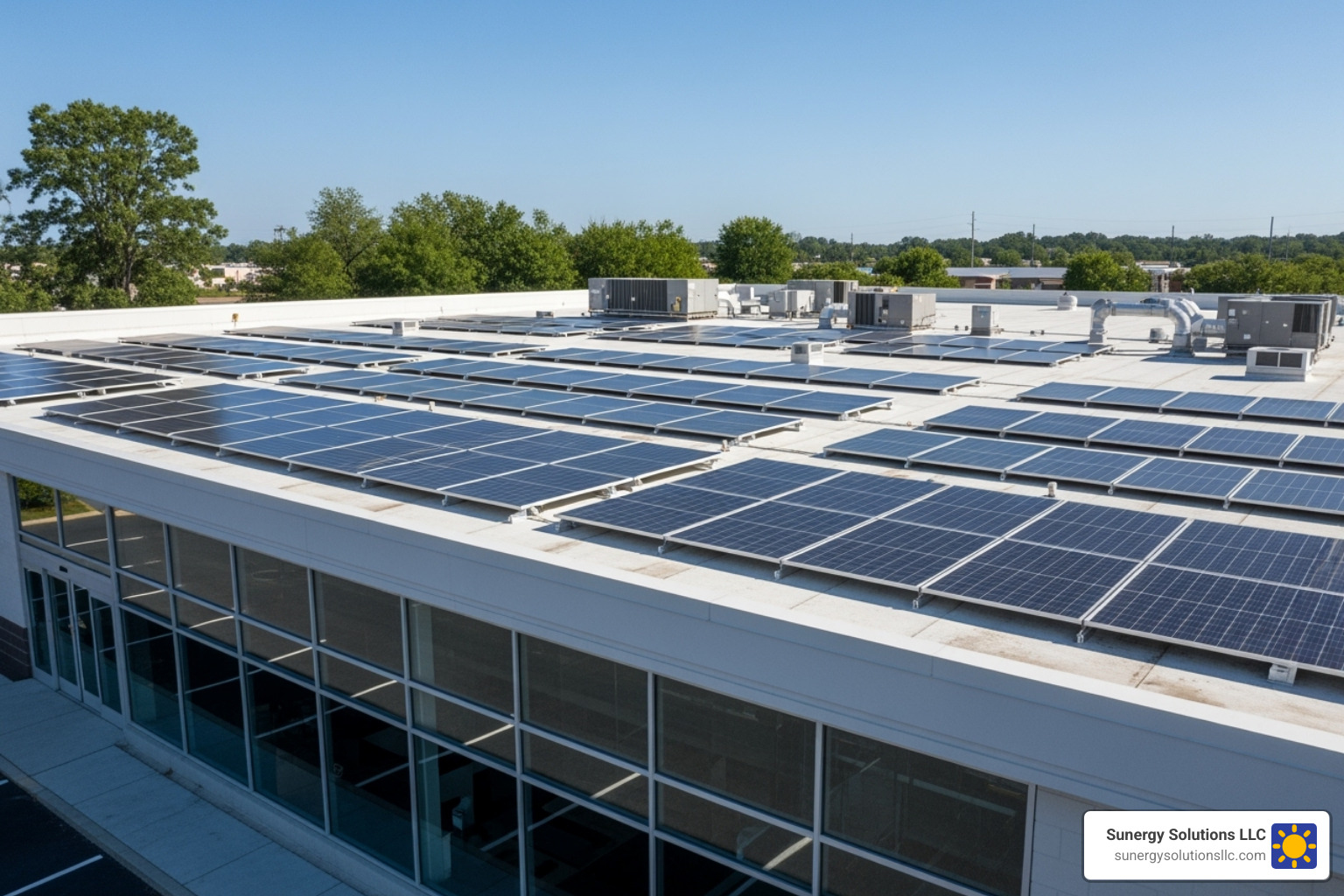
Solar energy for retail businesses isn’t just an environmental statement anymore – it’s a smart financial strategy that’s reshaping how stores operate and compete.
Quick Answer: Solar Energy for Retail Solutions
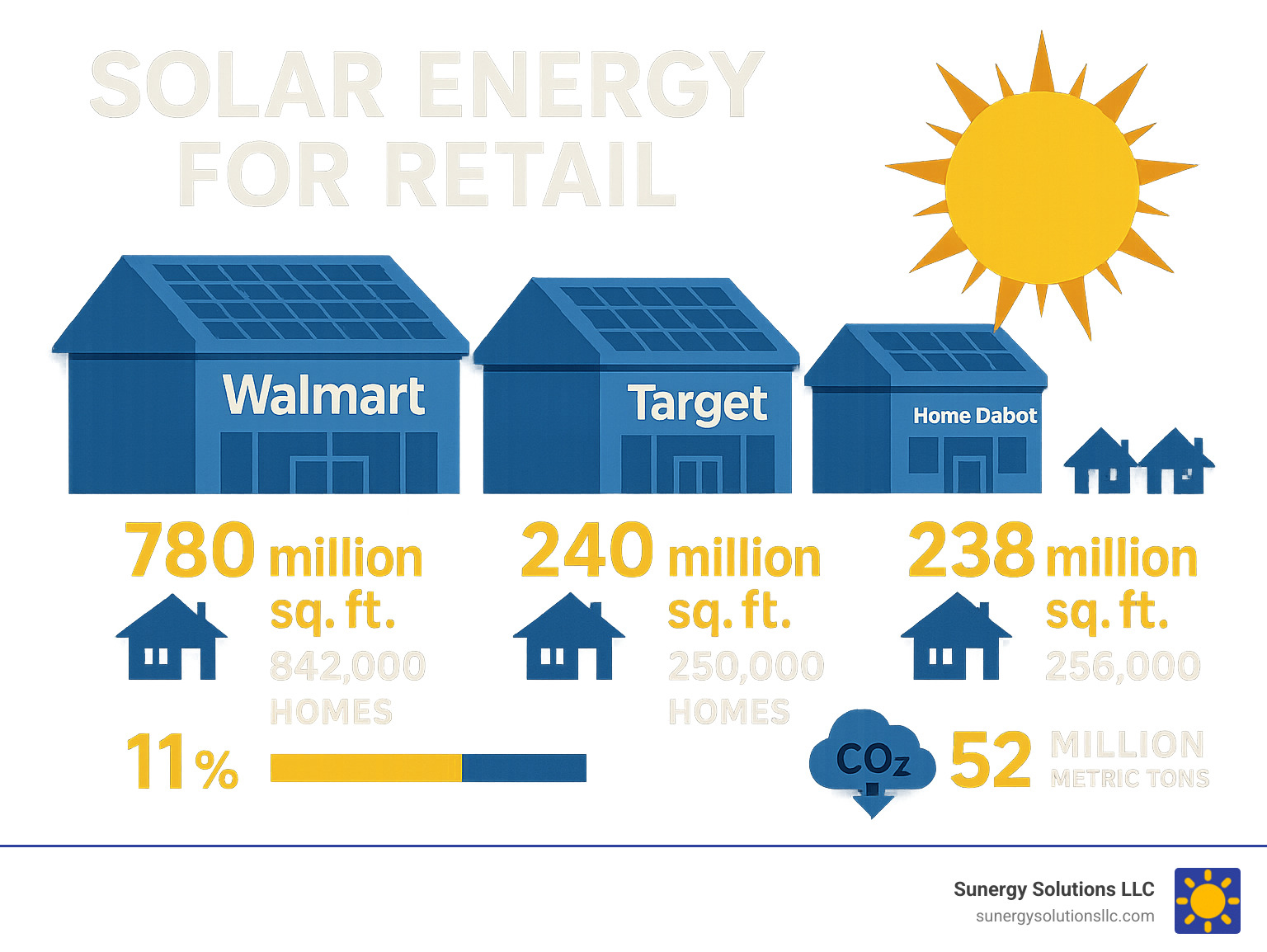
The numbers tell a compelling story. America’s big box stores and shopping centers have 84.4 terawatt-hours of untapped solar potential on their rooftops – enough to power almost 8 million homes. Walmart alone could generate electricity for more than 842,000 households if it maximized its 780 million square feet of roof space.
But here’s what makes this opportunity even more attractive: retail stores consume an average of 14.3 kilowatt hours of electricity per square foot annually, making energy one of their largest operating expenses after rent, inventory, and salaries. When Costco installed solar panels on just two California stores, they reported $300 in daily savings per location.
The retail giants are already moving. Target has completed 350 stores with solar roofs and aims for 500 locations. IKEA has equipped 79% of its U.S. stores with solar, reducing their carbon footprint equivalent to removing 14,000 cars from the road annually.
As a former investment banker turned renewable energy entrepreneur, I’ve spent nearly a decade helping businesses across the Northeast harness solar energy for retail applications through strategic financial planning and high-performance system design. My experience shows that retailers who act now gain both immediate cost advantages and long-term competitive positioning in an increasingly sustainability-focused market.
Solar energy for retail terms to learn:
For any retail business, the electricity bill is a major, often unpredictable, expense. Solar energy for retail businesses offers a proven way to control this cost. By installing solar panels, you essentially pre-purchase decades of electricity at a fixed price, generating your own clean power while competitors face rising utility rates. The financial benefits are significant: you hedge against energy price volatility, gain predictable energy costs for better long-term planning, and even increase your property value. It’s not just an operational saving; it’s an investment in your real estate.
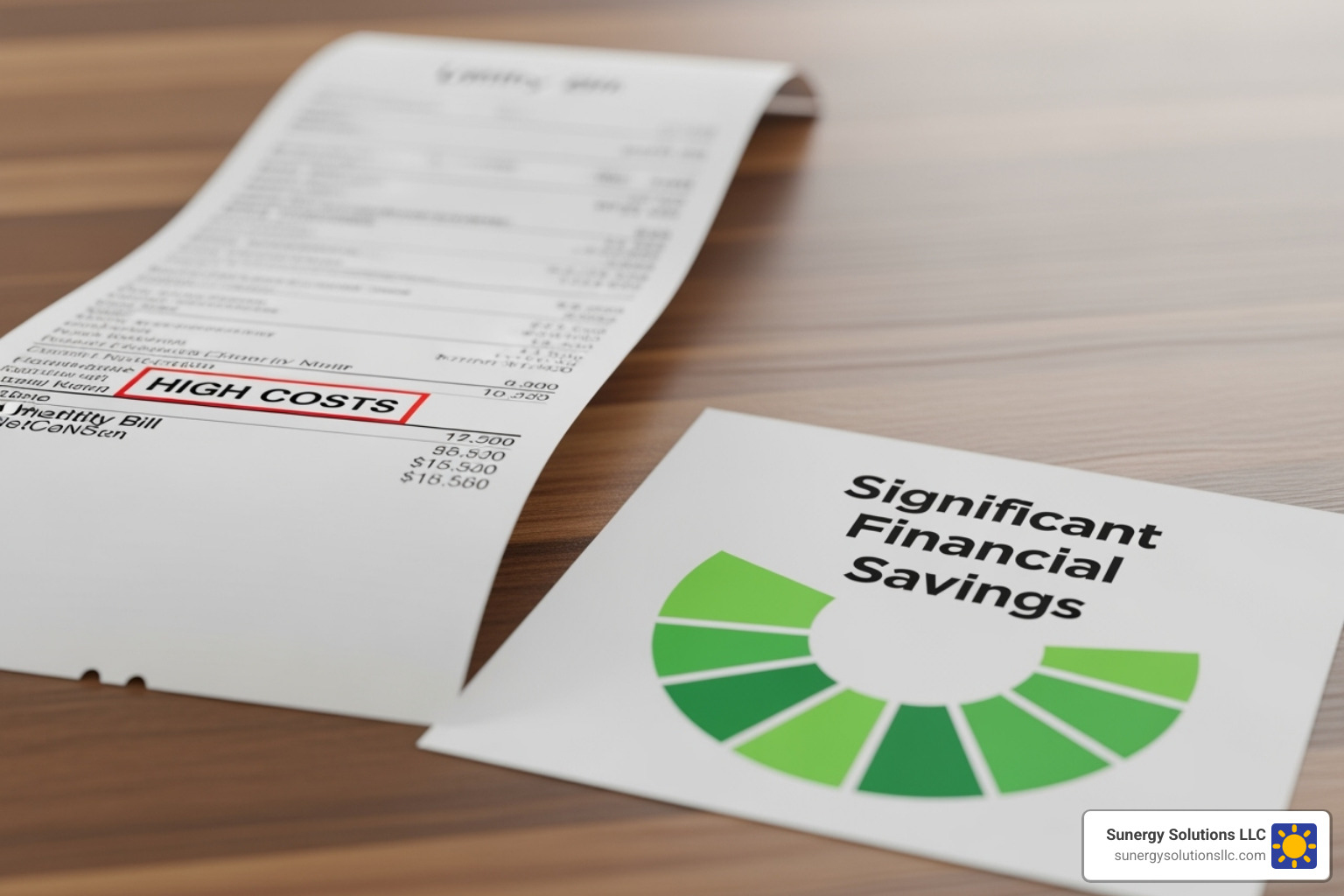
Want to see the numbers for your specific situation? Our Solar Return on Investment guide breaks down exactly how much you could save.
Solar panels convert your largest utility expense from a variable cost into a fixed, predictable investment. The key benefit for retailers is offsetting peak demand charges. Solar panels generate the most power during sunny afternoons, precisely when stores have high energy needs from lighting, air conditioning, and customer traffic. This allows you to avoid paying premium utility rates during peak hours.
Most retail solar systems have an ROI timeline of 5-7 years. After this payback period, you benefit from a 25-30 year system lifespan of nearly free electricity. With no moving parts, solar panels require minimal maintenance costs, typically just occasional cleaning and inspections.
For a detailed breakdown of what you can expect to invest, check out our Commercial Solar Panel Cost analysis.
The upfront investment for solar can seem daunting, but multiple financing options make it accessible. A cash purchase offers the maximum long-term savings and full ownership, allowing you to claim all tax benefits directly. Solar loans function like other equipment financing; you own the system and benefit from incentives, with loan payments often lower than your previous utility bills. For those seeking zero upfront investment, Power Purchase Agreements (PPAs) are a popular choice. We install and maintain the system, and you simply buy the power it generates at a fixed, lower-than-utility rate. Similarly, leasing options provide low monthly payments and included maintenance without requiring system ownership.
Our Commercial Solar Project Financing team can walk you through which option makes the most sense for your specific situation and cash flow needs.
| Feature | Cash Purchase | Power Purchase Agreement (PPA) |
|---|---|---|
| Upfront Cost | High | None |
| System Ownership | Retailer | Third-party developer |
| Maintenance | Retailer (or contracted) | Third-party developer |
| Energy Savings | Highest long-term savings | Guaranteed lower electricity rate than utility |
| Incentives | Retailer claims all tax credits & rebates | Developer claims tax credits & rebates (passed on in rate) |
| Property Value | Increases property value | No direct impact on property value |
| Contract Term | Own indefinitely | Typically 10-25 years |
The bottom line? Solar energy for retail isn’t just about being green – it’s about being smart with your money and taking control of one of your largest operating expenses.
Solar energy for retail isn’t just about cutting costs – it’s about positioning your business as a forward-thinking leader that customers want to support.
Today’s shoppers vote with their wallets, and they’re increasingly choosing businesses that match their values. When you install solar panels on your retail store, you’re making a powerful statement about Corporate Social Responsibility (CSR) that resonates with eco-conscious consumers who make up a growing portion of the market.
Think about it: when customers see your store’s solar panels or a “Powered by Solar Energy” sign, they’re not just seeing another business. They’re seeing a company that cares about the future – and that makes them feel good about spending money there.
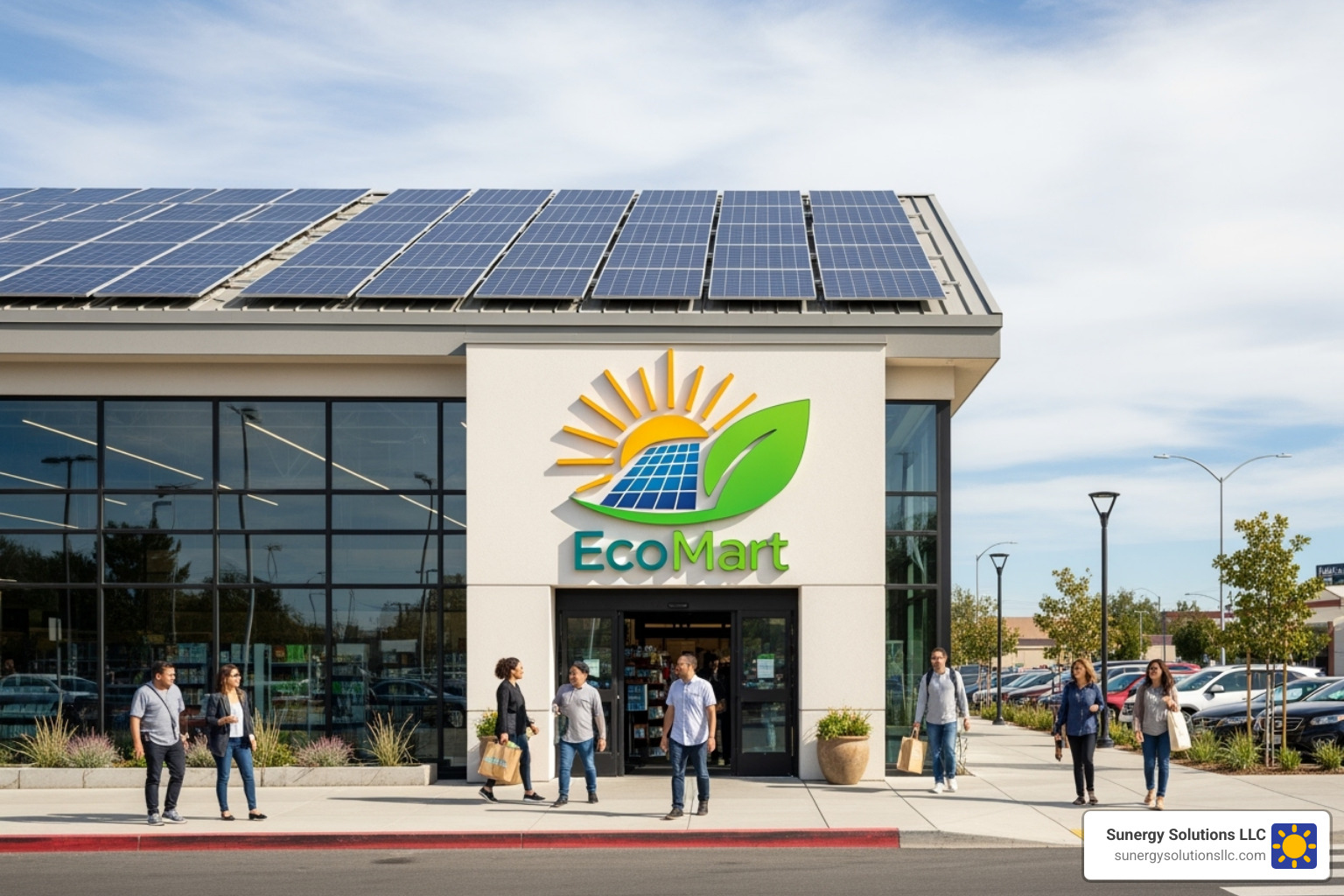
This isn’t just feel-good marketing – it creates real business advantages. Customers develop stronger loyalty to brands that demonstrate environmental stewardship, and they’re more likely to choose your store over competitors who haven’t made the same commitment. Your solar installation becomes a differentiator that sets you apart in crowded retail markets.
The Commercial Solar Energy Benefits extend far beyond your monthly utility bill, creating lasting value for your brand reputation and customer relationships.
Installing solar panels dramatically reduces your store’s carbon footprint by replacing grid electricity with clean, renewable power. The environmental impact is substantial – if America’s superstores maximized their solar potential, they could reduce CO2 emissions by more than 52 million metric tons annually. That’s like taking over 11.3 million cars off the road every year.
This kind of environmental leadership doesn’t go unnoticed by potential employees, especially younger workers who prioritize working for socially responsible companies. Your solar installation becomes a powerful recruiting tool that helps you attract and retain top talent who want to be part of something meaningful.
The public relations benefits are equally compelling. Your solar commitment gives you authentic stories to share about environmental leadership and community responsibility. Generating clean power from superstores would reduce CO2 emissions on a massive scale, and your business becomes part of that positive change.
Solar energy opens up exciting opportunities to improve your customers’ shopping experience. Solar-powered EV charging stations in your parking lot provide a valuable service that keeps customers on-site longer while their vehicles charge. This extended dwell time often translates directly into increased sales.
These charging stations serve as highly visible proof of your sustainability commitment. They’re conversation starters that differentiate your business and appeal to the growing number of electric vehicle owners who appreciate businesses that support their lifestyle choices.
Your solar installation creates multiple touchpoints for marketing your green initiatives: prominent building signage showcasing your solar commitment, social media content sharing your energy savings and carbon reduction achievements, staff training to help employees enthusiastically discuss your environmental leadership, community partnerships with local environmental groups, sustainability reporting that highlights your solar journey’s impact, and customer amenities like those solar-powered charging stations that provide real value while demonstrating your values.
The result is a shopping experience that feels aligned with customers’ environmental concerns, creating emotional connections that drive loyalty and word-of-mouth recommendations.
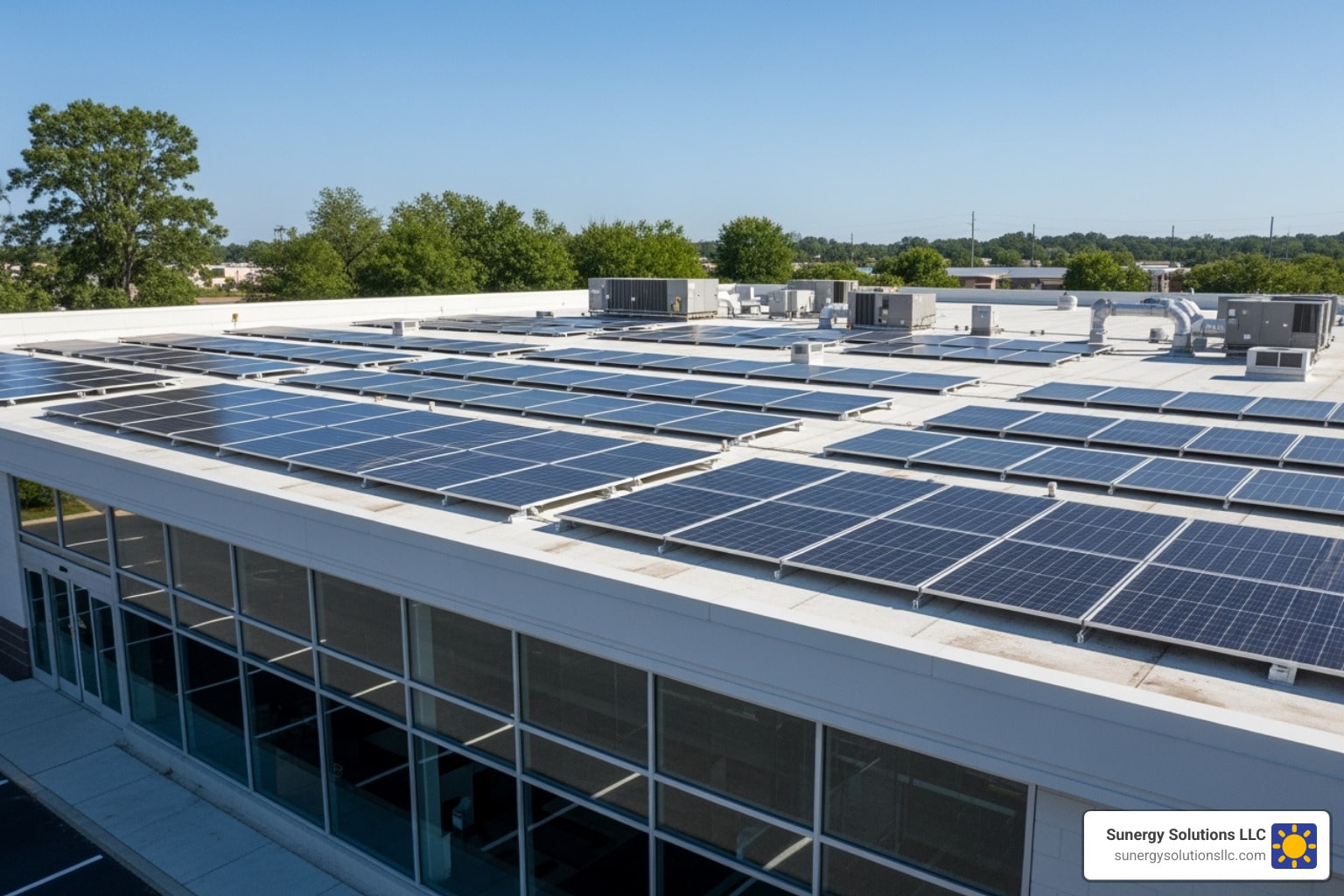
Here’s something that makes retail businesses perfect for solar: your rooftops are practically designed for it. Most shopping centers, big box stores, and grocery outlets have large, flat rooftops with unobstructed sun exposure – exactly what solar panels love most.
While residential homes might have tricky angles, dormers, or chimneys getting in the way, your retail space offers a clean slate. We can install panels efficiently across the entire surface, maximizing your energy generation potential. It’s like having a solar farm right above your store.
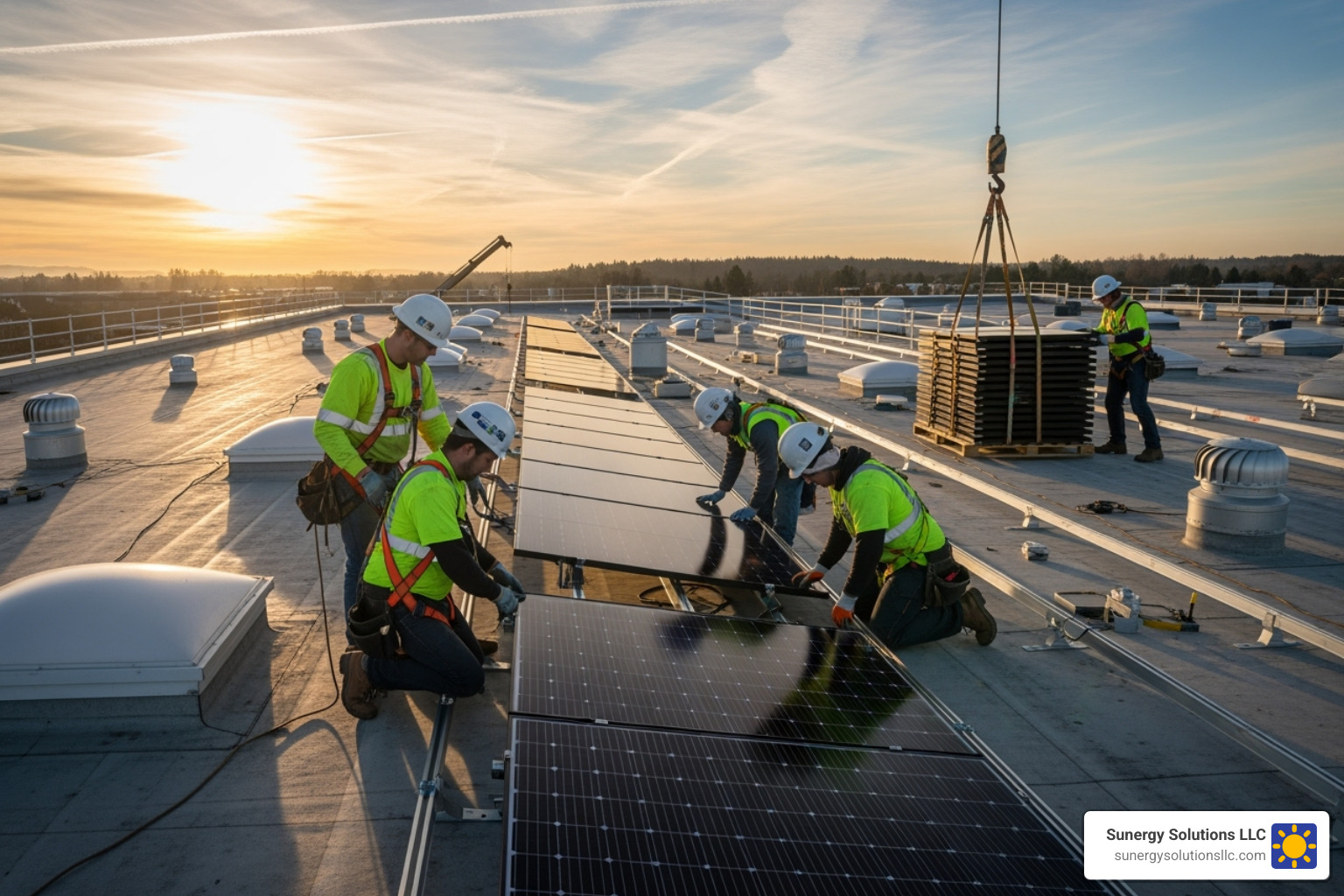
That roof space was just sitting there doing nothing. Now it becomes a productive asset, generating clean power while you serve customers below. The panels even act as a protective layer, shielding your roof from harsh weather and UV damage. This can actually extend your roof’s lifespan and reduce maintenance costs over time.
Our team specializes in Commercial Solar Solutions that make the most of your retail space’s natural advantages.
A successful solar energy for retail project starts with a thorough structural assessment of your roof to ensure it can safely support the panels. Next, we perform system sizing based on your energy consumption, analyzing your utility bills to design a system that meets your needs. A typical retail roof supports 5-10 watts of solar capacity per square foot. Our team handles all local permits and zoning requirements across our service areas, including Maine, Massachusetts, New Hampshire, Rhode Island, Vermont, Montana, and Virginia. Choosing the right equipment is key; we select high-performance panels and inverters from top-tier manufacturers to fit your budget and goals. Finally, we ensure seamless integration with your existing systems, like HVAC and refrigeration. While maintenance is minimal, our Maintenance and Cleaning of Residential Solar Systems guide offers tips for keeping your system at peak performance.
Retailers often have concerns about going solar, but they are easily addressed. The high initial investment can be eliminated with financing options like PPAs and solar leases. Navigating complex regulations is handled by our experienced team, which manages all permitting and inspections. Finding a qualified installer is critical, and our proven track record in commercial solar provides peace of mind. Finally, we minimize potential business disruption by performing most work on the roof during off-peak hours, ensuring your operations continue smoothly. With the right partner, these challenges become manageable steps toward significant savings and environmental benefits.
The financial landscape for solar energy for retail businesses becomes even more attractive when you factor in the substantial government incentives and net metering policies available today. These programs aren’t just nice-to-have bonuses – they’re game-changers that can slash your solar investment costs and dramatically accelerate your payback timeline.
Think of these incentives as the government’s way of saying “thank you” for choosing clean energy. You’ll find federal tax credits that can cover a significant portion of your installation costs, state-level rebates that put money directly back in your pocket, and net metering policies that let you sell excess power back to the grid. Plus, businesses can take advantage of accelerated depreciation (MACRS), which allows you to deduct a large chunk of your system’s cost over a shorter timeframe – a powerful tool for improving your cash flow.
The incentive landscape varies significantly by location, so I always recommend checking the Database of State Incentives for Renewables & Efficiency (DSIRE) for the most current programs in your area. It’s like having a treasure map for solar savings.
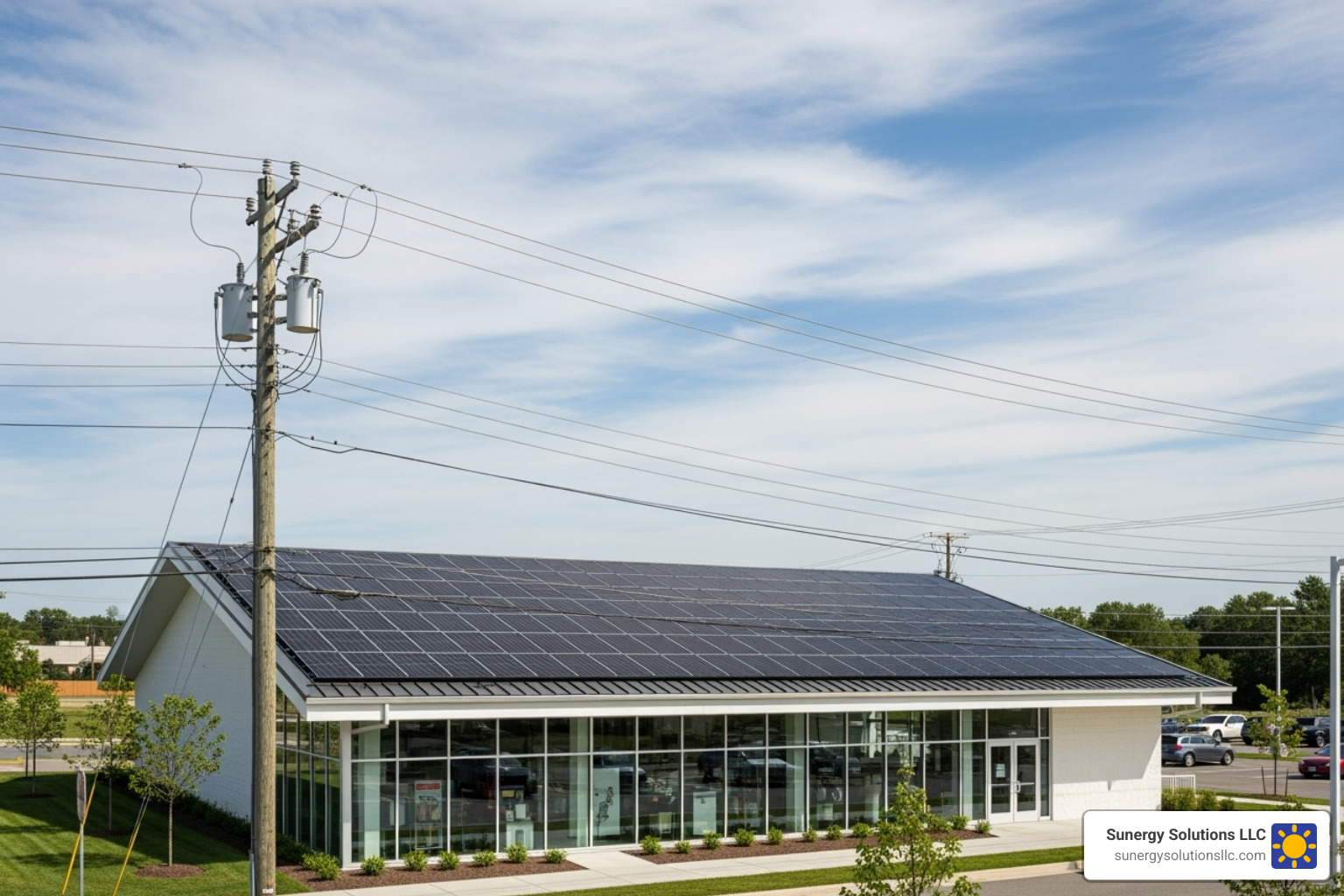
The crown jewel of solar incentives is The Federal Solar Investment Tax Credit (ITC). This isn’t just any tax deduction – it’s a dollar-for-dollar credit against your federal income taxes. For many years, businesses have been able to claim 26-30% of their total solar installation cost as a direct tax credit. If you spend $100,000 on a solar system, you could potentially reduce your federal tax bill by $26,000 to $30,000.
Here’s what makes this particularly powerful: unlike deductions that simply reduce your taxable income, tax credits reduce the actual amount of tax you owe. It’s the difference between getting a discount on the price tag versus getting cash back at the register.
But timing matters. The ITC is scheduled to step down after 2032, which means the sooner you act, the more you save. Many of our retail clients have finded that when they combine the federal ITC with state-specific programs, their net solar investment drops to a fraction of the original cost.
State incentives can be equally impressive. Some states offer additional tax credits, grants, or rebate programs that stack on top of the federal benefits. These programs change regularly, so working with experienced solar professionals who stay current on available incentives is crucial for maximizing your savings. You can learn More on the Solar Investment Tax Credit from industry sources.
Net metering is where solar gets really exciting for retail businesses. Imagine your rooftop not just saving you money, but actually earning money for your business. That’s exactly what net metering allows.
Here’s how it works in practice: Your solar panels don’t take weekends off, but your store might operate reduced hours on Sundays. When your panels are producing more electricity than your store is using, that excess power automatically flows back into the utility grid. Your utility meter literally runs backward, earning you credits on your electricity bill.
These credits act like a solar savings account. During peak shopping hours when your lighting, HVAC, and point-of-sale systems are running full blast, you can draw from these banked credits to offset your grid electricity usage. Some retail locations generate so much excess power that they receive actual cash payments from their utility company.
The beauty of net metering is that it turns the natural rhythm of retail operations into a financial advantage. Your panels produce the most electricity during sunny daytime hours, which often coincides with your peak operating times. But even when you’re closed, those panels keep working for you.
Understanding your local utility rules is essential because net metering policies vary significantly. Some utilities offer more generous buyback rates than others, and credit rollover periods can range from monthly to annually. Most programs focus on offsetting electricity consumption charges rather than fixed utility fees, but the savings can still be substantial.
When we design your system, we factor in your local net metering policies to maximize your financial benefits. It’s all about turning your roof into a productive business asset. Learn more about how this technology works in our guide on Solar Panels How They Work and Their Efficiency.
The amount of electricity solar can provide depends on your store’s energy consumption, available rooftop space, and geographic location. We analyze these factors to design a system that meets your goals. Many big box stores and shopping centers have the potential to replace over half of their annual electricity use. With today’s high-efficiency panels, we can often design systems to offset 50% to 100% of a store’s electricity usage, significantly reducing or even eliminating your electric bill.
Pairing solar energy for retail with battery storage significantly improves energy resilience. During a grid outage, a solar-plus-storage system can power critical operations like refrigeration, lighting, security, and point-of-sale systems, ensuring business continuity. This prevents inventory loss and allows you to serve customers when competitors cannot. Battery storage also allows you to use stored solar energy during peak-rate hours or at night, creating a microgrid solution that reduces dependence on the grid and protects against price volatility. This operational insurance provides a powerful competitive advantage.
Our installation process is designed to minimize disruption. It begins with an initial consultation and a thorough site assessment to understand your needs and evaluate your property. From there, we create a customized system design and handle all permitting and utility agreements for you. The installation itself occurs mostly on the rooftop, scheduled during off-peak hours to avoid impacting your customers or staff. After a final inspection and grid interconnection, we activate your system. You start generating clean power immediately, and we provide ongoing monitoring to ensure everything runs smoothly.
Adopting solar energy for retail is a smart business decision with long-term dividends. Financially, it allows you to slash your electricity bills by 50-100% and fix your energy costs for decades, turning a volatile expense into a predictable one. This stability frees you to focus on growing your business.
Beyond the bottom line, solar improves your brand. A visible commitment to sustainability builds customer loyalty and helps attract top talent. Practically, your large, flat roof is an ideal, underused asset for generating clean power. With powerful incentives like the Federal Solar Investment Tax Credit and net metering, solar is more financially accessible than ever.
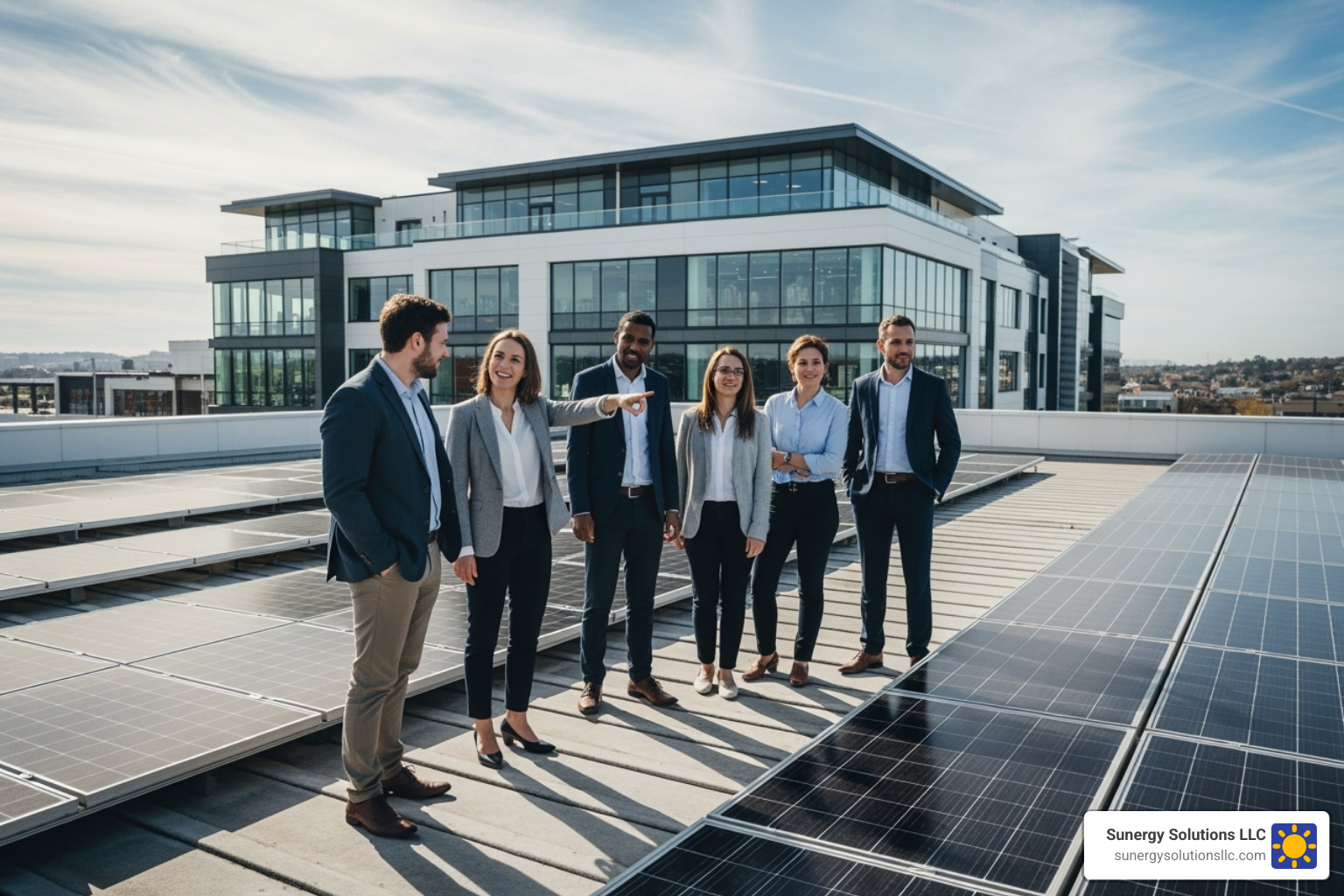
At Sunergy Solutions LLC, we provide customized solar solutions for retailers of all sizes. We combine top-tier equipment, extensive warranties, and exceptional service to make your solar journey smooth and profitable. Major retailers like Walmart, Target, and IKEA have already proven the model—the numbers work and the value is clear. It’s your turn to join them.
Ready to transform your retail business with solar energy for retail solutions that deliver real savings and lasting value? Start your commercial solar journey in Maine today, or reach out to us from any of our service areas across Massachusetts, New Hampshire, Rhode Island, Vermont, Montana, and Virginia. Let’s turn your rooftop into your next profit center and make your business a shining example of what’s possible when sustainability meets smart business strategy.
Appointments Available, 7 Days a Week


