
5.0 Rating
Request A Free Estimate
Energy savings for businesses can reduce operating costs by 18-25% through strategic efficiency measures and behavioral changes. Here are the key ways businesses maximize their energy savings:
Quick Wins (0-6 months):
Strategic Investments (6-24 months):
Financial Benefits:
Your energy bill is one of your biggest monthly expenses, but you have more control over these costs than you think. Rising energy prices hit businesses hard, with commercial buildings spending billions on energy annually—money that could instead support growth or improve your bottom line.
Energy efficiency isn’t just about cutting costs; it’s about gaining a competitive edge. Companies that invest in energy savings often see improved employee comfort, a better brand reputation, and increased property values.
Many of the most effective energy-saving strategies require little to no upfront investment. Simple changes like adjusting thermostats, upgrading lighting, and engaging employees can deliver immediate results.
I’m Robert Raffa, CEO of Sunergy Solutions LLC, and I’ve spent nearly a decade helping Northeast businesses transition to clean energy and implement energy savings for businesses strategies that deliver real results. My background in investment banking taught me that the smartest business moves combine financial returns with long-term value creation.
Similar topics to energy savings for businesses:
Every business decision comes down to one question: “What’s in it for us?” When it comes to energy savings for businesses, the answer is a stronger bottom line and a host of other benefits.

Those high monthly utility bills don’t have to be a given. The average commercial building can slash energy costs by 18-25% through smart efficiency measures and simple behavioral changes. Some businesses see savings of up to 30% with no-cost actions alone.
If you’re spending $10,000 monthly on energy, that’s potentially $2,500 back in your pocket every month. That’s $30,000 annually that could go toward hiring, upgrading equipment, or improving profit margins.
Every dollar saved on energy goes directly to your bottom line. Unlike revenue increases that come with additional costs, energy savings are pure profit.
Today’s consumers want to support businesses that share their values. Nearly 90% of American households recognize the ENERGY STAR logo, meaning your commitment to efficiency won’t go unnoticed.
When you showcase your energy savings for businesses initiatives, you’re telling customers that you’re forward-thinking and responsible. This is a genuine competitive advantage that can attract environmentally conscious customers and strengthen existing relationships.
Your sustainability efforts become a story worth sharing on your website, in proposals, or during networking events.
Energy efficiency upgrades often make your workplace more comfortable and productive. Better lighting reduces eye strain, improved HVAC systems maintain consistent temperatures and air quality, and upgraded windows reduce drafts and noise.
When your team is comfortable, they’re happier, healthier, and more focused. This translates into better work quality, fewer sick days, and improved employee retention. A comfortable workspace is a business advantage that helps you attract and keep great employees.
Beyond immediate financial benefits, energy efficiency positions your business as an environmental leader. Whether you have specific sustainability targets or simply want to reduce your carbon footprint, energy savings for businesses are a crucial piece of the puzzle.
Scientific research on energy efficiency benefits consistently shows that businesses implementing these measures contribute significantly to reducing CO2 emissions while building stronger, more resilient operations.
It’s about being part of the solution and showing your community that your business cares about creating a better future.
Achieving energy savings for businesses requires a clear plan, much like a road trip. Successful companies follow a proven three-step approach, typically reducing their facility’s energy use by 15 percent or more.
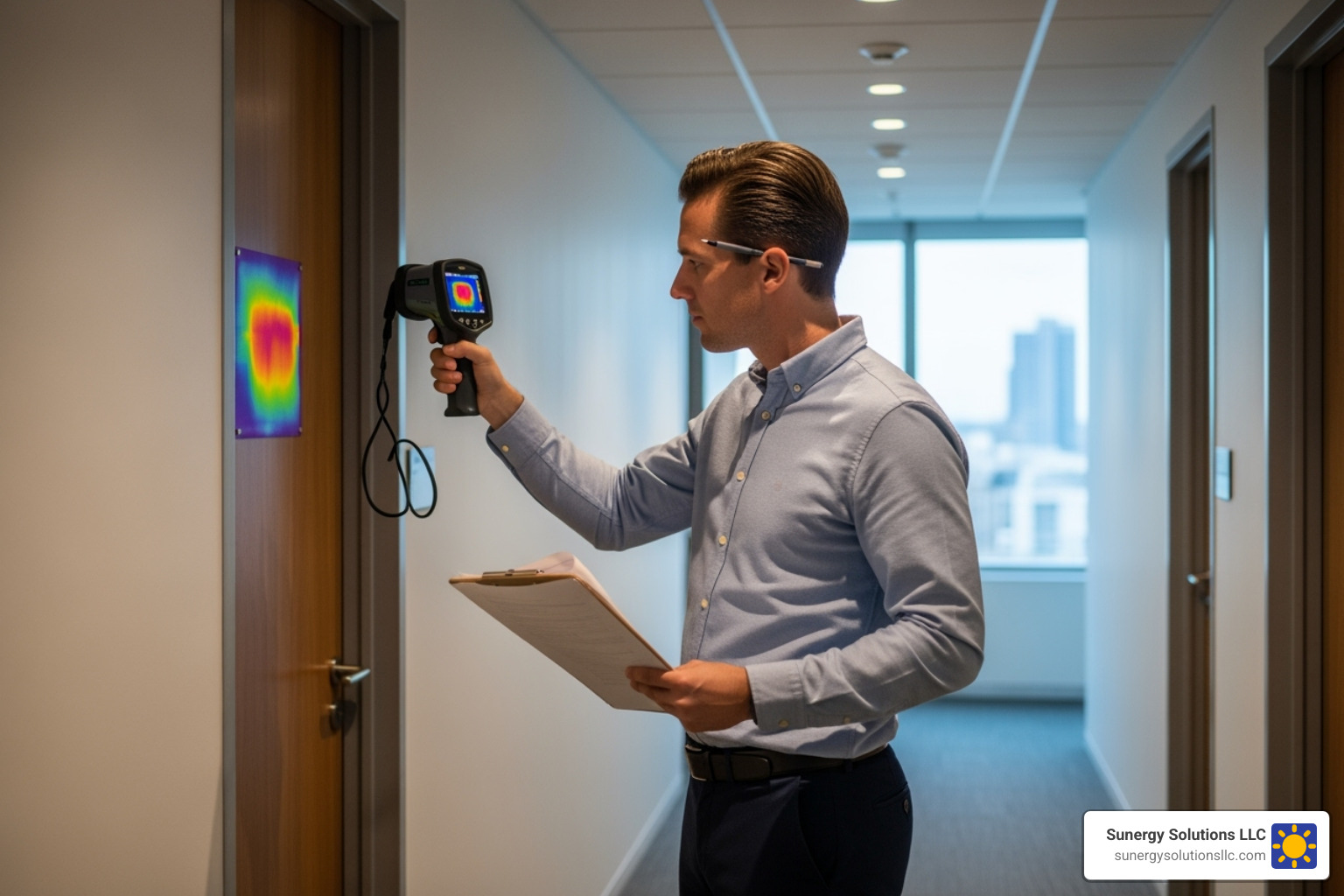
An energy audit is your starting point—a comprehensive health checkup for your building’s energy use. This professional assessment reveals where your energy dollars are going, including both obvious and hidden drains.
I always recommend businesses start by Using the ENERGY STAR Portfolio Manager. This free tool is the national standard for benchmarking energy and water use. It acts like a fitness tracker for your building, allowing you to monitor progress and spot areas needing attention. The Portfolio Manager provides a baseline to measure your improvements against, so you aren’t flying blind.
Once your audit reveals opportunities, it’s time to grab the low-hanging fruit. These are changes that deliver immediate results without requiring a large budget. An average commercial building can save up to 30 percent on energy bills from these simple actions alone. These quick wins build momentum and can help fund the larger investments in step three.
After capturing the easy wins, it’s time for the bigger picture. These upgrades require more planning and investment but deliver deeper, long-term energy savings for businesses. Strategic investments might take 6-24 months to implement but can transform how your building uses energy for decades.
Sometimes the most powerful changes don’t cost a dime. I’ve seen businesses slash their energy bills just by changing habits.
Employee engagement is your secret weapon. Your staff often spot opportunities management misses. Energy treasure hunts, where teams walk through the facility looking for ways to save energy, can reduce energy use by 15% or more.
Thermostat management is incredibly powerful. Reducing heating by just 1°C cuts fuel consumption by 8%. On the cooling side, every degree you raise your thermostat in summer increases energy savings by 2-3%. Programmable thermostats automate this process, saving about $180 annually per unit.
Power management settings are another goldmine. Phantom energy loads from idle devices can account for up to 20% of your electricity bill. Configure computers for low-power sleep mode and encourage employees to turn things off at the end of the day.
Natural light utilization saves energy and boosts moods. Open blinds during the day to reduce lighting needs. Consider daylight blinds that diffuse light while reducing glare.
Regular maintenance prevents small problems from becoming expensive energy drains. Cleaning HVAC filters and coils keeps the system running efficiently. Change replaceable filters every spring and fall, and clean washable filters monthly.
Sealing leaks is highly effective. A building can lose up to 40% of its heat through the roof, and sealing air duct leaks can prevent up to 30% of your total energy loss. Check weatherstripping around windows and doors as well.
Here are 5 immediate, no-cost actions you can take today:
When you’re ready for the next level, strategic investments deliver the most dramatic long-term results.
Upgrading to high-efficiency systems starts with replacing old equipment. ENERGY STAR certified appliances use 10% to 50% less energy and water than standard models, and the upfront cost pays for itself through reduced operating expenses.
Building envelope improvements address your building’s shell. Adequate insulation in ceilings and roofs can save up to 30% on cooling bills. Insulating hot water pipes is also important. Energy-efficient windows make a huge difference, as regular windows can lose 10 times more energy than an insulated wall. Shading devices like blinds or awnings can block 65% to 95% of the sun’s heat.
This is where solar energy becomes a game-changer. Our Commercial and Industrial Solar Solutions provide a reliable way to generate your own clean energy, reducing or eliminating your reliance on the grid.
Advanced technology adoption through smart building systems takes efficiency to the next level. Energy Management Systems can automate and optimize energy use across your entire facility.
Energy efficiency projects are low-risk investments with clear returns.
Payback period is the time it takes for savings to equal your initial investment. Many projects have short paybacks, especially with incentives.
Lifecycle costing considers the total cost of ownership. Efficient equipment might cost more upfront but delivers lower operating costs over its lifetime. For example, LED bulbs save up to 80% on lighting costs and last 25 times longer.
Making the business case is easier when you quantify the benefits. Well-designed efficiency projects offer clear financial returns, which makes them fundable. For solar specifically, you can find detailed financial information in our guide about commercial solar panel cost.
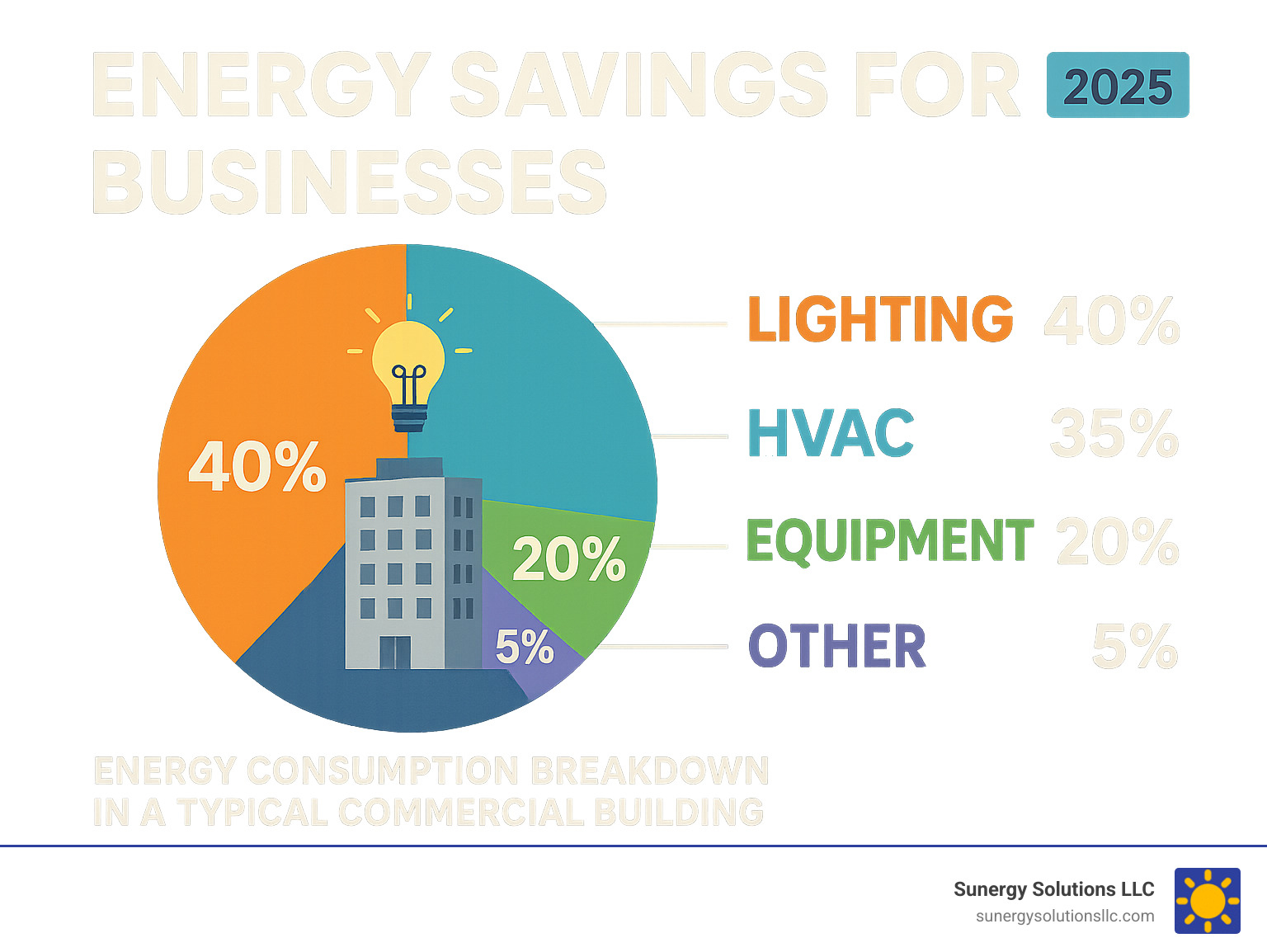
To maximize energy savings for businesses, focus on the three biggest consumers: lighting, HVAC, and equipment. Strategic improvements here will have the most dramatic impact on your bottom line.

Lighting is a major electricity user in offices, making upgrades a fast path to meaningful energy savings for businesses.
LED retrofitting is a no-brainer. Upgrading from old incandescent, halogen, or fluorescent bulbs to LEDs means using 80 percent less energy with lights that last 25 times longer. This can reduce your lighting costs by up to 75 percent, and the bulbs pay for themselves quickly.
For even smarter savings, occupancy sensors in restrooms and conference rooms automatically turn lights off when spaces are empty, saving up to 30% on lighting costs. Daylight sensors adjust indoor lighting based on available natural light.
Lighting controls like dimmers and task lighting—focusing bright light only where needed—prevent over-lighting entire spaces. Good maintenance alone can reduce lighting costs by up to 15% over 2-3 years.
| Lighting Type | Energy Use (relative) | Lifespan (hours) | Cost (initial) |
|---|---|---|---|
| Incandescent | High | 1,000 – 2,000 | Low |
| Fluorescent | Medium | 7,000 – 15,000 | Medium |
| LED | Very Low | 25,000 – 50,000+ | High |
The benefits of ENERGY STAR lighting include better light quality and more even distribution, in addition to savings.
Your heating and cooling system likely consumes about a quarter of your energy budget, offering huge opportunities for energy savings for businesses.
Programmable smart thermostats learn your business patterns and adjust temperatures when the building is empty, saving about $180 every year per unit.
AC systems lose up to 2% efficiency annually without proper care. Setting up regular maintenance schedules can save up to 5% on energy costs and extend equipment life.
Duct sealing and insulation is incredibly effective. Leaky ducts can waste up to 30 percent of your total energy, and sealing them can improve system efficiency by as much as 20 percent.
Economizers use cool outside air for “free cooling.” When it’s time to replace equipment, high-efficiency HVAC units offer substantial long-term savings. For custom solutions, check out our energy efficient business solutions.
Everyday equipment adds up to significant energy use and savings opportunities.
ENERGY STAR certified appliances should be your default choice. If all computers sold in the U.S. were ENERGY STAR certified, we’d save over $1 billion in energy costs and avoid 15 billion pounds of greenhouse gas emissions annually.
Laptops use 90% less energy than desktop computers, making them a smart switch where possible.
Phantom loads from plugged-in equipment can account for up to 20% of your electricity bill. Use smart power strips and encourage unplugging devices to tackle this hidden cost.
For industrial businesses, compressed air system maintenance is crucial. Leaks can waste 20% to 50% of total capacity. Fixing them can reduce annual energy consumption by 20%.
Motor efficiency is also key. Premium efficiency motors are 1-4% more efficient than standard ones, and variable frequency drives can cut energy use by nearly 50% by reducing motor speed by just 20%.
For a transformative leap, exploring solar installation for businesses is a strategic investment with long-term returns.
The landscape of energy savings for businesses is evolving. Smart technology and robust incentive programs make efficiency more accessible and affordable than ever, turning futuristic concepts into practical tools for your business.
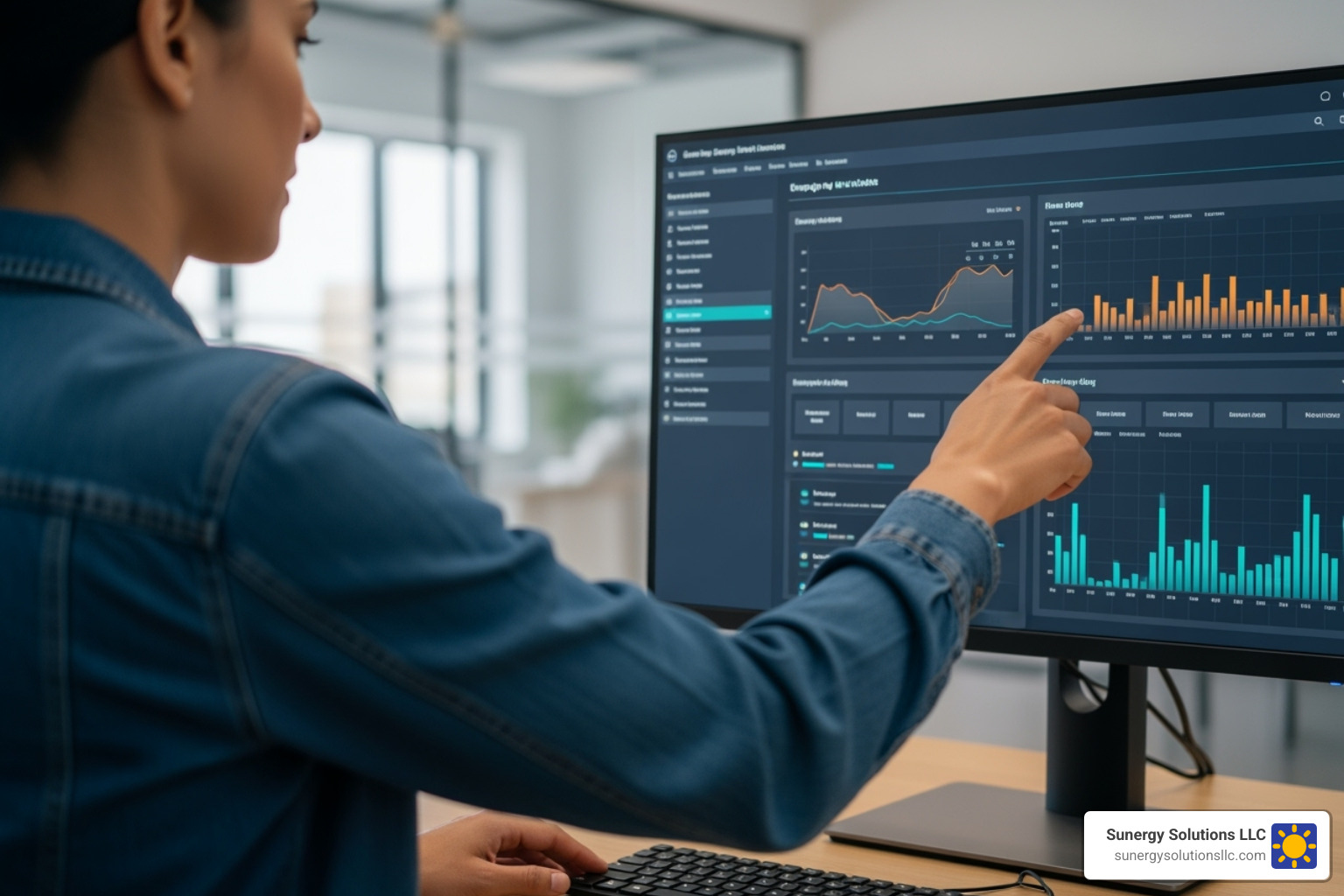
An Energy Management System (EMS) acts as the “brain” of your building. It integrates and controls your HVAC, lighting, and power monitoring systems to create a seamlessly optimized environment.
These systems provide real-time data, helping you spot inefficiencies, predict maintenance needs, and make informed decisions based on actual usage patterns rather than guesswork. This level of control and automation leads to deeper energy savings for businesses than traditional approaches.
Integrating renewable energy, especially solar power, is a powerful pathway to substantial energy savings for businesses. When you generate your own clean energy, you reduce costs and gain independence from fluctuating utility rates.
Our Commercial Solar Power solutions offer this energy independence. Our photovoltaic panels produce 19-22% more power than standard panels, maximizing your energy generation. With 25-year warranties, you can count on decades of reliable, cost-effective power.
Solar integration works alongside your other efficiency measures. The less energy you use, the more of your needs can be met by your solar installation.
Financially, the incentives are compelling. Government and utility programs make investing in energy efficiency highly attractive.
The federal solar tax credit (Investment Tax Credit) currently covers 30% of your total solar installation costs. This is a direct reduction in your tax liability. For a $100,000 system, that’s $30,000 back in your pocket. Federal accelerated depreciation allows businesses to expense a significant portion of the cost in the first year.
State and utility rebates add another layer of savings, offering grants and low-interest loans that can dramatically reduce your upfront investment.
We recommend exploring the Database of State Incentives for Renewables & Efficiency (DSIRE) to find programs in your area. At Sunergy Solutions LLC, we help businesses in Maine, Massachusetts, New Hampshire, Rhode Island, Vermont, Montana, and Virginia steer these opportunities to maximize their savings.
The combination of technology and financial incentives creates an unprecedented opportunity for businesses to achieve significant savings while improving their operations and environmental impact.
Here are answers to the most common questions business owners ask about energy savings.
The numbers are impressive. A typical business can reduce energy bills by 18-25% through a combination of behavioral changes and strategic upgrades, with some no-cost actions saving up to 30%.
These are real savings. A business spending $5,000 monthly on electricity could save $1,250 each month, or $15,000 a year, to reinvest in growth, equipment, or your team.
The beauty of energy savings for businesses is that they compound over time. Start with simple changes, then layer in strategic investments like solar panels or high-efficiency HVAC systems. Each improvement builds on the last.
Start by understanding where your energy actually goes. You can’t manage what you don’t measure.
The first step is to conduct an energy audit or benchmark your building’s performance using a tool like ENERGY STAR Portfolio Manager. This gives you a clear picture of where you’re using the most energy and helps you identify the biggest opportunities for improvement.
The audit often reveals surprises, like an overworked HVAC system due to air leaks or inefficient lighting. Once you identify the problems, the solutions become clear.
While some upgrades require investment, many are low-cost or no-cost. Simple actions like adjusting thermostat settings, unplugging phantom loads, and engaging employees can deliver immediate savings with no upfront cost.
For larger projects, the financial landscape is very favorable. Financing options, tax credits, and rebates can significantly lower the upfront cost and provide a strong return on investment. The federal solar tax credit alone covers 30% of installation costs, and many states offer additional incentives.
Energy efficiency projects are considered low-risk investments because the savings are predictable and measurable, delivering consistent benefits month after month.
The key is to take a strategic approach. Start with the no-cost wins, then reinvest those savings into bigger upgrades that deliver even greater long-term energy savings for businesses.
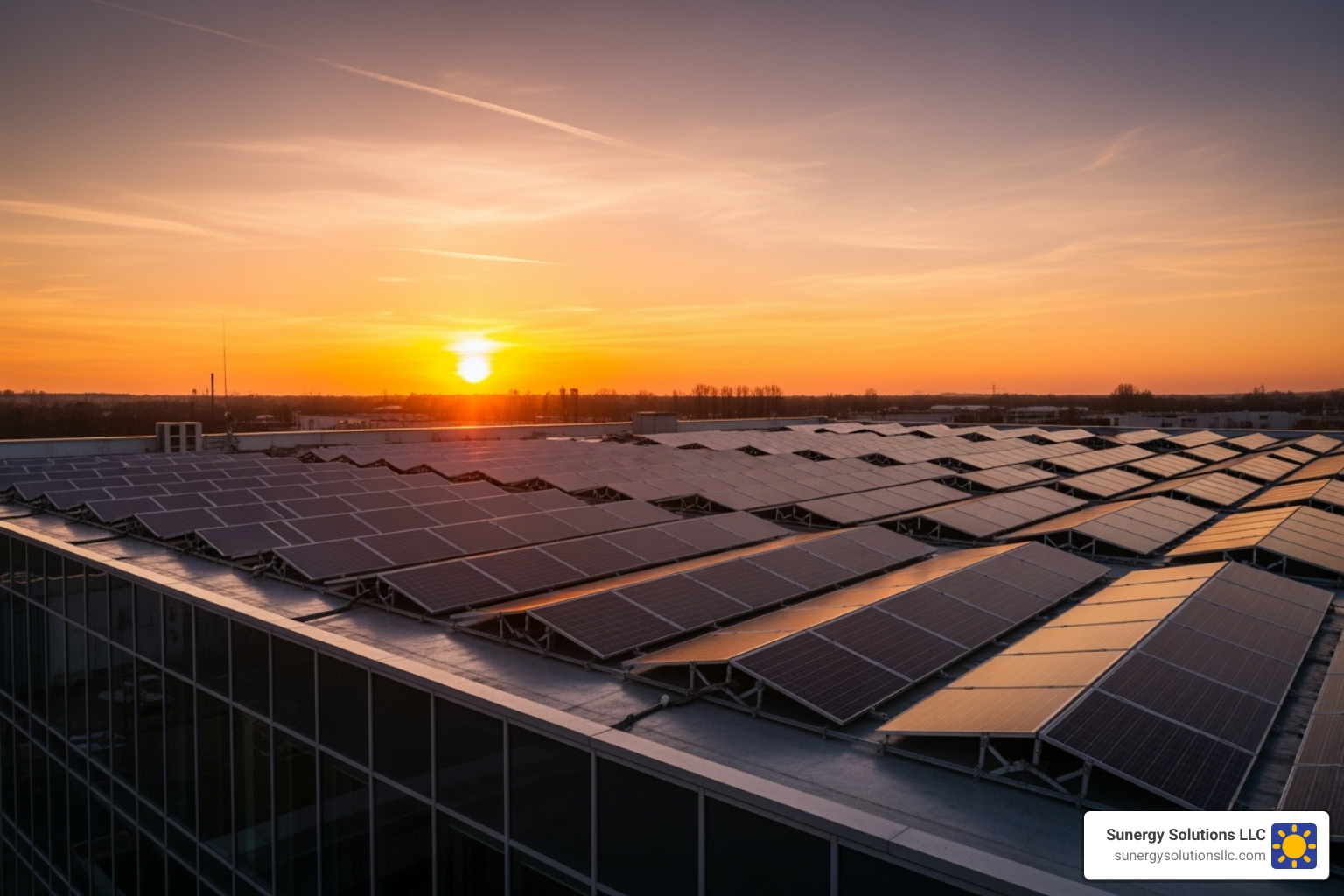
Your journey toward energy savings for businesses is just beginning and can be a transformative shift for your company.
We’ve shown how businesses can cut energy bills by 18-25% with strategies from simple adjustments to full solar installations. These tools and strategies are all within your reach.
The long-term value of these investments extends far beyond monthly savings. You’re protecting your business from future energy price volatility, creating a more comfortable workspace that retains top talent, and building a brand that customers respect.
Environmental responsibility is good business. Your clients, employees, and community are watching. When you demonstrate leadership in sustainability, you position your company as forward-thinking and socially conscious.
At Sunergy Solutions LLC, we’ve spent years helping businesses across Maine, Massachusetts, New Hampshire, Rhode Island, Vermont, Montana, and Virginia make this transition. Our expertise goes beyond just installing solar panels; we understand the financial and technical requirements and how to make the process smooth for busy business owners.
Take control of your energy costs instead of letting them control you. Every step forward is a win for your bottom line and your environmental impact.
Ready to see what’s possible for your specific business? Explore commercial solar solutions in Virginia or reach out to discuss how we can help you achieve the energy savings for businesses that will transform your operations for decades to come.
Your energy independence starts with a single decision. Make it today.
Appointments Available, 7 Days a Week


