
5.0 Rating
Request A Free Estimate
A residential solar array is a powerful investment for your home. It uses sunlight to generate clean electricity. Since 2008, hundreds of thousands of Americans have chosen solar energy for their homes. They want to cut energy costs and help the planet.
If you’re thinking about home solar, here’s what you need to know:
This guide will walk you through everything. You’ll learn about different system types, costs, benefits, and how to get started.
I’m Robert Raffa, CEO and Founder of Sunergy Solutions LLC. As a former investment banker turned renewable energy entrepreneur, I’ve spent nearly a decade building a full-service solar provider that helps homeowners transition to clean, sustainable energy, specializing in designing and installing high-performance residential solar arrays that maximize production and long-term savings.
Residential solar array helpful reading:

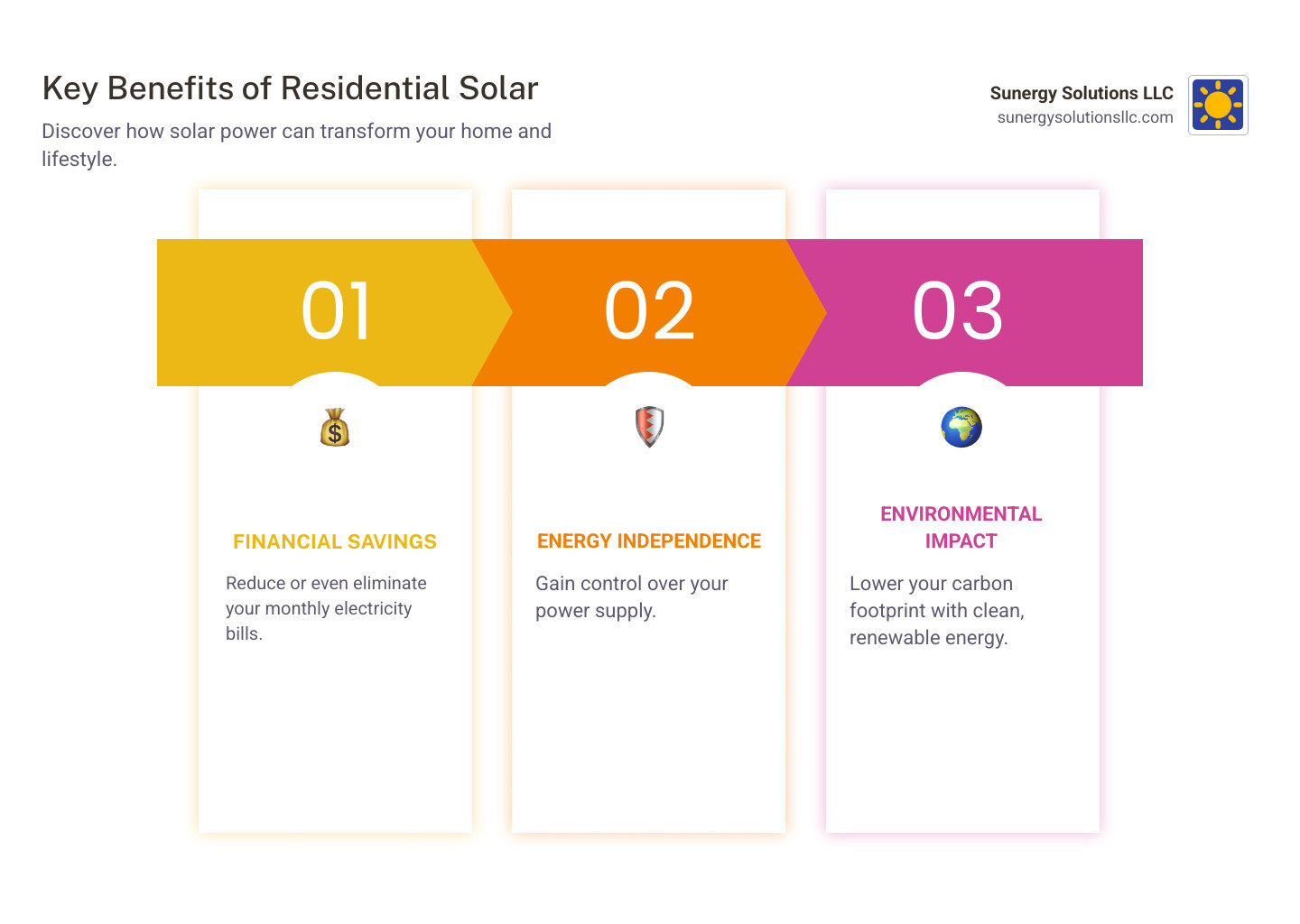
Installing a residential solar array is first and foremost about putting money back in your pocket. By replacing utility power with sunshine, most homeowners reduce or even eliminate their monthly electric bill and save tens of thousands of dollars over the life of their system. Those savings translate into a higher resale price too—recent studies show solar-equipped homes sell for roughly 4 % more than comparable houses.
Solar also delivers something you can’t put a price on: peace of mind. Generating your own clean electricity lowers your household’s carbon footprint by 3–4 tons of CO₂ per year (the equivalent of planting more than 100 trees) and shields you from future utility-rate hikes. If you add battery storage, you’ll keep the lights on during grid outages and enjoy true energy independence.
For a deeper dive into the advantages, explore our resources on the Benefits of Residential Solar Systems Installation and the U.S. Department of Energy Homeowner’s Guide to Going Solar.
We’ll evaluate your property and goals, then recommend the configuration that maximizes savings and reliability.
At its heart, a residential solar array is a marvel of modern engineering. It uses the sun’s raw power and turns it into usable electricity for your home. This change happens thanks to the photovoltaic (PV) effect. This is a process where special materials create an electric current when sunlight hits them. It’s a clean, quiet, and very efficient way to power your life.
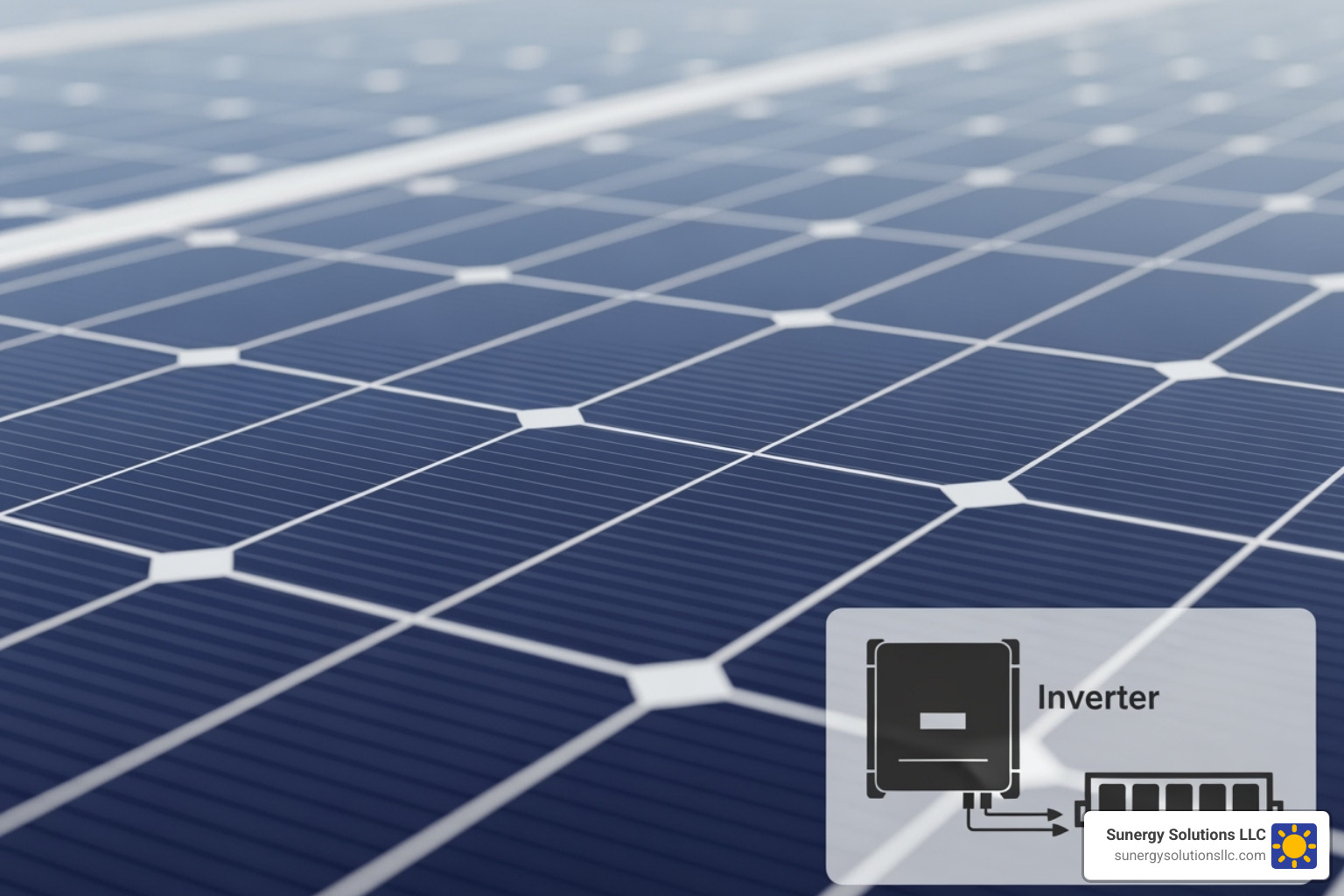
While solar energy might seem complex, the main parts of a residential solar array are quite simple once you know what each one does. Here’s what makes up a typical system:
First, you have the Solar Panels (PV Modules). These are the main attraction! They’re made of special cells that capture sunlight and change it directly into direct current (DC) electricity. We offer many high-quality panels, including monocrystalline types. These are known for being very efficient and looking great. You can learn more about our options on our Solar Panels for Home page.
Next, you need Inverters. Your solar panels make DC electricity, but your home appliances and the power grid use alternating current (AC) electricity. The inverter is like the brain of the system. It changes that DC power into the AC power your home can use. There are two main types:
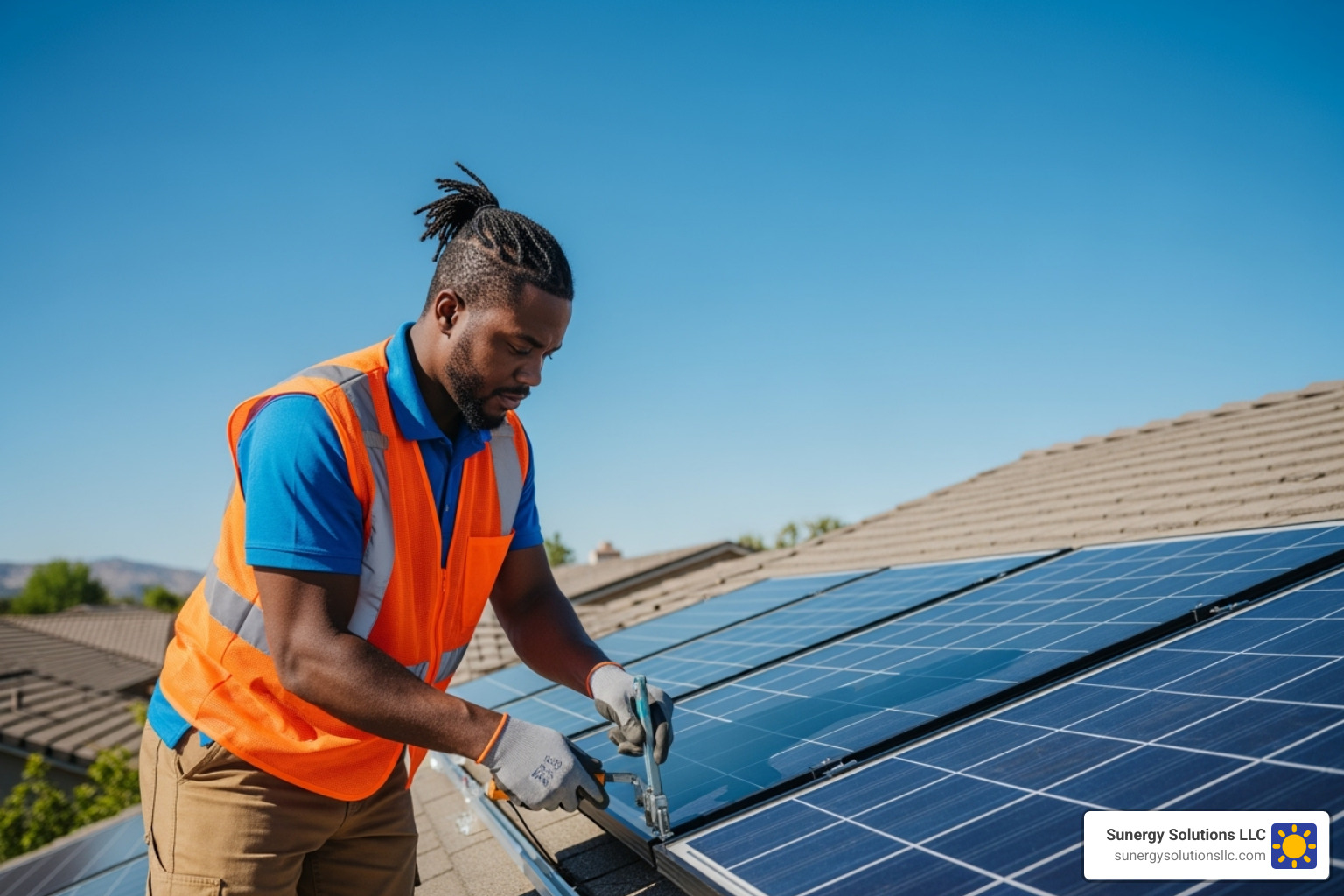
Then there’s the Racking and Mounting System. These are the unsung heroes! They securely attach your solar panels to your roof or ground mount. They are built to stand up to all kinds of weather, like strong winds and heavy snow. This ensures your residential solar array stays safe and sound for many decades.
While optional, Batteries are a great addition and something we often recommend. Just like we talked about with hybrid systems, batteries store extra solar energy you make during the day. This stored power can then be used at night, when electricity prices are higher, or most importantly, during a power outage. They are key to getting more energy independence and saving the most money, especially if your utility has “Time of Use” plans.
Finally, a Monitoring System lets you keep an eye on your residential solar array‘s performance in real-time. You can see how much electricity your system is making, how it’s being used, and how much you’re saving. It also helps us make sure your system is always working at its best.
All these parts work smoothly together to give your home clean, dependable energy. And with Sunergy Solutions LLC, you get top-tier equipment backed by our great warranties.
Understanding solar panel details helps you see the true power they bring to your home. When we talk about panel efficiency and wattage, we’re looking at how well a panel turns sunlight into electricity and how much power it can actually produce.
Efficiency is how well a solar panel turns sunlight into usable power. For home models, solar panel efficiency usually falls between 15% and 20%. Our top-tier panels, for example, often reach efficiency levels of 18% to 20%. Higher efficiency means the panel can make more power from a smaller area. This is really important if your roof space is limited. For a deeper dive, check out our guide on Solar Panel Efficiency Explained.
Wattage tells you how much power a solar panel can put out under perfect conditions. Residential solar panels vary quite a bit, from 250 to over 420 watts. A panel with higher wattage can contribute more to your home’s energy needs on its own. For instance, our high-performance panels typically range from 335 to 405 watts, though some can go even higher.
Several things affect how much energy your residential solar array will produce:
We use advanced tools to help you Estimate your home’s solar output based on your specific location and property details. This way, you can be sure you’re getting the most out of your residential solar array.

After the 30 % federal tax credit, the average Sunergy roof-mounted system runs about $21,000 (roughly $2.75 per watt). A 17.5 kW ground mount averages $42,140 after that same credit. Panel hardware itself usually falls between $0.61–$0.85 per watt.
Additional savings can come from:
We handle the paperwork so every available incentive shows up on your quote. Curious about ballpark pricing in your neighborhood? Visit How Much Do Solar Panels Cost?.
| Option | Up-Front Cost | You Own System? | Claim 30 % Tax Credit? | Long-Term Savings |
|---|---|---|---|---|
| Cash | High | Yes | Yes | Highest |
| Solar Loan | Low / $0 | Yes | Yes | High (minus interest) |
| Lease / PPA | $0 | No | No | Moderate |
A solar-specific loan can spread payments over 5–20 years, often leaving your monthly loan bill lower than your old electric bill. Just watch for “dealer” or “origination” fees; if they’re buried in the fine print, compare with a HELOC or credit-union option. Our Residential Solar System Financing page breaks down the math so you can choose with confidence.
Top-tier modules are engineered for 25–30 years of service and degrade only 0.25–0.5 % per year—so they’ll still deliver roughly 80–90 % of day-one output at year 25.
Typical protections include:
Details are in our guides to Solar Panel Lifespan and Solar Panel Warranties Explained.
Careful planning prevents surprises and keeps your system humming for decades. Read about Common Solar System Installation Mistakes to Avoid so you’re ahead of the curve.

Our focus on premium components, transparent pricing, and local service has made Sunergy a trusted name throughout New England, Virginia, and Montana. See our tips on How to Find a Reputable Solar Company.
A residential solar array slashes electric bills, boosts home value, and lets you power your life with clean, renewable energy. With Sunergy’s premium equipment, iron-clad warranties, and white-glove customer care, going solar is easier—and smarter—than ever.
Ready to see what solar can do for you? Request a free, no-obligation estimate today!
Sunergy Solutions LLC • Serving ME, MA, NH, RI, VT, MT & VA
Appointments Available, 7 Days a Week


