
5.0 Rating
Request A Free Estimate
High efficiency solar panels are the key to getting the most electricity from every square foot of your roof. But with so many options on the market, choosing the right panels can feel overwhelming.
Here’s what you need to know about high efficiency solar panels:
Solar panel efficiency measures how much sunlight gets converted into usable electricity. While standard panels convert about 17-20% of sunlight into power, today’s high-efficiency models can reach 24.8% efficiency – meaning you get significantly more electricity from the same roof space.
The efficiency gap between top and bottom performers is surprisingly small – just 1.6 percentage points separate the best from the rest. But that small difference can mean thousands of dollars in additional savings over your system’s 25-30 year lifespan.
I’m Robert Raffa, CEO and Founder of Sunergy Solutions LLC, and I’ve spent nearly a decade helping Northeast homeowners maximize their solar investments through high efficiency solar panels and strategic system design. My background in investment banking gives me a unique perspective on analyzing the long-term financial returns of different solar technologies.
Related content about high efficiency solar panels:
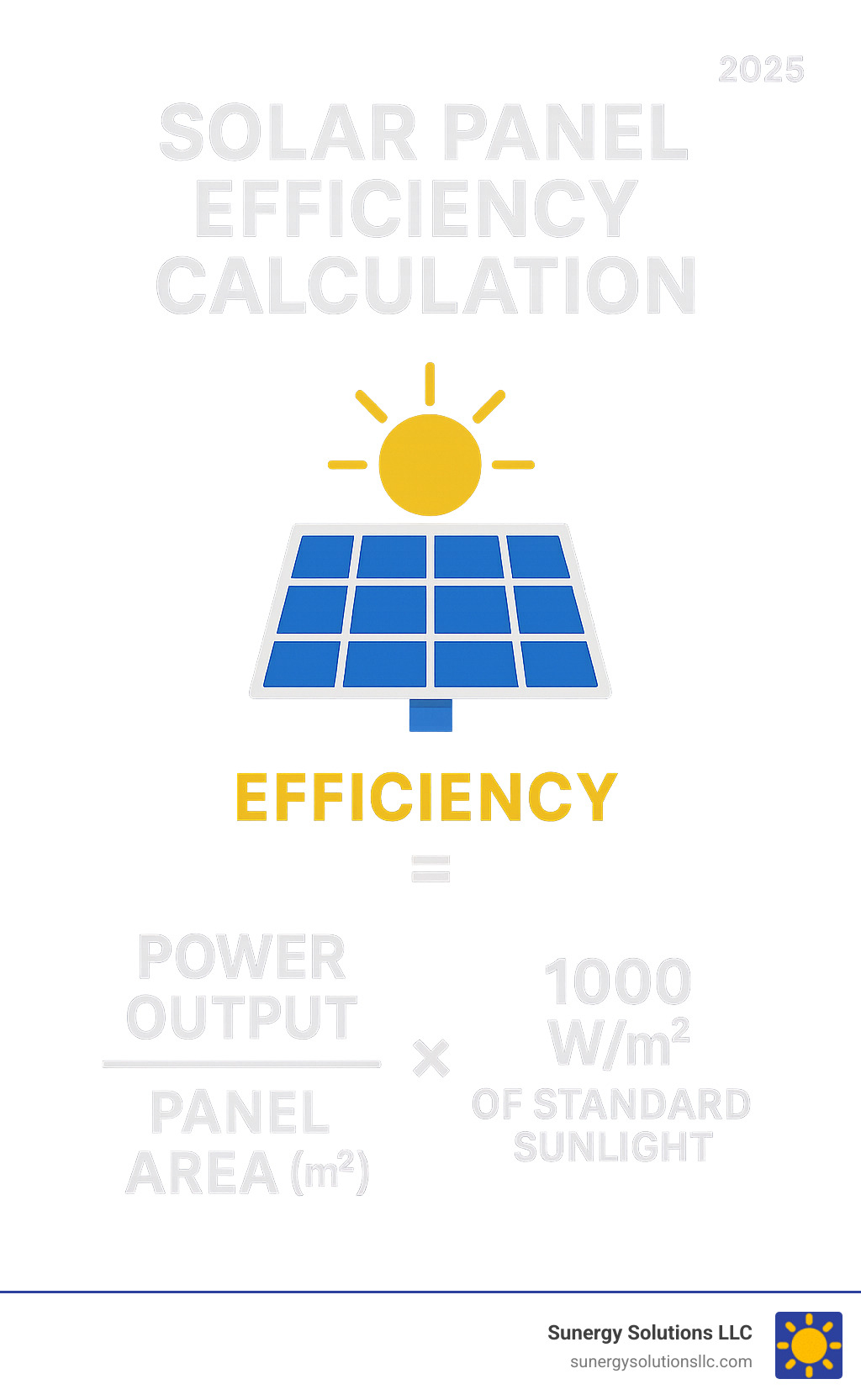
Solar panel efficiency is how much sunlight hitting your panels becomes usable electricity. This number directly impacts your home’s energy production and your savings. A more efficient panel is like a super-athlete, converting more solar energy into power. Understanding how photovoltaic cells convert sunlight to electricity is key to making an informed solar investment and maximizing your Solar Energy for Homes production.
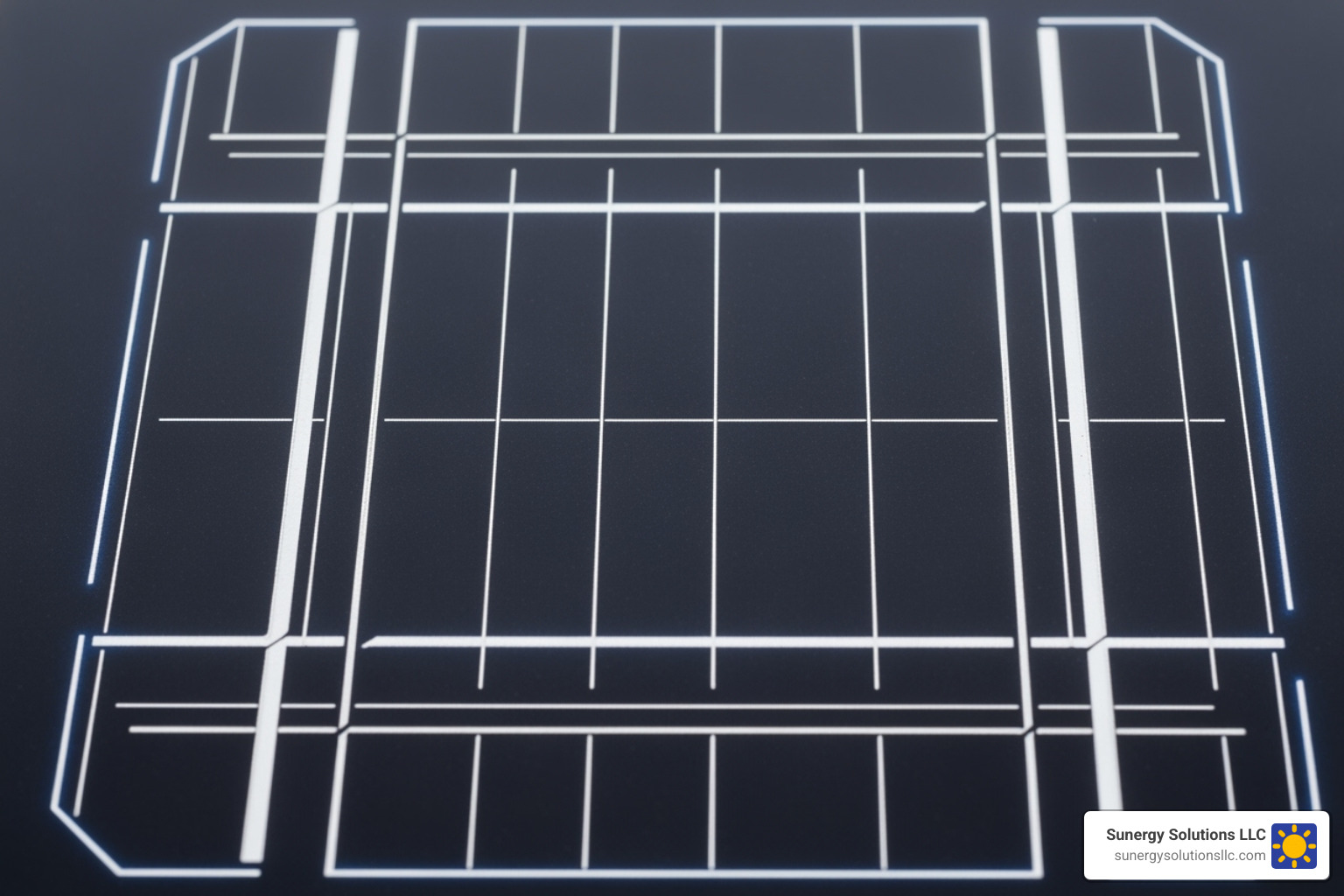
To ensure a fair comparison, solar panel efficiency is measured under specific lab conditions called Standard Test Conditions (STC). These conditions simulate an ideal sunny day for consistent measurements.
Under STC, the panel is exposed to a solar irradiance of 1000 watts per square meter (W/m²), roughly the intensity of sunlight at noon on a clear day. The panel’s cell temperature is kept at an optimal 25°C (77°F), and an “Air Mass” of 1.5 (AM 1.5) is used to represent the standard solar spectrum.
The efficiency percentage is calculated by dividing the panel’s maximum power output by its surface area and the 1000 W/m² irradiance. For example, a 20% efficient panel converts 20% of sunlight into electricity under these ideal conditions. This standardized measurement allows for clear, apples-to-apples comparisons of a panel’s potential. You can dig deeper with the U.S. Department of Energy’s Photovoltaic Cell Conversion Efficiency Basics.
While STC provides a baseline, real-world factors also influence a panel’s performance, much like a car’s actual gas mileage differs from its EPA rating.
One of the most significant factors is the cell type. Monocrystalline cells, from a single silicon crystal, are generally most efficient. Polycrystalline cells, from multiple silicon crystals, are less efficient but more cost-effective. However, manufacturers are moving towards N-type monocrystalline panels, which perform better in heat, degrade slower, and are more efficient than traditional P-type cells. N-type cells are becoming the preferred choice for their superior characteristics, as seen in discussions around n-type monocrystalline panels.
The temperature coefficient is another crucial factor. Solar panels prefer cooler temperatures; their efficiency decreases above 25°C (77°F). The temperature coefficient shows how much power is lost for each degree Celsius rise. In hot climates like Virginia, a panel with a lower temperature coefficient performs better in the summer.
Panel materials and design also play a huge role. Anti-reflective coatings maximize light absorption. Surface texturization also helps trap more light. Advanced cell structures like Passivated Emitter and Rear Cell (PERC) technology improve efficiency by optimizing the rear surface to capture more light.
Even minor details like the busbar configuration (the thin metal strips that collect current) can impact efficiency. Half-cut cells, for instance, reduce resistive losses and improve shading tolerance.
Finally, external factors like dust and debris can reduce efficiency by blocking sunlight. Regular cleaning is essential for peak performance. Our guide on Maintenance and Cleaning of Residential Solar Systems offers tips to keep your system efficient.
The 2025 solar panel market is more exciting than ever. As we help homeowners across New England and Virginia, we see innovations delivering more power from smaller spaces. When shopping for high efficiency solar panels, the efficiency percentage is just the start; consider the complete picture of power output, durability, and warranty protection. The right panels can transform your energy future, whether for a compact Boston roof or a large Virginia commercial property. The key is understanding what makes these premium panels worth it.
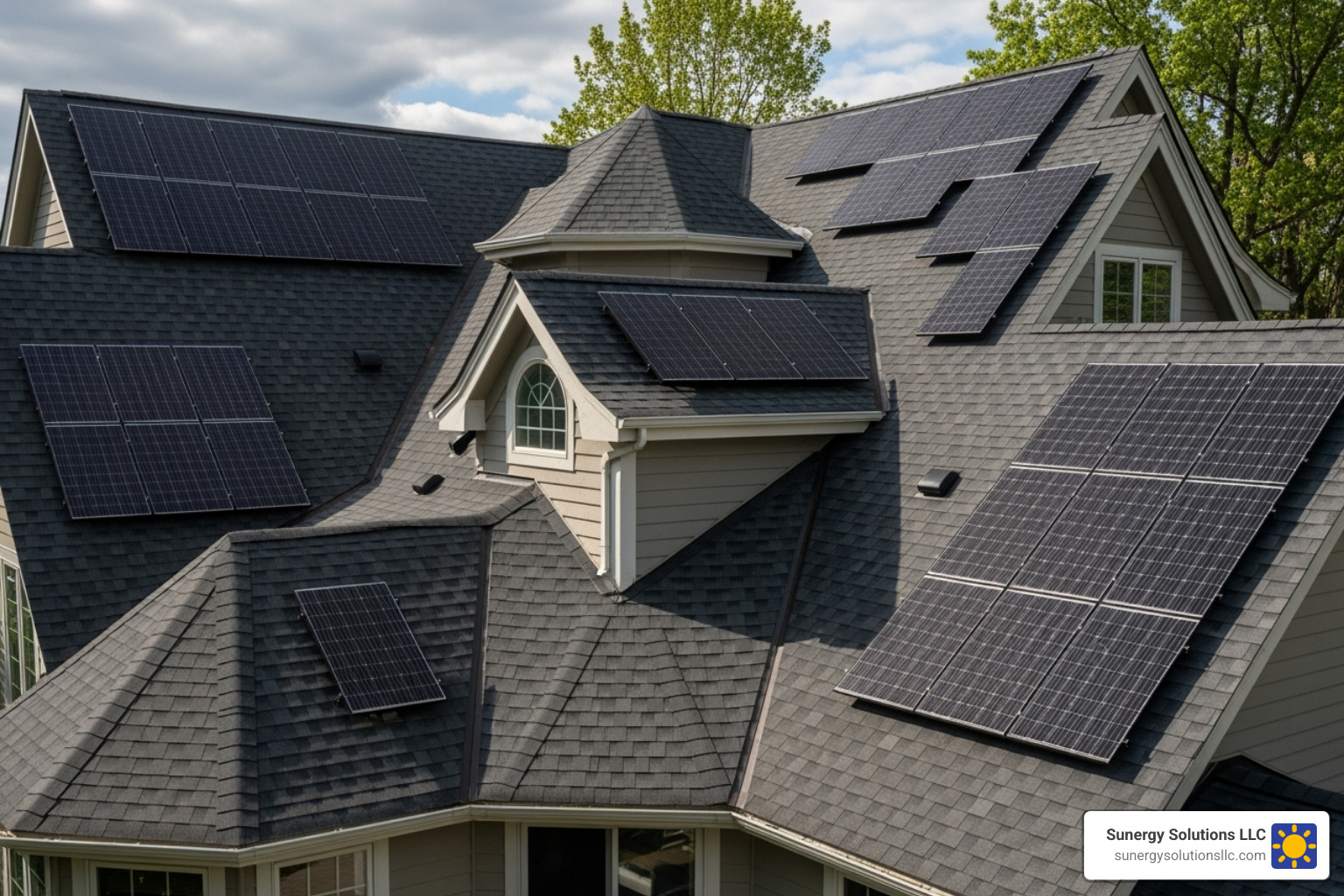
Today’s premium high efficiency solar panels deliver efficiency ratings over 22%, with the best reaching 24.8%. These gains translate directly into more electricity production from your roof.
High power density is a key benefit. Leading models produce up to 480 watts per panel with over 24% efficiency. This means fewer panels are needed, a game-changer for homes with limited or complex roof space.
Extended performance warranties are a hallmark of premium panels. The best manufacturers offer 25 to 30-year warranties, guaranteeing at least 87.4% of original output after three decades. Some even offer 40-year product warranties, showing confidence in their technology.
Low degradation rates ensure your investment pays off. Top-tier panels degrade as little as 0.25% annually, meaning your system will produce strong returns for decades.
Advanced cell structures like Heterojunction (HJT), Tunnel Oxide Passivated Contact (TOPCon), and Back-Contact cells push efficiency boundaries. Back-Contact cells are especially clever, moving all electrical connections to the back, leaving the entire front surface free to absorb sunlight.
Superior temperature performance is crucial, especially during hot summers in New England or Virginia. Premium high efficiency solar panels perform better in high temperatures due to improved temperature coefficients that minimize power loss.
Durability and weather resistance ensure these panels handle everything from heavy Vermont snow to strong Maine coastal winds. Many models are tested to withstand snow loads up to 6,000 Pascals and high wind speeds.
Our guide to the Latest Solar Panels for Homes can help you understand the newest technologies. Also consider the different Types of Residential Solar Systems to find the perfect fit.
This is a key question for homeowners. While high efficiency solar panels cost more upfront, they often deliver better long-term value in the right conditions.
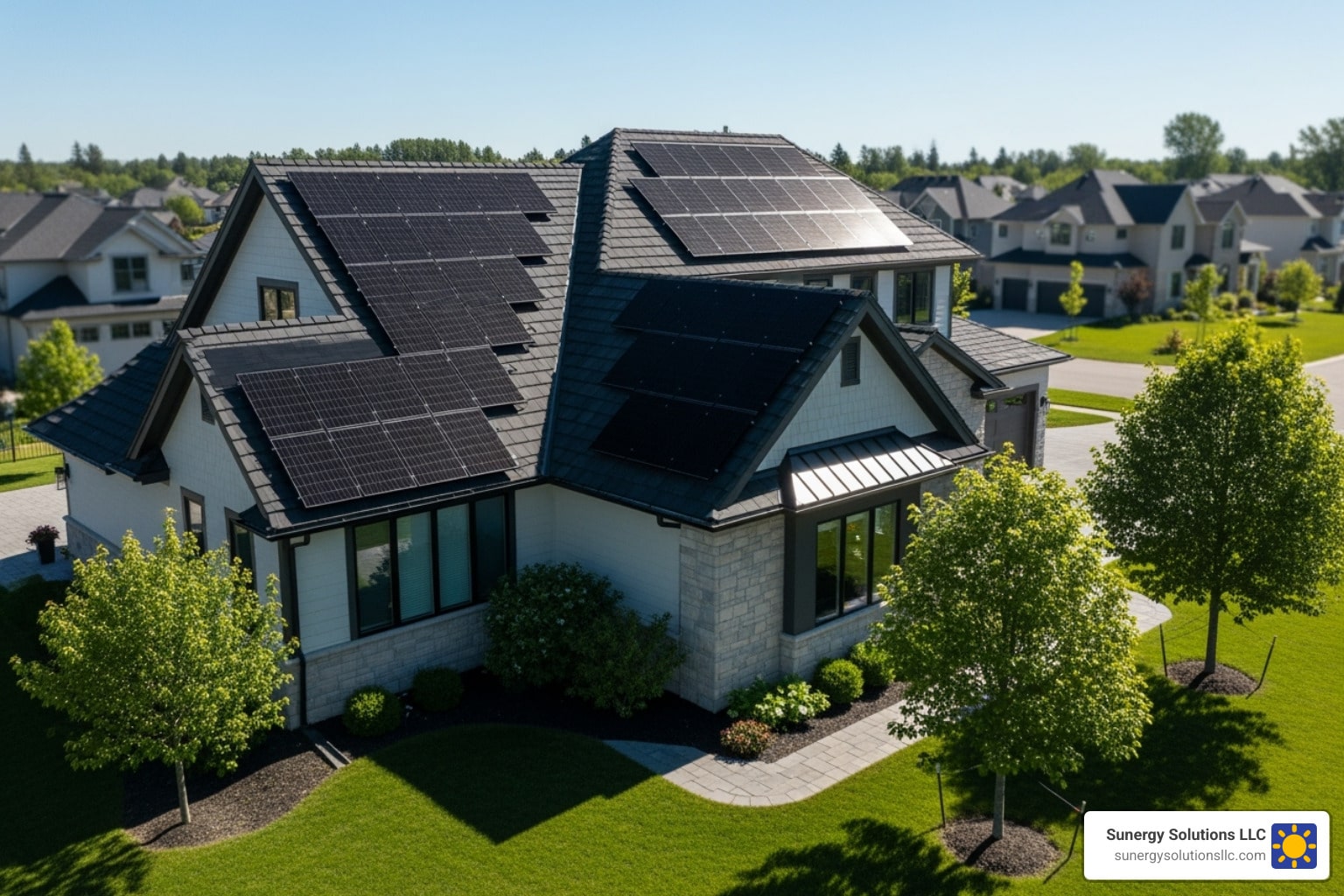
Limited roof space is a compelling reason for high-efficiency panels. If your roof is small, oddly shaped, or has obstacles, these panels maximize production from the available space. You might need 20% fewer panels to meet your energy needs.
High energy consumption households and businesses benefit most. If you spend $300+ monthly on electricity, the extra power from high-efficiency panels can accelerate your payback period and increase total savings.
Partially shaded roofs perform better with high-efficiency panels. While we design systems to minimize shading, it’s sometimes unavoidable. Premium panels handle partial shading better due to advanced designs that minimize power loss.
The long-term financial picture proves the worth of high-efficiency panels. Despite higher upfront costs, increased energy production over 25-30 years often means thousands in additional savings. High-efficiency models can beat the typical two-year energy payback time of modern silicon panels.
Property value increases are an added bonus. A high-performance solar system can boost your home’s resale value, making the investment pay off even if you move.
The decision depends on your roof size, energy use, budget, and long-term plans. Our guide on The Cost of Installing a Residential Solar System: A Comprehensive Guide can help you crunch the numbers.
Bifacial and flexible panels are two exciting technologies opening new possibilities for solar energy.
Bifacial technology generates electricity from both sides: the front captures direct sunlight, and the back harnesses reflected light. This “albedo effect” can boost energy production by up to 30% in the right conditions. They work well in ground-mounted installations like Commercial Ground Mount Solar systems where light reflects off surfaces like grass or snow.
Flexible solar panels are revolutionizing portable and specialty applications. These lightweight, bendable panels offer possibilities rigid panels can’t. RV owners love them for conforming to curved roofs, and they can even be used on apartment balconies. While typically less efficient than rigid panels, their versatility is valuable for emergency backup, off-grid use, or where traditional mounting isn’t practical.
These technologies show how solar innovation is expanding beyond traditional rooftops, giving more people access to clean energy.
The solar industry’s journey of innovation is exciting. The first silicon solar panel in 1954 had 6% efficiency. Today, we install residential high efficiency solar panels exceeding 24% efficiency—a four-fold improvement in seven decades.
This progress isn’t slowing. New breakthroughs annually make solar more accessible and powerful for families in New England and Virginia. Researchers are giving us more bang for our buck: more electricity from the same roof space, meaning better savings. The momentum is inspiring, driven by our need for clean, affordable energy. This innovation means today’s high efficiency solar panels are just the beginning. The U.S. Department of Energy offers insights into this Solar technology evolution, showing how far we’ve come.
While today’s panels are sophisticated, research labs are developing even better technologies. The current world record for solar cell efficiency is an astounding 47.6%. NREL has also developed triple junction cells reaching 39.5% efficiency in real-world conditions. These lab panels aren’t ready for residential use yet, as they use expensive, cost-prohibitive materials. But they show what’s theoretically possible, with some achieving 47% efficiency in a lab setting.
The most promising development for homeowners is tandem solar cells, especially perovskite-on-silicon. Think of it this way: traditional silicon panels are like one employee doing all the work, while tandem cells are like two specialists.
Perovskite-on-silicon combinations work brilliantly because each material captures different parts of the light spectrum. Perovskite absorbs blue light, while silicon handles red and infrared. Layering these materials captures a broader range of sunlight.
Progress has been remarkable, with researchers achieving 32.5% efficiency in 2022. Companies are already working to commercialize this technology, with some cells reaching 26.8% efficiency.
Multi-junction cells are another exciting frontier, stacking different materials to capture more light wavelengths. Currently used mainly in space, the technology is becoming more practical for terrestrial use.
This is exciting for homeowners because these advances break the Shockley-Queisser limit—the theoretical 34% maximum efficiency for single-material solar cells. Combining materials opens up new possibilities. We can’t predict when these panels will be cost-effective for homes, but rapid development suggests it won’t be long. When they arrive, they’ll make high efficiency solar panels even more valuable for homeowners.
We get a lot of questions from homeowners about high efficiency solar panels, and honestly, that makes perfect sense! Choosing the right solar system is a big decision, and you want to make sure you’re getting the best value for your investment. Let me walk you through the most common questions we hear and give you straight answers based on our years of experience in the field.
Here’s the thing about solar panel efficiency ratings – the landscape has really evolved over the past few years. If you’re looking at standard panels, you’ll typically see efficiency ratings between 17-19%. These are solid, reliable panels that will serve most homeowners well.
But if you want to step up to high-performance panels, you’re looking at 20% or higher. This is where things get interesting for homeowners who want to maximize their energy production.
For premium high-efficiency panels – the cream of the crop – we’re talking about 22% and above. These are the panels that really shine when you have limited roof space or want to squeeze every bit of energy from your system. The absolute best residential panels available today can reach up to 24.8% efficiency.
So what’s “good” really depends on your situation. While 20% is definitely good, anything above 22% puts you in the excellent category and truly earns the high efficiency solar panels label.
This is one of my favorite questions because it gets to the heart of how solar actually works! The short answer is yes, high efficiency solar panels do perform better on cloudy days compared to standard panels.
Here’s what happens when clouds roll in: Your panels are still generating electricity from what we call “diffuse sunlight” – basically the light that filters through those clouds. While you won’t get the same production as a bright sunny day, more efficient panels are simply better at converting whatever light is available into usable power.
Think of it this way – if a cloudy day reduces your solar production to about 80-90% of normal, a high efficiency solar panel will still convert a larger percentage of that reduced light into electricity. So you’ll end up with more power from your high-efficiency system than you would from a standard system of the same size.
There’s actually a silver lining to cooler, cloudy weather too. Solar panels love cool temperatures, so on those crisp, clear winter days, your panels might actually produce more power than on blazing hot summer days. This is especially true here in New England, where we often get that perfect combination of bright sun and cool air.
Your system’s performance also depends heavily on the quality of your Solar Inverters: What They Are and Why You Need Them, which play a crucial role in maximizing energy capture during those varying light conditions.
This is probably the most important question, and the answer really comes down to understanding your specific situation. Let me break down the key factors we look at when helping homeowners make this decision.
Your energy needs are the starting point. We’ll analyze your current electricity bills and talk about any changes you’re planning – like adding an electric vehicle or a heat pump. If you’re a high-energy household looking to offset as much of your bill as possible, high efficiency solar panels can help you reach that goal.
Roof space is often the deciding factor. If you’ve got a smaller roof, or one with dormers, chimneys, or other obstacles, high-efficiency panels let you generate more power from the available space. It’s like getting a bigger system without actually needing more room.
Shading analysis is something we take very seriously. While we always design systems to avoid shade as much as possible, sometimes there are unavoidable shadows from trees or neighboring buildings. High-efficiency panels tend to handle partial shading better, so your overall system performance stays stronger.
Your long-term investment goals matter too. If you’re planning to stay in your home for many years and want to maximize your energy savings over decades, the higher upfront cost of high efficiency solar panels often pays for itself through superior performance and durability.
The best way to figure out what’s right for your home is through a professional consultation. We’ll come out, assess your roof, analyze your energy usage, and give you honest recommendations based on what makes the most financial sense for your situation. Finding the right solar partner is crucial, and we’ve put together a guide on How to Find a Reputable Solar Company to help you steer this important decision.
The journey through high efficiency solar panels brings us to an exciting conclusion: you now have the knowledge to make an informed decision that could transform your energy future. From understanding efficiency ratings to comparing cutting-edge technologies, you’ve finded how these advanced panels can deliver more power from every ray of sunshine hitting your roof.
The beauty of high efficiency solar panels lies in their ability to maximize your investment, especially when roof space is limited or energy needs are high. Whether you’re dealing with partial shading, a complex roof shape, or simply want the best long-term return on your solar investment, these premium panels deliver exceptional performance year after year.
At Sunergy Solutions LLC, we’ve seen how the right solar solution can dramatically reduce energy bills while contributing to a cleaner environment. Our commitment extends across Connecticut, Massachusetts, Maine, New Hampshire, Rhode Island, Vermont, and Virginia, where we help families and businesses harness the sun’s power through safe, reliable, and affordable solar installations.
What sets us apart is our understanding that every home and business is unique. Your roof, your energy usage, your budget, and your goals all play a role in designing the perfect solar solution. That’s why we don’t believe in one-size-fits-all approaches. Instead, we create custom solutions that maximize your benefits and savings.
Our expertise goes beyond just solar panels. We also provide professional roofing and gutter services, ensuring your entire roof system works together seamlessly. After all, your solar investment deserves a solid foundation that will protect it for decades to come.
Whether you’re exploring Residential Solar for your family home or considering Commercial Solar solutions for your business, our team of experts is ready to guide you through every step of the process. We believe in transparent communication, quality workmanship, and delivering results that exceed expectations.
The solar industry continues to evolve rapidly, with new technologies and improved efficiencies arriving regularly. By choosing a partner who stays current with these advances, you’re ensuring that your solar investment incorporates the latest innovations and delivers maximum value for years to come.
Ready to explore your solar options? Learn more about our expert solar installations and find how high efficiency solar panels can transform your energy future.
Appointments Available, 7 Days a Week


