
5.0 Rating
Request A Free Estimate
Commercial solar system design is the foundation that determines whether your solar investment delivers maximum savings or becomes a costly mistake. The process involves three key phases:
Essential Design Stages:
The solar industry has seen a 24% annual growth rate since 2010, creating huge opportunities for businesses. However, navigating the complex design process is key to open uping savings and avoiding pitfalls like underperformance, costly repairs, and failed inspections.
A well-engineered system can deliver payback periods of 7-10 years and decades of energy savings. As one industry expert noted: “Commercial solar design is a complex web of interwoven needs of the project owner combined with complicated engineering challenges that frequently come up in commercial projects.”
I’m Robert Raffa, CEO of Sunergy Solutions LLC. With nearly a decade of experience and a background in investment banking, I help Northeast businesses steer the commercial solar system design process to create projects that are both technically excellent and financially sound.
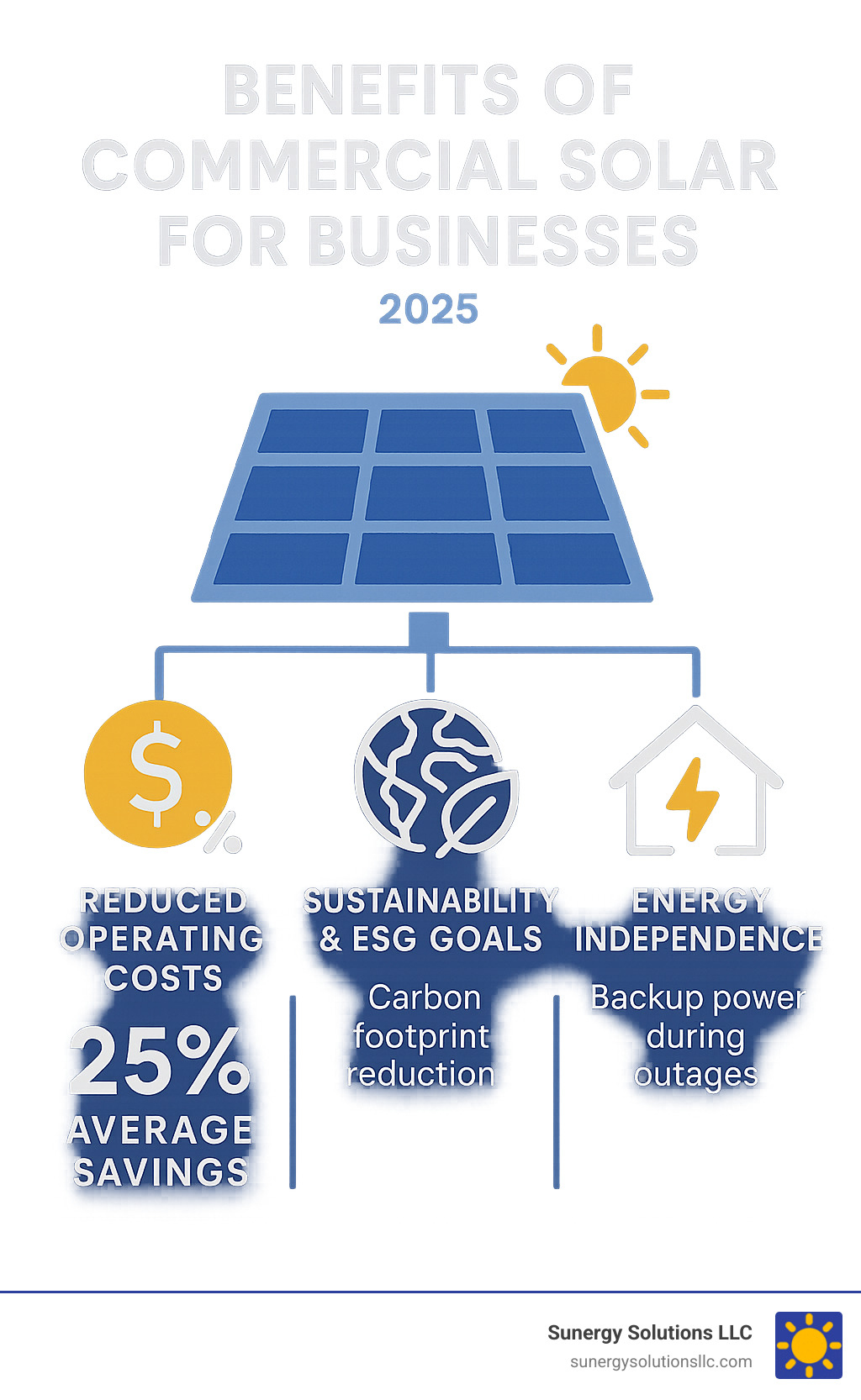
Know your commercial solar system design terms:
The preliminary phase of your commercial solar system design is where we separate successful solar investments from costly mistakes. It’s like creating a blueprint before construction begins.
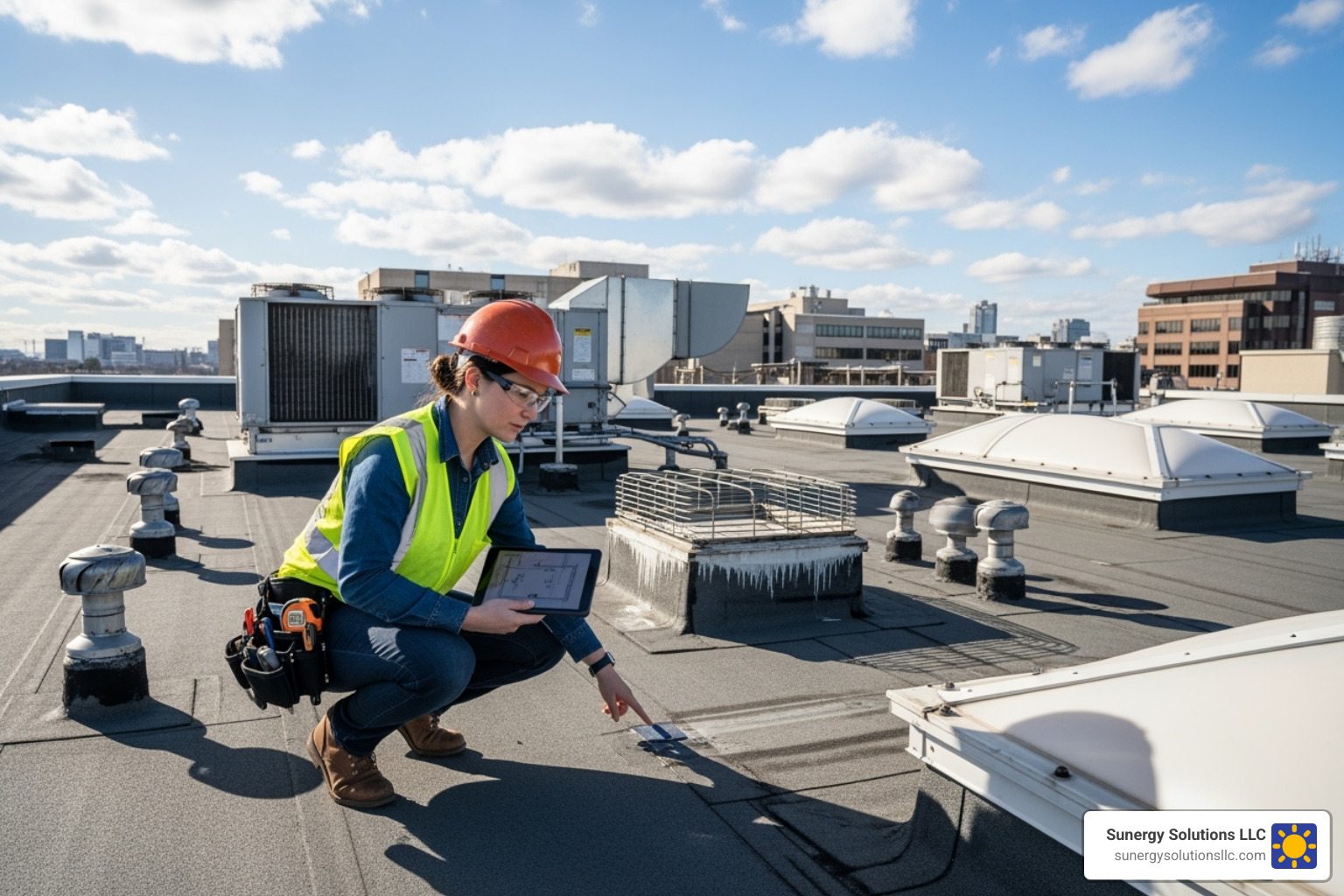
Site assessment is critical. While satellite images help, there’s no substitute for an on-site visit. Our NABCEP certified team spends hours on your property identifying details that can make or break a project. We look for shading from trees that could cut production by 30%, verify roof strength for panel weight, and find the most cost-effective spot to connect to the grid.
Energy load analysis involves a deep dive into your utility bills from the past 12-24 months. We analyze your peak demand, seasonal variations, and time-of-use charges to size your system perfectly—not too big to waste money, and not too small to miss savings.
Structural integrity is also a key focus. We ensure your roof can handle not just the panels, but also wind and snow loads for decades. Sometimes, this means advising a roof replacement before installation, turning a future problem into smart timing.
For businesses ready to explore their solar potential, our Solar Installation for Businesses page provides detailed insights into the process and benefits.
Understanding the difference between commercial and utility-scale solar is crucial for proper commercial solar system design. They serve different purposes and face unique challenges.
Before designing, we clarify what success looks like for your business. This goes beyond just reducing electricity bills to achieving multiple strategic goals.
Return on Investment (ROI) and payback period are key. Most systems pay for themselves in 7-10 years (sometimes as fast as 4-6 years), followed by 15+ years of nearly free electricity.
The Federal Solar Tax Credit can cover 30% of system costs. State and local incentives, which we track using the DSIRE database, can add thousands more in savings.
Financing options like loans, leases, and Power Purchase Agreements make solar accessible. Many financed systems become cash-flow positive within 60 months, with energy savings exceeding loan payments.
Solar offers predictable energy costs for decades, protecting your business from volatile utility rates. For a detailed cost analysis, explore our guide on Commercial Solar Panel Cost.
After the preliminary assessment, we translate your energy needs into a detailed commercial solar system design. This is where engineering meets artistry.
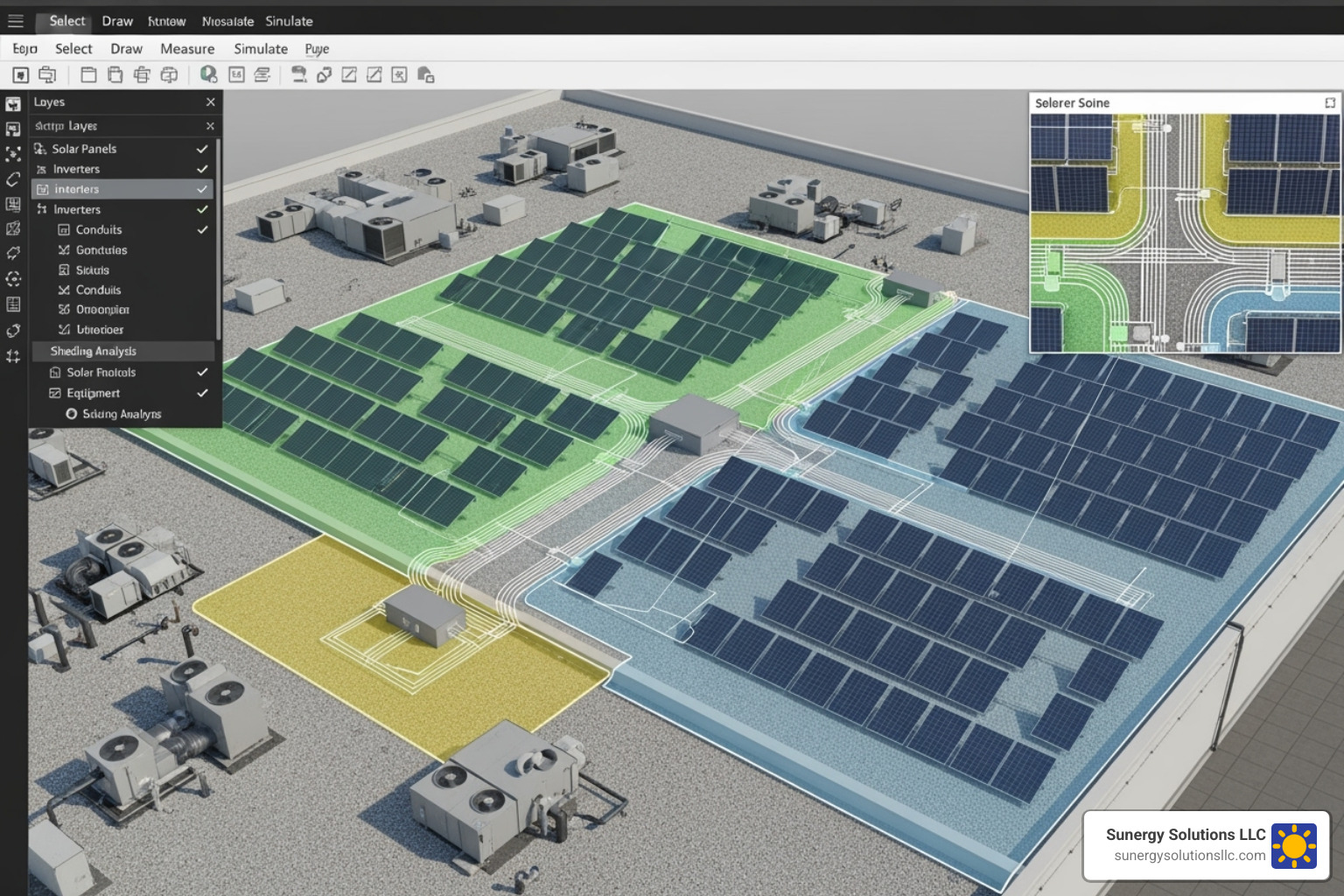
We follow a proven 30%, 60%, 90% staged design process. This methodical approach ensures quality review at every step, preventing misunderstandings and costly change orders. As one industry expert puts it: “Breaking down the design into stages allows for a rigorous quality review every step of the way, providing more opportunity for mistakes to be corrected before being constructed in the field.”
We use cutting-edge solar design software like HelioScope and PVsyst to simulate panel configurations, predict energy yields, and model shading throughout the year. For projects with unique structural or electrical needs, we partner with third-party engineering experts to ensure seamless integration.
This stage captures the big picture. We select primary equipment (solar panels and inverters), perform initial string sizing, and conduct a preliminary shade analysis. Key deliverables include a site plan, a simplified single-line electrical diagram, production estimates, a preliminary bill of materials, and basic structural considerations. This ensures we are aligned on the project’s direction before committing to full engineering.
Here, the conceptual design becomes construction-ready blueprints. We create precise array layouts and detailed electrical schematics that meet all National Electrical Code requirements for safety and efficiency. We also finalize the complete bill of materials, specifying every component for compatibility and durability. Once you approve the design, we submit the comprehensive, PE-stamped package to local authorities for permits, handling all coordination to keep the project moving.
For more details on how we manage these comprehensive systems, check out our Commercial Solar Energy Systems page.
The IFC package is the final, certified plan. It includes finalized layouts, data acquisition systems for performance monitoring, and updated energy production models. All drawings are stamped by a Professional Engineer, giving the green light for construction. Before work begins, we hold a detailed “page-turn” meeting with our construction crews to review every detail of the plans. This proactive coordination prevents on-site problems and ensures a smooth installation, a best practice highlighted in Solar Industry Magazine.
Your commercial solar system design is now ready to become a powerful, money-saving reality.
A commercial solar system design is like a high-performance engine—every component must work in perfect harmony. The parts we select determine if your system delivers exceptional performance for decades or becomes a maintenance headache.
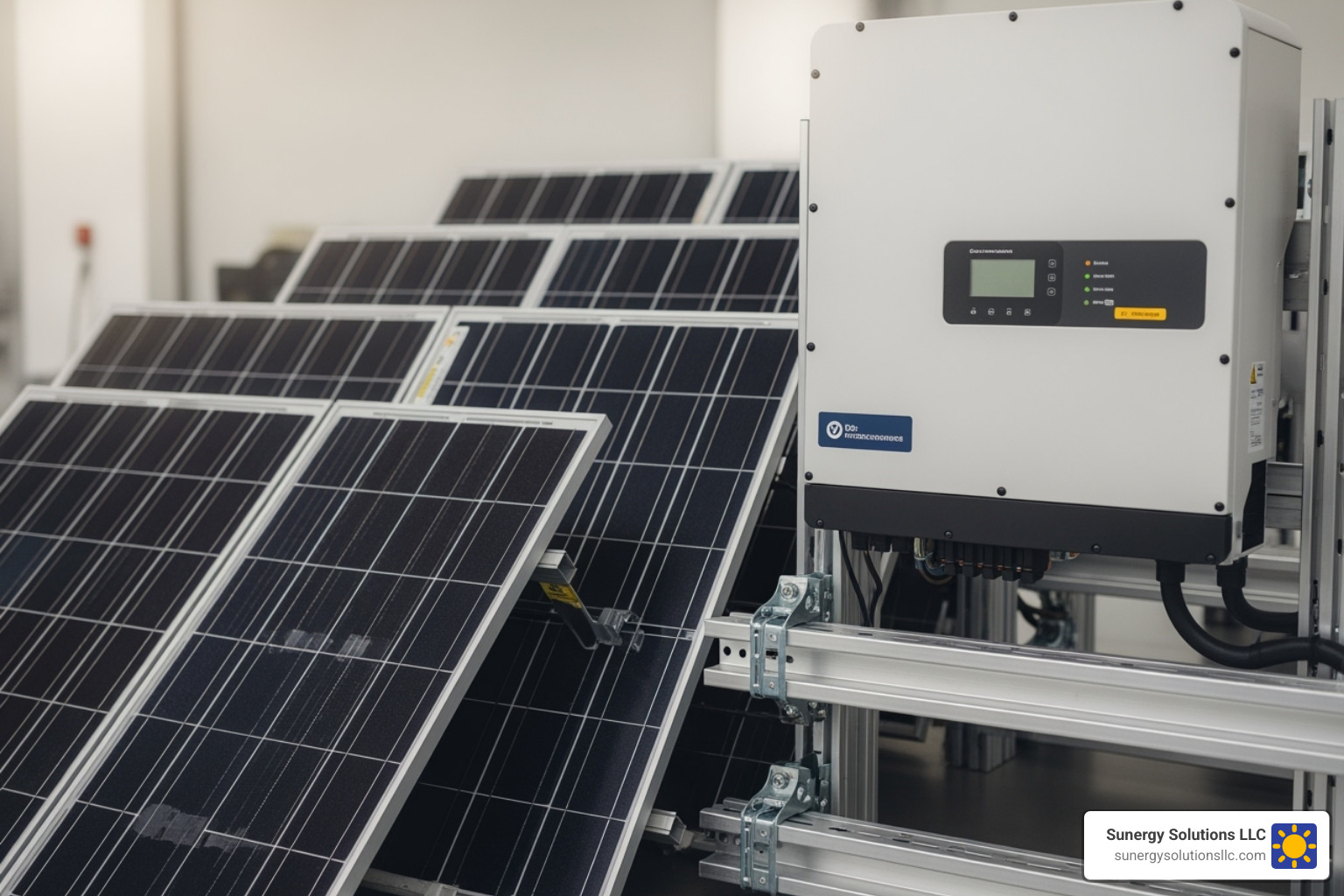
We exclusively use Tier 1 manufacturers, representing companies with advanced R&D and automated quality control. Every component has proper UL 1703 and IEC 61215/61730 certifications, ensuring they meet rigorous safety and quality standards. This is backed by robust warranties: 12-25 year product and 25-30 year performance warranties for panels, and 10-25 year warranties for inverters. Our work is guided by NABCEP certified personnel, the gold standard for solar expertise.
The heart of your system is its solar panels and inverters. For commercial applications, we recommend monocrystalline panels with 19-22% efficiency to maximize power on valuable roof or ground space. We also consider climate performance, shade tolerance, and vendor reliability.
Inverters convert DC electricity from panels into usable AC power and are a common failure point if not chosen correctly. We match the inverter to your site’s needs:
Our Commercial Solar Panel Installers can help you choose the best option for your situation.
Mounting systems and Balance of System (BOS) components are the essential foundation of your commercial solar system design.
Mounting system selection depends on your property. For flat commercial roofs, we use ballasted mounts that don’t penetrate the roof or penetrating mounts that anchor to the structure. Ground-mounted systems offer flexibility for optimal sun exposure, and our Commercial Ground Mount Solar solutions are robust and scalable. Carport installations are also popular, providing both solar generation and shaded parking.
BOS components are critical for safety and performance. This includes racking, wiring, conduits, combiner boxes, and AC/DC disconnects. Modern monitoring systems provide real-time performance data, often alerting us to issues before they impact production. Every component is selected for durability and code compliance.
A great technical design is only half the battle in commercial solar system design. Navigating the web of permitting and utility interconnection is a critical, often challenging, part of the process.
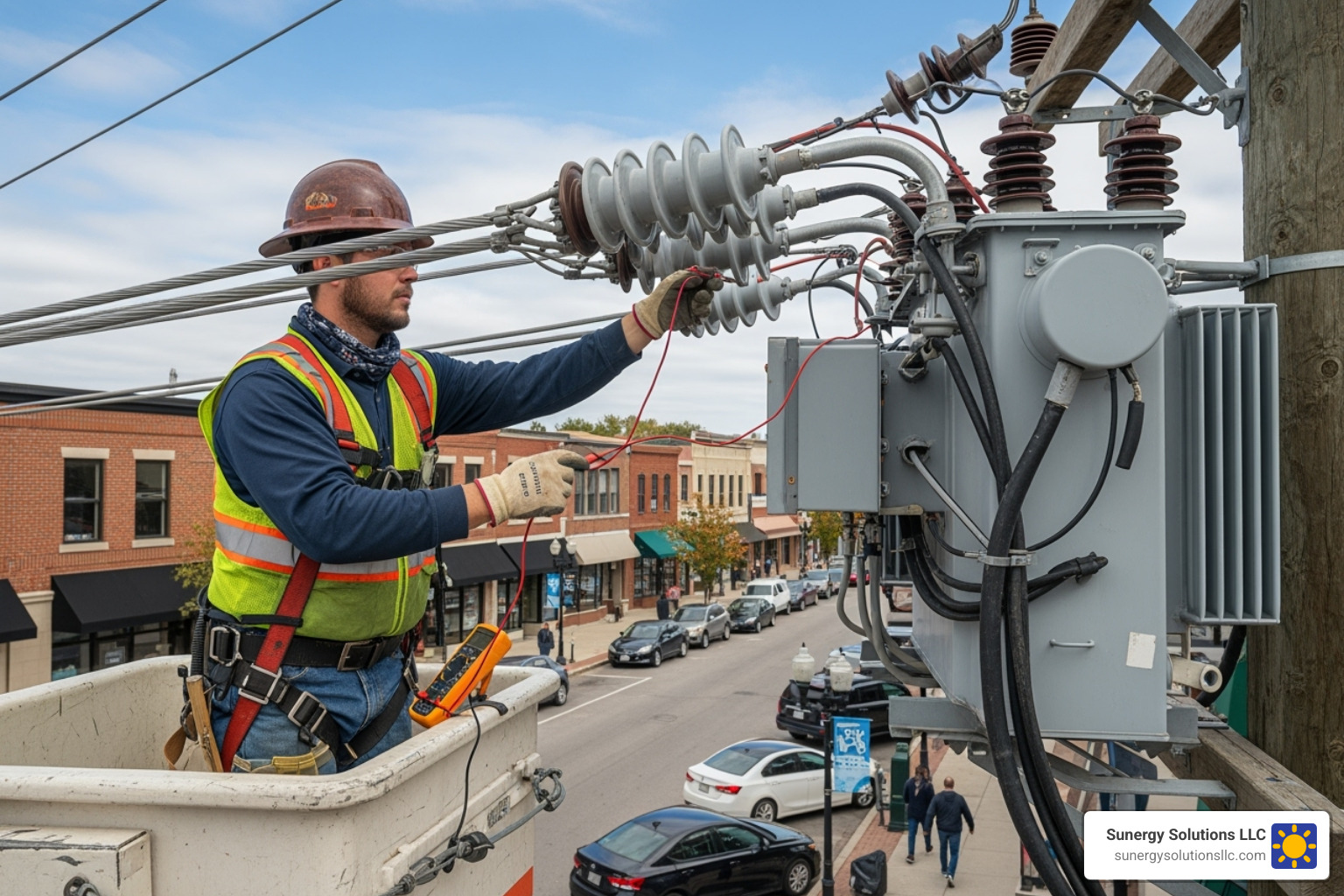
This phase requires approval from two main entities: the Authority Having Jurisdiction (AHJ) (your local building department) and your Electric Distribution Company (EDC) (the utility). The AHJ ensures safety and code compliance, while the EDC sets rules for grid connection. These requirements significantly impact the design and vary by location.
Timeline expectations are crucial. Budget a minimum of six business weeks from submitting the interconnection application to receiving the utility’s approval to construct. Complex projects may require grid impact studies that extend this timeline. We never order materials until this approval is in hand.
Securing permits is essential for a safe, legal, and compliant commercial solar system design. Our team handles this entire process, preparing a comprehensive submission package that demonstrates full compliance with local building codes, structural requirements, and the National Electrical Code (NEC). We pay close attention to NEC guidelines for wiring and safety, as well as the structural review to ensure your roof can support the system’s weight plus wind and snow loads for decades. Our goal is an error-free first submission to minimize delays. For more insights, visit our page on Commercial Solar Companies.
The utility interconnection agreement is the legal framework governing how your system interacts with the grid. Every utility has its own mandatory interconnection standards for connection, safety, and metering. Larger systems may require grid impact studies to assess their effect on local infrastructure, though most integrate smoothly.
Net metering policies, which determine how you’re credited for excess power sent to the grid, are critical for calculating your ROI. The entire process leads to receiving “approval to construct” from the utility—the green light for installation. Our team manages all utility communications to expedite approvals and avoid common pitfalls. To learn more, visit our Commercial Solar Power page.
The commercial solar system design work itself typically takes several weeks to a few months. However, the utility interconnection process is almost always the longest part of the journey. You should budget a minimum of six business weeks just to receive the “approval to construct” from the utility. For larger or more complex systems, this timeline can stretch much longer due to required grid impact studies or infrastructure upgrades. We set realistic expectations from day one to avoid surprises.
After nearly a decade in the business, I’ve seen three common, costly mistakes derail commercial solar system design projects:
While exact figures vary, a commercial solar system typically has a significant, positive impact on property value. The primary drivers are:
The predictable, low energy costs provided by solar make a property more valuable and desirable in the commercial market.
The commercial solar system design journey can seem complex, but with the right partner, it becomes a straightforward and exciting process. At Sunergy Solutions LLC, we’ve spent nearly a decade guiding businesses across the Northeast through every step, from initial site assessment to final activation.
Our commitment is to provide a seamless experience built on top-tier equipment from Tier 1 manufacturers, extensive warranties, and exceptional customer service. We handle the engineering, paperwork, and utility negotiations so you can focus on your business.
A well-designed commercial solar system is a powerful asset that delivers value for decades. You can expect financial returns with a payback period of 4-7 years, followed by years of nearly free electricity. Beyond the savings, you’ll achieve energy independence, hedge against rising utility rates, and meet your sustainability goals.
This investment in your company’s future delivers both environmental benefits and significant cost savings for 25-30 years or more, becoming a testament to your forward-thinking leadership.
Ready to harness the power of the sun for your business? Let us design a system that fits your unique needs.
Appointments Available, 7 Days a Week


